
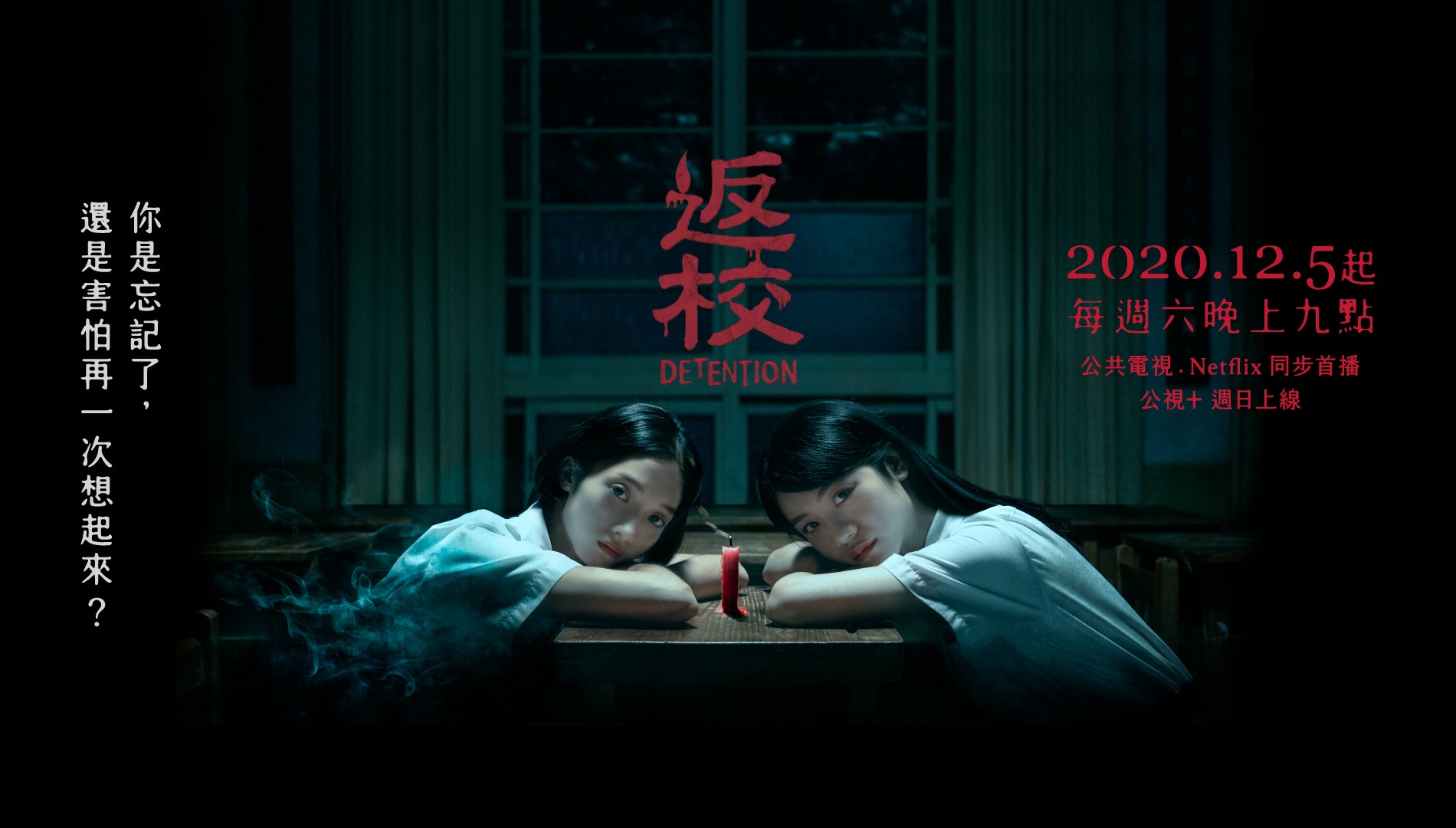
Returning School is a Taiwanese horror drama that has been available on Netflix since December 5, 2020. Its English title is Detention. It is based on the PC horror game of the same name that was released in 2017, and the story takes place 30 years after this game. Liu Yunxiang, a high school girl who transfers to a rural high school to start a new life, is faced with unexpected betrayals and numerous bizarre phenomena in a place that still carries on the martial law customs of 30 years ago. She then begins to unravel a cursed secret that is forbidden in this place.
Origin of the title name
The title "Kaeko" means "return to school." This derives from the Taiwanese school culture of "Kaeko-nichi" (return to school day).
Students go to school for one day before the end of summer and winter vacations to clean the school buildings and confirm simple notices. This is a regular system at all elementary, junior high and high schools in Taiwan.
Also, the English title, Detention, refers to after-school detention, detention and confinement. It is reminiscent of the white terror that is the subject of this movie.
Differences between the original and the drama version
The original game version was initially intended to be a dystopian version, but when the producer realized that there were many parts in the production that overlapped with the situation in Taiwan during the period of martial law, the production policy was changed to one that dealt with white terror, and the drama version continues this trend.
The original story was set in a Taiwanese school during martial law in the 60s, when censorship and illegal arrests were planned for all media activities, including reading and writing poetry. All of the members who were found to have read banned books during the meeting were arrested and severely punished. In the drama version, Chan and In Tuihan, who appear only in the memory of Ruishin, are the victims of martial law.
The drama, which portrays 30 years from now, depicts Taiwanese school life after martial law was lifted, with no restrictions on the press or illegal arrests, but 翠華 High School's school rules leave a legacy of martial law and prohibit students from bringing in or reading any books that have nothing to do with classes. At the beginning of the novel, there was a scene in which Yoon-Shian brought the novel "1Q84" to high school in his bag, but was found by a teacher at a baggage inspection and confiscated.
Taoist rite of repose and poetic divination
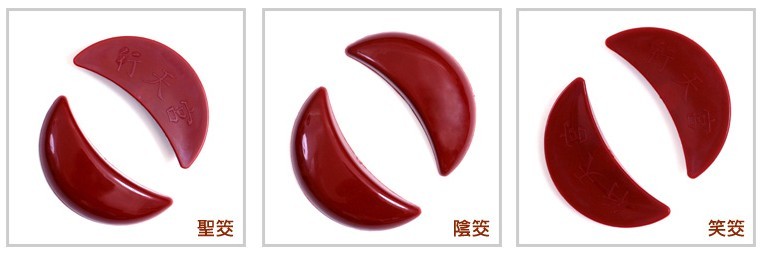
In this work, you can see the scene of fortune-telling by throwing two red shell-like objects, both of which are related to Taoism, a folk belief in Greater China. In Taiwanese, Poe fortune-telling is called "toteki 筊," which means "throwing 筊." 筊 is the red shell-like stone shown in the image, which is called "po" in Taiwanese and written as "hai" in Chinese characters.
You can cast two pieces of paper up to three times, and the result changes depending on the combination of the two sides. First, the state on the left side of the image, where one side is a round surface and the other side is a flat surface facing upward, is called holy 筊 (cup), which means a positive result. In this case, it is interpreted that God answered "yes" to two questions, such as "A wish has come true" or "Yes".
Next, the state in which both round faces face upward in the center of the image is called Yin 筊 (cup), which means the negative result. In this case, it is interpreted that God answered' no' to the two choices of' yes' and' no' to the question that the wish was not fulfilled.
Finally, on the right side of the image, both flat faces are facing upward. This is called laughing 筊 (cup), which means that the god is laughing and the answer is not coming out. In this case, you have no choice but to throw the 筊 again and read the fortune again. Or it may be interpreted as meaning that you have already found the answer.

Tags
Contents
- Overview of "Kaeko"
- Outline and story of "Kaeko"
- Ghost
- You're me, I'm you.
- Long stay
- Cleanup
- Characters in "Kaeko"
- Liu Yunxian (played by Lee Linway)
- Fan Ruisin (played by Han Ning)
- Jung Woo ェンリアン (played by Hoang コアンチー)
- Shen ホワ (played by Yao Chun-yao)
- Jang Min-hee (played by Shea Dong-han)
- By グオフォン (played by David Chao)
- Shen Jin (played by Luo グアンシー)
- Wei Jong-ting (played by Wu Kunder)
- In Tuihan (played by Serena Fan)
- Sue Dieu (played by Tsai Ruishue)
- Liu Yunxian's mother (played by John Jea Aye)
- The term "Kaeko"
- 翠華 High School
- Ghost
- 涵翠 Tower
- Seongsu Temple
- White terror
- Jade Pendant
- Words, lines, scenes of "Kaeko"
- Fudesen
- Memories of happy times
- The Soul of Luisin Freed
- "Kaeko" via, and small stories / episodes and anecdotes of "Kaeko"
- Origin of the title name
- Differences between the original and the drama version
- Taoist rite of repose and poetic divination