
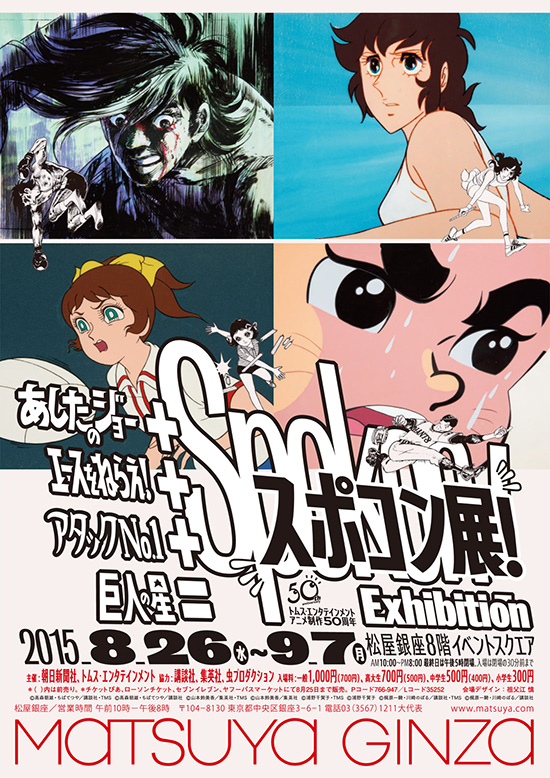
The Spore Exhibition began at Ginza Matsuya on August 26, 2015.
Personally, I am of the "Strike Right in the Middle!" generation, so I was very interested in the exhibition.
Now that I am a "good adult," I would like to look at these works from a different angle than I did back then.
☆ "Star of the Giants"
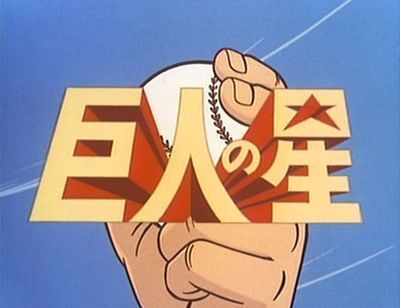
The Star of the Giants" is a manga work by Kazuki Kajiwara (original idea) and Noboru Kawasaki (illustration).
Anyway, it was a big hit that no one knew about back then.
It was broadcast every Saturday from 7:00 p.m., and since there was no recording function back then, we had no choice but to watch it in real time, and we would sit in front of the TV at this time no matter what! That was the natural way of life.
I remember that I had all the "Star of the Giants" comics in my collection.
Regardless of gender, "Star of the Giants" was very popular.
I remember I bought tracing paper and layered it on top of the comics and copied many scenes I liked.
I still dabble in secondary works, and I didn't realize that my roots were in such a place... awwwww!
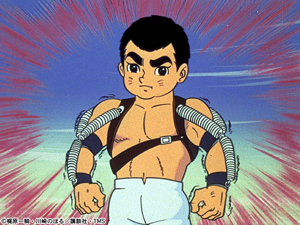
The big-league ball training cast, the disappearing magic ball, the hero HIOMA's father Ittetsu turning HIOMA's best friend Ban Chūta into the "strongest enemy" and eventually breaking HIOMA's left arm, etc. These things were popular among children and young people back then.
If it were today, they would probably be drawn to it.
Also, there are a lot of things that would be considered "gags" today, such as the flames burning in the eyes, the tears coming out halfway, Hanagata driving a sports car even though he is supposed to be a junior high school student, Akiko always watching over Hioma from behind a pillar with tears in her eyes... There are so many descriptions that could be considered "gags" nowadays.
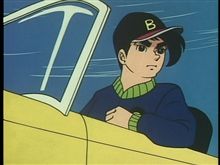
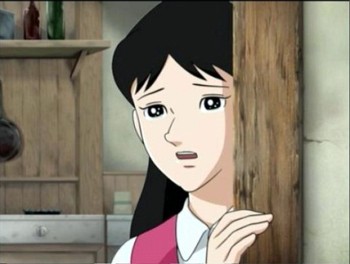
Ah, but the last scene of "Star of the Giants" (*There is a sequel, "New Star of the Giants," which I have hardly read) still makes my heart sing even now.
The scene where Ittetsu slowly walks away from the mound with his son on his back.
I think many people of my generation felt the same way.
In those days, it was said that children's favorite things were "Giant (baseball), Taiho (sumo), and egg rolls.
The Star of the Giants is a "historical drama" story about a father and son who dreamed of joining the Giants, the top favorite team of children, and overcame severe training and hardships to achieve glory.
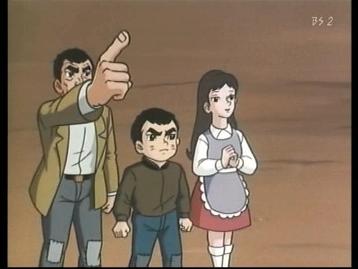
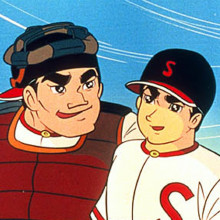
The main character, Hoshi Hyuma, is a boy who lives a poor life with his father Ittetsu (who played third base for the Giants when he was young) and his sister Akiko. With his father's slogan, "Aiming to become a star of the Giants," he gradually gains strength while undergoing rigorous training from his father.
As he grows older, Hiyuma enrolls in Seiun High School. He and Chūta Ban, whom he met there, form a battery and play an active role on the baseball team. He eventually competes against rivals Mitsuru Hanagata and Toyosaku Samon at Koshien, and little by little begins his path to joining the Giants.
Handsome "Attack No. 1"
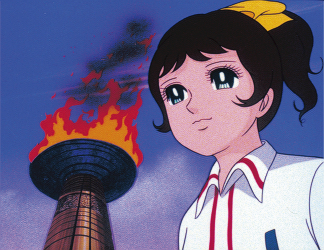
Attack No. 1" is a sports manga written and drawn by Chikako Urano.
The opening theme song, "Because I cry. It's a girl," is a famous line from the opening theme song.
At the time of serialization, the popularity of this work was split in two with "Sign is V!
I loved it and was thoroughly influenced by it.
Because of this anime, I joined the volleyball club when I was just entering junior high school.
(Well, I was short and I wasn't as good as I thought I was going to be, so I stopped halfway through...)
Kozue Ayuhara and Midori Hayakawa were rivals at first, but after recognizing each other's abilities, they formed a strong friendship and became the strongest attack duo. It's a bit clichéd, but that's the kind of thing I admired.
This is the current serialization of "Hi-Q! (this is the boys' version), which is currently being serialized in Jump.
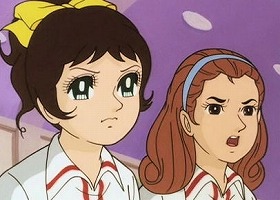
On the right is Midori Hayakawa. When she first appeared, she was a rude, bad-tempered, rich young lady. (She was a transfer student to Fujimi Gakuen.)
She is what we would call a tsundere nowadays.
(She was a transfer student to Fujimi Gakuen.) She is what we would call a tsundere now.
Also, although this is a digression from the main topic, the fact that the main character's name was "Kozue" or "Midori," which is not a child's name, while the name "Xuko" was common at the time (laugh), was quite appealing to girls who were in the throes of puberty at the time.
There were quite a few things to pick on, especially Kozue's boyfriend, Tsutomu, who dies in a car accident during an important match, but the accident was caused by a car rollover driven by Tsutomu, who was too old to get a driver's license!
This was said at the time to be "a mystery," wasn't it? Oh, this is also off topic.
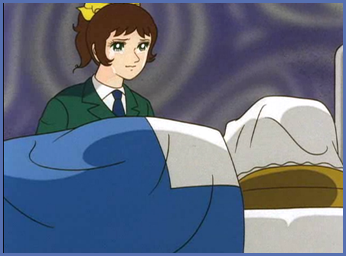
Kozue won the prefectural tournament and rushed to the hospital. But she was too late.
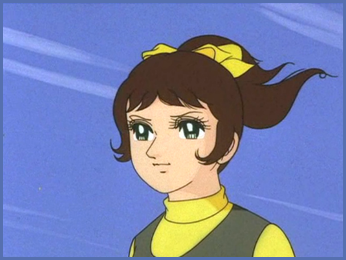
Kozue, for a while, doesn't care about ballet anymore after the death of her beloved Mukun. However, when she read the diary left behind by Miku, which reads, "I love Kozue Ayuhara, but I will confess it when she becomes the number one attacker in the world. But after reading her diary, she decides that what she must do is to become the best attacker in the world.
I think this gracefulness is one of the advantages of a sporty story.
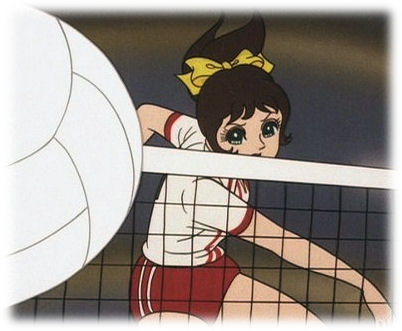
ATTACK!!!!"
Tomorrow's Joe.
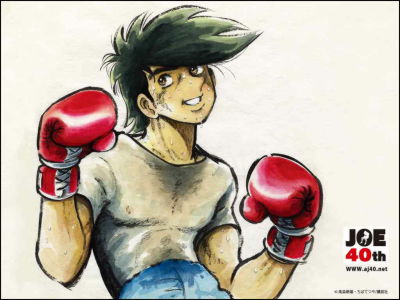
Ashita no Joe" is a manga written by Kajiwara Ikki and drawn by Chiba Tetsuya.
Unlike the heroes of the previous "sports" series, the protagonist of "Ashita no Joe" is a badass who has entered a reformatory, which is a new setting in itself.
The main character, Yabuki Joe, was discovered by Danpei Tange, who discovered boxing.
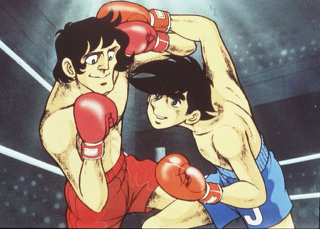
Another highlight is his rival Rikiishi's ultra-stoicism, which surpasses even that of Joe.
Rikiishi is a man who has lost weight to the point of cutting down on his own life, and then loses that life as soon as he emerges victorious in the ring.
You can't get much more stoic than that.
When Toru Rikiishi died in the work, a funeral was really held for him, and it was widely covered by various mass media because at that time there was no secondary creation culture or Comiket, etc. as there is now.
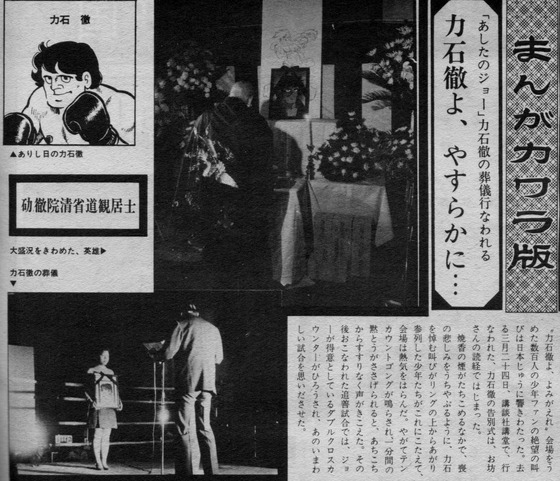
This is an article about what it was like back then, in 1970.
