
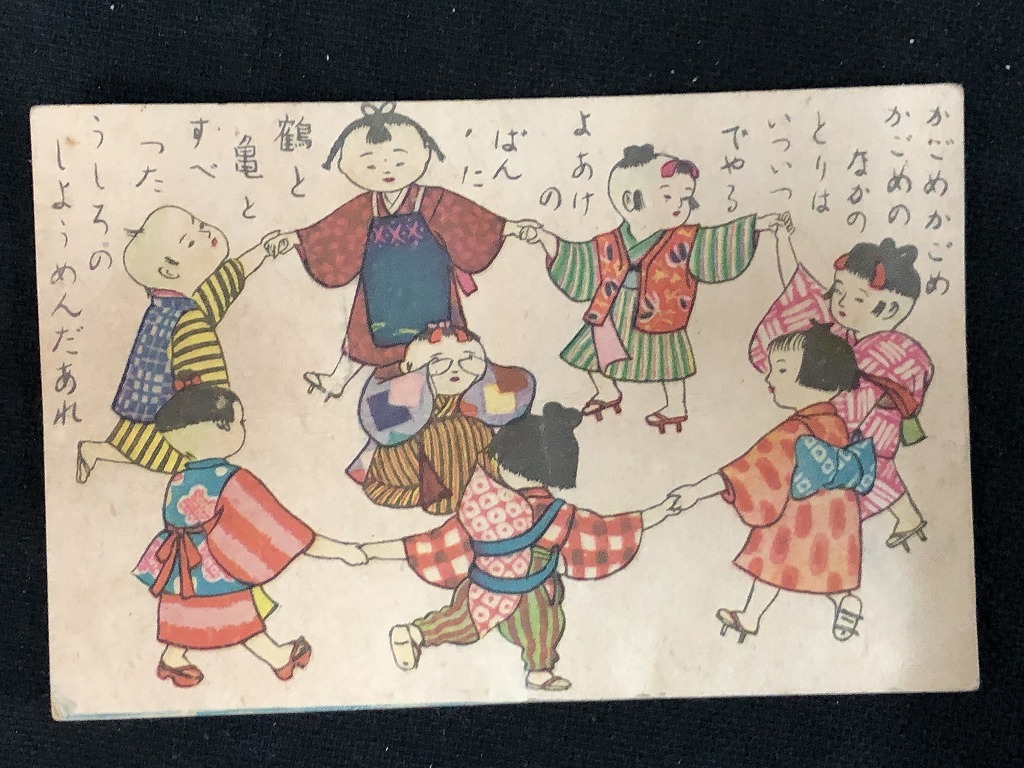
We have compiled a list of scary and mysterious urban legends about the nursery rhyme "Kagome Kagome. The secrets and rumors hidden in the familiar song, such as "Playing the song backwards will result in a cursed message," are also included. We also introduce the lyrics, which have changed with the times, and the theory that the song was popularized by Matsuo Basho.
■Kagome kagome
Kagome kagome" is not strictly speaking a children's song, but a "children's song. It has been sung among children since ancient times.
The lyrics vary from region to region, but basically the children go around the ogre in a circle while singing the song.
It is believed that the expressions after "cranes and turtles" in the lyrics were established after the Meiji period (1868-1912), so it is difficult to find an ancient origin for the interpretation.
It is said to have originated in Noda City, Chiba Prefecture, but this is not certain.
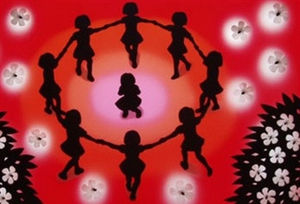
Kagome Kagome lyrics
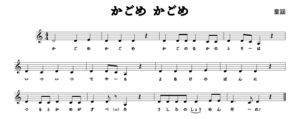
the cage, the cage, the cage, and the bird in the cage...
When will it be done? At the end of the day?
The vines and the turtles slid down the slope of a rock.
Source: knultra.com
Kagome kagome" in the mid-Edo period
The oldest extant reference to the original "Kagome-kagome" is the "Chikudo zuishu" (Collection of essays on children's songs), compiled around 1820.
This collection of nursery rhymes contains nursery rhymes from 1751 to 1772. The following lyrics are written in the book.
Kaagome kagome.
The bird in the cage.
When will it happen?
At the break of dawn.
Tsuru tsuru tsuru pe hibutsu.
The pot in the pot, the pot in the pot.
There, there, there, there, there, there, there, there, there, there, there, there, there, there, there, there, there, there.
Source: www.worldfolksong.com
This shows that as of the middle of the Edo period, the lyrics of "Tsuru to Kame ga Sukerita" were "Tsurutsuru Tsurutsupezu" (The crane and the turtle slipped away).
This "tsurutsuru" is not a crane, but an onomatopoeic word meaning that things are pulled. Tsurupetsudo" is a variation of "tsutsuppeta," which is said to mean "to pull, to shove.
A collection of children's songs from the late Edo period
Here are the lyrics to "Kagome kagome" from the 1844 children's song collection "Osana asobi mukashi no hinagata" (Children's Songs of the Ancient World).
basket, basket, basket, basket, basket
The basket is always empty.
I'll do it all the time
before dawn
Tsuru tsuru tsuru tsuru pette
When the stove's done, they'll win
If you put it in there, you'll get a big win
Put it in there and eat it
Source: www.worldfolksong.com
As in the mid-Edo period, lyrics reminiscent of "nabe nabe sokonuke" appear, with the additional phrase "sokonuke tare dondokachiko.
Was it Matsuo Basho who spread the word?
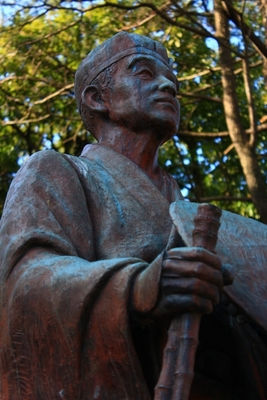
Matsuo Basho was a haiku poet who left various haiku in various parts of Japan during the Edo period. At that time, each clan in Japan had its own barrier, and no one was allowed to pass through without a bill of entry, even if he was just carrying a package. If a person attempted to ignore a barrier and crossed it, he or she would be severely punished as a criminal. It is said that Matsuo Basho must have had the backing of the Shogunate, as he was able to easily travel around the country in such an era. There are various rumors about Matsuo Basho's status, such as that he was the retired Hattori Hanzo or that he was a shogun of the Tokugawa family himself.
In any case, Matsuo Basho was the only person who could have spread Kagome Uta at once in Japan at that time.
It is said that Matsuo Basho traveled around the country and spread Kagome Uta in order to avoid having his property confiscated by the shogunate forces and to allow someone else to solve the mystery and use the property for the good of Japan when it was desperately needed in the future.
Theories and Urban Legends of Kagome Kagome
Because the lyrics are enigmatic and puzzling, they seem to be easily taken to mean any number of things and become urban legends.
Miscarriage theory
Kagome = basket eyes = stomach
Kagome = Kagome woman = a woman who looks like she is holding a basket (pregnant woman)
Kago-no-naka-no-Tori = a baby in a basket = a baby in the belly
This is the theory that interprets the lyrics in this way.
Source: onmtp.jp
In the belly, in the belly
The baby in my belly
When will it come out?
Just after midnight
Mother and child were pushed and fell and miscarried
Who pushed her?
Source: onmtp.jp
There are various popular theories about this as well, and it is interpreted that cranes and turtles, which are synonymous with good fortune, slip = bad things happen, and it is also taken to mean that Kagome (a pregnant woman) has a miscarriage.
The song is often introduced as a song about a mother's resentment over the loss of her child, who was pushed from behind on the stairs after midnight and rolled down the stairs.
Source: onmtp.jp

Contents
- ■Kagome kagome
- Kagome Kagome lyrics
- Kagome kagome" in the mid-Edo period
- A collection of children's songs from the late Edo period
- Was it Matsuo Basho who spread the word?
- Theories and Urban Legends of Kagome Kagome
- Miscarriage theory
- prostitute
- Bullying
- Child Abuse
- Prisoner Suffering
- buried gold
- ...and cut down on the mouths of the people.
- channeling
- ■When Kagome Kagome is played backwards, is there a cursed message?
- Your mother abandoned you.
- hate-hate-hate