

Here we summarize the dark side of the entertainment industry that the media never mentions. It is about a string of unnatural deaths in the vicinity of major entertainment production companies. It also includes an interview with Yohei Hoshino, who has published a nonfiction book that cuts into the taboo of the entertainment industry.
Source: up.gc-img.net
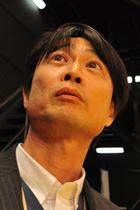
Motokazu Taniguchi, an executive at major entertainment firm Keidash
He is an executive at the major entertainment firm Keidash,
Motokazu Taniguchi, president of affiliated company Pearl Dash,
criminal complaint to the Tokyo Metropolitan Police Department and a civil complaint to the Tokyo District Court for obstruction of business.
Mr. Taniguchi barged into the recording studio and chased after Yoshimatsu,
He made phone calls to Yoshimatsu's parents' house and had a detective take pictures of his house,
Taniguchi has been persistently stalking Yoshimatsu, calling his parents' home, using a detective to take pictures of his home, and making phone calls to his business associates.
Mr. Taniguchi made threatening phone calls to the sponsors of the convention to harass them.
Fearing a scandal, the IAAF asked Yoshimatsu, "What are you going to do about it?
Fearing a scandal, the International Cultural Association informed Yoshimatsu that he should refrain from attending the convention because of his poor health during the convention.
girlschannel
Source: up.gc-img.net
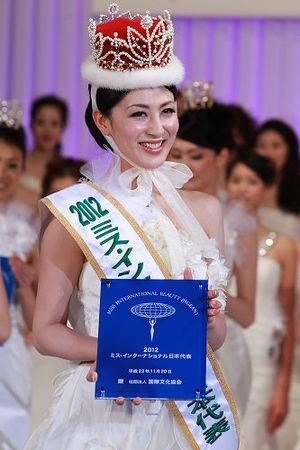
Ikumi Yoshimatsu
In 2012, she was the first Japanese to win the Miss International Grand Prix.
Taniguchi had a hired detective investigate the area around Ms. Yoshimatsu's office,
He called Yoshimatsu's parents' home and mentioned the name of Ako Kawada, a former TBS announcer who committed suicide in 2008 and was affiliated with Taniguchi's office after turning freelance,
She said, "I am concerned. I am worried that your daughter will become like her.
Yoshimatsu said, "I am worried that your daughter will become like her.
In response, Yoshimatsu said,
He said, "He made it sound as if he was concerned, but to me and my family, it sounded like a threatening message that 'you will commit suicide,' or 'you will end up like Ako Kawada.
He was indignant.
As can be seen from the above, in recent years, the "self-regulation" of the entertainment industry by the mass media has been increasing,
The media's "self-regulation" of the entertainment industry has become stronger and stronger,
On the other hand, we are concerned that the mafia-ization of entertainment production companies
the entertainment industry, while the mafia-ization of the entertainment production industry is progressing.
In the past 10 years, we have seen the deaths of several people in the entertainment industry who had ties to major entertainment companies,
The undercurrents of the entertainment industry may be extraordinary.
-It is not a peaceful situation when there are deaths.
Hoshino: In December 2005, a dubious document denouncing a money scandal involving Takeshi Akoshima, the chairman of the judging committee for the Record Awards, was spread around.
A suspicious document denouncing a money scandal involving Takeshi Akoshima, the head of the judging committee for the Record Awards, was spread around in December 2005,
Immediately after that, a fire broke out at Mr. Akoshima's home,
Three days later, Akoshima's body was found in the ruins of the fire.
Source: www.maniado.jp
The late Takeshi Akoshima
Incident involving the strange death of the chairman of the judging committee for the Record Awards
That year, Reco Grand was on whether or not to let EXILE win the Grand Prize,
The major entertainment companies were engaged in a tug-of-war behind the scenes over whether or not EXILE would win the Grand Prize.
Strange Death of the Chairman of the Jury of the Japan Record Award
Music critic Takeshi Akoshima (65) died in September of the same year that he was chosen to head the judging committee for the "Japan Record Award 2005.
In September of the same year, Takeshi Akoshima, 65, a music critic, was chosen as the chairman of the judging committee for the 2005 Japan Record Award,
In September of the same year, when he was chosen as the chairman of the judging committee for the 2005 Japan Record Awards, a group of "music industry volunteers" named Akoshima as an outrageous person,
He called Akoshima an "outrageous person" and
A letter was sent to Akishima and related parties, stating that money had been exchanged with industry insiders and that Akishima should resign as chairman of the Recording Grand Prize Committee.
and that "Akoshima should resign from the Recording Industry Committee.
Akoshima said of the documents,
"I wouldn't go so far as to say that it is completely untrue, but it is a distortion of the facts," he said.
I know who sent it. I know who sent it out, and I will tell you the details at a later date.
Then the incident in question occurred.
Akoshima left home on the morning of the 12th,
On the 14th, his family filed an investigation with the Totsuka Police Station of the Kanagawa Prefectural Police.
On the 13th, Akoshima's house in Yokohama, Kanagawa Prefecture, was burned down.
In a puzzling incident, he went missing on the 12th and his house burned down on the 13th,
Naturally, the police were searching for him, but on the 16th, three days after the fire, his body was suddenly found on the premises of his house.
The police were searching for him, but on the 16th, three days after the fire, his body was suddenly found on the premises of his house.
Although there were many police officers searching the premises of his house, which was not very large, on the 14th and 15th, the body was found on the 16th, three days after the fire.
The fact that the body was found three days later, despite the fact that a large number of police officers had searched
The police said, "We searched outside for the first time on the 16th.
The police stated, "We started searching outside for the first time on the 16th.
An autopsy revealed no smoke inhalation.
This means that he died before the fire broke out.
The police then announced that the cause of death was by burning,
The cause of the fire was determined to be arson, not accidental fire.
The police then announced that they had determined that there was no case.
The Japan Record Award is the most prestigious music award in Japan,
Because of the interest involved, there is speculation that the fire was caused by some kind of trouble related to the award.
Mania Road
Also in 2008, freelance announcer Ako Kawada committed suicide by charcoal briquette.
suicide by charcoal briquettes.

Source: blog-imgs-46.fc2.com
The late Ako Kawada, Anna
Ms. Kawada was dating and even engaged to a major entertainment executive,
However, she later called off the engagement because she grew increasingly distrustful of the executive.
However, just before his death, the entertainment executive ordered him twice to "go buy charcoal briquettes.
However, just before his death, the entertainment executive ordered him twice to buy coal briquettes.
The connection to the suicide is unclear,
In any case, there is a lot of information that has not yet come to light.
--could either be a possible case?
Hoshino: I don't know about that, but I think it is a problem that the anomalies in the entertainment industry are rarely discussed in society.
I think it is a problem that the anomalies of the entertainment industry are rarely discussed in society.
For example, many people know that the judging method of Reco Dai, which has long been considered a national event, is not fair.
Many people know that the judging process is not fair,
I believe it is unnatural that there is no movement to reform the judging process.
In writing this book, I researched the structure of the American entertainment industry,
In the U.S., it is illegal to have a system like Japan's Reco Daigaku.
Differences between the American and Japanese entertainment industry
Hoshino From someone who used to be the head of the judging committee for the Recording Awards,
'Just before the Grand Prize, the two production companies that the nominated singers belong to
The Grand Prize winner can only choose one of the two because they receive gift certificates of the same amount from their two production companies.
I have heard that there must be collusion at the Sound Jikkyo.
It would be nice if it stayed within the industry, but behind the scenes of broadcasting over the public airwaves,
But behind the scenes of broadcasting over the public airwaves, this kind of behavior is taking place with impunity.
In the U.S., it is common practice for illegal acts called "payola" to be used to determine the songs to be played on the air,
This is called "payola," and it is illegal,
The Federal Communications Commission (FCC), which regulates and oversees the broadcasting and communications industry, enforces this practice.
-- Compared to the U.S., I have the impression that fraud is left unchecked in the Japanese entertainment industry,
Why is this?
Hoshino: I think there is a problem of discrimination behind this.
In the past, people engaged in the performing arts were called "kawahara beggars" or "kawahara-sha,
and were subjected to severe discrimination.
In the past, when idols entered the entertainment industry,
parents would vehemently oppose their idol's entry into the entertainment industry,
I think this problem is also behind it.
--without reform from the level of such social consciousness,
Is it true that the problems of the entertainment industry cannot be solved without reform at the level of social consciousness?
Hoshino: Yes.
However, when it comes to the relationship between talent and entertainment capital (entertainment production companies, etc.),
The current overwhelming strength of the entertainment capital side is not fixed,
It is fluid, depending on the time of the year.
For example, for a while after the war,
Until the "Five Companies Agreement" was established, which forbade the transfer of actors between film companies,
Actors were in a strong position vis-à-vis the film companies,
Actor brokers," who brokered jobs to actors, had a strong influence.
had a strong influence on the film companies.
Even before the war, the cartel of film companies was in its infancy,
Actors banded together to start independent production companies and even had their own distribution system,
and even had their own distribution system.
-Talent could also unite and be free to perform in the entertainment industry?
Hoshino: Even in the Edo period when actors were discriminated against as a system,
Actors resisted those in power.
Until the mid-Edo period, actors were ruled by a chieftain of the discriminated people called Danzaemon,
They paid an entertainment tax called yagura-sen.
In 1707, however, 300 of Danzaemon's subordinates were arrested for performing in Edo without permission from Danzaemon.
In 1707, however, 300 of Danzaemon's men destroyed his playhouse for performing in Edo without Danzaemon's permission.
A puppeteer named Kobayashi Shinsuke appealed to the Shogunate against Danzaemon's injustice,
Shinsuke's claim was accepted.
The story goes that "Sukeroku," a representative Kabuki play, was created based on this incident.
Some say that "Sukeroku" was created using this incident as a motif.
Sukeroku" is a play in which Sukeroku, the main character, steals a treasured sword called Tomokirimaru from an old man named Ikyu.
Sukeroku" is the story of the main character Sukeroku who steals a treasured sword called Tomokirimaru from an old man named Ikyu.
Tomokirimaru was "freedom of entertainment" for the actors of the time.
For today's celebrities, it would be "the right to perform.
