
Here we summarize the dark side of the entertainment industry that the media never mentions. It is about a string of unnatural deaths in the vicinity of major entertainment production companies. It also includes an interview with Yohei Hoshino, who has published a nonfiction book that cuts into the taboo of the entertainment industry.
Taboos in the entertainment industry that the media does not want to touch
'Why Are Entertainers Dried Out? Entertainment Industry Anti-Monopoly Law Violations" (Kanjo-sha)
Interview with Yohei Hoshino
In our interview with Yohei Hoshino, we reported on the "political dynamics of the entertainment industry" and received a great response.
(See "Ami Suzuki, Makoto Kitano...Why are entertainers suddenly 'dried up'? The "politics" of entertainment professionals that distort the entertainment industry,
Why were Ami Suzuki, Sein Camus, and Yui Asaka hung out to dry? The Power of the Ondojikyo, and Offices Intervening in Private Lives" on June 11.
This time, the issues presented by Mr. Hoshino within this book,
Why are the problems that Mr. Hoshino presents in this book not covered by the media?
The media's "entertainment industry taboo" is discussed, such as why the issues raised by Mr. Hoshino in this book are not covered by the media.
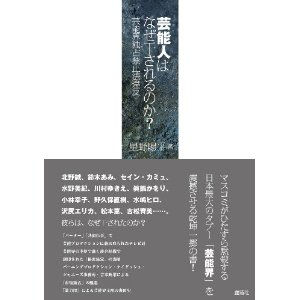
Source: ecx.images-amazon.com
Why Are Entertainers Dried Out? Entertainment Industry Anti-Monopoly Law Violations" (Kanjo-sha), Yohei Hoshino
--How was the reaction of the surrounding community to this book?
Yohei Hoshino (hereafter, Yohei Hoshino): This book has been sold out at both Internet bookstores and real bookstores, and is now in its third printing.
The book has been well received in online book reviews, and we are very pleased with the response.
However, for now,
However, there is a sense of frustration that the existence of the book is only spreading on the Internet.
-- that it will not be covered in the media?
Hoshino: When we published this book, we went around to several media outlets for publicity, but the response was quite harsh.
One person in charge told me, "I think it is an interesting book, but my boss is reluctant," and in another media outlet I was told, "It is difficult to introduce the book because we will be sidelined by another editorial department within the company,
It is difficult to introduce a book to the public because of the interference of other editorial departments within the company.
On the obi of the book, you mention "Japan's biggest taboo,
I was reminded of this.
--why are the problems in the entertainment industry so untouchable?
Hoshino: Simply put, entertainment is catchy and popular with the public,
In other words, while entertainment is catchy and popular, it is also a "commodity" that is relatively easy to make money from the media's point of view, which means that it is a source of interest.
Therefore, entertainment scandals flood the media on a daily basis,
However, information above a certain level is regulated and kept out of the public eye.
--Where is the line drawn as to whether or not it is regulated?
Hoshino: It is dangerous to go into the issue of entertainment production as a whole.
Especially since this book deals with a subject that is related to the lifeline of entertainment production,
It would be extremely difficult to have it introduced in the mass media.
"The Affinity Chart Case."
As far as I can tell, the first "entertainment taboo" was first recognized in the media,
the "Souaizu Incident" in 1971.
Source: livedoor.blogimg.jp
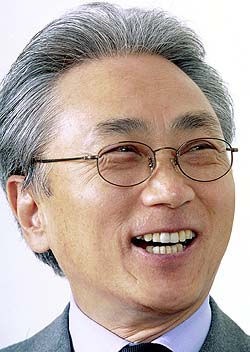
Nakanishi Rei
I can't find the details of the case online.
The "Shukan Post" (Shogakukan) at the time was titled "The amazing love chart of the entertainment world,
The article was written in the form of an accusation by a lyricist, Rei Nakanishi, about the promiscuous love affairs of famous celebrities,
The article was published in the form of an accusation by lyricist Rei Nakanishi.
However, immediately after the magazine's release, Mr. Nakanishi said
"If you don't give us an interview, we will expose your private life," he said.
The two reporters were arrested and charged with coercion,
Two reporters were arrested for extortion.
-What was the truth about the incident?
Hoshino: One thing is certain: Mr. Nakanishi was forced to sue the journalists.
The talent involved was so wide-ranging and the content of the articles so strong that Mr. Nakanishi had no choice but to sue the reporters,
And the content of the articles was so strong that the accuser was an insider in the entertainment industry,
Moreover, the accuser was an insider in the entertainment industry,
The industry was united in its decision to remove Mr. Nakanishi from the case.
The Japan Music Industry Association (Ondojikyo), of which most of the leading entertainment production companies are members, interviewed Mr. Nakanishi.
and the Association of Music Business Operators of Japan (Ondojikyo), which is made up of most of the leading entertainment production companies, interviewed Nakanishi,
Furthermore, Watanabe Productions, to which Mr. Nakanishi belonged
also stopped giving Mr. Nakanishi work orders.
However, on the day Mr. Nakanishi filed his complaint against the reporter
Watanabe Productions asked Mr. Nakanishi to write lyrics for a song.
--How was the response on the part of the "Weekly Post"?
Hoshino: The Oto-Jikkyo Association has lodged a severe protest with Shogakukan, publisher of the Weekly Post, and has demanded that its member entertainment professionals cover all publications issued by Shogakukan,
Shogakukan, publisher of "Weekly Post," and called on its member entertainment professionals to refuse to cover
Shogakukan to refuse to do interviews for all publications issued by Shogakukan.
If this is done, the publisher will go out of business.
In the end, the arrested journalists were not prosecuted,
Such incidents happen again and again,
As these incidents occurred over and over again, the perception spread throughout the mass media that "it is frightening to offend the entertainment industry.
Current entertainment taboos
--What do you think the current "entertainment industry taboo" is?
Hoshino: Ikumi Yoshimatsu won the grand prix of Miss International 2012,
Ikumi Yoshimatsu, who won the Miss International Grand Prix in 2012, was stalked and harassed by executives of a major entertainment production company who refused to transfer her to the new company,
She was unable to attend the grand prix award ceremony after being stalked and harassed by executives of a major entertainment production company who refused to transfer her to another company,
Ms. Yoshimatsu's accusation was reported overseas,
Ms. Yoshimatsu's accusations were reported overseas, but received little coverage in Japan.
