
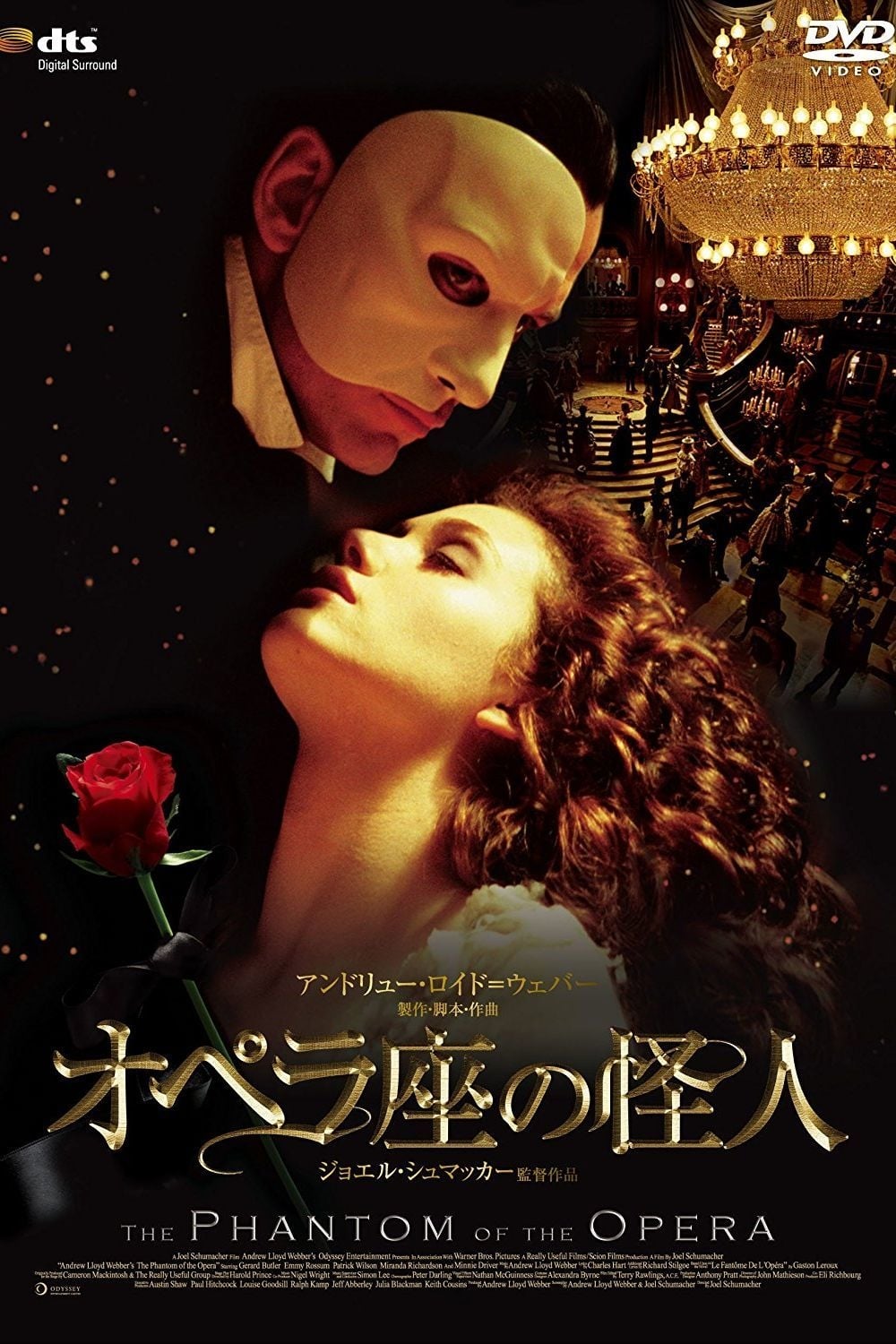
The Phantom of the Opera" is a musical film based on the novel "The Phantom of the Opera" written by Gaston Leroux, which was released in the U.S. in 2004. He is in love with a beautiful young chorus girl, Christine, and sees her musical talent and teaches her music without showing himself. Christine is chosen to play the lead role as the monster had planned, but she is reunited with her childhood friend Raoul and falls in love with him. From there, the jealous monster begins his revenge plot.
CV: Yukie Yokoyama
Ballet teacher at the opera house and mother of Meg Gilly. She takes care of Christine, thinking she is her biological daughter. She visited the Gypsy Circus Troupe when she was a boarding student at the opera house. She saw a boy monster committing a murder. She immediately sheltered the monster and led him to the basement of the opera house. She worships the monster's talent and acts like a spokesman for him. She suddenly recommended Christine, who was just a chorus girl, as a substitute for the main character because of the monster's will. She became distressed by the monster's gradually escalating behavior toward Christine and confessed everything to Raul.
Monsieur Gilles Andre (played by Simon Callow)
CV: Kazuo Hayashi
The new manager of the opera. He makes a fortune in Scrap Metal and is delighted to be able to acquire the opera, but he is an amateur when it comes to art. Rather than offering sublime art, he tries to use the title of opera master in a social sense. He often receives letters of threats and orders from the monster, but he does not believe in its existence and ignores them all. He meets the monster for the first time at a masquerade and stiffens with surprise and fear.
Xue Li Chad Philman (played by Ciarán Hinds)
CV: Akira Aoki
The new manager of the opera. Amateur in art, greedy for money. Christina's disappearance and Charlotte of Naples's withdrawal are all PR for money. He receives threats and orders from monsters, but he thinks of "ghost" as a bad prank and ignores it entirely. He drinks champagne on his shoes if he wants to put Charlotte of Naples in a good mood.
ジェゼフ Bukae (played by Kevin McNally)
CV: Shuji Ida
The principal stagemaster of the opera. He was a boorish and alcoholic. Whenever he had time, he watched the girls change their costumes. He knew about the existence of monsters. After the performance of "Hannibal," he was playing a practical joke with the dancing girls, singing, "His skin is like yellow parchment. He doesn't have a nose and has a big black hole. He's always on his guard. If he doesn't, he'll be hung up by a rope." Madame Gilly came to stop him and slapped him. During the performance of "Il Moot," he was searching for a suspicious figure on the stage, but he was found by the monster and strangled to death.
Term for "The Phantom of the Opera"
Opera house
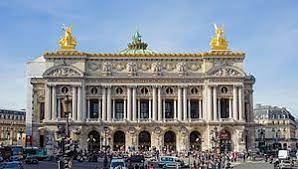
An opera house in the French capital of Paris and one of the venues for the French National Opera, the Royal Dance Academy was founded in 1661 by the 14th Sun Wang Rui and boasts a history of 360 years. The theater has changed with the times and the political system, and the Garnier Palace is the 13th generation.
In 1860, a decree was issued on a plan to build a new opera house. The design was invited publicly and Charles Garnier's proposal was adopted. The first foundation stone was placed on July 21, 1862.
The chandelier was also designed by Charles Garnier. Designed in bronze and crystal, it weighed seven tons and cost a total of 30000 Gold Francs. In 1896, a chandelier fell to the audience, killing and injuring Gaston Leroux, who was inspired by The Phantom of the Opera.
There are caves, waterways and lakes under the opera house.
Prima donna
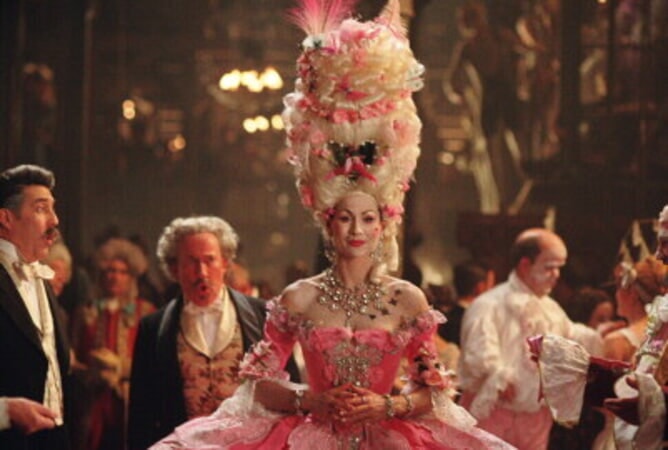
Charlotte of Naples of the prima donna
"Prima donna" is an Italian word that literally means "first woman." It refers to a female singer who plays a leading role in operas, etc., usually a soprano. It is also often used figuratively in non-operas, such as ballet.
To join the 19th-century opera as an artist, you must first be judged by the director of the theatre and the head of each department. If you pass the examination, you will have a one year temporary admission period, after which you will receive a salary determined by the government according to your position. Top-class members such as prima donna were guaranteed an annual salary of 12000 francs (about 12 million yen in Japanese yen).
Hannibal
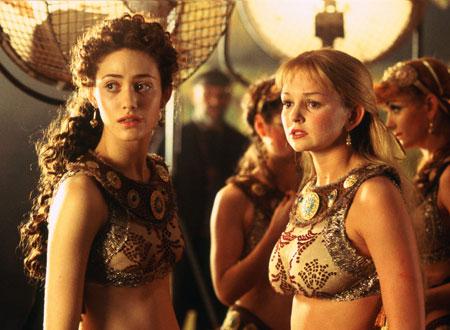
Christine (left) and Meg (right) in costumes while rehearsing for Hannibal
"Andrew Rowe" is a fictional opera created by Hannibal Idd-Weber. It is modeled on "Aida," composed by Giuseppe Verdi and premiered in 1871. It is one of the most popular operas in the world today, depicting the tragic love of a man and woman torn between two countries, Egypt and Ethiopia, during the time of Pharaoh. The melody of "The March in Triumph" in the second stage of the second act is also famous by itself.
Il Moot
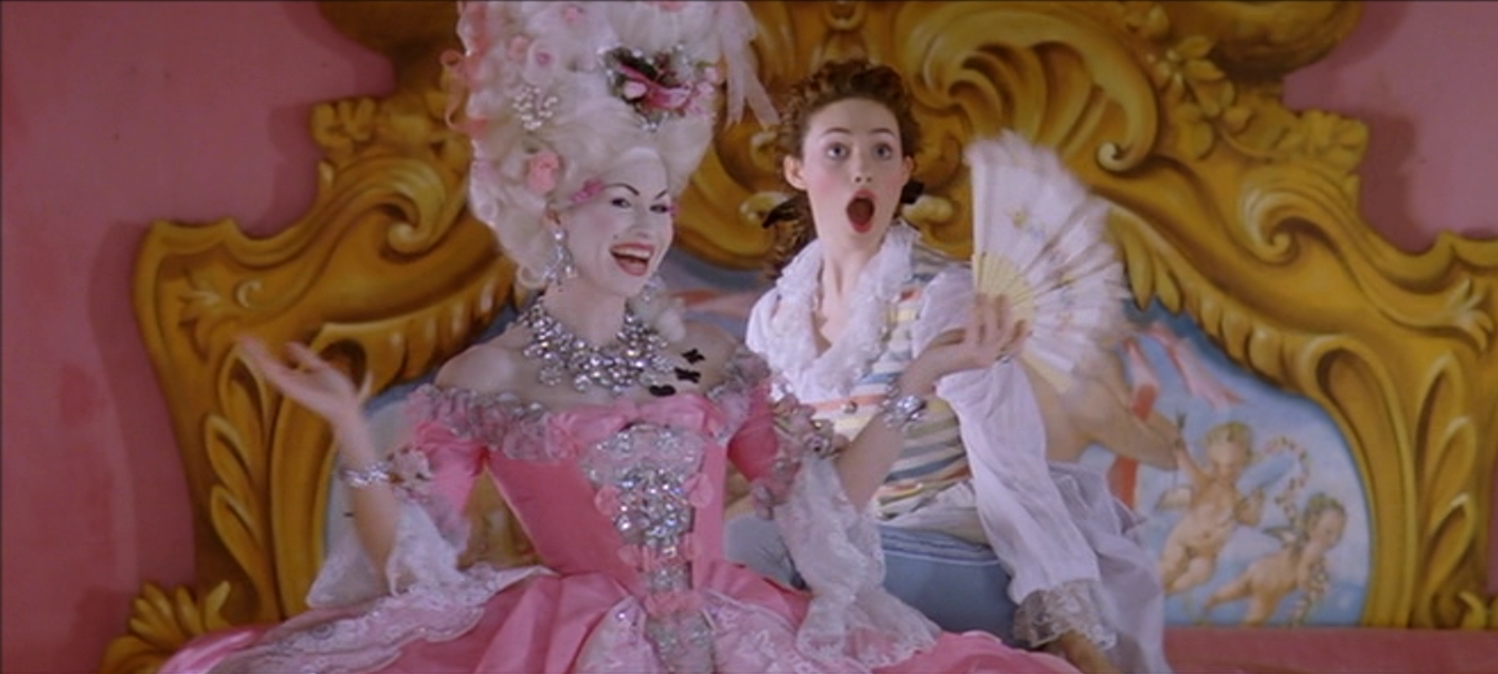
Countess Charlotte of Naples (left) and pageboy Christine (right) in "Il Moot."
"Il Moot" is a fictional opera created by Andrew Rowe Ido-Weber and modeled after Wolfgang Amadeus Mozart's 1786 opera "The Marriage of Figaro." A sequel to Rossini's opera "The Barber of Seville," it is a one day love comedy for couples who are preparing to get married and want to repair their cold relationship.
Don Juan's victory
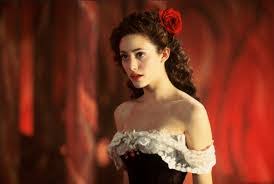
Christine in "The Victory of Don Juan"
"The Victory of Don Juan" is a fictional opera created by composer Andrew Rowe Ido-Weber based on an existing opera. The original is "Don Giovanni," an opera composed by Wolfgang Amadeus Mozart in 1787. The main character is Don Giovanni, the strongest playboy in history, who has 640 women in Italy, 231 in Germany, and 1003 in Spain. The main character eventually goes to hell.
"The Phantom of the Opera" Quotes, Lines, Scenes

Tags
Contents
- Outline of "Phantom of the Opera"
- The Phantom of the Opera" Synopsis and Story
- Prologue
- Hannibal
- New manager and benefactor
- Leading role debut
- Musical Angel
- Encounter with a monster
- In the mirror.
- House of the Phantom
- Kaito no Ai
- Il Moot mystery
- Prima donna
- Incident
- Two Loves
- Masquerade
- Secret engagement
- Request from the Phantom
- Identity of the monster
- To the grave.
- Final battle
- Raoul's plan
- Don Juan's victory
- Where the monster lives.
- Love and hate
- The Future of Love
- Epilogue
- Fictional character from The Phantom of the Opera
- Protagonist
- The Phantom of the Opera (played by Gerard Butler)
- Christine DARET (played by Emmy Rossum)
- Raúl Nyi (played by Patrick Wilson)
- Opera company members
- Charlotte of Naples Judicelli (played by Minnie Driver)
- Meg Gilly (played by Jennifer Ellison)
- Hubert Piange (played by Victor McGuire)
- Theater officials
- Madam Gilly (played by Miranda Richardson)
- Monsieur Gilles Andre (played by Simon Callow)
- Xue Li Chad Philman (played by Ciarán Hinds)
- ジェゼフ Bukae (played by Kevin McNally)
- Term for "The Phantom of the Opera"
- Opera house
- Prima donna
- Hannibal
- Il Moot
- Don Juan's victory
- "The Phantom of the Opera" Quotes, Lines, Scenes
- Monster: "Burned in hell, but still longs for heaven."
- Christine: "I've made up my mind."
- Rose offered to Christine's grave
- Masquerade
- Chandelier
- "The Phantom of the Opera": Inside Stories, Trivia, Small Stories / Episodes and Anecdotes
- Emmy and Jennifer.
- Christine's final role
- Special makeup
- Shooting the rooftop scene
- Theme song and insert song of "Phantom of the Opera"
- Main Theme: Gerard Butler / Emmy Rossum "The Phantom Of the Opera"
- ED (ending): Minnie Driver "Learn To Be Lonely"
- Songs in the play: "Think Of Me" by Emmy Rossum
- Songs in the play: Emmy Rossum / Jennifer Ellison "Angel Of Music"
- Songs in the play: Gerard Butler / Emmy Rossum "The Mirror (Angel of Music)"
- Songs in the play: "The Music Of the Night" by Gerard Butler
- Songs in the play: Gerard Butler / Emmy Rossum "I Remember/Stranger Than You Dream It"
- Songs in the play: Minnie Driver / Simon Callow / Ciarán Hinds "Prima Donna"
- Songs in the play: Emmy Rossum / Patrick Wilson "Why Have You Collapsed Me Here?"
- Songs in the play: Emmy Rossum / Patrick Wilson "All I Ask Of You"
- Songs in the play: Simon Callow / Ciarán Hinds and others "Masquerade"
- The song in the play: "WishYouWereSomehow Here Again" by Emmy Rossum
- Songs in the play: Gerard Butler / Emmy Rossum "The Point Of No Return"
- Songs in the play: Gerard Butler / Emmy Rossum / Patrick Wilson "Down Once More"