
Chi. About the Earth's Motion" is a manga by Yutaka Uo that was serialized in "Big Comic Spirits" from 2020 to 2022. It is a work of fiction about people who risked their lives to prove the "geocentric motion theory" that overturned the "celestial motion theory," which believed that the universe revolved around the earth, in the 15th century. It was also ranked in numerous other awards, and was featured in the media and became a topic of conversation.
Cism
A religion that is prevalent in the P Kingdom, which is the stage. The teachings of C-ism are derived from the Bible. Those with heretic ideas are arrested for allegedly disobeying God, and if they do not reform, they are punished by burning at the stake. The burning at the stake is done according to the teaching that the body becomes ashes and cannot be resurrected at the last judgment. C-ism officially recognizes the Ptolemaic theory. The earth is at the center and bottom of the universe to make people realize that it is low, impure, helpless and sinful. It taught that the heavenly world was sublime, majestic, great and vast.
Heliocentric theory
Also called the Earth's Center Theory. The theory that the earth is at rest at the center of the universe, around which the celestial bodies revolve. It was connected with Ptolemy's astronomy and Aristotle's natural science. In modern times, it was connected not only with mere scientific theories but also with ideas and the world view. It is the theory adopted by C-ism in the work, but it is actually cosmology that spread widely in various regions.
Heliocentric theory
The theory that the center of the universe is the sun around which various planets, including the earth, revolve. This theory is sometimes called the solar center theory, but it has been pointed out that the fact that the earth is moving and the fact that the center of the universe is the sun are different concepts and are therefore inappropriate as a translation. The earth was advocated by Philolaus around the 5th and 4th centuries BC and by Aristarchus of Samos in the 3rd century BC, but the Ptolemaic theory was believed. In the 16th century, Copernicus published "Tenka no Kaiten ni tsuite" (On the Rotation of the Celestial Body), and wrote about the measurement and calculation methods of the Ptolemaic theory and advocated a theory that overturned the Ptolemaic theory that had been believed until then. Even so, few people believed the Ptolemaic theory to be true. Since the favorable evidence for the Ptolemaic theory was published in a paper entitled "Sekai no Yushi" (Messenger of the Star World) published by Galileo Galilei in 1610, the Ptolemaic theory became the mainstream. In the story, the main characters who were regarded as heretics from C-ism risked their lives to protect the research of the Ptolemaic theory and pass it on to future generations. There are two theories as to whether the Ptolemaic theory was actually persecuted by
Inquisitor
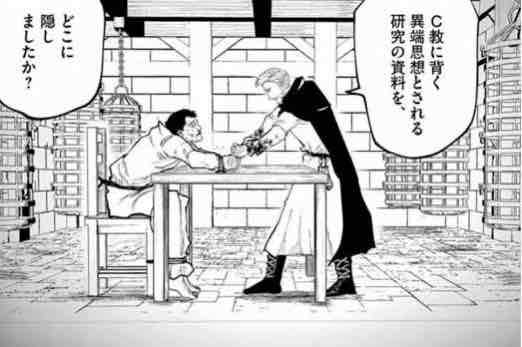
A part of the clergy that captures and converts heretics. They torture as well as interrogate.
Ptolemy
Around the 2nd century, he was an astronomer of ancient Alexandria. He advocated the earth center theory (the theory of the heavenly body). He was connected with the natural science of Aristotle of Aristotle and was supported by many people. His main work "Almaguest" was regarded as an authority and had a great impact. In addition to astronomy, he was active in many fields such as mathematics, astrology, musicology, optics, geography and cartography.
When Badeni explains the Count of Piast, he says, "He is an aristocrat who devotes his life to proving a complete heliocentric theory that goes beyond the current one (the Ptolemy model)."
Aristarchus of Samos
An ancient Greek astronomer and mathematician who was born on the island of Samoth around the 3rd century BC. He is said to be the pioneer of the theory of the center of the sun (the heliocentric theory), but at that time he received little support.
In Chapter 2, when Badeni and others met Count Piast, they introduced themselves saying, "I will take over Aristarchus of Samos."
Albert Brudzewski
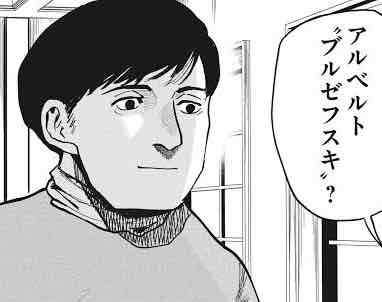
Albert's model was a Polish astronomer, mathematician, philosopher, writer, and diplomat who was born in ブルゼヴォ between about 1445 and 1497. He was generally admitted to the University of Krakow at the late age of 23. He taught at the University of Krakow for the next 20 years, and Nicolaus Copernicus was one of the students who attended Albert's lectures. He was skeptical of the Ptolemaic theory and was the first person in the world to discover that the moon follows an elliptical orbit.
Nicolaus Copernicus
From 1473 to 1543, he was an astronomer from Poland. In his later years, he wrote "On The Rotation of the Celestial Sphere" and advocated the theory of the center of the sun (the heliocentric theory). It is said to be the most important discovery in the history of astronomy. In the work, after Albert entered university, it is written that "a young man named Copernicus was one of the students at the university who studied astronomy through his commentaries." In fact, he met Professor Albert at university and studied astronomy.
Famous Words, Lines, Scenes, and Scenes from "Chi: The Movement of the Earth"
Hubert: "Wrong answers don't mean nothing."
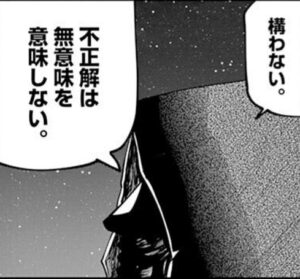
The scene where Hubert said to Rafaugh.
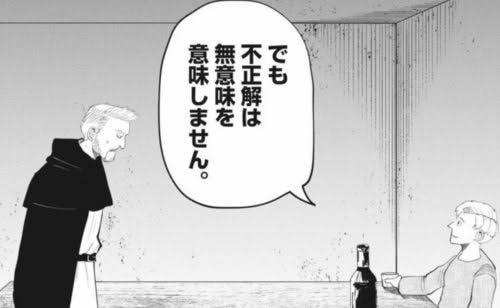
The scene of Rafaugh saying to Novak.
When Rafaugh asked Hubert about the heliocentric theory, he gave three reasons why he thought it wrong: the first was that there were too many contradictions; the second was that if it was right, who would support it? The third was that it would be foolish to put one's life in such a intuition. When asked what he would do if he believed his intuition and made a mistake, Hubert said, "No problem. An incorrect answer doesn't mean nothing." When he heard this, Rafaugh rejected it saying that he was very insane, but as he came into contact with Hubert and touched on the heliocentric theory, he began to feel like believing in the heliocentric theory. Hubert's belief was carried over to Rafaugh, and when Novak asked if this choice was right for your future, he said, "That's wrong, but an incorrect answer doesn't mean nothing." These words, carried over with Hubert's thoughts, gave Rafaugh the courage to believe and handed down the heliocentric theory to posterity.
Glass: "I'm counting on you."

Related Articles

2024年10月秋アニメ(今期アニメ)まとめ
2024年10月期に放送される秋アニメを50音順に紹介する。2024年10月秋アニメは、有名シリーズの新作が多数ラインナップされている。アニメの放送情報や配信情報、声優・スタッフ、あらすじなどの情報をわかりやすくまとめた。
Read Article

ひゃくえむ。(漫画・アニメ)のネタバレ解説・考察まとめ
『ひゃくえむ。』とは、ウェブコミック配信サイト『マガジンポケット』(講談社)にて2018年11月6日から2019年8月6日まで連載された、魚豊によるスポーツ漫画、およびそれを原作としたアニメ映画。生まれつき足が速いトガシと、つらい現実を忘れる為にただがむしゃらに走っていた小宮の2人が、100m走に魅せられ成長する物語。才能と努力、ライバル関係、なぜ走るのかという根源的な問いを描いている。映画版は監督・岩井澤健治、トガシの声を松坂桃李が、小宮の声を染谷将太が演じ2025年9月に公開された。
Read Article
Tags
Contents
- Overview of "Chi: About the Movement of the Earth"
- Outline and story of "Chi: About the Movement of the Earth"
- Chapter 1
- Chapter 2
- Chapter 3
- List of characters in "Chi: Chikyu no Undo"
- Chapter 1
- Rafau
- Hubert
- Potwicki
- Novac
- Chapter 2
- Oxie
- Glass
- Badeni
- Yorenta
- Piast
- Professor
- Kolbe
- Anthony
- Krabovski
- Heretic
- Chapter 3
- ドゥラカ
- Schmidt
- Fly
- Levan of Kakheti Drovski
- Volko
- Bishop of Peter
- Ash
- Uncle.
- Albert
- Master
- Father of Albert
- Rafau
- Priest
- Terms in "Chi: About the Movement of the Earth"
- P Kingdom
- Cism
- Heliocentric theory
- Heliocentric theory
- Inquisitor
- Ptolemy
- Aristarchus of Samos
- Albert Brudzewski
- Nicolaus Copernicus
- Famous Words, Lines, Scenes, and Scenes from "Chi: The Movement of the Earth"
- Hubert: "Wrong answers don't mean nothing."
- Glass: "I'm counting on you."
- Okzy: "I believe in heliocentric theory."
- A priest said, "If you offer coins, you can get bread. If you offer taxes, you can get rights. If you offer labor, you can get rewards. So, if you offer anything, you can know everything in this world."
- Behind-the-Scenes Stories / Trivia / Small Stories / Episodes / Anecdotes
- Meaning of the title "chi."
- Works influenced by