
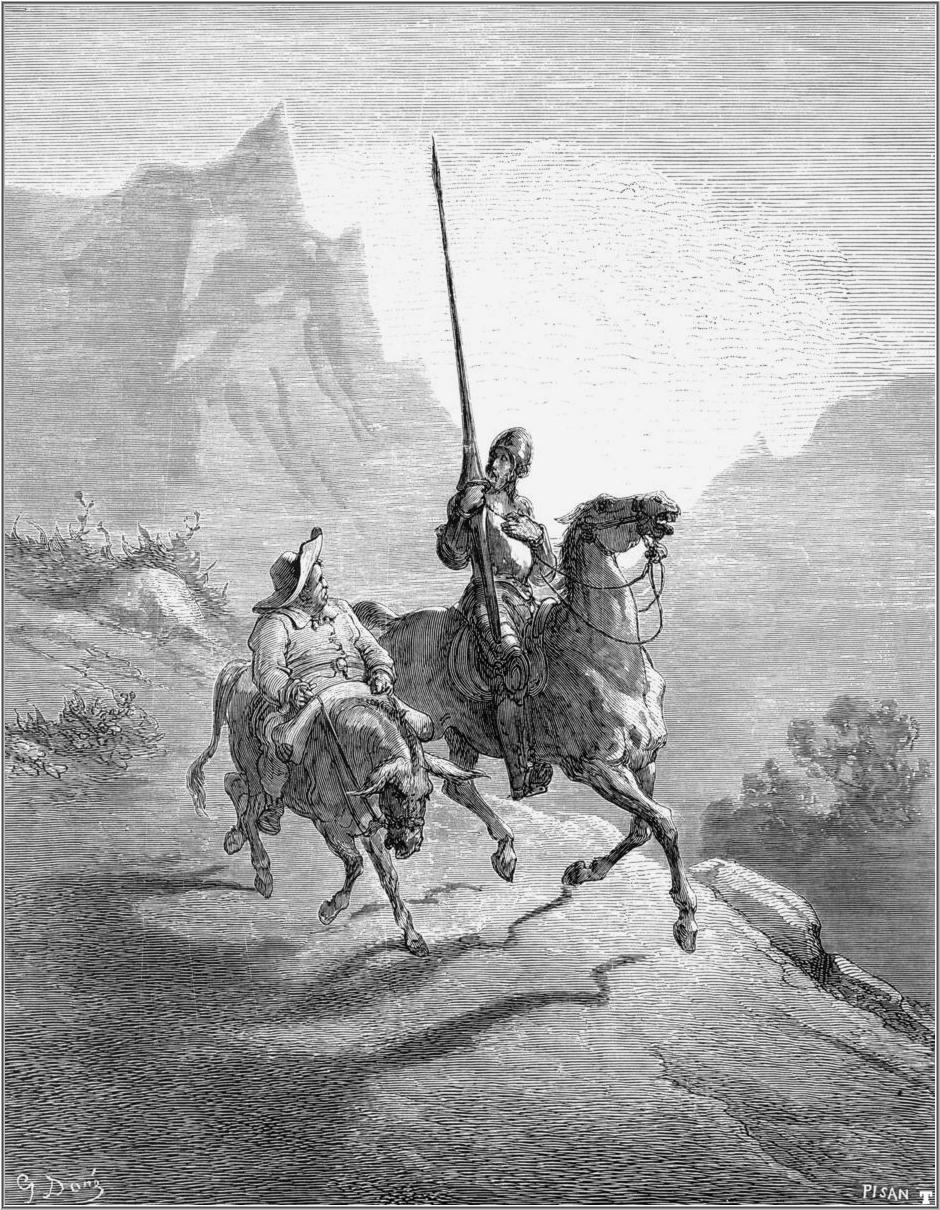
In 2002, "The 100 Best Books of All Time," organized by the Norwegian Book Club, was released. The list was voted on by 100 famous authors from 54 countries, and became a hot topic of conversation among book lovers around the world.
The rankings are undisclosed except for Don Quixote, which came in first. The following is a spoiler-free synopsis of the list, starting with the most recent works from the chronological order.
"Esse" by Montaigne, 1595
www.amazon.co.jp
Michel de Montaigne was a 16th-century French thinker and moralist. His book, "Esse," is a compilation of classical knowledge and has long been accepted as a cultural book by intellectuals. It influenced thinkers such as Descartes and Pascal by its method of searching for truth and the depth of human recognition, and has been read by many people as a classic masterpiece to this day.
The phrase "What do I know?" is a word of Montaigne, which humbly acknowledges that there are limits to human reason, judgment, and knowledge, and well expresses the thought of Montaigne who tried to pursue the truth without fear of trial and error.
"Gargantua and Pantagruel" by Rabelais, 1532 - 34
www.amazon.co.jp
This is the long-awaited new translation of the masterpiece by François Rabelais, the leading author of French Renaissance literature. In this volume, the birth, growth and adventures of Gargantua, the King of the Giants, as well as the war and its details, are depicted in a dense style that incorporates laughter and satire. From the fresh translation full of modern sense, the explosive interest and glorious emotion of the immortal story is happily conveyed.
Boccaccio "Decameron" 1349 to 1953
www.amazon.co.jp
Enter Link Summary
When the plague was raging in Florence, Italy in the 14th century, seven ladies and three gentlemen took refuge in the House of the Forest, where they took turns telling an interesting story every day. -- The painstaking translation that breathed new life into the immortal classics in the history of world literature left by the giants of the Italian Renaissance.
"Canterbury Story," by Chaucer, 14th century
www.amazon.co.jp
In April, when the flowers were blossoming and the breeze was blowing, I met a group of twenty nine pilgrims at a inn in Southwark. They were of various ranks and occupations, and on their way to Canterbury, they took turns talking to each other.
The representative work of Chaucer, the greatest medieval English poet.
Dante "Kamikyoku" 1265 - 1321
www.amazon.co.jp
In the spring of 1300, halfway through his life, the 35-year-old Dante, under the guidance of the great Roman poet Virgil, begins his journey alive to Hell, Purgatory, and Heaven. Passing through the gates of Hell, they descend into the valley of Hell as they meet the eternally remorseful dead.
A masterpiece of world literature with the best translation.
"Orchard Booth Turn" by Saadi, 1257
www.amazon.co.jp
A collection of poems by the great medieval Iranian poet Saadi, which contains many stories and is interesting to read, and based on his many years of travel experience, does not bore the reader.
"The Tale of Genji" by Murasaki Shikibu, 11
www.amazon.co.jp
The world's oldest full-length novel, "The Tale of Genji," is a hearty depiction of the beautiful prince born by Kiritsubo no Koi, who gathered all the Emperor's affection, and the people involved.
It is the masterpiece of Japanese literature that describes human activities that never change, such as a love story full of cuteness and simplicity, and a fierce power struggle.
"Senya Ichiya Monogatari" (The Tale of One Thousand and One Nights 700 1500
www.amazon.co.jp
The world is full of sensuality and sensuality. The world's largest quirky book, "One Thousand and One Nights," is enthralled by the talented Lord Burton, who translated it with all his might. It features the sweet illustrations of Iwami Furusawa.
"Makeover Monogatari" by Ovid, 1st century
www.amazon.co.jp
Enter Link Summary
Ancient Roman poet Ovid demonstrated his skills as a storyteller in this work. It contains 250 stories, including "Narcissus and Echo," with transformation as the main motif. It is a great collection of Greek and Roman myths and legends. It is a prose translation of the original Latin text with a beautifully transformed narrative.
"Princess Shakuntara" by Kalidasa, 1st century BC to 4th century AD
www.amazon.co.jp
The story is a story of a strange love affair between a hermit's adopted daughter, Shakunthaler, and the King of ドフシャンタ. It became widely known in the European world in 1789 when it was translated into English by William Jones. Two years later, when the German translation was published, it caused a great sensation and influenced Goethe.
"Aeneis" by Virgil, 29-19 BC
www.amazon.co.jp
A translation of "Aeneus" written by Publius Virgil Maro, a poet from Mantua, during the reign of Augustus in the ancient Roman period. A magnificent epic poem that suggests "the destiny of history" while singing the story of heroes and the founding of the Roman nation.
"Ramayana" from the 3rd century BC to the 3rd century AD
www.amazon.co.jp
This is a poem about Rama, the hero of Indian legend. "Ramayana", one of the two great classical epic poems of India, is one of the world literature of which India is proud, and can be said to be the home of the hearts of Asian people.
"King Oedipus," Sophocles, 430 BC
www.amazon.co.jp
A close and dramatic composition in which Oedipus commands the search for the murderers of the former king with the word of a severe curse, concentrating everything from the beginning to the catastrophe of the terrible discovery of the truth. A vivid contrast between the confident and proud king of the beginning, Oedipus, and the weak human being, Oedipus, crushed by the driving of fate.
Of all the many Greek tragedies, it is one of the most celebrated since ancient times.
"The Media" by Euripides, 431 BC
www.amazon.co.jp
Euripides (480B. C. - 406B. C.) was one of the three greatest tragic poets of Greece along with Aeschylus and Sophocles. He was born in a distinguished family in Athens. He debuted in the theater at the age of 25 to 30. His activities lasted for half a century. He was a leading figure in the Athens theater along with Sophocles. It is said that he wrote 75 or 80 plays in his life. In his later years, he was invited by Archelaus of Cappadocia, the king of Macedonia, and died there.
"The Book of Job, Old Testament" 6th to 4th century BC
www.amazon.co.jp
Enter Link Summary
To Job, who had lived a life that was both morally and religiously impeccable, and in which the piety of God was as deep as ever, God subjected him one after another to severe trials. Job agonized over the meaning of this burden, which he must bear without sin. This book, which confronts and questions the righteousness of man against the righteousness of God, has a distinctive feature among the Old Testament books, and its influence on literature and philosophy is especially strong.
"Odyssey," by Homer, 8th century BC
www.amazon.co.jp
Enter Link Summary
The Trojan War is over. The hero, Odysseus, is on his way back to his homeland, Itake. He is caught in a storm and drifted, and a 10-year adventure begins. Along with "Iliad," it is said to be the source of European literature. It is the oldest epic of a great hero in Greece.
"Iliad" by Homer, 850 to 750 BC
www.amazon.co.jp
Enter Link Summary
At the end of the Trojan War, the story begins with a fiery war of words between Achilles, the greatest general of the Greeks, and Agamemnon, the king. The epic epic of the great hero, which portrays the chivalrous battles and deaths of Achilles, a passionate and gentle man, his close friend Patroclus, Hector, the general of the Trojans, and other brave men.
"Sîn-leqi-unninni" by Gilgamesh, 18th to 17th century BC
www.amazon.co.jp
An eventful story of the real king Gilgamesh in the fragmentary myth of Sumer, written in early cuneiform characters; the last world literature containing episodes of friendship with the alter ego Enkiddo, extermination of the cedar forest monster Humbaba, adventures of eternal life, great floods, and relationships with other myths. This epic is known from the 2000 surviving lines of the Nineveh edition of the fragmentary Sumer story, edited in Akkadian and written in Assyrian.
