
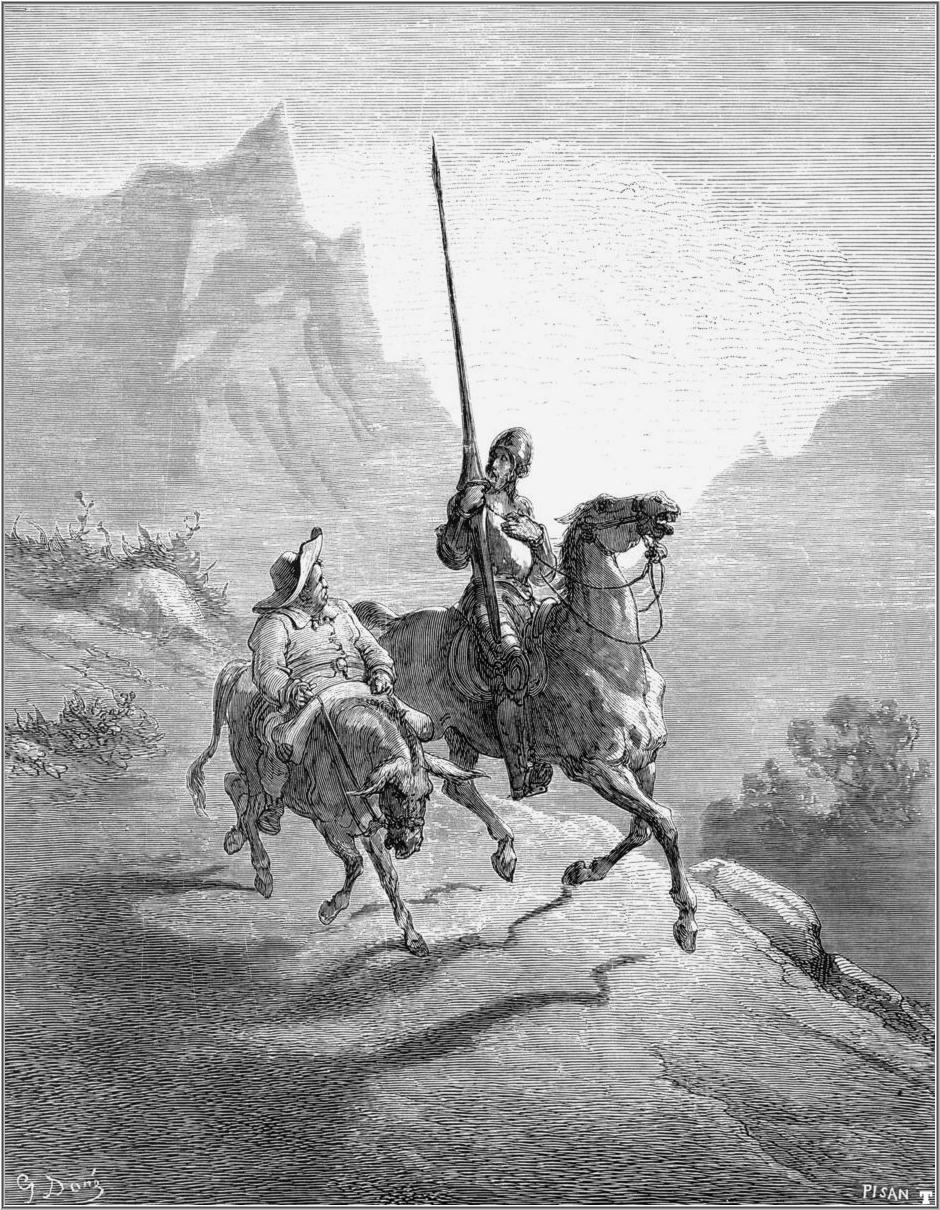
In 2002, "The 100 Best Books of All Time," organized by the Norwegian Book Club, was released. The list was voted on by 100 famous authors from 54 countries, and became a hot topic of conversation among book lovers around the world.
The rankings are undisclosed except for Don Quixote, which came in first. The following is a spoiler-free synopsis of the list, starting with the most recent works from the chronological order.
"Shiro-no-yami" by José Saramago, 1995
www.amazon.co.jp
It suddenly began one day when a man developed a disease of unknown cause that caused his vision to turn white. The "white disease" infected people throughout the country one after another.
"Nothing can be seen" and "nothing is seen by anyone" expose human nature, and order collapses. The world quickly became a living hell. However, there was only one woman who could see, so there was an unexpected development.
A philosophical allegory that shocked the world of Nobel Prize writers.
"Beloved" by Toni Morrison, 1987
www.amazon.co.jp
"Beloved" - That's the name of the mysterious young woman who suddenly appeared. The woman's name was the same as the epitaph "Beloved" on the tombstone of her daughter, whom escaped slave Sete killed with her own hands.
The story of love and confession is based on the pre-Civil War and post-Civil War times, and through the lives of black women, it describes on a grand scale the hardships that black slaves learned the meaning of freedom and took in order to gain freedom.
It is a representative work of the author who received the 93 Nobel Prize in Literature.
"Love in the Time of Cholera" by Garcia Marquez, 1985
www.amazon.co.jp
A 72-year-old woman had just lost her husband in an accident. A 76-year-old man had kept her single with his heart in his heart. At last, that night, the man told her he loved her. When a steamship carrying the two, who had mixed feelings of embarrassment, anxiety, memory and expectation, began to the great river of Colombia.
This is a true story of love that unfolds in against the backdrop of a time when civil war was raging like a plague.
"Midnight's Children" by Salman Rushdie, 1981
www.amazon.co.jp
It is said that his method of telling stories, which brings fiction and fantasy into reality, is close to that of magic realism. He became famous with "Midnight's Children," which became the beginning of a new trend of English literature by Indian writers.
Considered his best work to date, the book won the Booker Award in 1981 and was named best work for its 25th anniversary in 1993.
"Hyakunen-no-Kodoku" by Garcia Marquez, 1967
www.amazon.co.jp
The life and death of a lonely man living in the absence of love, the series of strange incidents, the mythical world of strange people --
One hundred years after the founding of the village of Macondo, when the first born by love appeared, the mystery of Melchiades' parchment was deciphered, ending the eventful history of the Buendians.
A world-class bestseller, this masterpiece was awarded the Nobel Prize in Literature.
"Golden Note" by Doris Lessing, 1962
www.amazon.co.jp
The Golden Note, first published in 1962 and written by a 40-something writer, appeared for a long time to if Doris Lessing, who was nominated for the Nobel Prize in the 1980s, had been left out. Some in the United States and Europe have said the 2007 award was too late.
But it's not too late to read her masterpiece, "The Golden Note," which depicts the social background of the time of writing, many of which have already undergone major changes. On the contrary, it shows that Lessing's point of view is not driven by temporary things that are valid only in that period. Now, 50 years after writing, her eyes become even clearer.
"The Tin Drum" by Günter Grass, 1959
www.amazon.co.jp
A requiem for the dead that tells the story of the half-life of Oscar, a little boy who has been growing steadily since he was three years old, on a drum. The beat of evil echoes in a torrent of images of obscenity, mystery and paranoia.
A successful work by a Nobel Prize-winning writer.
"Kuzure Yuku Kizuna" (Chinua Achebe, 1958
www.amazon.co.jp
Achebe is considered the father of African literature in English and one of the world's most admired writers. Released in 1958, Breaking Bonds sold more than 10 million copies worldwide, was translated into more than 50 languages, and was selected as one of the 100 best novels in Norway, Britain, the United States and Africa.
"Pedro Paramo" by Juan Rulfo, 1955
www.amazon.co.jp
"I" arrives at コマラ in search of a faceless father named Pedro Palamo. However, it was a town full of dead people surrounded by secret excitement.
This classic masterpiece, the forerunner of the Latin American literary boom, depicts the undeniable reality of Mexico with an avant-garde style in which the living and the dead mingle and the present and the past mingle.
"Lolita" by Vladimir Nabokov, 1955
www.amazon.co.jp
"Lolita, the Light of My Life, the Flame of My Loins, My Sins, My Souls, Lo Li Ta." Although called the masterpiece of world literature, there are few works that are so misunderstood. It is a romantic novel that depicts the perversion of a middle-aged man's love for a girl. At the same time, it is a Mystery and a Lord Novel. It is also a supreme existence that contains literary mysteries that continue to be debated. This is a new translation of the definitive edition of the "True Classic" that makes it possible to read in various ways. It sometimes causes laughter and sometimes tears.
"Yama no Oto" (Sound of the Mountain) by Kosei KAWABATA, 1954
www.amazon.co.jp
This is a masterpiece of Kawabata Literature after World War II that captures the subtle folds of the mind of Shingo, who is aware of his own aging due to deep boredom and fatigue in the devastated society immediately after World War II. Shingo's feelings of pity towards his eldest son, Kikuko, who has a woman outside his home, in a family where he feels lonely while living with his old wife and son. Shingo's feelings of pity gradually turn into feelings similar to love.
"The Old Man and the Sea" by Hemingway, 1952
www.amazon.co.jp
Despite a long period of poor fishing, the old Cuban fisherman, Santiago, went fishing alone in a small boat. An unimaginable giant marlin was caught on the remaining food. After four days of fighting to death, the old man won, but on his way home, he was attacked by a shark and the fish he tied to the boat was eaten away.
It is a masterpiece that expresses the solemnity of nature and human courage through the appearance of an old man who bravely fights against a big fish using a thorough external depiction.
"The Invisible Man" by Ralph Ellison, 1952
www.amazon.co.jp
A nameless young man who became an invisible person buried in history because he was a black person in America. This novel provides a lyrical description of the situation of a black person who has nowhere to go, who is pushed to the edge of society and shunned by organizations. The author focuses on the "human condition" of today. The author highlights the American society of the 1920s and 30s, and at the same time, sharpens the various problems of that society. It is a hard work that took seven years to write.
"Paul Celan Zenshu of Poetry" by Paul Celan, 1952
www.amazon.co.jp
This is the first complete personal translation of a collection of Japanese poems by Paul Celan, who was in the stream of symbolism and Surrealism, lived through the fate of a modern poet and killed himself while living in the heart of the tragedy of Nazism and the scars of Stalinism as a Jew.
Samuel Beckett "Molloy" 1951 - 1953
www.amazon.co.jp
When I realized that Molloy, who was at her mother's house, was on the verge of collapse, I couldn't remember my own name. On the other hand, Moran, who was ordered to investigate Molloy, had the same fate.
A monumental avant-garde novel that played a pioneering role in Nouveau Romance. The first part of a trilogy of novels by a Nobel Prize-winning writer that shocked the history of literature.
"Maroon dies" by Samuel Beckett
www.amazon.co.jp
Maroon, who lies on his deathbed after a life of wandering, writes down items of possessions and several stories. His life and the life of the story gradually converge, and finally.
The second part of a grotesque and comical novel trilogy, "A Novel About a Novel," in which a savage sense of humor pulls readers into a strange experience.
"Name-tsuke-numono" by Samuel Beckett
www.amazon.co.jp
After my physical death, I kept talking in the dark, and I met the worm. I kept talking in the unknown twilight. The more I spoke, the more the narrator melted away.
The final part of a trilogy of novels that goes back from "Novels about novels" to "Words about words".
"Recollection of Emperor Hadrian" by Marguerite Yourcenar, 1951
www.amazon.co.jp
Hadrian, one of the five great Roman emperors who had an obsession with travel and Greece, art and beautiful boys. His rare life is told alive from the inside at the end of his life. "Portrait by One Dream". The author's masterpiece of his mature period.
George Orwell, 1984, 1949.
www.amazon.co.jp
A totalitarian near future dominated by a party led by the "Big Brother." Winston Smith is a member of the Truth Ministry's Records and Records Department, whose job is to falsify history. He has long been dissatisfied with the system that forces him to be completely submissive. Once, when he fell in love with the wild beauty Julia, he became attracted to underground anti-government activities that are rumored to be organized by legendary traitors.
The masterpiece of 20th century world literature.
"Pippi with Long Socks" by Astrid Lindgren, 1945
www.amazon.co.jp
Inspired by "Uncle Ashinaga," the small daughter of the author, Lindgren, asked her mother to make a story about a girl called "Pippi with long socks." That's when she was born the story of the best girl in the world. Children discover the ideal image of their dreams in a Pippi that lives in a free world, and adults discover a wild and eternal girl that they can't help loving.
"Denkishu" by Borges, 1944 - 86
www.amazon.co.jp
A Borges at the forefront of modern literature, depicting the world as a "labyrinth" that floats in the glow of dreams and reality. A fascinating collection of short stories that are delicately woven based on the myths and philosophies of East, West, Old, and New, such as the "Ruins of the Ring," in which people suspect that our lives are nothing more than visions of other people's dreams, and the library story "Babel's Library," which is a metaphor for the universe.
Camus tiles "by Camus, 1942
www.amazon.co.jp
The day after his mother's death, he went to the beach, had a relationship with a woman, laughed at a film, killed a man in connection with his friend's going out with a woman, and said his motive was "the sun's fault." The sentence was death, but he was convinced he was happy and only hoped that many spectators would greet him on the day of his execution with cries of hatred.
This is a representative work of Camus that pursues the irrationality of reason and humanity with the main character being Meursault, a man who has lost his usual logical consistency.
"Absalom, Absalom!" by William Faulkner, 1936
www.amazon.co.jp
A representative work of Nobel Prize writers that describes discrimination and human suffering in the South.
Satpen, a man who appeared in a rural town in the southern part of the United States, built a huge house and manor and built his own family line. A story of prosperity and ruin that unfolds across the Civil War. A magnificent saga in which the history of cursed blood appears in a multi-layered story.
"Journey to the End of the Night" by Celine, 1932
www.amazon.co.jp
This is an autobiographical novel by Celine, a "cursed writer" who cursed the deceit of the entire world, risked his life to the condemnation of it, and finally succumbed to the wounds of a desperate struggle. The first volume describes how he volunteered to join the army in World War I, performed his deeds of valor, but was seriously injured, developed a strong anti-war ideology, and traveled around the country.
巨篇, a masterpiece of modern literature, is described as "the most violent and the most insufferable cry once released from a human mouth," depicting the pathetic humanity of the main character, who continues his endless journey of life aversion, in a grisly realism and unconventional style.
