

The 1970s is said to be the beginning of idol culture in Japan. Here we have compiled a list of female idols active in the 1970s by decade. Episodes of popularity, representative songs and hits, awards received, and post-idol activities after retirement are introduced.
Source: www.amazon.co.jp
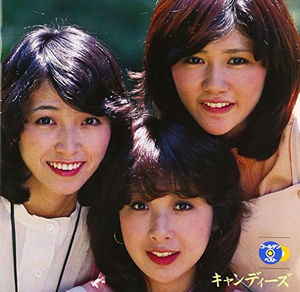
Candies
Date of birth of each member]
Ran Ito: January 13, 1955
Yoshiko Tanaka: April 8, 1956
Miki Fujimura: January 15, 1956
Entering the entertainment business
Selected from the Schoolmates to form Candies
Catchphrase.
-Candies
[Record debut
September 1, 1973 (I'm crazy about you)
Awards
-Announcers
Number of appearances in Kohaku
3 times
Candy's representative songs] ( ): Oricon's highest ranking
1975: Younger Boy (No.9)
1975: Ace of Hearts (No.11)
1976: Haruichiban (No.3)
1977: Yasashii na Demon (No.4)
1977: Shochu omisaki mondai (5th place)
1978: Souyogaeyeshi (No.1)
Number of No.1 songs on Oricon: 1
Candy's success in the 70's
Although they were not a big seller at the time of their debut, they appeared in many TV programs because they belonged to a major entertainment agency (NABEPRO).
After the fifth single, the center of the group was changed from Yoshiko Tanaka to Ran Ito, and the group quickly broke through to become one of the most popular idols of the 1970s.
However, on July 17, 1977, they announced their breakup with the famous words "I want to be a normal girl again," and disbanded after a concert on April 4, 1978.
Subsequent Activities
Ran Ito and Yoshiko Tanaka both returned to show business in 1980 and became successful actresses, while Miki Fujimura retired from show business except for a brief return in 1983.
In their personal lives, Ran Ito married Yutaka Mizutani, and Yoshiko Tanaka married Kazuo Kodachi, Masako Natsume's brother.
[Candy's Current Trends
Ran Ito is still active as an actress.
Miki Fujimura retired from show business.
Yoshiko Tanaka passed away on April 21, 2011 due to multiple organ cancer.
We pray for her soul rest in peace.
◆74-75 debutantes
The 1974-75 debutant group includes the three members of the "Hana no Chusan Trio" and those who debuted between Candy's and Pink Lady's. Many of them quickly transitioned from idols to actresses, full-fledged singers, and celebrities.
Source: www.amazon.co.jp
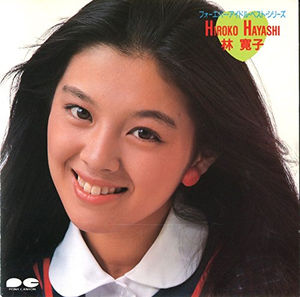
Hiroko Hayashi
[Date of birth.
October 16, 1959
Started in the entertainment industry
Child actor → "You are the star! The 1st Grand Champion
Catchphrase.
A girl like a gentle breeze
[Record debut
March 25, 1974 (Hohoemi)
Awards
-Announcers
Number of appearances in Kohaku
- [Awards
Hiroko Hayashi's representative songs] The figures in parentheses show the highest ranking in Oricon.
-Number of No.1 songs on Oricon
Number of No.1 songs on Oricon
Hiroko Hayashi's activities in the 70's
The rival program of "You're the Star! a rival program of "Star Birth", but did not make it big as a singer. a rival program of "Star Birth", but she did not make it big as a singer.
Originally a child actress, she became more active as an actress than as an idol singer.
Subsequent activities
In 1980, she married Hisao Kurosawa, the son of Akira Kurosawa, a film director and producer (they later divorced).
From the 1980s onward, she worked mainly as a TV personality.
Hiroko Hayashi's Current Activities
Hiroko Hayashi is still active in the entertainment industry and can often be seen as a commentator on information programs.
↓Her blog
http://ameblo.jp/aisiteru-kawaii/
Source: www.amazon.co.jp
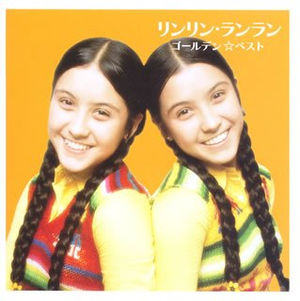
Ling Ling Ling Ling Lan Lan
[Date of birth
Ling Ling: January 3, 1959
Lan Lan: January 3, 1959
Entering the entertainment business
Scouted while performing in Hong Kong
[Catchphrase]
-He is a very talented and talented person.
[Record debut
April 15, 1974 (Indian Dolls in Love)
Awards
-And
Number of appearances in Kohaku
- [Awards
Representative songs of Lin Lin Lang Lang] (Figures in parentheses are the highest ranks in Oricon)
1974: Indian Doll in Love (No.27)
Number of No.1 songs on Oricon:-1
The most popular songs of Lin Lin Lang Lang in the 70's.
The song "Koi no Indian Ningyo (Love Indian Dolls)," her debut song, became a hit due to the uniqueness of being foreign twins.
After that, she continued to work as an assistant on TV programs.
Subsequent Activities
She retired from show business at least in the 1970s.
Currently, she is living a normal life in the U.S.
She is currently living a normal life in the United States.
Source: www.amazon.co.jp
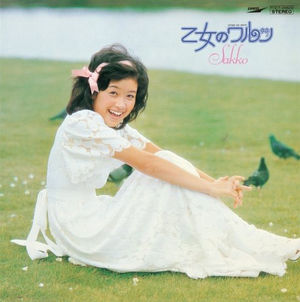
Sakiko Ito
[Date of birth.
April 2, 1958
Started in the entertainment industry
Passed the 8th final of "Birth of a Star! Passed the 8th final competition
Catchphrase.
-Anne
[Record debut
April 20, 1974 (Himawari Musume)
Awards
-April 20, 1974 (Sunflower Musume)
Number of appearances in Kohaku
1 time
Sakiko Ito's representative songs] ( ): Highest Oricon Ranking
1974: Himawari Musume (No.20)
1975: Otome no Waltz (No.5)
1976: Kimi kawaii ne (No.9)
Number of No.1 songs on Oricon
Sakiko Ito's activities in the 70's
Her debut song "Himawari Musume" was a hit, followed by several other hit songs, and in 1976 she participated in the Kohaku Uta Gassen (Red and White Singing Contest).
Subsequent activities
After the 1980s, she had no more hit songs, and stopped her singing career when she got married in 1989.
Sakiko Ito's current career
She resumed her singing career in 2004, and often appears on nostalgic TV programs.
↓Her Facebook
https://www.facebook.com/sakiko.chiba.52
Source: www.amazon.co.jp
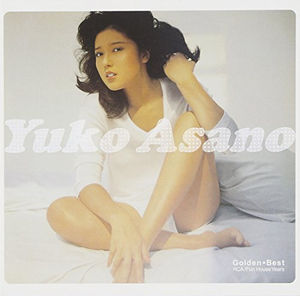
Yuko Asano
[Date of birth.
July 9, 1960
Entertainer
4th champion of "Singing Newcomer's Championship
Catchphrase
Jumping antelope
Record debut
May 25, 1974 (Tobidase Hatsukoi)
Awards
1975 Record Award for Best New Artist (Koi wa dandan)
Kohaku appearances
0 (Appeared as a host in 1991)
Yuko Asano's representative songs] (figures in parentheses indicate the highest Oricon ranking)
1974: Love is Dan Dan (No.1)
1976: Sexy Bus Stop (No.12)
Number of No.1 songs on Oricon: -1
Yuko Asano's activities in the 70's
Despite debuting at the young age of 13, she was a unique idol with an imbalance of being tall and having a mature face, but she was not well accepted and did not make it big as a singer.
However, she was not accepted as a singer and did not make it big as a singer.
From the 1980s onward, she focused on campaign girl and other gravure activities, and from the latter half of the 1980s onward, she made it big as an actress, often starring in TV dramas.
In particular, she appeared in many trendy dramas made during the bubble era, and is known as an actress representing trendy dramas.
Yuko Asano's current life
Yuko Asano is still active as an actress, although she plays fewer leading roles in serial dramas.
↓Her blog
http://blog.asanoyuko.jp/
Source: www.amazon.co.jp
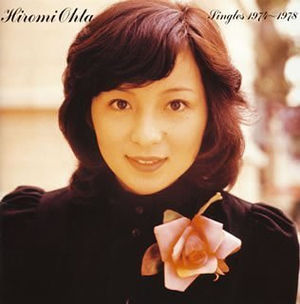
Hiromi Ota
[Date of birth.
January 20, 1955
Entering the entertainment industry
School Mates → "Young 101" audition
Catchphrase
[Catchphrase] "Sincerity in storytelling
Record debut
November 1, 1974 (Ameidare)
Awards
1975 Record Award for Best New Artist (Amedare)
Number of appearances in Kohaku
5 times (4 of them in 1970s)
Hiromi Ota's representative songs] (The figures in parentheses show the highest ranking in Oricon)
No.75: Amedare (No.14)
No.75: Cotton Handkerchief (No.2)
Number of No.1 songs on Oricon
Hiromi Ota's activities in the 70's
Her debut song "Amedare" won the New Artist of the Year Award at the Record Awards (not the Best New Artist Award), and her fourth single "Cotton Handkerchief" became a big hit and gained popularity.
Although "Cotton Handkerchief" failed to reach No. 1 on the Oricon Weekly Ranking due to "Oyoge Iaikikun," it was such a big hit that it reached No. 4 for the year.
Subsequent successes
Since the 1980s, she has been active as a singer, as she had always been more interested in becoming a full-fledged singer than an idol.
Hiromi Ota's Present
She is still active as a singer and sings on TV with a youthful voice that belies her age.
↓Her blog
http://ameblo.jp/hiromi-ohta/
Source: www.amazon.co.jp
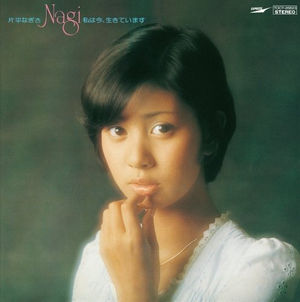
Katahira Nagisa
[Date of birth.
July 12, 1959
Started in the entertainment industry
Star Birth! Passed the 9th final competition
Catchphrase.
-Anne
[Record debut
January 20, 1975 (Jun Ai)
Awards
1975 Record Award for Best New Artist (Beautiful Contract)
Number of appearances in Kohaku
-Announcer
The figures in parentheses show the highest Oricon rankings.
1975: Beautiful Kizuri ("Beautiful Kizuri")
Number of No.1 songs on Oricon
The number of songs that reached No.1 on Oricon: - [Nagisa Katahira's activities in the 70's
Debuted from "Star Birth! She made her debut as a singer in "Star Birth!
In 1977, she starred in a live-action movie based on the comic book "Black Jack" (a story in which Black Jack is not the main character). (A story in which Black Jack was not the main character.)
[Subsequent activities
She continued to be active as an actress after the 1980s, and from the 1990s onward, she often appeared in two-hour dramas and was called the "Queen of Two-Hour Dramas.
From 1981 to 1992, she also worked as an assistant on the popular variety show, "Welcome Newlyweds! a popular variety show from 1981 to 1992.
Current Nagisa Katahira
She continues to play leading roles in TV dramas and is an indispensable figure in the Japanese drama industry.
Source: www.amazon.co.jp
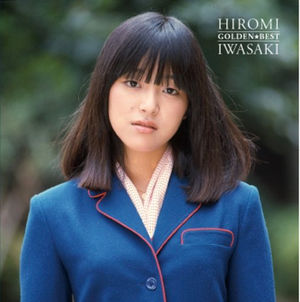
Hiromi Iwasaki
[Date of birth
November 12, 1958
Entered show business
After studying under Toshi Matsuda and Yaeko Mizutani, he became the grand champion of "Star Birth! Grand Champion of the 11th finals
Catchphrase
Hear me to the sky, Hiromi Iwasaki!
Record debut
April 25, 1975 (duet)
Awards
1975 Record Award for Best New Artist (Romance)
1975 Best New Artist Award for Broadcast Music (Romance)
1975 FNS Song Festival Best New Artist Award (Romance)
Kohaku appearances
14 times (including 5 times in the 70's)
Hiromi Iwasaki's representative songs
1975: Duet (No.19)
75: Romance (No.1)
1978: Cinderella Honeymoon (No.13)
1982: Lullaby of the Virgin Mary (No.1)
Number of No. 1 songs on Oricon: 3 (including 2 in the 70s)
Hiromi Iwasaki's activities in the 1970s
Her second song "Romance," the second song from her debut, became a big hit (No. 6 on the Oricon Ranking for the year 1975), and she instantly became one of the top idols.
She was very well known for her singing ability and was regarded more as a full-fledged singer than as an idol.
[Subsequent activities
In 1982, she had a hit with "Seibo-tachi no Lullaby" (Lullaby of the Virgin Mothers), and was increasingly recognized as a full-fledged singer, making 14 appearances in the Kohaku Uta Gassen (Red and White Singing Contest).
Her younger sister, Yoshimi Iwasaki, also made her debut in the entertainment industry, singing hit songs such as "Touch.
Hiromi Iwasaki's current career
Hiromi Iwasaki is still active as a singer.
↓Her Facebook
https://www.facebook.com/fansitehiromi
Source: www.amazon.co.jp
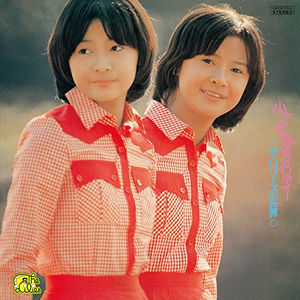
The Lily's
[Member Date of birth
Naomi Tsubame: December 7, 1960
Mayumi Tsubame: December 7, 1960
Entering the entertainment industry
Audition
[Catchphrase]
-Audition
[Record debut
June 5, 1975 (Light Blue Tokimeki)
Awards
-Announcers
Number of appearances in Kohaku
- [Awards
The Lily's representative songs] (The figures in parentheses show the highest ranking in Oricon)
1975: I like you, Captain (No.39)
The Lilyz's activities in the 70's
The Lillies were twin sisters and were expected to be the successors to The Peanuts, who were also twin female singers at the same agency, but perhaps because their predecessors were too great, they failed to have any big hits.
Even their only hit song, "Sukiyo Captain", reached only 39th place on the Oricon chart.
Subsequent Activities
The duo continued to sing until the mid-1980s, but marriage and childbirth made their activities more difficult.
The Lily's Present
The Lily's reunited in 2005, when they had finished raising their children, and now appear on nostalgic TV programs.
↓Her own blog (common blog for both of them)
https://ameblo.jp/lilies-blog/
◆The biggest boom in Japanese entertainment history! Pink Lady dominated the era.
Pink Lady created a sensation as the biggest boom in the history of Japanese entertainment.
In 1978, they won the Japan Song Award for "Southpaw" and the Record Award for "UFO." In their heyday, the entire country, regardless of age or gender, was tinged with Pink Lady.
However, perhaps because her agency was a start-up entertainment agency, her activities were conspicuous for their lack of adherence to entertainment industry conventions (she withdrew from the Kohaku Uta Gassen and entered the U.S. market), and her popularity quickly declined.
Source: www.amazon.co.jp
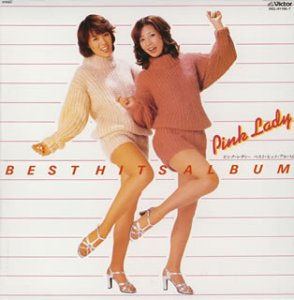
pink lady
[Member Date of birth
Mee: March 9, 1958
Kay: September 2, 1957
Entry into the entertainment industry
Yamaha Vocal School → "Star Birth! Passed the 16th final competition
Catchphrase
-Catchphrase
[Record debut
August 25, 1976 (Inspector Pepper)
Awards
1976 Japan Record Award for Best New Artist (Inspector Pepper)
1978 Japan Record Award (UFO)
1978 Japan Song Award (Southpaw)
Kohaku appearances
4 times (including once in the 70's)
Pink Lady's best-known songs] ( ): Oricon's highest ranking
1976: Inspector Pepper (No.4)
1976: S.O.S. (No.1)
1977: Carmen '77 (No.1)
1977: Sinbad on the Beach (No.1)
1977: Wanted '77 (1st place)
1977: UFO (1st Prize)
1978: Southpaw (1st Prize)
78: Monster (1st prize)
78: The Invisible Man (1st place)
78: The Chameleon Army (#1)
79: Kiss In The Dark (#37) *Rankings are Billboard rankings.
Number of #1 songs on Oricon: 9
Pink Lady's performance in the 70's
Pink Lady's debut song was the second or tenth song to reach No. 1 on the Oricon Ranking for a total of 63 weeks, and Pink Lady was No. 1 for 27 of the 28 weeks from the third week of July 1977 to the third week of February 1978, creating a boom that was so heated that it could be called an anomaly.
There is even an anecdote that Pink Lady was too busy to rehearse at Yoru no Hit Studio, so Momoe Yamaguchi and Junko Sakurada rehearsed instead. (This is not an anecdote, but a fact.)
In 1978, Pink Lady and Yamaguchi Momoe, two of the most popular idols of the 70s, competed for the Record Award with each other's representative songs (Pink Lady with UFO, Yamaguchi Momoe with Playback Part 2), and they won this head-to-head competition in an amazing way.
However, their popularity quickly waned as fans began to diverge between their thoughts and actions, such as when they withdrew from the 1978 Kohaku Uta Gassen (Red and White Singing Contest) and when they sought to expand their business overseas.
[Subsequent activities
At the end of the 1970s, the Pink Ladies entered the U.S. market, but were not as successful as expected and returned to Japan (although they had hit songs second only to Kyu Sakamoto, and had their own TV show).
Soon after, they announced their breakup, and ceased their activities with a breakup concert on March 31, 1981.
After the breakup, Kay changed her name to Keiko Masuda and had a hit with "Suzume" and Mie changed her name to MIE and had a hit with "NEVER," but the image of Pink Lady was so strong that it seemed to have hindered their entertainment activities after the breakup.
Pink Lady now.
Both Pink Ladies have continued their entertainment activities and have repeatedly reunited, finally withdrawing from the breakup.
They often appear on TV as the Pink Ladies.
↓Kei (Keiko Masuda)'s blog
http://www.kei-office.net/gallery/
↓Mie's (Mie Mie) activity report
http://www.web-mie.com/gallery/index.html

Tags
Contents
- ◆First of all
- ◆About Awards
- ◆Idol Creation: The Appearance of Tomonori Okazaki
- ◆ Debutantes in 1970-71
- ◆New three daughters are born! Mari Tenchi became a national idol!
- ◆72 debutantes
- ◆Hana no Chusan Trio formed! Momoe Yamaguchi grows into a national singer
- ◆73 debutantes
- ◆Candys are very successful! Success of Group Idol
- ◆74-75 debutantes
- ◆The biggest boom in Japanese entertainment history! Pink Lady dominated the era.
- ◆Fresh Three Daughters
- ◆Debutants debuting after 1977
- ◆Idols who became popular outside of their singing career
- ◆Other!
- ◆If you want to know more about 70's idols...
- ▼ Related Articles