
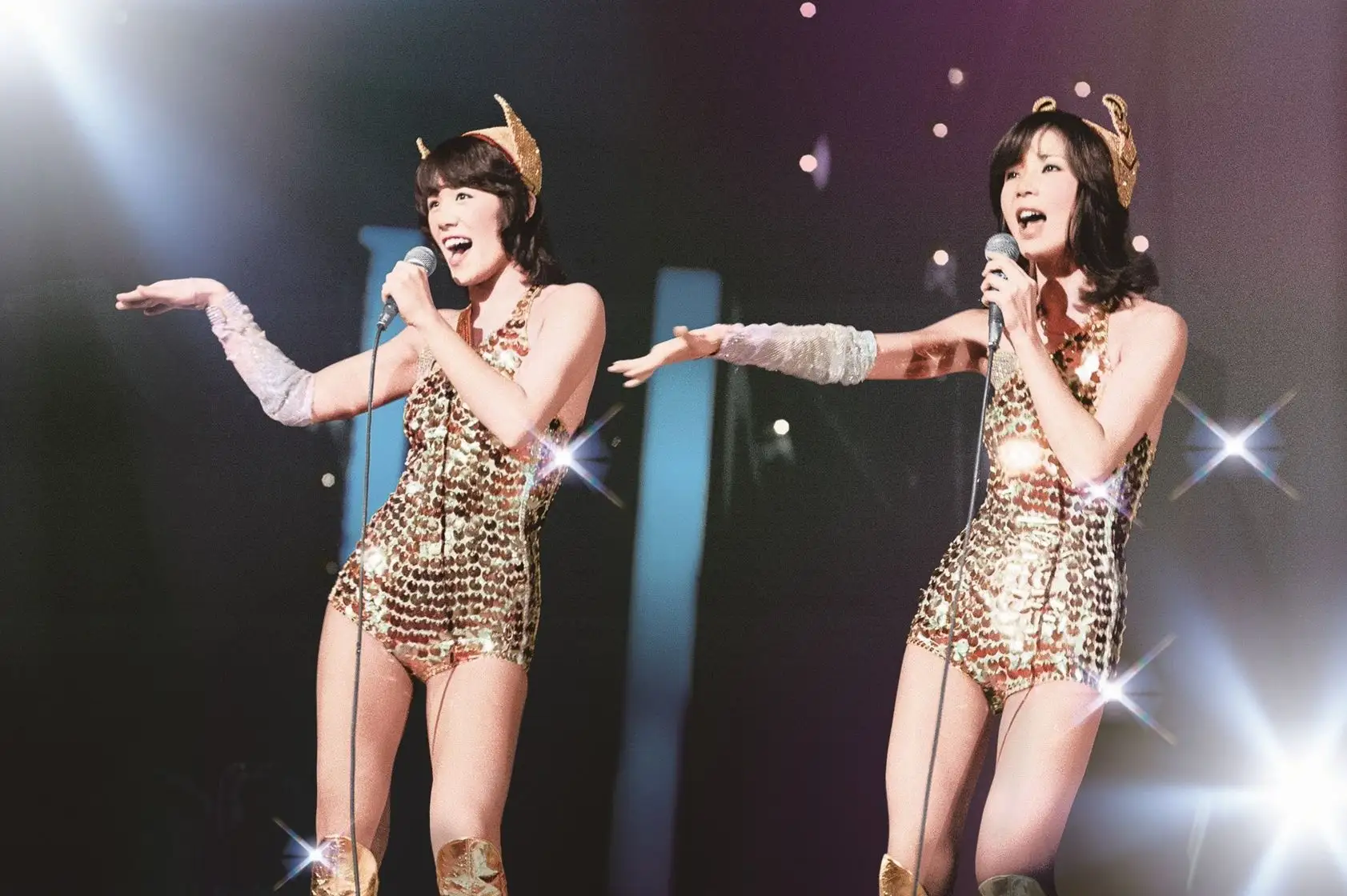
The 1970s is said to be the beginning of idol culture in Japan. Here we have compiled a list of female idols active in the 1970s by decade. Episodes of popularity, representative songs and hits, awards received, and post-idol activities after retirement are introduced.

Source: www.amazon.co.jp
Maoka Megumi
[Date of birth.
October 11, 1955
Entertainer
Born as a child actor
[Catchphrase]
-Catchphrase
[Record debut
June 5, 1972 (budding)
Awards
1972 Record Award for Best New Artist (Budae)
Number of appearances in Kohaku
1 appearance
Megumi Maoka's representative songs] (The figures in parentheses show the highest ranking in Oricon)
1972: Buds (No.3)
1973: My boyfriend is a lefty (No.1)
Number of No.1 songs on Oricon: 1
Megumi Maoka's activities in the 70's
Although she debuted at a time when there were strong rivals, she won the Best New Artist Award at the Record Awards (1972), beating out Masako Mori. (The song was Budding)
She continued to have hits with "Watashi no he no left-handed" and was as popular as "Shin Sanjin Musume" and "Hana no Chusan Trio," but in 1977, she got married and retired from show business.
[Subsequent activities
In 1983, she divorced and returned to show business, and since then has worked mainly as an actress and TV personality.
Megumi Maoka's Present
She is still active in the entertainment industry and often appears on television.
↓Her blog (paid content)
https://megu-asa.com/2016/
Source: www.amazon.co.jp
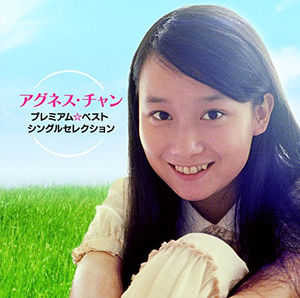
Agnes Chan
[Date of birth.
August 20, 1955
Entered the entertainment industry
While working as a singer and actress in Hong Kong, she caught the eye of a scout and moved to Japan.
Catchphrase
Pearl from Hong Kong
Record debut
November 25, 1972 (Hinageshi no Hana)
Awards
1973 Record Grand Prize for Best New Artist (Brilliance of the Grass)
1973 Newcomer of the Year Award for Best Broadcasting Music (Kusahara no Shine)
Number of appearances in Kohaku
3 times
Agnes Chan's representative songs] (The figures in parentheses show the highest ranking in Oricon)
1972: Hinageshi no Hana (No.5)
1973: "Shine of the Meadow" (No.2)
1973: A Little Love Story (No.1)
Number of No.1 songs on Oricon: 1
Agnes Chan's activities in the 70's
She came from Hong Kong and spoke only a few words of Japanese, but she became popular because of her cuteness.
In 1976, she stopped performing for two years for academic reasons.
Subsequent Activities
From the 1980s onward, she was active mainly as a TV personality, and also became active in activities other than entertainment, such as earning a doctorate and becoming a visiting professor at a university.
Agnes Chan's current activities
In addition to her ongoing entertainment activities, she is increasingly active in public international organizations.
↓Her blog
http://ameblo.jp/agneschan/
◆Hana no Chusan Trio formed! Momoe Yamaguchi grows into a national singer
The audition program "Star Birth! (Masako Mori made her debut one year earlier than the other), they were called the "Hana-no-Chuzan Trio" (the name changed as they moved up through the grades and continued to be called the "Kosan Trio"). (The name changed as they moved up through the grades, and they continued to be called the "Kosan Trio.")
The "Hana no Chuzan Trio" turned into the "Shin Sanjin Musume" and swept the idol world, with Momoe Yamaguchi in particular becoming a national star.
Source: www.amazon.co.jp
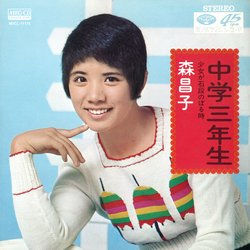
Masako Mori
[Date of birth.
October 13, 1958
Started in the entertainment industry
Star Birth! First Grand Champion
Catchphrase.
Your classmate
[Record debut
July 1, 1972 (Sensei)
Awards
1972 Record Award for Best New Artist (Sensei)
1972 Best Newcomer Award for Broadcast Music (Sensei)
Number of appearances in Kohaku
15 times (including 7 times in the 1970s)
Shoko Mori's representative songs] ( ) shows the highest rank on Oricon.
1972: Sensei (No.3)
1983: Koshinetsu Tsubame (No.27)
Number of No.1 songs on Oricon
Masako Mori's most popular songs in the 70's
She was the first grand champion of "Star Birth! She made a spectacular debut as the first grand champion of "Star Birth!
Although her popularity as an idol was not as high as that of the two members of the "Hana no Chusan Trio," her outstanding singing ability was highly acclaimed, and she grew into a full-fledged singer (with a strong enka-oriented singing style).
[Subsequent activities
In 1983, he became active as an enka singer with the hit song "Echigo-Tsubame" (Winter Swallow), and appeared in Kohaku 13 times in a row, including two appearances as a soloist.
In 1986, she married enka singer Shinichi Mori and retired from show business. (She had resumed her entertainment activities on a limited basis since 2001.)
Masako Mori's present situation
She is continuing her entertainment activities and often appears on nostalgia programs.
↓Her blog
http://ameblo.jp/masakomori/
Source: www.amazon.co.jp
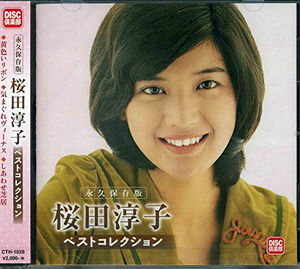
Junko Sakurada
[Date of birth.
April 14, 1958
Started in the entertainment industry
Star Birth! Grand Champion of the 4th Kessen Tournament
Catchphrase
Angel of the Gentle Breeze
Record debut
February 25, 1973 (Tenshi mo Yumemiru)
Awards
1973 Record Award for Best New Artist (Watashi no Aoi Tori)
1973 Best New Artist Award for Broadcast Music (Watashi no Aoi Tori)
Number of appearances in Kohaku
9 appearances (including 6 in the 1970s)
Junko Sakurada's representative songs] (The figures in parentheses show the highest ranking in Oricon)
1973: Watashi no Aoi Tori (No.18)
1974: Hajimete no Happening (No.1)
1975: Summer of 17 (No.2)
1976: Beware of Summer (No.2)
1976: Hey! Notice Me (No.2)
1977: Venus on a Whim (No.7)
1977: Shiawase Shibai (No.3)
Number of No.1 songs on Oricon: 1
Junko Sakurada's activities in the 70's
With her cute looks and bright, innocent personality, she became the highest scoring and most popular singer of "Star Birth! (Star Birth!), she was the highest-scoring and most-acclaimed singer of all time.
She was the only one of the "Hana no Chuzo Trio" to win the Record Award for Best New Artist, and was more popular than Masako Mori and Momoe Yamaguchi as an idol at the time of her debut.
Subsequent activities
In the late 1970s, she began to make the transition from being an idol to a full-fledged singer, but her sales declined rapidly, and in 1983, she stopped releasing records and shifted her focus to acting.
In 1992, she made headlines for her participation in a Unification Church joint wedding ceremony, which resulted in her losing her job.
[Junko Sakurada's present life
In 2012, Junko Sakurada made her first public appearance in a long time at the wake of Hidetada Aizawa, the chairman of Sunmee Chic, and also made a one-night return on November 26 of the same year as a concert commemorating the 40th anniversary of her performing career.
According to the participants, he looked just as he did back then.
Source: www.amazon.co.jp
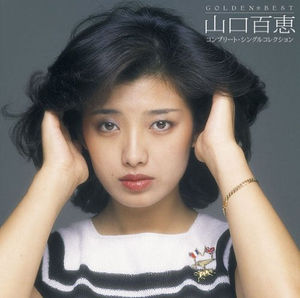
Yamaguchi Momoe
[Date of birth.
January 17, 1959
Started in the entertainment industry
The Birth of a Star! Passed the 5th Kessen Contest
Catchphrase
Big Sony, Big Newcomer
Record debut
May 21, 1973 (around the same time)
[Awards
-Announcer
Number of appearances in Kohaku
6 times
The figures in parentheses show the highest ranks in the Oricon Ranking.
1973: Blue Fruit (No.9)
1973: Forbidden Play (No.12)
1974: Harukaze no Tamagure (No.11)
1974: One Summer Experience (No.3)
1974: Colors of Winter (No.1)
1975: Summer Opening Youth (No.4)
1976: Yokosuka Story (No.1)
1976: Red Shock (No.3)
1977: Yume Sentaku Jinin (No.1)
1977: Imitation Gold (No.2)
1977: Autumn Cherry Blossoms (No.3)
1977: Playback Part 2 (No.2)
1978: Zettai Zetsumei (No.3)
1978: Ii Hi Tabidachi (No.3)
79: Beauty, Silent (No.4)
1979: Singing Sinfully (No.8)
1980: Carnival (No.4)
1980: Rock'n'Roll Widow (No.3)
1980: Sayonara no Mukougawa (No.4)
Number of No.1 songs on Oricon: 4
Momoe Yamaguchi's activities in the 1970s
Although she was never invited to the New Artist Awards, her songs with radical lyrics inappropriate for her age became hits, and she grew to become a national singer with consecutive Oricon No. 5 or higher rankings from her 5th single to her 26th single.
She also starred in a series of hit TV dramas and rose to become a national idol and a national star.
Subsequent Activities
On October 20, 1979, she announced her relationship with actor Tomokazu Miura (with whom she had co-starred in several dramas and movies), and on March 7, 1980, she announced her marriage to Tomokazu Miura and her retirement from show business.
She retired from show business after her final concert on October 5, 1980, and Yamaguchi Momoe became a legend.
Yamaguchi Momoe's Present
Since her retirement from show business, Momoe Yamaguchi has not appeared on the stage at all, but this has deified her and her reputation has continued to grow in later years.
◆73 debutantes
The group that debuted in 1973 was synchronized with Momoe Yamaguchi and Junko Sakurada of the "Hana no Chuzo Trio" and Candy's, and it may be said that they were a difficult generation to be active in the idol song world.
Source: www.amazon.co.jp
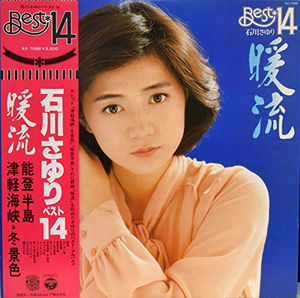
Sayuri Ishikawa
[Date of birth
January 30, 1958
Entering the entertainment business
Passed the Chibikko singing contest
Catchphrase
Columbia Princess
[Record debut
March 25, 1973 (Hide and Seek)
Awards
1977 FNS Song Festival Grand Prix (Tsugaru Kaikyo, Fuyunkei) *Awarded as an enka singer
Number of appearances in Kohaku
38 appearances (including 3 in the 70's) *All appearances since becoming an enka singer
The figures in parentheses show the highest ranking in the Oricon Ranking.
1977: Tsugaru Kaikyo Fuyunkei (No.6)
1986: Amagi koshi (No.46)
1991: Whiskey ga, oizuki ga, oizuki desu (You like whiskey, don't you?)
Number of No.1 songs on Oricon
Sayuri Ishikawa's activities in the 70's
At the time of her debut, she was an idol singer, and there was a plan to replace Junko Sakurada as a member of the "Hana no Chusan Trio" (Sayuri Ishikawa and Masako Mori and Momoe Yamaguchi belonged to the same company, Horipro), but she never made it big as an idol.
Since she had always been known for her singing ability, she switched to enka singing and became a very successful singer. (In 1977, she won the Grand Prix at the FNS Music Festival for her song "Tsugaru Kaikyo Fuyunkei.)
Subsequent successes
She continued her career as an enka singer, appearing in the Kohaku Uta Gassen for 33 consecutive years. (If not for her maternity leave, she would have made 40 consecutive appearances.)
In 1986, she had a hit with "Amagi koshi (Over the Amagi Castle)," which became one of her most popular songs along with "Tsugaru Kaikyo Fuyunkei (Winter View of the Tsugaru Straits).
Currently, Sayuri Ishikawa is a major enka singer.
As a leading enka singer, she continues her energetic singing career.
↓Her blog
http://www.ishikawasayuri.com/diary/index.html
Source: www.amazon.co.jp
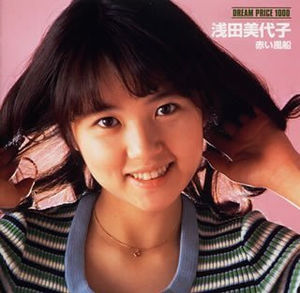
Miyoko Asada
[Date of birth.
February 15, 1956
Entry into the entertainment industry
Audition for "It's Time!
[Catchphrase]
Sonny Angel
[Record debut
April 21, 1973 (Red Balloon)
Awards
1973 Record Award for Best New Artist (Akai Fuusen)
Number of appearances in Kohaku
-Akai Fuusen
Miyoko Asada's representative songs
1973: Akai Fuusen (No.1)
Number of No.1 songs on Oricon: 1
Miyoko Asada's activities in the 70's
Miyoko Asada appeared in popular TV dramas such as "It's Time" and "Terauchi Kantaro and Family." In addition, she was as popular as "Hana no Chuzo Trio" who debuted at the same time, as she reached No. 1 on the Oricon Ranking in her second week, which was the shortest debut at the time. (Their debut song "Akai Fuusen" was ranked No. 10 in the annual Oricon Ranking in 1973.)
) In 1975, however, her popularity declined due to rumors about her relationship with folk singer Takuro Yoshida, and in 1977 she married Takuro Yoshida and retired from show business.
In 1977, she married Takuro Yoshida and retired from show business.
In 1983, she divorced Takuro Yoshida and resumed her show business activities. She played the role of Hama-chan's wife in the movie "Tsuribaka nisshi" and became a popular figure among the audience, appearing on many variety shows with her natural character.
Miyoko Asada's present life
Miyoko Asada continues to be active as an actress as well as a TV personality with a natural character.
Source: www.amazon.co.jp
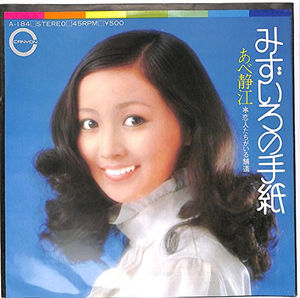
Shizue Abe
[Date of birth.
November 28, 1951
Entertainer
Born as a child actor
Catchphrase
Scent of Freesia
[Record debut
May 25, 1973 (at a coffee shop)
Awards
1973 Record Award Newcomer of the Year (for Coffee Shop)
Number of appearances in Kohaku
1 time
Shizue Abe's representative songs] ( ): Highest ranks on Oricon
1973: At a Coffee Shop (No.9)
1973: Mizuro no tegami (No.7)
Number of No.1 songs on Oricon
Shizue Abe's activities in the 70's
After gaining popularity as a radio DJ, she made her record debut and won the Record Award for Best New Artist. (Not the Best New Artist Award)
After that, her career continued.
After her record release in 1979, she mainly worked as an actress and TV personality from the 1980s onward.
Shizue Abe's Present
She is still active in the entertainment industry, mainly as a TV personality.
↓Her blog
http://ameblo.jp/abe-shizue/
Source: www.amazon.co.jp
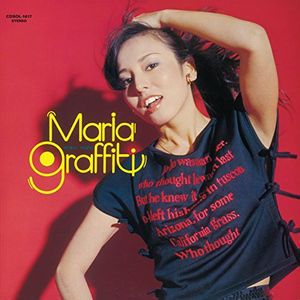
Maria Anzai
[Date of birth.
December 16, 1953
Entering the entertainment industry
Scout
Catchphrase
Chocolate Maria
Record Debut
July 5, 1973 (Tears in the Sun)
Awards
1973 Record Award for Best New Artist (Tears in the Sun)
Appearances.
-Announcer.
Maria Anzai's representative songs
1973: Tears in the Sun (No.16)
Number of No.1 songs on Oricon: -1
Maria Anzai's performance in the 70's
Maria Anzai's cover song "Tears in the Sun" became a hit and won the Record Award for Best New Artist. (Not the Best New Artist Award).
However, she retired from show business in 1978 due to a dispute with her agency.
In 2000, she returned to show business and became a live performer.
In 2000, she returned to show business, performing live and other activities.
Maria Anzai's current life
On March 15, 2014, she passed away due to an acute myocardial infarction.
We pray for her repose.
◆Candys are very successful! Success of Group Idol
Although there were successful examples of idol groups such as The Peanuts (twins) and The Golden Half (halves), there was no successful example of a so-called idol group that has continued to the present day until Candy's appearance.
Candy's can be said to be the originator of the idol group, and had a great impact on the history of idols from then on.

Tags
Contents
- ◆First of all
- ◆About Awards
- ◆Idol Creation: The Appearance of Tomonori Okazaki
- ◆ Debutantes in 1970-71
- ◆New three daughters are born! Mari Tenchi became a national idol!
- ◆72 debutantes
- ◆Hana no Chusan Trio formed! Momoe Yamaguchi grows into a national singer
- ◆73 debutantes
- ◆Candys are very successful! Success of Group Idol
- ◆74-75 debutantes
- ◆The biggest boom in Japanese entertainment history! Pink Lady dominated the era.
- ◆Fresh Three Daughters
- ◆Debutants debuting after 1977
- ◆Idols who became popular outside of their singing career
- ◆Other!
- ◆If you want to know more about 70's idols...
- ▼ Related Articles