
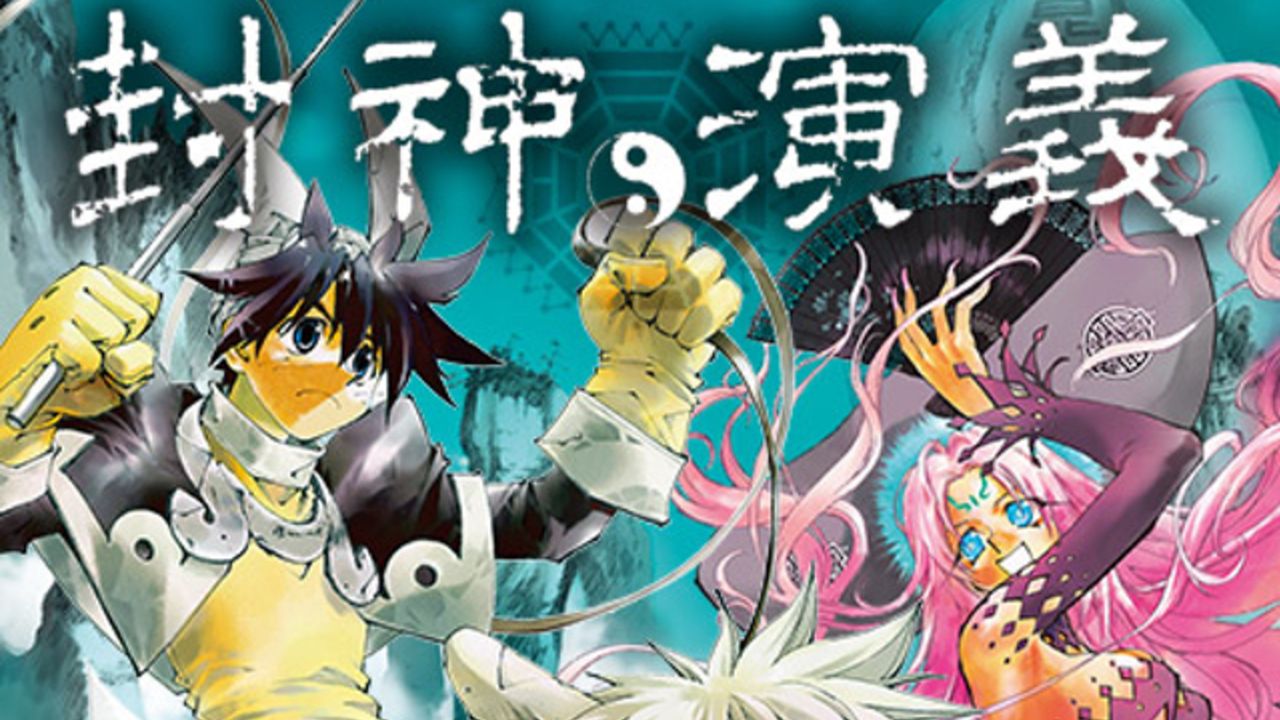
FUJISHIN ENKI" is a science fiction battle manga serialized in "Weekly Shonen Jump" from 1996 to 2000, and an anime work based on the manga. The author is Ryu Fujisaki. Shang, the oldest dynasty in China. The king was a great ruler, but he was seduced by a nymph, Tsukiami, and the country was ruled by an evil hermit. The Hermit Realm, seeing the situation of the helpless humans, decides to launch the "Seishin Project" to seal off the evil hermits. Entrusted with this grand plan to "create a true human world without hermits," Taikobo, a Taoist monk, and his companions fight a grueling battle.
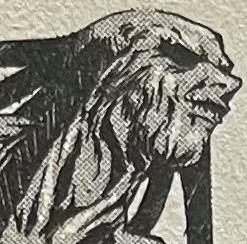
A contestant at the Great Hogai Competition held by Daji in Horai Island. He was the first to appear in the competition. He was a plant monster hermit who was given power by a maid. He was enlightened by Chang Kyu, who inherited Kinju, a Hogai of friendship.
Bazen
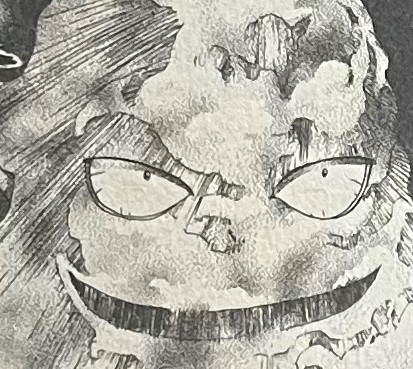
HE WAS A PARTICIPANT IN THE GREAT Hogai COMPETITION HELD BY Daji IN THE CITY OF Horai Island. HE APPEARED IN SECOND PLACE. HE WAS A MONSTER SENNIN WITH A GAS BODY. HIS BODY DOES N'T RESPOND TO PHYSICAL ATTACKS, SO HE WAS A BIG WINNER AT THE BEGINNING OF THE MATCH, BUT HE DISAPPEARED WITH HIS SOUL AT ROKKON HATA, Yang Jian's Hogai.
Ubuka (crow culture)
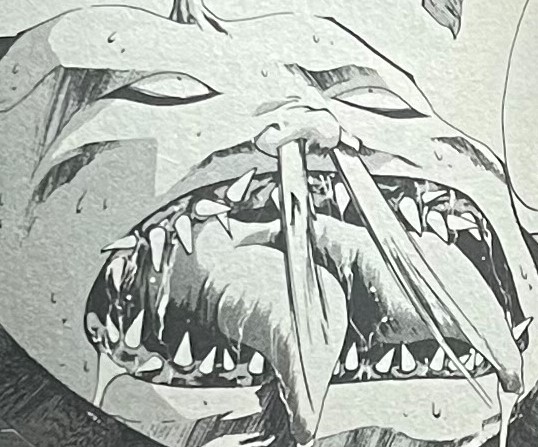
A participant in the Great Hogai Competition held by Daji in Horai Island. He appeared in the third position, but was revered by the intruding Wang Gui. He is a monster hermit with a big body and a habit of saying "I want to bloom."
Enko, Shushishin, Joko (eternal 旲)
At the Great Hogai Competition held by Daji in Horai Island, the ghosts of the three on-one battle with the Shinto flame throwers, who had been boosted up by female servants, were instantly revered by the overwhelming power of the Shinto flame throwers.
Other Persons
Shinkohyo (Monkey Leopard)
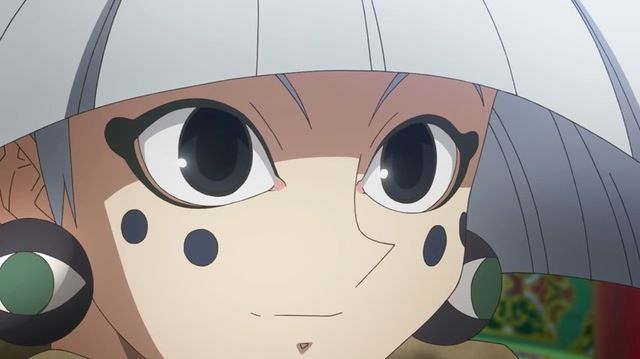
CV: Akira Ishida / Kosuke Toriumi
The main Hogai is Raikoben.
He was the strongest Taoist who had the strongest Hogai, Raikko Whip, and the strongest spiritual animal, Kokutenko (black tiger). While acting as a guest of Daji, he did not take sides with either Yin or Zhou, but stood on the sidelines by advising Taikobo. Although he has an unattractive personality, he dislikes being made fun of for his sense of dress. His teacher was Daijo Okinu. He recognized Taikobo, who hurt him, as his rival. He was aware of the existence of a, and after investigation, he said that it was against his own aesthetics, and he supported Taikobo in the final phase.
Taijoro-kun
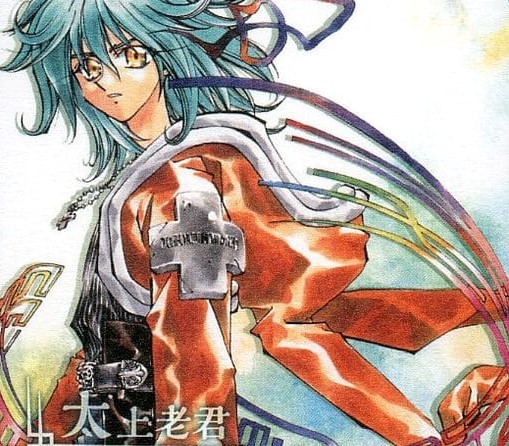
CV: Minami Takayama (CD-book version) / Kengo Kawanishi
The main Hogai is called "Taikyokuzu" or "傾世 Gen 禳."
He has the greatest ability among the three great sennin, and it is said that his ability surpasses that of Daji and Monchu. He is an incomparable lazy person who wakes up only once every three years, sleeping in a special suit called the "lazy suit," which substitutes for breathing. He is aware of the existence of the, and in fact, in his sleep, he has been snooping on the dreams of the and looking for her. When the wakes up, he also wakes up. In the final battle, he was pulled out by his disciple, Shin Kuhyo, but he did not participate in the battle due to his original character. However, when his favorite lazy suit was cracked by the attack of the, he got angry and went on a rampage using Moto 禳 傾世.
Ryou Yi Jiang
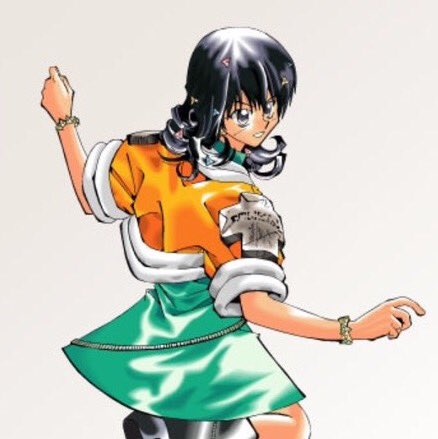
CV: Haruna Ikezawa (game version)
A young girl who lives in the unexplored region of Momogenkyo in the sky. She has a genius mind that rivals that of adults, and serves as the chief judge. She is the adopted daughter of Taishang Laojun, who guided Taigongwang to Taishang Laojun. In fact, she is the chief of the surviving Qiang Tribe and the great-grandson of Taigongmeng's sister. In the battle of Makino, he led the Qiang Tribe soldiers to help the Zhou army. After the establishment of Zhou, he plays a secretarial role for Wu Wang by making use of his natural intelligence.
Yin clan
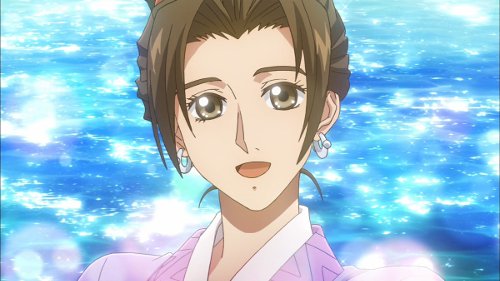
CV: Ryoka Yuzuki / Atsuko Yuya
She is the wife of Li Jing, who has a cheerful personality. She is also the mother of Nezha, Mokukyu, and Kinkyu. She Nezha on her belly for three years, and after giving birth she doted on Nezha.
Taoyuan Patriarch

Related Articles
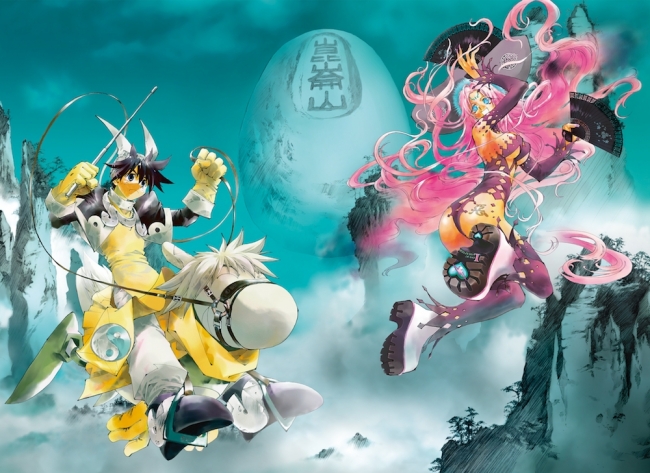
Spoiler commentary and discussion of Haikyuu Seishin Engi (anime)
Haikyuu: Sealed God Enki" is an anime work based on the manga "Sealed God Enki" by Ryu Fujisaki. Based on the bizarre novel "Fenshin Engi" written in the Ming Dynasty of China, the work incorporates elements of comedy and homage. This is the second anime based on the same work, but there is no connection with the first one, and the work focuses on the "Immortal World War" in the middle of the story. Ancient China. A hermit, Taigongmou, is assigned by his master to carry out the "Seishin Plan," a plan to seal off the evil hermits who are destroying the human world. With various humans and hermits as his allies, he aims to overthrow the evil hermit, Qi Ji, who threatens the human world.
Read Article
Summary of the Paopaea (Paopaea)
The "Paopaea" is a weapon that appears in Ryu Fujisaki's manga "Fei Shen Yanyi". The hermit Taigongwang is ordered by his master, Yuan Huang Tianzun, to carry out the "Seishin Project" to seal the evil hermits, including the nymph Peki, in the divine world. As the story progresses, the existence of Nyoka, who manipulates history behind the scenes, and the true purpose of the sealing plan are revealed. Set during the transition of the Chinese dynasty from Shang to Zhou, the story is modeled on the novel of the same title, which is intertwined with the world of hermits, and the development, some characters, and the design of the treasure shells are arranged in the style of a boys' manga. This section summarizes the weapons and shells used by the hermits on both sides.
Read Article
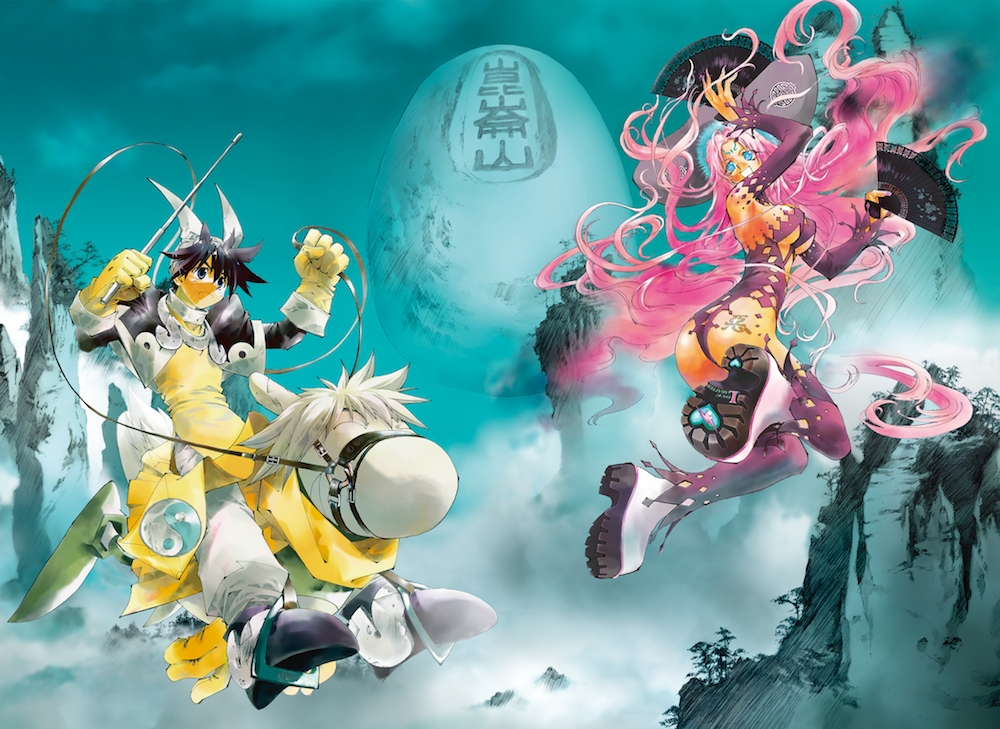
Summary of collected and uncollected foreshadowing and mysteries of the Fushin Enki
Houshin Engi" is a fantasy battle manga by Japanese manga artist Ryu Fujisaki. It is inspired by the Chinese classic "Fushin Engi". In addition to the battle, gag, and comedy elements that are the mainstay of shōnen manga, the work is full of original elements such as super-ancient prehistoric civilizations and the theory of ancient astronauts, and there are many mysteries and foreshadowing hidden within the story. By the end of the serialization, most of the mysteries and foreshadowing have been resolved, and readers have praised the work, saying that the serialization ended smoothly.
Read Article
Spoiler commentary and discussion of Shikon (novel, manga, and anime).
Shikishi Oni" is a horror novel, manga, and anime work based on the novel by Mayumi Ono. The comic version by Ryu Fujisaki was serialized in "JUMP SQUARE". The anime aired for 22 episodes from July to December 2010. A small village with a population of 1,300, "Sotoba Village" is isolated from its surroundings, and the custom of burial still remains. One day, three bodies were found in the Yamairi area, but the villagers decided that there was nothing unusual about the deaths, and they were treated as ordinary deaths. However, villagers continue to die one after another, and the anomalies accelerate.
Read Article
Summary of "special eye" abilities in manga and anime! Sharan-gan, Shiran-gan, etc.
Here we have compiled a list of "special eye" abilities that appear in manga and anime. It includes the globally popular "Sharan Gan" and "Shiran Gan" from "NARUTO," the "Secret Stone Eye" from "Nangoku Shonen Papu Wakuen," the "Vision Eye" from "BLACK CAT," and the "Clairvoyant Eye" from "Fushin Engi" among others.
Read Article
Tags
Contents
- Overview of HOSHIN ENGI
- Outline and story of "HOSHIN ENGI"
- Activation of the plan
- Fate of Taikobo
- First guardian
- He challenged Daji, but was defeated.
- Looking for allies.
- Monnaka's return
- Yinzhou War
- Princess Akira falls asleep, and her son, Princess Hatsu
- Dawn of Senkai Taisen
- The end of Monnaka, the end of the Great War
- Settlement of the Yin-Zhou War
- Landmark of history
- True purpose of the divine plan
- The Beginning
- To hunt down the maids.
- The Appearance of Fushiki
- Daji and the Earth
- Settlement with the maid
- A New History of Lost Milestones
- List of HOSHIN ENGI characters
- Key person
- Taikobo
- Four Elephants
- Nezha
- Yang Jian
- Daji
- Zhou
- Kissho
- Kihatsu (Princess Kihatsu)
- Kitan
- Hime Yikao
- Nangu Curry (Nankyukatsu)
- Yellow Flying Tiger
- Huang Tianxiang
- Yellow Tenroku
- The Count of Yellow Tenshaku
- Huang Fei Biao
- Huang Bi Hyo
- Jia Shi
- The Huang clan
- Huangming
- 周紀
- Ryukan (dragon ring)
- Wu Ken
- Bukichi
- Zhou no Sennin / Doshi
- Leizhenzi
- Kotenka (yellow 天化)
- Dogyo Mago
- Deng 蝉玉
- Li Jing
- Shuku 黒虎
- Yin
- The "Juki King" (the "Juki King")
- 殷郊
- Yin Hong
- Jiang Hui
- Baihaku
- business volume
- Bi Gan
- The Shu clan
- Yin no Sennin / Doshi
- Bunchu
- Chokei (Chang Kei)
- Gao Lan Ying
- Huqibi
- Wang Gui Jin
- Chen Tong
- Hosuibi & Hoso
- Kohei
- Lu Noh
- 黄倉
- Cho Keiho
- Wind Forest
- Shuho
- Hermit of the Kunlun Mountains
- Gensen-son
- Hakutsuru Doji
- Princess Ryukichi
- Nendō Dōjin
- Unchu-shi
- Taiotsu Shinjin
- Gyokutei Shinjin
- Seikyo Doutoku Shinkun
- Puxian Zhenren
- Dogyo Tenson
- Koseiko Hiro
- Chijingzi
- Reiho Daihoshi
- Juliusun
- Wenshu Guangfa Tianzun
- Shinjin Huanglong
- Cihang Daoren
- 韋護
- Hekiun (blue cloud)
- 赤雲
- Kintaku
- Mokutaku
- Kokutsuru Doji
- Hakukan
- Hermits and Taoists in the Geumodo Archipelago
- Tsuten Kyoshu (Teacher of Tsuten)
- Koyu Ken
- Yang Sen
- Lee Ko-Ha
- Ouma
- Marei-sei (Blue Curse)
- Mareiko
- Marei-kai Sea
- Mareiju
- Cho Ko-Mei
- The Three Sisters of Unsho
- Yonin
- Ryogaku (Mt. Lu)
- Bagen (horse origin)
- Shushin, Shutenrin, Riki, and Yobunki
- Ryu Kan
- Yoka
- Kyuin
- KO no Keino
- Chen Qi
- O Tenkun
- Zhang Tiankun
- Sun Tiankun
- Dong Tien Kun
- Yuan Tiankun
- Cho Ten-kun
- Hata Tenkun
- White fried fish paste kun (Hakuten kun)
- Yao Tiankun
- Kinko Seibo (Golden Child)
- Horai Island
- Kokaku
- Bazen
- Ubuka (crow culture)
- Enko, Shushishin, Joko (eternal 旲)
- Other Persons
- Shinkohyo (Monkey Leopard)
- Taijoro-kun
- Ryou Yi Jiang
- Yin clan
- Taoyuan Patriarch
- Ryobo
- Kang Hwan-so
- 鄂崇 U
- 蘇護
- Sozenchu
- 鄭倫
- Deng Kyuko
- Spirituals and Fairies
- Kokutenko (black spot tiger)
- Kokukirin
- Eun
- Kamitaka
- Ryushuko (dragon 鬚虎)
- Suisei Reijyuo (King Reijyu of Suisei)
- 敖 Hei
- Hito (flying sword)
- Supupapa
- Founder
- Joka (maid)
- 伏羲
- List of Gaiden characters
- Shinno
- 燧人, Zhurong
- Kosen
- Uyokusen
- Kokibi, Kosen no Haha
- Terms of the HOSHIN ENGI
- Hogai (パオペエ)
- Dashi-nben
- Kenkonken Sphere
- Fuka-rin (Wind and Fire Ring)
- 混天 Aya
- Kinsen
- Kasenso (pointed spear)
- Kyuryushinkato II
- Reishu (sacred gem)
- Sansentō (three pointed sword)
- Kotenken
- Goka-shichi-kin-o (five fire seven bird fan)
- Kinkabo (Golden Cap)
- Ten 騒翼
- Bakuya no hoken (treasure sword of Bakuya)
- 鑚心 nails
- Karyu Hyo
- Bakuya no Hoken II
- Doryuso
- Gokoseki (five light stone)
- Reiyo-to Pagoda
- Ban 天印
- Onmyo Kagami (Mirror of Yin and Yang)
- Taiyoushin
- Nyoi Hagoromo
- Shiju Hagoromo (Purple Ribbon Robe)
- 蕩魔 Pestle
- Kumei Kon
- 紅珠
- Hiraii
- Senrigan (Thousand Eyes)
- Fengjindai
- 霧露 Kenkon Net
- Hieken (flying 焔剣)
- Kuryu Shinkato (Fire Cutting of the Dragon King)
- Zansen Ken
- Taikyokufuin
- Banno-bocho (all-purpose kitchen knife)
- Rakko Temple
- Konsenjo
- Ruri-hei
- Goyo
- 遁竜 Tsubaki (camellias)
- Go Kagiken Sword
- Kongenju (mixed gem)
- 劈地 Ju (The Jewel of the heart)
- 拌黄 Ju (The Jewel of Banko)
- Kaitenju
- Seiun Ken
- Kongen-san (umbrella)
- Kurobiwa (black biwa)
- Fox Marten
- Bakuroryusaku (a rope lashing rope)
- Kongen Kinto
- Mysterious Veil
- Kami no hand of God
- 瘟㾮 Umbrellas
- Wan Li 起雲 Unen
- Karako (Fire Crow Pot)
- Banjinsha
- Kaketsu Shinto (sword made of blood)
- 紅珠 eki
- 蜈蜂 bag
- Ticks (parasitic Hogai organisms)
- Sanga-sha Shokuzu
- Shihoken (four treasure sword)
- Space Hogai
- The Ultimate Battle of the Yellow River
- Kosuijin (Red Fortress)
- Kosajin (red sandstone)
- Kaketsujin (Bloody Camp)
- Fukoujin
- Kanpyojin (cold ice battle)
- Chiretsujin
- Retsu 焔陣
- Tenzetsujin (The Heavenly Fortress)
- Rakko Ninjin
- Kinko dried sweet potato Jin
- 誅仙 jin (Siege of Osaka)
- Bansenjin
- Super Hogai
- Taikyoku-zu (the picture of Taiji)
- Kinben
- Kinkosen (gold 蛟剪)
- 傾世 Gen 禳
- Rikukonhan
- Banko-han
- Raikoben
- Kinkoza (lit. forbidden 銼)
- Chikyu Hakai Hogai
- Big Bang Hogai
- Fengshen Plan
- platform in front of a temple's principal image, from which the officiating monk chants
- Sennin (Sendo)
- Taoist
- Tennen-doshi
- Yokai Sennin
- Words, lines, scenes from "HOSHIN ENGI"
- Taikongwang: "It's a trust, my lord."
- Yang Jian: "I have nothing to lose! I have the strength of everyone I've met!"
- The Taisho Elder said, "There is a flow to everything. If you can see it, there is no losing and no winning."
- Taigong "I'd rather eat than work!"
- Himemasa: "I'm in trouble. I really have nothing to do."
- Behind the Scenes, Trivia, Small Stories / Episodes and Anecdotes of "HOSHIN ENGI"
- The default of the Four Dragons was the dragon.
- "The Hamburg Incident" Also Caused Trauma to Readers
- Difference between this novel and the original novel
- Taikobo was an old man in the book.
- IN THE ORIGINAL STORY, SHIN WAS JUST A MINOR VILLAIN.
- AND UN-CHUKO.
- The divine hawk was one of the treasure shells in the original story.
- THE FACT THAT GOONS AND FUKI ARE ALIENS. Original settings of the manga
- Theme Songs and Insert Songs for "Fenshin Enki
- Senkaiden HOSHIN ENGI OP (opening): Chihiro Yonekura "WILL"
- Senkaiden HOSHIN ENGI Ed (ending): Chihiro Yonekura "FRIENDS"
- HOSHIN ENGI OP (opening): Fear, and Loathing in Las Vegas "Keep the Heat and Fire Yourself Up" (episodes 1-13)
- HOSHIN ENGI OP (opening): Fear, and Loathing in Las Vegas "Treasure in Your Hands" (episodes 14-23)
- Ba Qiong HOSHIN ENGI (ending): Nagi Yanagi's "The Distant Future" (Chapter 2 to Chapter 13)
- Ba Qiong HOSHIN ENGI ED (ending): "The Intangible Outline" by Nagi Yanagi (CHAPTER 14 - CHAPTER 22)