
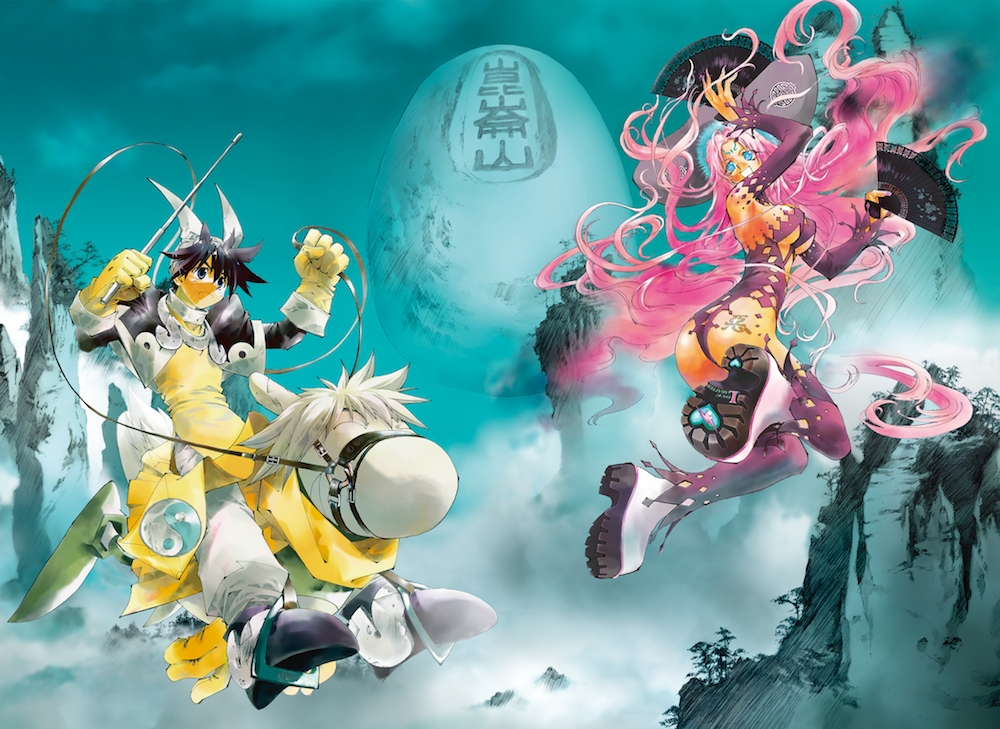
Houshin Engi" is a fantasy battle manga by Japanese manga artist Ryu Fujisaki. It is inspired by the Chinese classic "Fushin Engi". In addition to the battle, gag, and comedy elements that are the mainstay of shōnen manga, the work is full of original elements such as super-ancient prehistoric civilizations and the theory of ancient astronauts, and there are many mysteries and foreshadowing hidden within the story. By the end of the serialization, most of the mysteries and foreshadowing have been resolved, and readers have praised the work, saying that the serialization ended smoothly.
Overview of "Fengshin Yanyi"
Hoshin Engi" is a fantasy battle manga by Japanese manga artist Ryu Fujisaki, and is a popular work that has been adapted for a wide range of media, including TV anime and musicals. The manga is based on the Chinese classic "Fushin Engi" (封神演義), and the reading of the characters' names is largely based on the Kodansha paperback edition of "Fushin Engi" translated by Anno Tsutomu. The manga is easy to read, as it combines the original "Fenshin Engi" with the battle, action, gag, and comedy elements that are the mainstay of shōnen manga. In addition, there are original elements such as super-ancient prehistoric civilizations and the theory of ancient astronauts, and the story is littered with mysteries and foreshadowing.
Long ago in China, during the Shang dynasty. The world of mankind is in turmoil after the king is kidnapped by a nymph with an evil heart, Dakei, and begins to rule in an evil manner. The world of mankind was in turmoil, and the former head of the Kunlun Mountain, the world of the Immortals, entrusted his disciple Taigongbang to carry out the "Hoshin Plan" in order to defeat Dakei and usher in a new era of revolution in the world of mankind. Taigongbang enlists his friends and uses their wisdom to confront Sukemi. In the process, he learns of an entity known as the "Signpost of History" who manipulates history behind the scenes.
About foreshadowing and mysteries
While "Fei Shen Yanyi" is based on the Chinese classic ghost story "Fei Shen Yanyi," it is full of original elements, such as super-ancient prehistoric civilizations and ancient astronaut theories. There are many mysteries and foreshadowing scattered throughout the story, many of which appear early in the story. Toward the end of the serialization, these mysteries and foreshadowing were gradually recovered, and after the serialization ended, readers gave high marks to the work, saying, "The serialization ended beautifully (with a clean finish).
Collected Foreshadowing and Mysteries in "Fengshin Yanyi
The Four Imperishable Jades
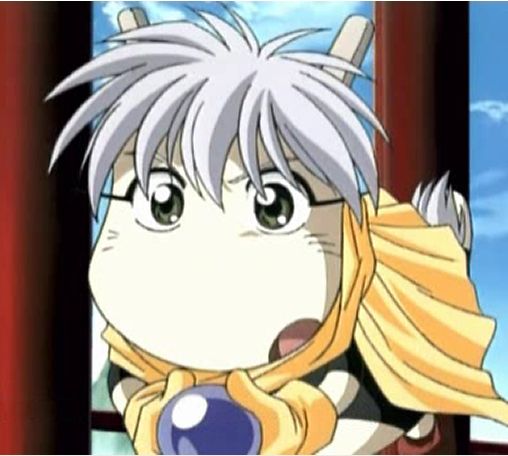
Sifuzhuang (四不象) is a spirit animal that serves the hero, Taigongwang. In the first episode of the story, it was given to Taigongwang by Yuanjitenson, the former head of the Kunlun Mountains of the Immortal Realm, as he was about to embark on the "God-Fathering Project". Since then, he has followed Taigongmang's reckless and unprecedented behavior, sometimes complaining about it, but always following him single-mindedly.
Since his first appearance, Shifuzou has held a "jade" in his hand. He never let go of it even for a moment and always carried it with great care, but he never revealed the reason why he was carrying it, and readers had the impression that it was just a fashion item.
The jade's true identity was revealed during the battle against Cho Koumei, a hermit from Geumodo Island, which exists separately from Kunlun Mountain. He is one of the three strongest men in the Geumodo Islands and is a battle-crazed fun-loving criminal. In order to fight against Taikongwang who was not serious about the battle, he took Shifuseo as a hostage and petrified him. Dagongwang fights to get Shifuzou back, but is defeated by Zhao Gongming, and in addition, the petrified Shifuzou is destroyed. However, the four elephants were later revived after being powered up. It was thanks to the "jade" that the four elephants had kept in their possession for a long time. This "jade" is an extremely rare item called a "resurrection jade," and when used, it can be revived once. Readers wondered if this development had been contemplated from the very first episode.
Existence of historical signposts
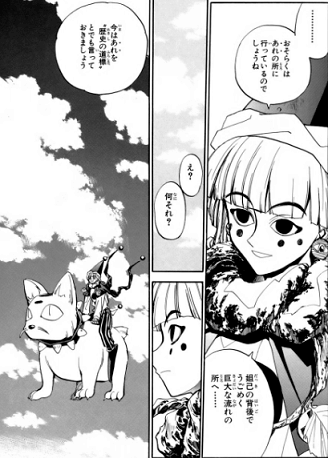
The last boss of "Feng Shen Yanyi" was Jiwa, one of the aliens who landed in this world. The name "Jiwa" was not revealed until the end of the story, and until then, it was called "the guidepost of history. However, the term appeared early in the story, in episode 13.
The main story of "Feng Shen Yanyi" is that the main character, Taigongmuang, defeats Piao Ji. In fact, however, the real enemy is this "historical guidepost" called Nuwa, and Nuwa is merely following Nuwa's lead. It is also revealed that the "God of the Gods Plan" was a preparation for defeating Meba in the first place.
In battle manga, bosses often change from one stage to the next, but in "Fei Shen Yanyi," the last boss was Mei Hua from the beginning to the end. The truth revealed at the climax of the story, such as the existence of the "Signpost of History," its name, and its purpose, is an excellent recovery of the foreshadowing in the early stages of the story.
Yang Zhen's "Art of Change"
Yang Zhen, a Taoist of the Kun Lun Mountain in the hermit world, uses the art of transformation. He is the only Taoist who can use the Art of Transformation, and it is unique among the various arts that appear in the book. Yang Zhen appears early in the story and plays a number of roles, such as saving Taikong Wang by using the Art of Transformation.
Later, it is revealed that Yang Xian is actually a hermit demon. A yokai hermit is a non-human or inanimate object that has been bathed in the light of the moon and sun for more than 1,000 years and has acquired such demonic powers that it can take human form. The stages of this process are: fairies (who acquire demonic powers) → yokai hermits (who can take human form) → yokai hermits (who can maintain human form at all times). The "art of change" used by Yang Zhen was acquired through this process.
In the hermit world, there is an unspoken rule that human hermits belong to Kunlun Mountain and youkai hermits belong to Geumodo Island (there are exceptions). Since Yang Chen belonged to the Kunlun Mountains, readers were completely led to believe that Yang Chen was a human.
Why the sealed Wang Tianjun was resurrected
Wang Tengkun belongs to Geumodo Island, the hermit world, and is one of the members of Jyutenkun, which organizes Geumodo Island, and is the leader of the group.
In the story of "FUGEN Yanyi", when a hermit, a Taoist, or a human being with excellent abilities dies, his/her soul is sent to a place called "Hoshindai" (this is called "Seishin" in Japanese). Wang Tianjun died during the all-out war between Kunlun Mountain and Geumodo Island, and his soul was sealed. However, for some reason, Wang Tianjun resurrected and intervened in the war again. Then, he died again and was sealed as a god. However, he was resurrected one more time after that, and a total of three Wang Tianjuns appear in the work.
It was later discovered that this was because the spirit of Wang Tian-kun was divided into three parts by the nymph Dakki.
The relationship between Taigong and Wang Tianjun hidden on the cover of the book.
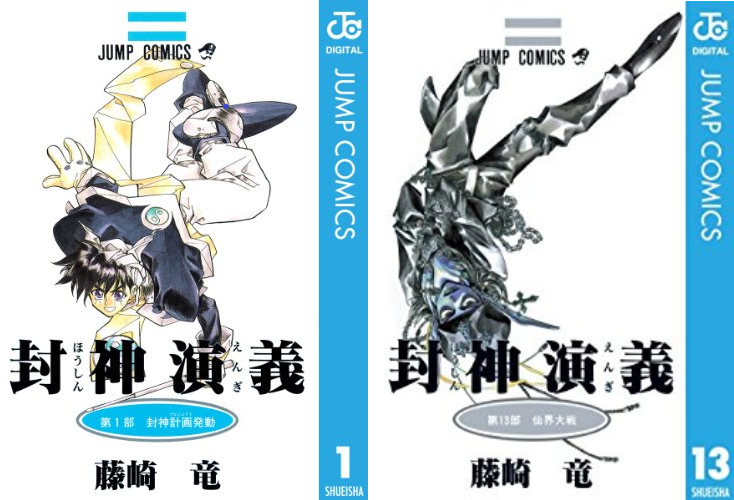
It is revealed later in the story that the hero and daoist of the Kunlun Mountain in the hermit world, Taigongwang, has the same soul as the hermit Wangtiankun of the Geumodo Archipelago.
Wang Tianjun was originally a person named Ou Yi who was a direct disciple of the Kunlun mountain head, Yuan Hui-Tian Son, but he was handed over to Geumodo Islands as a hostage when Kunlun Mountain and Geumodo Islands signed a non-aggression treaty (Yang Chen came to Kunlun from Geumodo Islands). However, Yuan Huang Tian Zun did not want to let go of Wang Yi who has a rare talent, so he divided Wang Yi's soul in half before handing him over to Geumodo Islands. One of the divided souls was put in Wang Yi's body and the other one was put in the body of a human named Lu Nozomu who died in the human world. This Lu Nozomu was later given the name Taigongwang and became the protagonist of this story. The fact that Wang Tianjun, who had been an enemy of Taigongwang, was originally one person shocked readers.
However, this fact was already foreshadowed on the cover of the book before it was revealed. There are 23 volumes of "Fushin Engi," each of which has one (or sometimes more than one) character on the cover. Among them, only Taigongwang (volume 1) and Wang Tianjun (volume 13) are drawn upside down. There was much discussion among readers that this picture might have suggested that the two were the same person.
Shojo and Huang Tianhua on the cover of the book

The 30th king of the Shang Dynasty, Chūō Wang, was a wise ruler who excelled in both literary and military arts. However, after he was kidnapped by a nymph, Tsuki, he began to rule corruptly, causing suffering to his people. In the end, he was killed by King Wu of Zhou, who rose up to put an end to his evil rule.
But before he could do so, Chu-ko fought a one-on-one battle with Huang Tianhua, a Kunlun Mountain warrior. He challenged Huang to a battle in order to surpass his late father, Huang Feihuang, whom Feihuang had been unable to defeat. This battle is depicted in the latter half of the story.
On the cover of the book, Huang Tianhua (vol. 8) and Joi Kuo (vol. 19) are shown side by side in a confrontation. Since the cover of volume 8 depicts Huang Tianhua long before the battle with Siao Wang, there was some talk that the battle between the two had been contemplated long before the battle.
Uncollected Foreshadowing and Mysteries in "Fengshin Yanyi
Why did Zhao Gongming know about Namao?

Related Articles
Spoiler commentary and discussion of Fushin Engi (manga and anime)
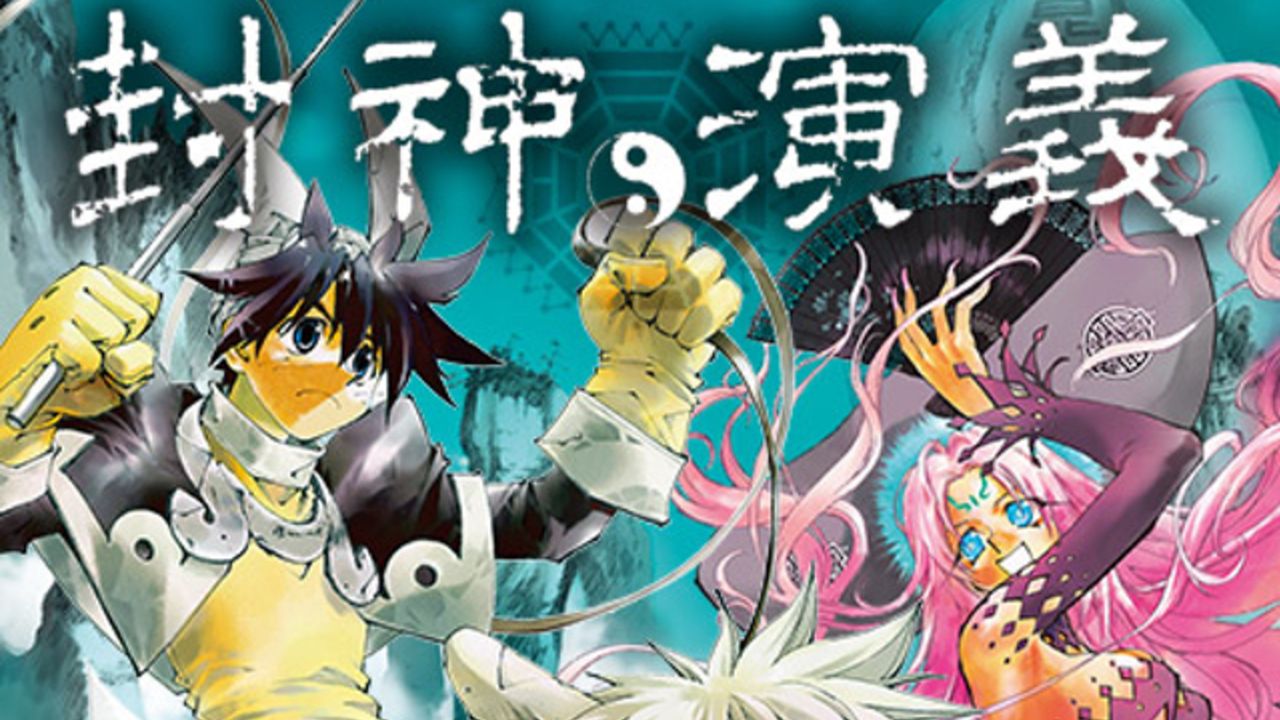
FUJISHIN ENKI" is a science fiction battle manga serialized in "Weekly Shonen Jump" from 1996 to 2000, and an anime work based on the manga. The author is Ryu Fujisaki. Shang, the oldest dynasty in China. The king was a great ruler, but he was seduced by a nymph, Tsukiami, and the country was ruled by an evil hermit. The Hermit Realm, seeing the situation of the helpless humans, decides to launch the "Seishin Project" to seal off the evil hermits. Entrusted with this grand plan to "create a true human world without hermits," Taikobo, a Taoist monk, and his companions fight a grueling battle.
Read Article
Spoiler commentary and discussion of Haikyuu Seishin Engi (anime)
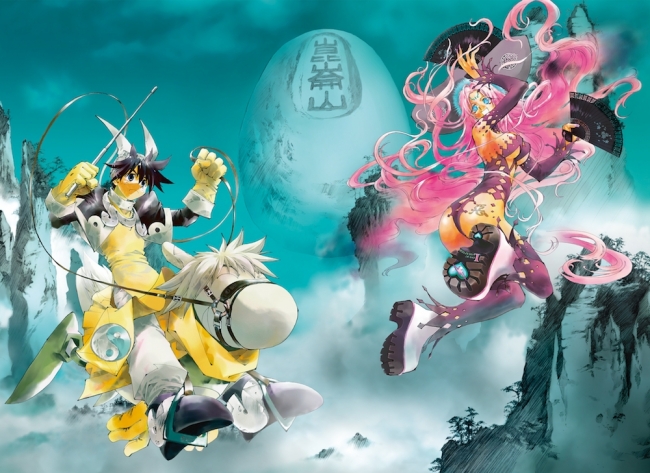
Haikyuu: Sealed God Enki" is an anime work based on the manga "Sealed God Enki" by Ryu Fujisaki. Based on the bizarre novel "Fenshin Engi" written in the Ming Dynasty of China, the work incorporates elements of comedy and homage. This is the second anime based on the same work, but there is no connection with the first one, and the work focuses on the "Immortal World War" in the middle of the story. Ancient China. A hermit, Taigongmou, is assigned by his master to carry out the "Seishin Plan," a plan to seal off the evil hermits who are destroying the human world. With various humans and hermits as his allies, he aims to overthrow the evil hermit, Qi Ji, who threatens the human world.
Read Article
Summary of the Paopaea (Paopaea)
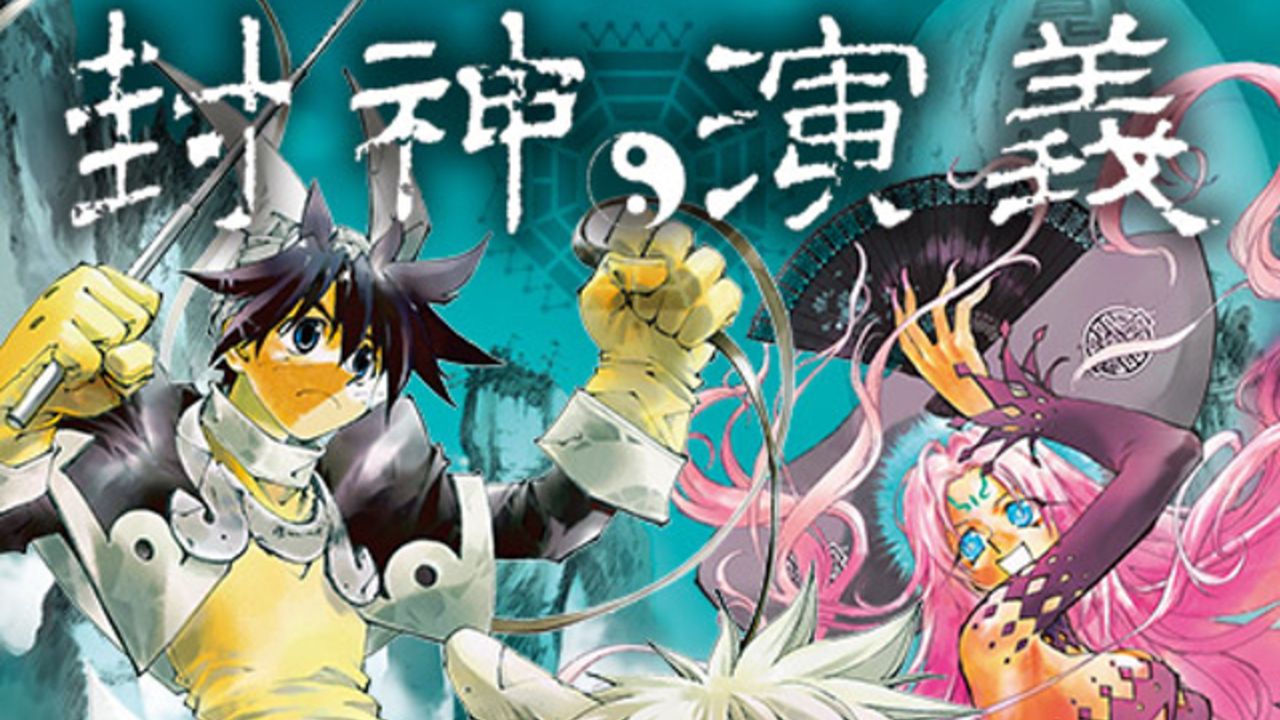
The "Paopaea" is a weapon that appears in Ryu Fujisaki's manga "Fei Shen Yanyi". The hermit Taigongwang is ordered by his master, Yuan Huang Tianzun, to carry out the "Seishin Project" to seal the evil hermits, including the nymph Peki, in the divine world. As the story progresses, the existence of Nyoka, who manipulates history behind the scenes, and the true purpose of the sealing plan are revealed. Set during the transition of the Chinese dynasty from Shang to Zhou, the story is modeled on the novel of the same title, which is intertwined with the world of hermits, and the development, some characters, and the design of the treasure shells are arranged in the style of a boys' manga. This section summarizes the weapons and shells used by the hermits on both sides.
Read Article
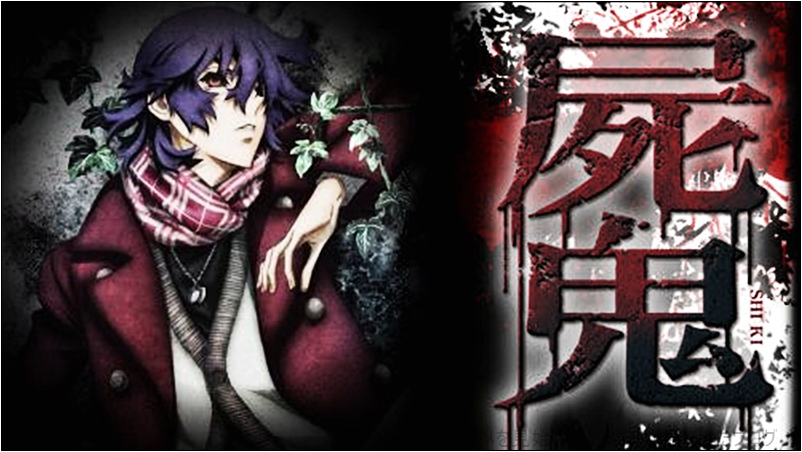
Spoiler commentary and discussion of Shikon (novel, manga, and anime).
Shikishi Oni" is a horror novel, manga, and anime work based on the novel by Mayumi Ono. The comic version by Ryu Fujisaki was serialized in "JUMP SQUARE". The anime aired for 22 episodes from July to December 2010. A small village with a population of 1,300, "Sotoba Village" is isolated from its surroundings, and the custom of burial still remains. One day, three bodies were found in the Yamairi area, but the villagers decided that there was nothing unusual about the deaths, and they were treated as ordinary deaths. However, villagers continue to die one after another, and the anomalies accelerate.
Read Article
Summary of "special eye" abilities in manga and anime! Sharan-gan, Shiran-gan, etc.
Here we have compiled a list of "special eye" abilities that appear in manga and anime. It includes the globally popular "Sharan Gan" and "Shiran Gan" from "NARUTO," the "Secret Stone Eye" from "Nangoku Shonen Papu Wakuen," the "Vision Eye" from "BLACK CAT," and the "Clairvoyant Eye" from "Fushin Engi" among others.
Read Article
Tags
Contents
- Overview of "Fengshin Yanyi"
- About foreshadowing and mysteries
- Collected Foreshadowing and Mysteries in "Fengshin Yanyi
- The Four Imperishable Jades
- Existence of historical signposts
- Yang Zhen's "Art of Change"
- Why the sealed Wang Tianjun was resurrected
- The relationship between Taigong and Wang Tianjun hidden on the cover of the book.
- Shojo and Huang Tianhua on the cover of the book
- Uncollected Foreshadowing and Mysteries in "Fengshin Yanyi
- Why did Zhao Gongming know about Namao?