
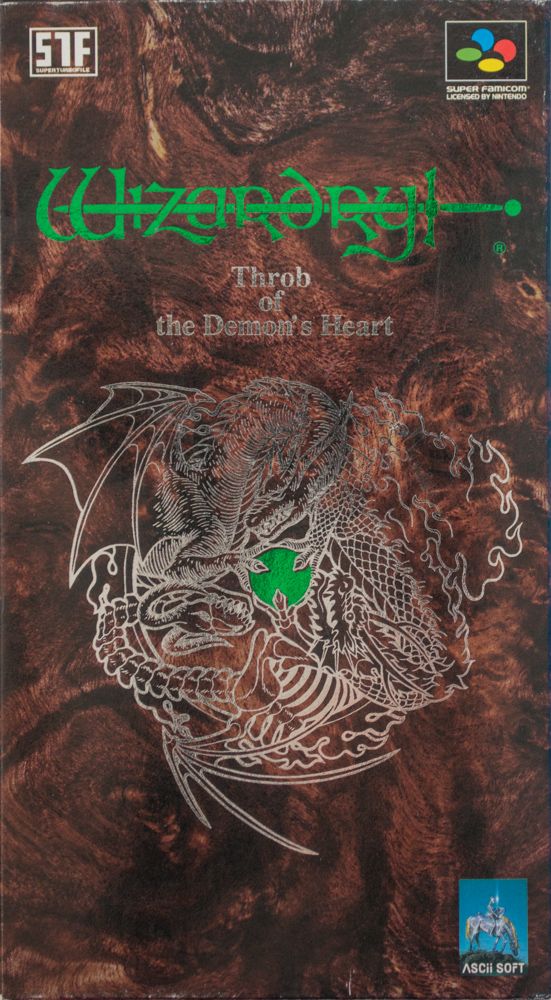
Wizardry Gaiden IV" is a 3D dungeon role-playing game released in 1996 exclusively for the Super Nintendo Entertainment System. The subtitle is "Throb of the Demon's Heart. It is the fourth Japanese-made Wizardry game. While this title is an orthodox hack-and-slash game, it incorporates a Japanese-style setting, events, and horror elements, and allows players to interact with numerous NPCs and enjoy the struggle for power. The story involves having adventurers collect the "Three Sacred Treasures" in order to control a local uprising triggered by the death of the previous lord of the Scarlet Lotus Castle.
Total annihilation
Unlike most role-playing games, if a party is killed in a battle or accident, the character's body will be left in the Lost Palace (not re-run from save), and the only way to save them is to organize another party as a rescue team team to retrieve the body. If the party is killed in a battle or accident, the character's body will be left in the Lost Palace (not re-run from save). If the party is killed in a battle or accident, the character's body will be left in the Lost Palace (not re-run from save). Wizardry
The safety of the characters is not guaranteed when they are completely destroyed, and they may be deprived of items at random or lost in the worst case. A lost character cannot be resurrected with a resuscitation spell or a temple.
Special Power
Special force present only in some items. At the end of the item equipment screen, you are asked, "Do you use special force of 0 0?"
Various benefits can be obtained by using it, but some of the items have negative effects (such as loss of ability and death).
If special power is released, there is a certain probability that it will be damaged or changed to another item, so it is risky to use it carelessly.
In addition, the special power of this game does not need to wear the corresponding item and can be used even for the occupation that can not be equipped, so you can use it without worrying about equipment restrictions.
Healing
The ability of items such as "Holy Armor" to automatically recover HP.
With healing + 1, one HP is recovered with each step or turn in battle.
If healing is positive, a "+" appears next to HP on the status screen, and if it is negative, such as possession of poison or cursed items, a "-" appears.
(The healing items in this game are effective just by having them, but the minus healing items are effective only when equipped.)
Some monsters also have enemies that have healing powers.
Formation and range
Up to six people can organize a party, with the first three being called' avant-garde' and the last three' avant-garde'.
There is a concept of "range" in the weapons that a player character is equipped with, and the number of groups of monsters that can attack varies depending on the position of the formation and the type of weapon.
Short range = Only the front can attack monsters up to the second group. Swords, axes, etc.
Middle Range = Forward can attack monsters up to 4th Group, Back can attack monsters up to 2nd Group. Frailty, spears, etc.
Long range = Any monster can attack regardless of the formation. Bows, shuriken, etc.
On the other side, there are monsters with special attacks that can reach the back row, such as tall giants and those who fly.
Weapon handle
From this work, the concept of a handle has been added to weapon items. Roughly divided into the following:
"Main Hand" = Weapon held in dominant hand as usual. Can be combined with shield or sub weapon.
"Main / Sub One Hand" = An auxiliary weapon that can be attached to the dominant hand or the reverse hand. Two sword style (two attacks in total of main weapon and sub weapon per turn) is possible.
"Both hands" = large weapons such as huge swords, spears and bows. Since both hands are used, it is not possible to equip a shield.
Summoning spell
Each of the five levels has a summoning spell: magician's spell "Socordi," monk's spell "バモルディ," The Alchemist's spell "Gardi," and supernatural power spell "ザカルディ."
Each spell can summon a different monster, and the monsters that are called are random, but if you can summon it, it becomes an additional force and a wall that takes on the enemy's attack.
Transfer and Transmigration
Characters from the previous game can be transferred to this game. The ability value can be inherited up to 14, and the level can be started from 3.
In addition, it became possible to choose the sex of the child at the time of reincarnation (except for occupations with gender restrictions such as Balkiri).
Retraining at the training ground
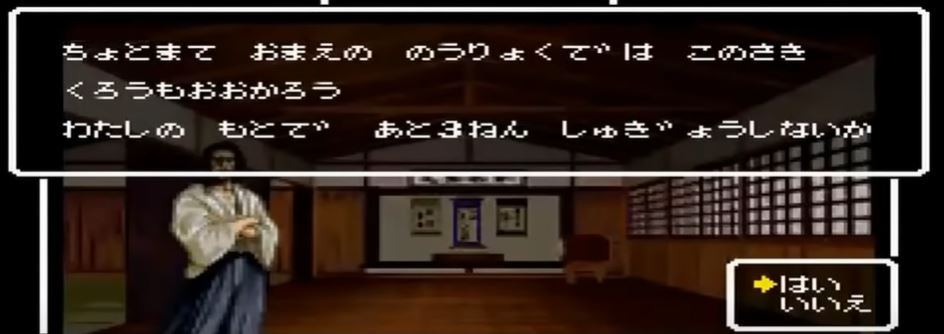
A dojo owner who suggests a 3-year training
In this game, if the bonus point of the character created at the training site is 10 or less, the dojo owner suggests that the character be trained for three years.
If you take this suggestion, the character will get three years old, but instead you can start at four levels (the HP and ability values will also be increased by three levels).
Non-player character
In this game, various NPCs appear. They can be enemies or allies depending on the actions of the player characters.
In addition, equipment can be purchased from NPC. Since it is an uncertain name, the identity can only be inferred from the price, but the inventory is infinite.
Heavy Mode
"Mania Mode," which had been used in previous games, has been changed to "Heavy Mode."
In the mania mode, if the adventure was interrupted, it was to start over from the castle, but in the heavy mode, it became possible to interrupt.
However, since it is often saved during combat or camping, it is difficult to start over with a reset technique.
Heavy mode doesn't offer much of an advantage over normal mode.
Fictional character from "Wizardry Gaiden IV"
Friend (client)
Quilla

Related Articles
Wizardry #5 (Wizardry #5) Spoilers and Discussion Summary
Wizardry #5 is a 3D dungeon role-playing game released by Certec, Inc. in the United States in 1988. It is subtitled "Heart of the Maelstrom". It is the fifth installment in the classic RPG series, the originator of the "hack and slash" genre. A "calamity" is said to have the power to destroy the world. The Gatekeeper, a wizard with the power to control it, has been captured by the evil witch Thorn. The adventurers must defeat Thorn and save the Gatekeeper in order to save the world.
Read Article
Wizardry #4 (Wizardry #4) Spoilers and Discussion Summary
Wizardry #4 is a 3D dungeon role-playing game released by Certec, Inc. in the United States in 1987. It is subtitled "The Return of Werdna. It is the fourth installment in the classic RPG series, the originator of the "hack and slash" genre. Werdna, the sorcerer defeated in the first game, takes the lead role, summoning demons and slaughtering adventurers on his way to the surface to recover the stolen amulets (amulets).
Read Article
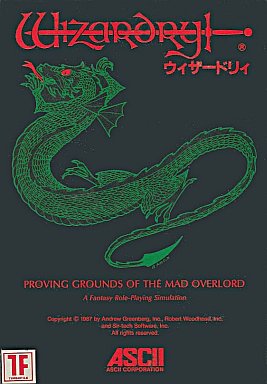
Wizardry #1 (Wizardry #1) Spoilers and Discussion Summary
Wizardry #1" (Wizardry #1) is a 3D dungeon role-playing game released by Certec, Inc. in the United States in 1981. The subtitle is "Proving Grounds of the Mad Overlord," and it is a classic RPG in which a party of six players explore an underground labyrinth, defeat monsters, obtain items from treasure chests, and strengthen and train their characters. This is the first title in the series.
Read Article
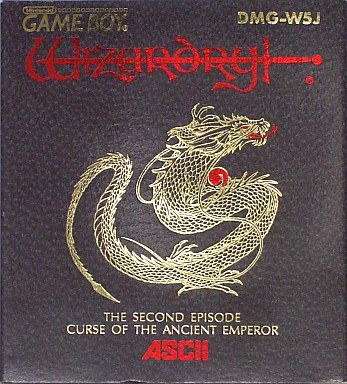
Wizardry Gaiden II (The Curse of the Ancient Emperor) Spoilers and Discussion Summary
Wizardry Gaiden II" is a 3D dungeon role-playing game on a Game Boy cartridge released in 1992. Its subtitle is "Curse of the Ancient Emperor. It is the second Japanese-made Wizardry game. When ruins are excavated in the fortress city of Almar, the curse of an ancient emperor buried there becomes a disaster that strikes the city. The adventurers challenge the ruins in order to remove the curse.
Read Article
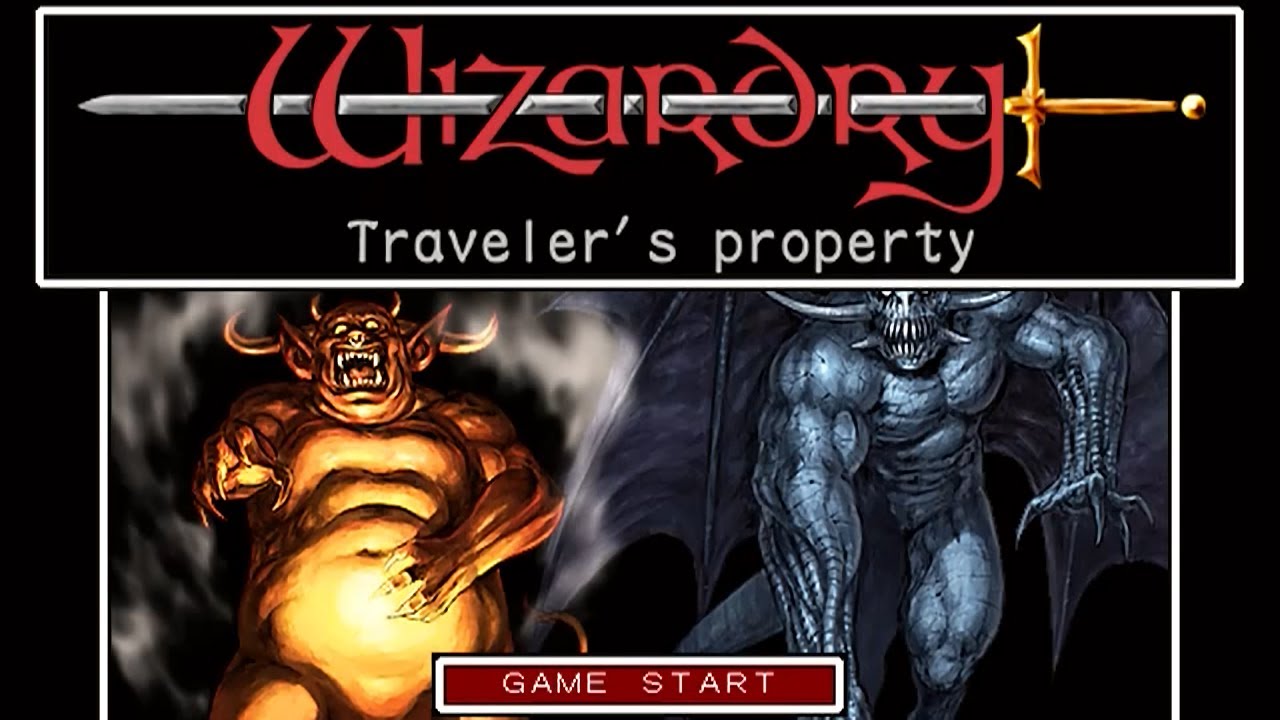
Wizardry Gaiden: The Five Ordeals (The Five Ordeals) Spoilers and Discussion Summary
Wizardry Gaiden: The Five Ordeals is a 3D dungeon role-playing game released for Windows in 2006. It is one of the Japanese-made "Wizardry" series. The game, which purports to be a return to the roots of the original "Shoden" series, uses a simple game system with the initial five races and eight occupations, and the UI (user interface) of the previous title, "Battle Prison". In addition to the five official scenarios with independent stories, the game features a built-in editor that allows users to create their own scenarios.
Read Article
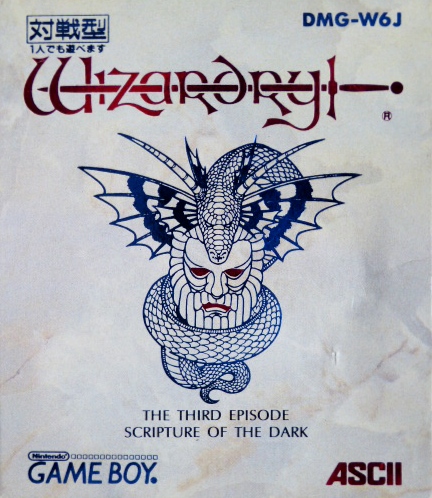
Wizardry Gaiden III (The Scriptures of Darkness) Spoiler Commentary and Discussion Summary
Wizardry Gaiden III" is a 3D dungeon role-playing game on a Game Boy cartridge released in 1993. Its subtitle is "SCRIPTURE OF THE DARK. It is the third Japanese-made Wizardry game. King Agan, the ruler of the fortress city of Dalia, has fallen into madness and withdrawn due to the curse of the Golden Mask. Adventurers are gathered to lift the curse and restore the king to sanity.
Read Article
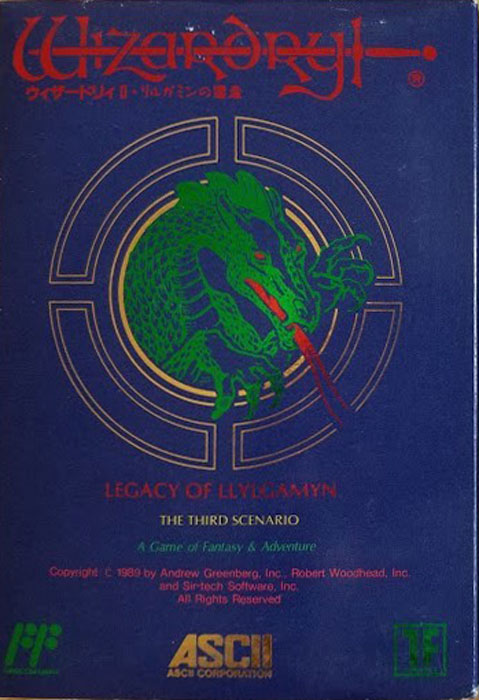
Wizardry #3 (Wizardry #3) Spoilers and Discussion Summary
Wizardry #3 is a 3D dungeon role-playing game released by Certec, Inc. in the United States in 1983. It is subtitled "Legacy of Llylgamyn. It is the third game in the classic RPG series, the originator of the "hack and slash" genre. The mission of the adventurers is to bring back the pearl guarded by the great dragon Le Kevres in order to discover the cause of a worldwide natural cataclysm.
Read Article
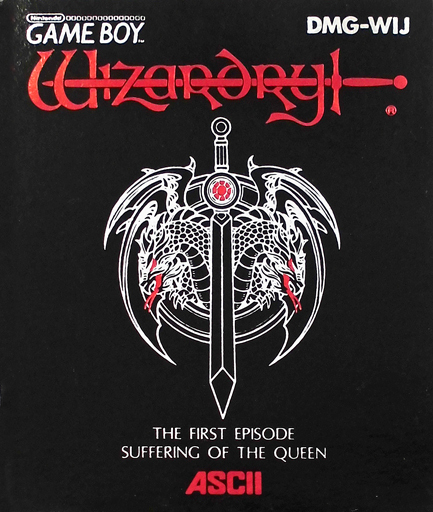
Spoiler commentary and discussion of Wizardry Gaiden I (The Passion of the Queen)
Wizardry Gaiden I" is a 3D dungeon role-playing game on a Game Boy cartridge released in 1991. The subtitle of the game is "Suffering of the Queen. It was the first Japanese-made Wizardry game. After Queen Iras ascends to the throne, the city of Lilgamin has been plagued by a series of disasters. Even the court magician Tylotham has betrayed his court and holed himself up in the "Cursed Hole. Adventurers are summoned to defeat him.
Read Article
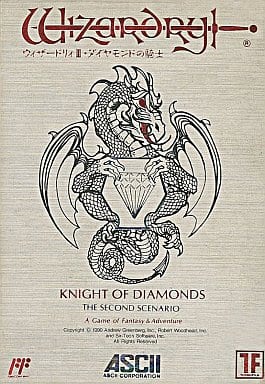
Wizardry #2 (Wizardry #2) Spoilers and Discussion Summary
Wizardry #2" is a 3D dungeon role-playing game released by Certec, Inc. in the United States in 1982. It is subtitled Knight of Diamonds. It is the second installment in the classic RPG series, the originator of the "hack and slash" genre. The mission of the adventurers is to bring back the "Staff of Nilda," which protects the city of Lilgamin and has disappeared into the "Cursed Pit of Dabalps.
Read Article
A compilation of two legendary RPGs based on Dragon Quest
Dragon Quest" is now so famous that it can be considered a national RPG, but it was not created entirely from scratch. There are two legendary RPGs in the development of Dragon Quest.
Read Article
From masterpieces to lost works! Super Nintendo RPG Summary [Wizardry: The Story of Rugamine and others].
Here we have compiled a list of famous RPGs for the Super Nintendo Entertainment System (SNES). The list ranges from well-known masterpieces, to honorable works that are not major, to stray works that are famous in a certain sense. There are also early works such as the popular RPG series "Fire Emblem" and "Final Fantasy".
Read Article
Contents
- Outline of "Wizardry Gaiden IV (Taima no Kodou)"
- Outline and story of "Wizardry Gaiden IV (Taima no Kodou)"
- Who saved people from the Oddball
- A tribe of three towers devoted to each of the sacred treasures
- Death of Terunagako, the lord of' Hirenjo'
- Meeting of the three wise men
- Edicts: "Seize the Three Sacred Treasures of the Imperial Family."
- The Lord of the Castle who Acquired the Sacred Treasures
- The Betrayal of the Wise and the Devil of the Womb
- Battle in the Sanctuary and the Death of Dahlia
- Wizardry Gaiden IV game system
- Facilities of Hiren Castle / Rilgamin Castle
- Benten Sakaba / Gilgamesh no Sakaba
- Adventurer's Inn (both facilities have the same name)
- Daikoku Shoten / Bortak Shoten
- Temple of the Sacred Bird / Temple of K
- Out-of-town
- Dungeon
- Fudo-no-to
- Tower of Magic
- Ghost Tower
- Field
- Ancient cave
- Sanctuary
- Dragon Cave
- Game Flow
- About Characters
- Capability value
- Gender
- Character
- Age
- AC (armor class)
- Race of characters
- Human
- Elf
- Dwarf
- Gnome
- Hobbit
- Fairey, Faerie
- Lisman, Lizman
- Draco (Dracon)
- Rawulf, Rawulf
- Mook
- Ferper, Felpurr
- Character's occupation
- Fighter
- Mage
- Priest
- Thief (Thief)
- Bishop
- The Alchemist
- Bard
- Ranger
- Psionic
- Valkyrie
- Samurai
- Lord
- Monk
- Ninja (Ninja)
- Treasure chest
- Critical hit
- Surprise attack
- Knockout
- Energy drain
- Become ashes, lost
- Total annihilation
- Special Power
- Healing
- Formation and range
- Weapon handle
- Summoning spell
- Transfer and Transmigration
- Retraining at the training ground
- Non-player character
- Heavy Mode
- Fictional character from "Wizardry Gaiden IV"
- Friend (client)
- Quilla
- Two of the three wise men
- Non-player character
- Kikyo
- Shugen Rama
- Virus
- Ayame
- Lama Gozen
- General Galas.
- Saburōuta
- Genmuou
- Claudia / Euria
- Tatsuo
- Raizo
- Queen Fei Ling
- Rachel.
- Kyoka
- Gengoro
- Clean up
- Yukari
- RAN (
- Majura
- Piero
- Enemy characters, etc.
- Murphy. ズゴースト.
- One of the three wise men
- Dama no Maou
- Dahlia
- Agan ウコーツ
- Diamond knight
- Yomi gozen
- "Wizardry Gaiden IV" items
- Weapons (short range)
- Two Swords
- Sword of カシナート
- Bizen Osafune Kanemitsu
- Kunimitsu
- ヴァローソード
- Excalibur
- Muramasa
- The Thief's Dagger
- Angel stick
- The Golden Hour of the Sun
- Weapon (medium range)
- Catnine tail
- Jeanne's Spear
- Faust Halberd
- The Staff of Death
- Zatoichibo
- Gang neal spear
- Demon Spear
- Holy Spear
- Weapons (long range)
- Shuriken
- Sankoken
- Nyoi-bo
- Giant Bow
- Arrow of the Spirit of the Forest
- The Arrow of Hachimantaro
- Armor
- Emerald lobe
- Sapphire lobe
- Scarlet robe
- The Devil's Breastplate
- Evil Armor
- Ice Chain
- Flame Chain Mail
- Megami no Muneate
- Fairy Robe
- Cloistered Emperor's Robe
- Kuro 糸縅
- Holy armor
- Ninja Garb
- Shield
- Round Shield
- Defensive shield
- Neutral Shield
- Shield of evil
- Misril shield
- Magic Shield
- Shield of the coat of arms
- Dragonkite
- Helmet
- Magic Hood
- Metastatic Helmet
- Golden Tiara
- Knights helmet
- Kijin no Kabuto
- Fairy Hat
- Kote
- Gloves
- Mantis glove
- Saizō no Kote
- Mildahl's kote
- Fairy Kote
- Boots
- Tsuranuki
- Mantis Boots
- Sacred Slippers
- Fairy shoes
- Glass shoes
- Other goods
- Damaged card
- Recovery card
- Mental card
- Ruby slippers
- Pearl Ring
- Air Charm
- Priestess's Ring
- Celestial Ring
- Ring of Death
- The Return of Youth
- Green Cape
- Dragon's tusk
- Troll Ring
- Kanreki no Hoi
- Lute
- Silence Harp
- Healing Harp
- Horn of Prometheus
- Hoichi's biwa
- Event Items
- Key to the warehouse
- Teacup
- Horse Ornament / Bird Ornament / Mouse Ornament / Rabbit Ornament
- Small face
- Hannya
- Soul Amulet
- Ice jasper
- Key of the rose
- Key to the prison
- Perfume
- Key to the preparation room
- A gorgeous kimono
- Secret letter
- The Sword of
- Key of the sword
- Karakuri ningyo
- Teacup with sake
- Piece of fragrant wood
- Red card
- Blue card
- Green card
- Hagoromo
- False cloak
- Magic Pot
- Soul Pot
- Demon Pot
- Angel's Feather
- Black key
- White Key
- Temple Keys
- Monkey's Hand
- Children's zori
- Yosen no Kagi
- Sweet water
- Skeleton Key
- Blind cane
- Temari
- Demon King's Key
- Book key
- Silver Key
- Copper key
- Raccoon Statue
- Kappa Statue
- Gold key
- Pink Ribbon
- Snake Key
- Score
- Temple Keys
- The Book of Magic
- Sword of Destruction
- Ghost Cloak
- Book of the Dead
- Inro
- Dahlia pendant
- Magical riddance
- The Book of Demons
- Book of Reincarnation
- Term for "Wizardry Gaiden IV"
- I'm in the stone.
- * Oops *
- * I touched it! *
- A.C.
- Kant Temple
- Bars in Gilgamesh
- Voltak Store
- Rilgamin
- ニルダ Wand
- Wardona no Mayoke
- The behind-the-scenes story, trivia, and small stories / episodes and anecdotes of "Wizardry Gaiden IV (Taima no Kodou)"
- Basics of Redo, Reset Technique
- Capacity value increase and experience value adjustment using energy drain
- Save Data Corruption Bug Related to the Dissolution Spell "Gilfe"
- HP Spike Bug in Taking "Book of the Dead" Item
- How to bring back the Three Sacred Treasures
- "Taima no Maou" (The Devil of the Womb Demon): Earning
- Agan ウコーツ is based on producer Takeshi Tokunaga.
- It was the adventurers who caused the fall of Rilgamin.