
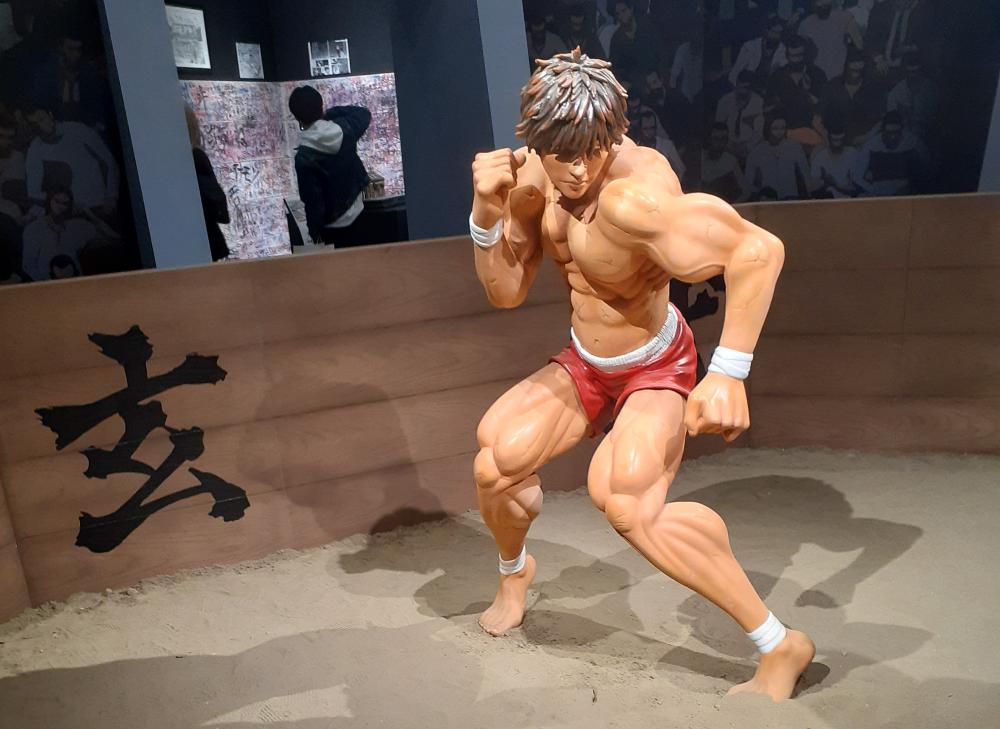
For those who live in the world of martial arts and martial arts, "who is the strongest? The term "real fighters" is a perfect description of these men, whose bodies are so well-trained that they are truly "real fighters! In this article, we have gathered 10 men who are considered to be the strongest in the history of mankind. What will happen to the winners?
Michael Gerard "Mike" Tyson is a former professional boxer from the United States.
Source: ja.wikipedia.org
He is 180 cm tall (there are various theories, but the measurement at Jikei Medical University was 180 cm), has a reach of 180 cm, and boasts a neck with a circumference of over 50 cm. Although he is small for a heavyweight, he has the extraordinary punching power to knock out huge boxers with his guard, the speed to share the reputation of being the fastest heavyweight in history with Muhammad Ali, advanced offensive skills to hit the vital points with accurate combinations, and the ability to cut most of his opponent's punches in the air without relying on his guard alone. With his iron-clad defensive skills, he put big men on the mat one after another, breaking the stagnant period of the heavyweight division after Muhammad Ali's retirement, and reigning at the top of the pound-for-pound division.
He was so punchy that he had struggled with sparring since his amateur days, and when he was 15, he paid $ 1,000 a week to hire the sparring partners of Larry Holmes, the world heavyweight champion at the time.
Source: ja.wikipedia.org
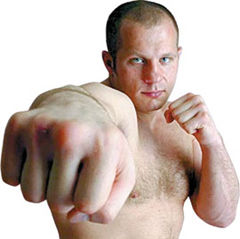
Fedor Emelianenko
Source: sanjuro.cocolog-nifty.com
Fedor Emelianenko or エメリヤーネンコ Fedor is a Russian mixed martial artist, sambo, and former judoka from the Red Devil Sport Club. He was the first Rings heavyweight champion, the second PRIDE heavyweight champion, and the first WAMMA world heavyweight champion.
Source: ja.wikipedia.org
Until 2010, it was evaluated as' the strongest in the mixed martial arts world' not only in Japan but also in the media in the United States, and ranked first in the world in the heavyweight class (93kg-120kg) in many rankings.
Source: ja.wikipedia.org
He set a record of no defeat for 10 years until he was defeated in 2010.
Source: ja.wikipedia.org
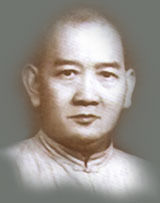
Wong Fei-hung
Source: www.ne.jp
Ko Hiko was the first martial artist and doctor in Kiyosue.
Source: ja.wikipedia.org
He was the son of his father, martial artist Wong Ki-in, who was called one of the' Guangdong Jukketsu' (Guangdong Ten Heroes), and his father taught him' Koke Ken' (Hong Ke Ken), a school of the Nan-ha Shaolin Kung Fu (Southern School of Shaolin Kung Fu), and he spent his boyhood with his father continuing his journey of training, but his skills were already as good as those of a dojo owner at the age of 13, and he is called a' boy hero.'
Source: ja.wikipedia.org
His representative (or legendary) technique is "Mukageza" which is not the official name of the technique, but it is a series of rapid foot techniques called "Mukageza" because the speed of the technique was so fast that even the shadow of his feet could not be seen on the ground like a wind. Originally, it was a technique of Enseiken, a kind of Shorinken of the Northern School, which mainly dealt with foot techniques, but Hiko Hung exchanged with Song Hui-do, a martial artist of the Northern School,' Tetsusen Ken,' which was one of the techniques of Hongke Ken that he had handed down, and taught this foot technique, and after that, he honed it to the point where it became his byword. There are several existing official match records on Mukageza, all of which refer to the speed and destructive power of the threat, and in terms of foot techniques, it is said to have never been done before or after him. For example, in 1867, he took part in an event called' Prize Money if You Can Beat a Fierce Dog with Your Bare Hands' which was planned as a show by an English businessman in Hong Kong, and it is recorded that while many challengers were seriously injured by a huge fighting dog, Hiko Hung's extremely fast kicking technique killed the dog instantly.
Source: ja.wikipedia.org
Masahiko Kimura
Masahiko KIMURA (September 10, 1917 - April 18, 1993 (1917 - April 18, 1993)) was a Japanese judoka (seventh dan).
He retired undefeated for 15 years, including holding the All Japan Championships for 13 years in a row and winning the Tenran Tournament. He was praised as' There is no Kimura before Kimura, and there is no Kimura after Kimura,' and even now he is often called the strongest judoka in history. He is also called' Oni no Kimura' (Oni no Kimura) because of his rugged judo style.
Source: ja.wikipedia.org
Since Kimura entered Takudai, he had practiced for more than 10 hours, not only at Takudai, but also visiting other universities, the Metropolitan Police Department and the Imperial Guard for ran dori training.
At night, following the example of his teacher Ushinoshima, he tied a sash around a big tree and drove it 1,000 times a day, and at last, one of the trees died.
Thinking, "I don't practice when I'm asleep," she decided to sleep for three hours and did image training while she was asleep.
He also went to the training halls of Goju-ryu karate and Shoto School karate to learn striking techniques.
After the war, he practiced mainly sparring with American heavyweight boxers and tried to master boxing.
Source: ja.wikipedia.org
On a hot summer day, when his teacher Ushinoshima asked him to fan him with a fan, he raised a tatami mat and surprised Ushinoshima by looking at it like a fan. He was also able to roll a 100 kg barbell from his shoulders to his wrists with his arms outstretched.
Source: ja.wikipedia.org
His specialty in standing techniques was Osotogari, which was so powerful that he could pull his arms from all positions in the ground techniques. It is said that Kimura's Osotogari was prohibited because there were so many fainters in the practice at Kodokan, and later, his arms were also prohibited because there were so many people who were dislocated.
Source: ja.wikipedia.org
Kimura's mental strength is well known, but his most famous example is "If You Lose, Cut Your Belly." It is said that he practiced Seppuku (suicide by disembowelment) with a short sword on the eve of the match before entering the match, and challenged the match with the determination to die.
Source: ja.wikipedia.org
Fight to the Death with Hélio Gracie
Erio had prepared a coffin and was determined to die, but Kimura broke Erio's arm in the second round by going from his favorite Osotogari to the arm-lock. It was not possible to continue the match at this point, but Erio refused to give up with his strong mental strength, and carlos, who saw the danger, threw in a towel and Kimura won by ippon.
Source: ja.wikipedia.org
Yasuichi Matsumoto, who won the All Japan Championships in 1948 and directed the Tokyo Olympics, said, "Kimura is definitely the strongest team in history. He was strong enough to be separated from human beings. Including Gesink and Yamashita, we can't compete with him."
Source: ja.wikipedia.org
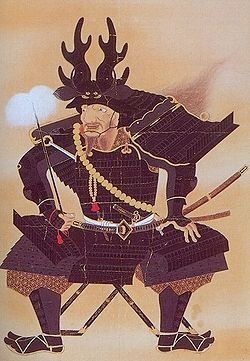
Honda Tadakatsu
Source: ja.wikipedia.org
Honda Tadakatsu
Tadakatsu HONDA was a busho (Japanese military commander) and daimyo (Japanese feudal lord) who lived from the Sengoku period (period of warring states) to the early Edo period.
Source: ja.wikipedia.org
