
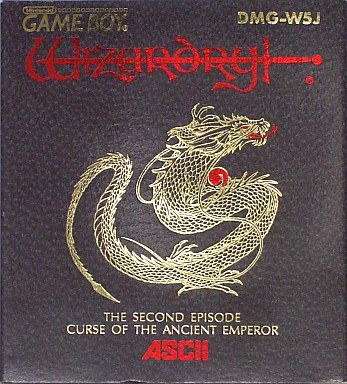
Wizardry Gaiden II" is a 3D dungeon role-playing game on a Game Boy cartridge released in 1992. Its subtitle is "Curse of the Ancient Emperor. It is the second Japanese-made Wizardry game.
When ruins are excavated in the fortress city of Almar, the curse of an ancient emperor buried there becomes a disaster that strikes the city. The adventurers challenge the ruins in order to remove the curse.
"Wizardry Gaiden II (Curse of the Ancient Emperor)": Behind-the-Scenes Stories, Trivia, Small Stories / Episodes, and Anecdotes
Basics of Redo, Reset Technique
By resetting during the battle, it is possible to return to the state before the battle.
You can also reset it when you upgrade at an inn, so you can go back to your previous level and start over until you get the growth you like (but note that once you leave the inn, the reset won't work).
Capacity value increase and experience value adjustment using energy drain
This is a trick that takes advantage of the fact that even if an enemy monster's energy drain is received, only the level drops at that time and the experience value does not change until after the battle.
This is a technique that has existed since the time of Seiden, but in this work, it is applied only when you escape with the monk spell "ロクトフェイト." If you use the magician spell "Mallor," your experience will be reduced, so be careful.
Monster's healing capability bug
A bug that has existed since the time of Gaiden I. The monster's healing ability (HP recovers automatically) recovers (rises) the level instead of HP every turn.
For example, the Greater Demon, which has five healing points, calls out to its friends, but if it makes dozens of turns trying to raise fish, it will grow into a monster of a terrible level, so it is very dangerous. In particular, the fixed enemy "Sand Clad" on the fourth basement floor has a healing point of 30 points, so it increases its power by 30 levels per turn. Since there is even a risk of being completely destroyed if it stays for a long time, a long battle is strictly prohibited.
Buggy technique to go to ground level
When you warp back to the castle or return with the priest's spell "ロクトフェイト," turn it off before it switches to the castle screen. When you "resume your adventure," if you are successful, there is a party on the "kai" at the top of the first basement floor.
Since it's a bug floor, the walls can be changed and passed through, and you can get a bug item called "no" (various effects) by fighting monsters with buggy names.
Since it is just a bug technique, the data processing may get stuck and the game may freeze. If you want to try it, you need to take precautions such as backing up the data in advance.
How to enter the sound test
You can test the name "- WIZ -" when you create a character at the training site, you can test the sound of the game background music.
Using Monster Graphics
Because the film was created with a limited budget, it uses the monster graphics (mostly human) from Gaiden I.
In order to increase the number of monster types, images of the same giants and dragons are called "0 0 zombies" and used in the same way.
Gaiden II Kk de pato Is: "Suna no Okimi"
There is a novel by Hideo Furukawa called "Wizardry Gaiden II: Suna no Okimi" (The King of Sand) based on the setting of this play. Only one volume was published as a book, but it is incomplete.
As an aside, Hideo Furukawa published "Arabian Night Tribe" based on the story of this novel in 2002 and received the 55th Japan Mystery Writers Association Award and the 23rd Japan Science Fiction Award.

Related Articles
Wizardry Gaiden III (The Scriptures of Darkness) Spoiler Commentary and Discussion Summary
Wizardry Gaiden III" is a 3D dungeon role-playing game on a Game Boy cartridge released in 1993. Its subtitle is "SCRIPTURE OF THE DARK. It is the third Japanese-made Wizardry game. King Agan, the ruler of the fortress city of Dalia, has fallen into madness and withdrawn due to the curse of the Golden Mask. Adventurers are gathered to lift the curse and restore the king to sanity.
Read Article
Spoiler commentary and discussion of Wizardry Gaiden I (The Passion of the Queen)
Wizardry Gaiden I" is a 3D dungeon role-playing game on a Game Boy cartridge released in 1991. The subtitle of the game is "Suffering of the Queen. It was the first Japanese-made Wizardry game. After Queen Iras ascends to the throne, the city of Lilgamin has been plagued by a series of disasters. Even the court magician Tylotham has betrayed his court and holed himself up in the "Cursed Hole. Adventurers are summoned to defeat him.
Read Article
Wizardry #5 (Wizardry #5) Spoilers and Discussion Summary
Wizardry #5 is a 3D dungeon role-playing game released by Certec, Inc. in the United States in 1988. It is subtitled "Heart of the Maelstrom". It is the fifth installment in the classic RPG series, the originator of the "hack and slash" genre. A "calamity" is said to have the power to destroy the world. The Gatekeeper, a wizard with the power to control it, has been captured by the evil witch Thorn. The adventurers must defeat Thorn and save the Gatekeeper in order to save the world.
Read Article
Wizardry #4 (Wizardry #4) Spoilers and Discussion Summary
Wizardry #4 is a 3D dungeon role-playing game released by Certec, Inc. in the United States in 1987. It is subtitled "The Return of Werdna. It is the fourth installment in the classic RPG series, the originator of the "hack and slash" genre. Werdna, the sorcerer defeated in the first game, takes the lead role, summoning demons and slaughtering adventurers on his way to the surface to recover the stolen amulets (amulets).
Read Article
Spoiler commentary and discussion of Wizardry Gaiden IV (The Heartbeat of the Womb Demon)
Wizardry Gaiden IV" is a 3D dungeon role-playing game released in 1996 exclusively for the Super Nintendo Entertainment System. The subtitle is "Throb of the Demon's Heart. It is the fourth Japanese-made Wizardry game. While this title is an orthodox hack-and-slash game, it incorporates a Japanese-style setting, events, and horror elements, and allows players to interact with numerous NPCs and enjoy the struggle for power. The story involves having adventurers collect the "Three Sacred Treasures" in order to control a local uprising triggered by the death of the previous lord of the Scarlet Lotus Castle.
Read Article
Wizardry #1 (Wizardry #1) Spoilers and Discussion Summary
Wizardry #1" (Wizardry #1) is a 3D dungeon role-playing game released by Certec, Inc. in the United States in 1981. The subtitle is "Proving Grounds of the Mad Overlord," and it is a classic RPG in which a party of six players explore an underground labyrinth, defeat monsters, obtain items from treasure chests, and strengthen and train their characters. This is the first title in the series.
Read Article
Wizardry Gaiden: The Five Ordeals (The Five Ordeals) Spoilers and Discussion Summary
Wizardry Gaiden: The Five Ordeals is a 3D dungeon role-playing game released for Windows in 2006. It is one of the Japanese-made "Wizardry" series. The game, which purports to be a return to the roots of the original "Shoden" series, uses a simple game system with the initial five races and eight occupations, and the UI (user interface) of the previous title, "Battle Prison". In addition to the five official scenarios with independent stories, the game features a built-in editor that allows users to create their own scenarios.
Read Article
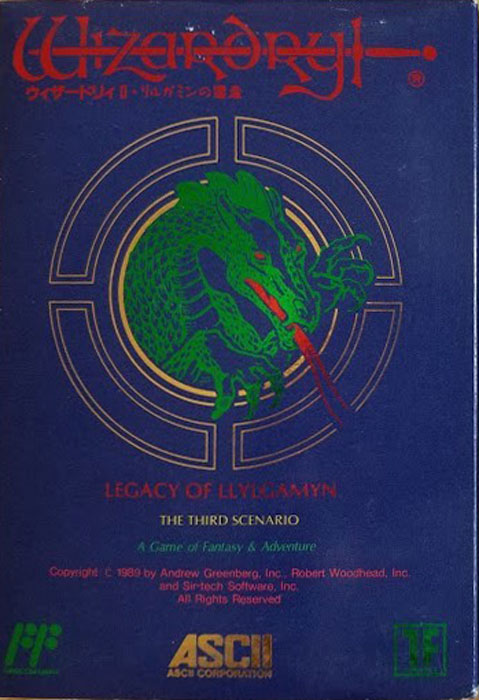
Wizardry #3 (Wizardry #3) Spoilers and Discussion Summary
Wizardry #3 is a 3D dungeon role-playing game released by Certec, Inc. in the United States in 1983. It is subtitled "Legacy of Llylgamyn. It is the third game in the classic RPG series, the originator of the "hack and slash" genre. The mission of the adventurers is to bring back the pearl guarded by the great dragon Le Kevres in order to discover the cause of a worldwide natural cataclysm.
Read Article
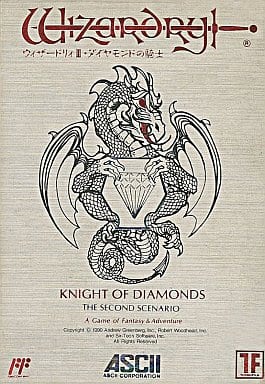
Wizardry #2 (Wizardry #2) Spoilers and Discussion Summary
Wizardry #2" is a 3D dungeon role-playing game released by Certec, Inc. in the United States in 1982. It is subtitled Knight of Diamonds. It is the second installment in the classic RPG series, the originator of the "hack and slash" genre. The mission of the adventurers is to bring back the "Staff of Nilda," which protects the city of Lilgamin and has disappeared into the "Cursed Pit of Dabalps.
Read Article
A compilation of two legendary RPGs based on Dragon Quest
Dragon Quest" is now so famous that it can be considered a national RPG, but it was not created entirely from scratch. There are two legendary RPGs in the development of Dragon Quest.
Read Article
From masterpieces to lost works! Super Nintendo RPG Summary [Wizardry: The Story of Rugamine and others].
Here we have compiled a list of famous RPGs for the Super Nintendo Entertainment System (SNES). The list ranges from well-known masterpieces, to honorable works that are not major, to stray works that are famous in a certain sense. There are also early works such as the popular RPG series "Fire Emblem" and "Final Fantasy".
Read Article
Contents
- Outline of "Wizardry Gaiden II (Curse of the Ancient Emperor)"
- Outline and story of "Wizardry Gaiden II (Curse of the Ancient Emperor)"
- Ancient ruins discovered in a trading city
- The Resurrection of the Ancient Emperor ハルギス and the Beginning of Disaster
- Manaya, the lord's daughter, in critical condition
- The Lord's Proclamation and the Adventurers Assembled
- Truth and Consequences
- Wizardry: The Curse of the Ancient Emperor
- Almarl facilities
- Bars in Gilgamesh
- Adventurer's Inn
- Voltak Store
- Kant Temple
- Out-of-town
- Game Flow
- About Characters
- Capability value
- Race
- Character
- Age
- AC (armor class)
- Character's occupation
- Fighter
- Mage
- Priest
- Thief (Thief)
- Bishop
- Samurai
- Lord
- Ninja (Ninja)
- Treasure Chest and Trap
- Pebbles
- Stinger
- Magic drain
- Poison gas
- Bomb
- Cobra Curse
- Demon's Eye
- Rainbow Glitter
- Alarm
- Teleporter
- Critical hit
- Energy drain
- Become ashes, lost
- Total annihilation
- Special Power
- Healing
- Formation and range
- Summoning spell
- Meikū no Kikai
- Secret Door
- Lockdoor
- Teleporter
- Elevator
- Pit
- Izumi
- Dump
- Chute
- One way traffic
- Dark zone
- Transfer and Transmigration
- Switching the Labyrinth display
- Toggle Automapping
- Mania mode
- Fictional character from "Wizardry Gaiden II"
- People of the walled city of Almarl
- ウディーン
- Manaya
- Enemy monster
- Sand clad
- ハルギス
- Warmaster
- Skeley Empress
- Rokudai Mao
- Disperant
- Milefic
- Fly prior
- Trias
- DEATH
- Arc daemon
- Wizardry Gaiden II: The Curse of the Ancient Emperor
- Weapons (short range)
- Wand of the Devil
- The Necromancer's Wand
- Snakeax
- Two Swords
- Master Sword
- Sword of カシナート
- Nunchuk
- ブラックジャパンド
- Evil Sabre
- Shining Wand
- Kokarasuma
- Dojigiri
- The Thief's Dagger
- Rusted cutting edge
- Emptiness
- Muramasa
- Excalibur
- Weapons (long range)
- Cross shuriken
- Naginata
- Holy Basher
- Faust Halberd
- Baldash
- Heavy crossbow
- Archer's Bow
- Happo-shuriken
- Tiger Killer Spear
- Gogyo weapon
- Wooden Spirit Bow (long distance)
- Baking Blade (Short Range)
- Earth's Frailty (Long Distance)
- Kongo's battle-ax (short-range)
- Icing Dagger (Long Distance)
- Protective gear
- Neutral Armor
- Red Lotus Robe
- Depressor lobe
- Evil Armor
- Ice Wedge Armor
- Misril Plate Mail
- Red 糸縅
- Holy armor
- Cotton Fusuma Armor
- Shoulder strike
- Shield of evil
- Defensive shield
- Sleeve armor
- Yellow hat
- Helmet of Patience
- Man in the Iron Mask
- Magic Circlet
- Tsukinowa no kabuto
- Mantis glove
- Hobbit Kote
- Misril's Chain Kote
- Other goods
- Wing boots
- Ruby slippers
- Elvish glass bottle
- Cheek guard
- Shinobi no Mask
- Man-summer cloak
- Diamond ring
- Wind God Ring
- Pottery Ring
- Stone of Life
- Book of Mahaman
- Event Items
- Owl-Eyed
- Sand Medal
- Key to protecting the grave
- Helmet of the emperor
- Statue of Genbu
- Statue of White Tiger
- Suzaku Statue
- Statue of Blue Dragon
- The Jewel of the yoku
- Scale of the empress
- Book of Reincarnation
- Dazzling Cape
- Terms used in "Wizardry Gaiden II (Curse of the Ancient Emperor)"
- I'm in the stone.
- * Oops *
- * I touched it! *
- A.C.
- "Wizardry Gaiden II (Curse of the Ancient Emperor)": Behind-the-Scenes Stories, Trivia, Small Stories / Episodes, and Anecdotes
- Basics of Redo, Reset Technique
- Capacity value increase and experience value adjustment using energy drain
- Monster's healing capability bug
- Buggy technique to go to ground level
- How to enter the sound test
- Using Monster Graphics
- Gaiden II Kk de pato Is: "Suna no Okimi"