
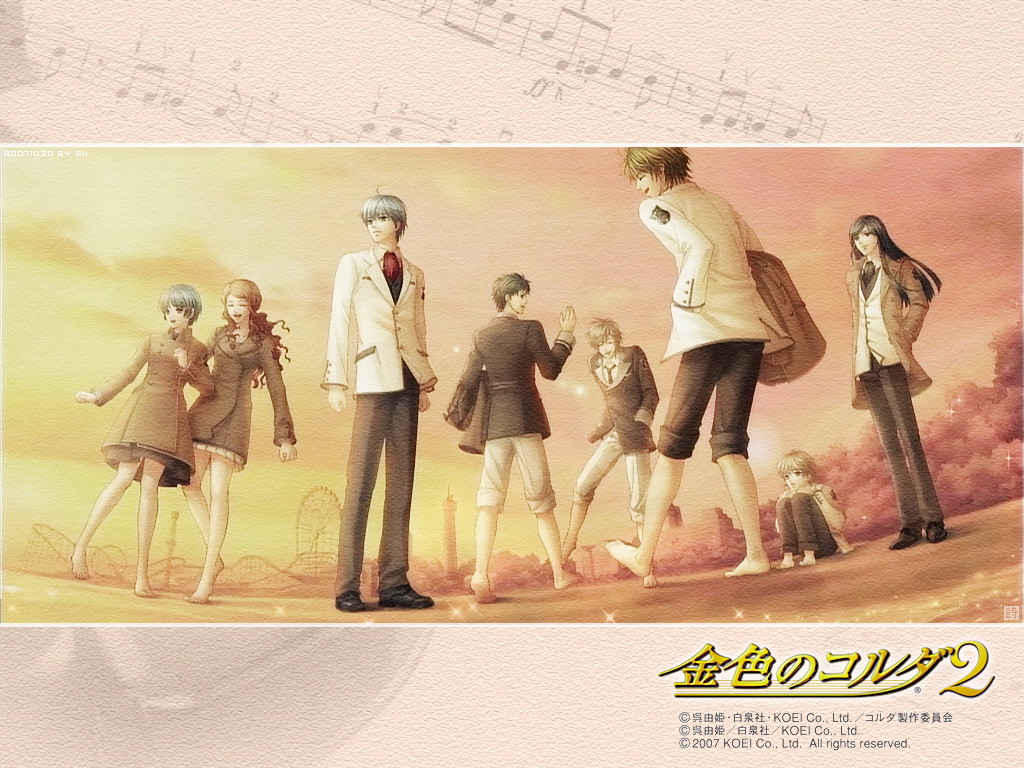
Golden Corda 2 (2f / 2ff / Encore)" is a sequel to "Golden Corda", a love simulation game for women released by Koei Tecmo Games Co.
It was released in the order of "2" and "2 Encore", with "2f", "2f Encore", and "2ff" being ported versions.
The season is autumn, and the story takes place half a year after the previous game.
The main character, a violinist, receives an invitation to perform in an ensemble concert. Then suddenly, the academy is in danger.
The protagonist and his friends work together for the success of the concert for the sake of the academy, and love and bonds grow between them.
Ryota TSUCHIURA
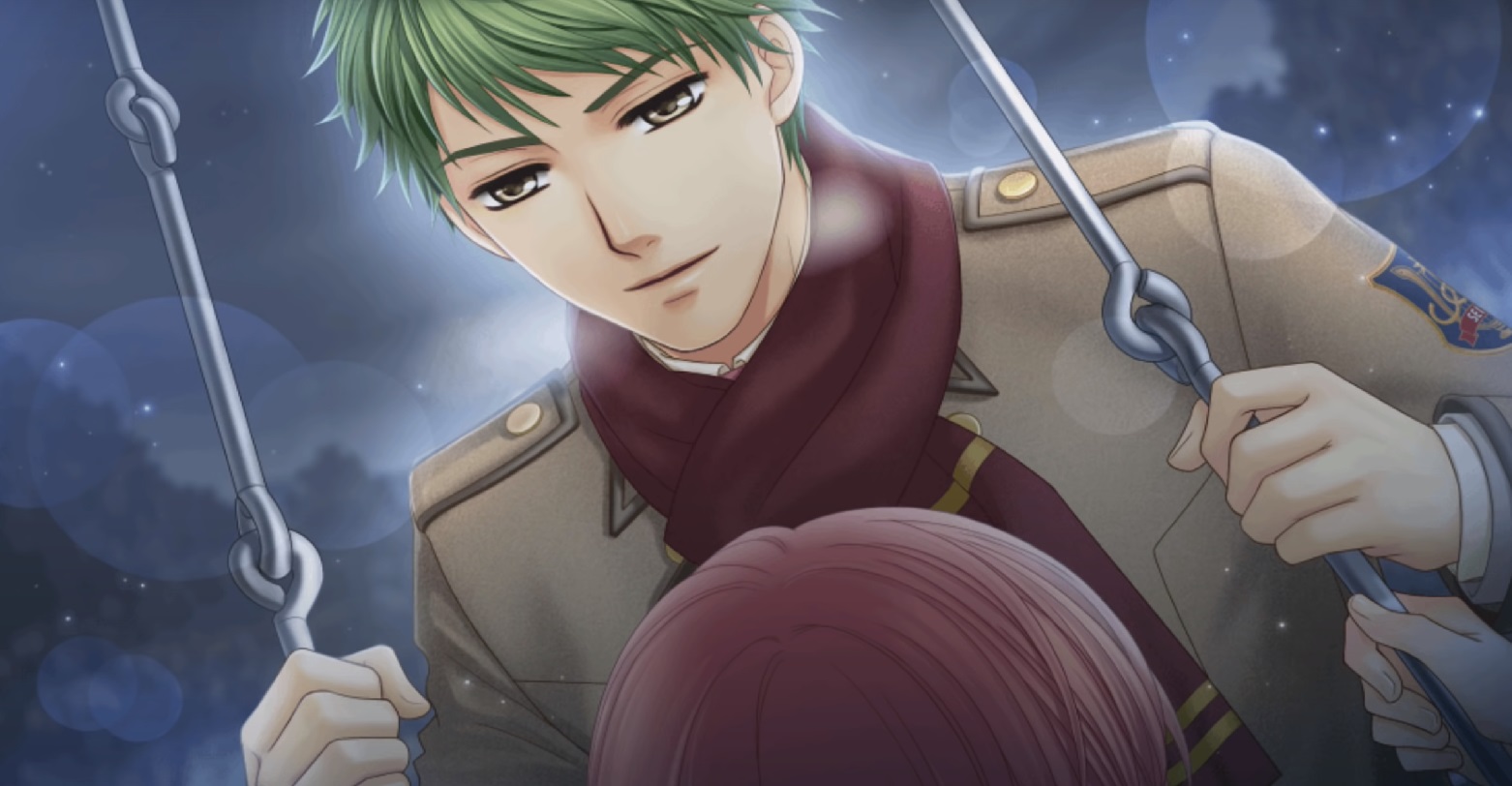
Tsuchiura and park date.
When he invited Ryotaro Tsuchiura, a piano player in the second year of a regular course, as an ensemble member to a concert at a church, he received an immediate OK from him.
Tsuchiura and the main character share the same regular course, and he was very cooperative in joining the ensemble, saying, "Let's help each other at the same time in the regular course.
On the day of the concert, a bazaar was being held around the church, and the protagonist and Tsuchiura walked among the crowd.
Among the foreign goods lined up in the bazaar, the main character finds a music box.
The music box plays the famous "For Elise" by Beethoven.
Hearing the melody, the hero remembers that a boy he does not know used to play it for him on the piano, and that it is a song that holds a special place in his heart.
At lunchtime, the protagonist and Tsuchiura are summoned by Kanazawa from the music school, who suggests that they transfer to the music department next year.
The protagonist and Tsuchiura had been recognized for their performance in the school music competition held in the spring.
Tsuchiura, who dislikes the music department, immediately refuses, but Kanazawa admonishes him to think carefully about it because it will affect his future in music, and Tsuchiura shuts his mouth.
Later, Kanazawa calls him again about transferring to the music department.
Kanazawa seemed to want to know how things were going, but Tsuchiura had already given his answer, "I will transfer to the music department.
He said that he made this decision after serious discussions with his family and thinking about his future.
On the other hand, the protagonist was still unable to give an answer and was impatient.
At the library, Tsuchiura was borrowing books on music theory and music history.
He was full of motivation as he said, "I have to prepare myself to get into the music department.
The protagonist, who was still unsure about changing schools, tried to consult with Tsuchiura, but he told her firmly, "You and I are different, and you have to make the final decision.
However, he smiles at her and says, "I'll be there for you," as if to reassure her.
After school, she hears a piano playing somewhere.
It was "For Elise," a song that the protagonist had fond memories of.
He told me nostalgically, "There was a girl who used to be happy when I played this song for her.
At the end of the final concert, Tsuchiura and the hero praised each other.
Tsuchiura said that through the concert, he had experienced the beauty of putting many pieces of music together to make one piece of music, and became interested in the conductor who builds up one piece of music.
He thanked the protagonist for making him feel that way and for inviting him to join the ensemble.
Then, Tsuchiura suddenly took out a music box he had seen at a church bazaar that day and presented it to the protagonist.
As the melody of "For Elise" played between them, Tsuchiura told an old story about himself.
Ten years ago, when I was still enjoying playing the piano, I met someone who was moved by my performance. That is when I learned that music can move people.
Tsuchiura was the very boy who played the piano that the protagonist remembered.
Ten years ago, at the spring competition, and now at this concert, Tsuchiura was always there at the turning point.
Tsuchiura laughed and said, "We are going to be friends for a long time to come," and promised the hero that he would always play "For Elise," which had become a memory for both of them.
Keiichi Shimizu
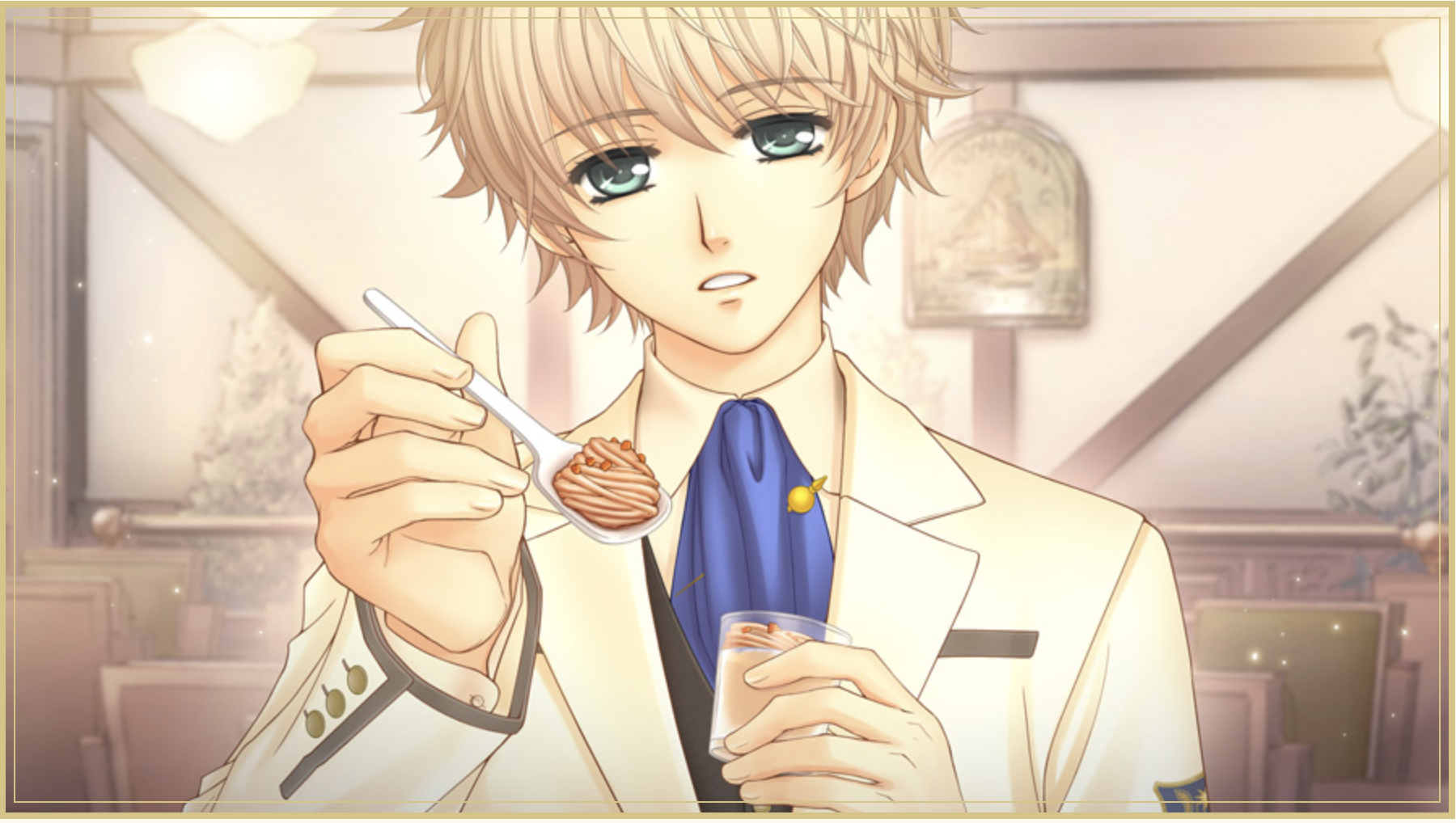
Shimizu will share his dessert at the academy cafeteria.
When I asked a cello player, Shimizu Keiichi, who is a freshman in music, to be a member of the ensemble at a church concert, he was accepted.
Shimizu seems to have been interested in ensemble performance for a long time, and it was unusual for him to be able to play at his own pace, so he got motivated.
When the main character goes to the roof to practice, he accidentally steps on a sheet of music scattered around Shimizu.
He apologized to Shimizu, but he looked relieved and said, "I'll be fine if I can read the notes."
Shimizu started composing at this time, and it seems that he scattered the score while he was absorbed in writing.
"I'm almost finished with the song," he laughed happily.
On holidays, the main character and Shimizu practice together and then head to the library.
Shimizu says that he likes to read books that are full of words.
He also learns that inspiration is important when he starts composing, so he tries to get inspiration by reading, walking, or meeting and talking with someone.
Then Shimizu began to talk about "Alma Mahler."
A beautiful Alma Mahler is a woman who inspires many artists to create, and such a person is called a "muse", a goddess of inspiration.
He told me that Shimizu is also looking for a Muse that naturally creates art when you are with it, as if it were a god.
While the main character is practicing, he meets Shimizu who is walking around.
Shimizu said that he was dreaming and looking for the sound he wanted while walking.
His method of composition is to spin a melody by piling up the sounds that he feels good.
When Shimizu asked him to help with the composition and the main character played the violin, he was pleased and said, "When I am with my seniors, I will be able to find the sound I have been looking for one after another."
One day, Shimizu asked me to go to the practice room.
So he clasped the protagonist's hands in his palm, and spoke with a smile on his forehead.
"When I'm near the main character, my heart is filled with shining things and I feel like I'm tickling and smiling. And since the sound of the main character is beautiful, every time I touch his beauty, the sound that was sleeping in his heart is recalled," he says.
Shimizu confessed, "You are my muse. I don't need anything if you have a senior." He knew that he was irreplaceable.
When the main character went to Shimizu after the final concert, Shimizu reported to him that' the song he had been composing for a long time was completed.'
The song is for the main character, and it is said that Shimizu made a sound out of his thoughts in his heart.
Shimizu plays the song on the spot, and the fertas appear around him, dancing and twinkling as if celebrating.
It was a very fantastic scenery, and the main character was also impressed by the performance.
"I want to spend Christmas with my seniors," Shimizu prayed, and the main character walked in the light that enveloped him, closing the gap between the two.
Kazuki 火原
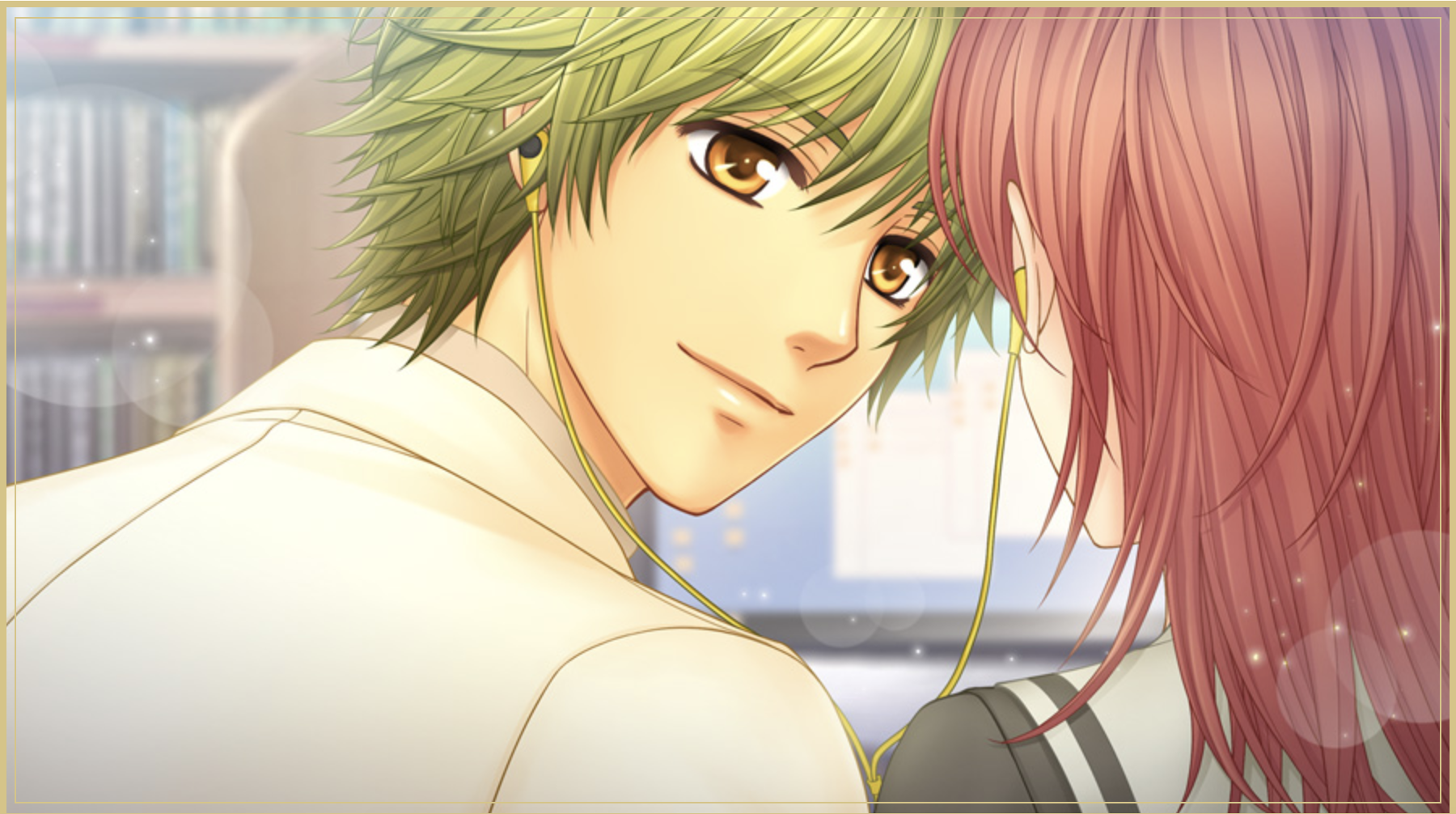
Listen to music with 火原 at the library's viewing booth.
I approached Kazuki Hihara, a third-year trumpet player in the music department, as an ensemble member for a concert at a church.
He loves events and said, "A concert? Sounds fun! Sounds great!" and he gladly joined the ensemble.
One day, Nami Amou, a member of the news department, was handing out extra newspapers at the main gate of the academy.
The article was about Hihara appearing in a TV commercial.
The main character went to see Hihara, expecting to hear him speak in high spirits, but Hihara seemed downcast and did not speak much, and did not want to talk about the commercial.
From the day the commercial was aired, the whole school was talking about Hihara's commercial.
The commercial was a refreshing image of Hihara playing the role of a young man playing the trumpet, which suited his image perfectly.
However, when the main character searches all over the school for Hihara, he finds him standing alone on an unpopular rooftop.
When the protagonist asked the listless Hibara what was wrong, he was told that the trumpet performance in the commercial was not actually his, but was replaced by a professionally dubbed performance.
The director told me that he couldn't broadcast the music of an amateur, just a high school student, all over the country. But I get compliments on my performance from everyone who thinks it's mine.
Hihara wants to tell the truth that that was not his performance, but he is unable to divulge the truth because of the confidentiality agreement he signed with the commercial.
Being an honest person, Hihara was suffering from the pain of deceiving everyone.
Amou interviews Hihara, who is the center of attention at school because of the commercial.
Amou interviewed Hibara, who was the center of attention at school because of the commercial: "What did you pay attention to when you performed, and would you like to appear in the second commercial?" Perhaps frustrated by the rapid-fire questions, Hihara tries to tell the truth to Tenba.
The protagonist, who knows what is going on, and his best friend, Yuzuki, stop him.
The two take Hihara to a deserted rooftop.
When Yuzuki corrects Hihara for trying to go public with the commercial, Hihara complains that he has had enough of keeping quiet.
Yuzuki's face contorts as he says, "It's not so much the deception, but the fact that no one around me realizes it's my performance that's making me want to scream.
Yuzuki tries to stop him in every way possible, but Hihara refuses to change his mind.
Yuzuki suddenly turns cold and cold eyes on Hihara, who has lost his temperature.
He was not prepared for the collateral damage that would be inflicted on the commercial staff and the academy if you went public with your story. Yuzuki took off her honor student mask and scolded Hihara.
Yuzuki, with the intention of calming Hihara down once and for all, revealed her true nature, which she had never shown to Hihara before.
Hihara is surprised by Yuzuki's cold attitude, which he has never seen before, but he regains his composure when he realizes that Yuzuki is sincerely concerned about him.
After Hibara calms down, Yuzuki suggests, "Let's think of a better way.
The main character, Yuzuki, and Hibara decide to take their time and think about it together, and the situation is resolved.
At a later meeting of the three, Yuzuki suggests, "Why don't we make a public announcement 50 years from now?
Yuzuki laughs and says, "After 50 years, the statute of limitations will expire, and even if something happens there, I and the main character will be there for him.
Another day, Hihara is surprised to hear from Aoi Kaji, a second-year student in the regular course, who asks him, "The performance in the commercial is not yours, is it? Aoi Kaji, a sophomore in the regular course, asks him, "The commercial performance is not yours, is it?
The thought that one day he would be able to tell the truth, and that someone like Kaji would notice his performance, seemed to lift a knot in Hihara's chest, and he gradually returned to his normal cheerful self.
The protagonist comes across Hihara with an application form for a competition.
Hihara wants to enter the competition to see how far his music can be conveyed through his trumpet performance, which was not used in the commercial.
On the spot, Hihara began to play, and the protagonist applauded the music that was uniquely his.
At the end of the final concert, Hihara thanked the protagonist for "being there for me all along.
He said that the protagonist's presence, who had always been there for him when he felt down and when he looked forward, had been a source of emotional support.
He then said, "I want to protect my performance and the things I love with my own strength," and Hibara confessed to the hero, "I want to be there for you so that I can help you whenever you have a hard time.
Azuma Yunoki
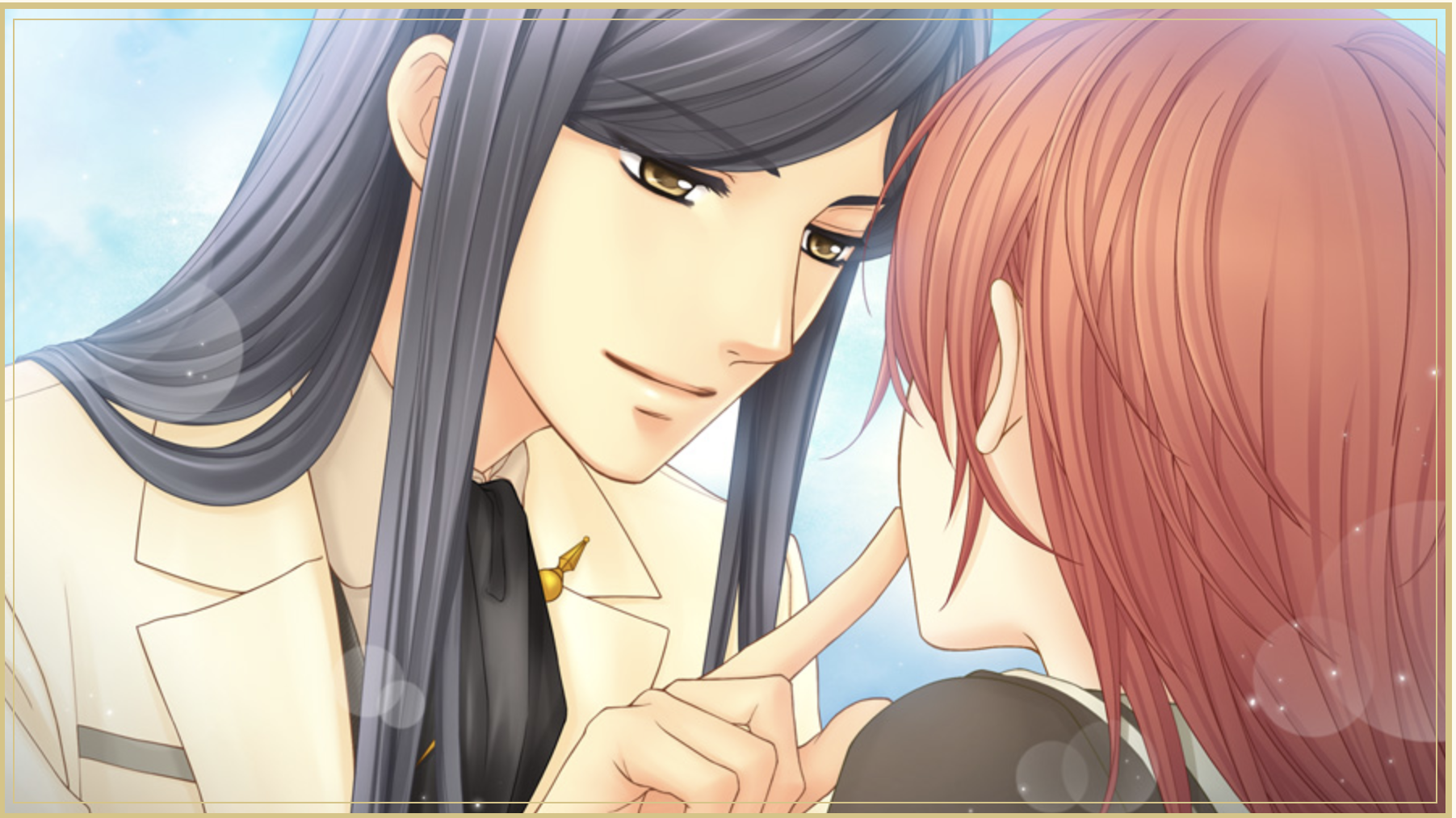
Yunoki told him not to tell,' Keep your mouth shut about my nature.'
When she asks Yunoki Azuma, a third-year music department flutist, to join her as an ensemble member for a concert at her church, he readily agrees.
However, Yuzuki's groupies around her denounce her, saying that she is too busy to bother them.
Yuzuki gently chides them, and the protagonist feels a little regretful, wondering if he has invited a difficult person....
After the concert at the church, the girls return to the academy.
Yuzuki calls out to him and the two head to the rooftop, where Yuzuki suddenly tells him to "be my wallflower," and the two freeze up.
Yuzuki has been looking for someone he can express his true feelings to without hesitation for some time, so he sets his sights on the protagonist.
Yuzuki is a good student and is trusted by everyone around him.
The protagonist is at a loss when he meets Yuzuki, who smiles wickedly at him.
During lunch break, the protagonist encounters Hihara and Yuzuki, who are discussing their future plans.
Yuzuki says that she plans to quit music after college due to family reasons.
Yuzuki is a music lover, but does he really have to quit?" Yuzuki gave him a resigned look and said, "Not everyone can choose the path they want to take.
One day, he overhears a rumor about Yuzuki.
Yuzuki's family's company is in crisis.
The protagonist is worried about Yuzuki and goes looking for him, only to be told by Yuzuki that "it's true.
Yuzuki's usual kind smile remains, but the protagonist feels that Yuzuki is somewhat overworked.
After the second concert, Hihara comes across Yuzuki looking for her.
When Hihara tells them that Yuzuki has been feeling down since this morning, the two look for him and find him standing offstage by himself.
The two rush over to him, but Yuzuki's cold attitude, "Leave me alone, please," shows no sign of the usual reserve.
Yuzuki, however, is not giving up.
In fact, he was told that his family's company was in a very dangerous situation and that they could not afford to let Yuzuki play music.
Yuzuki had agreed to do music only during high school, but it was not until she was suddenly forced to give up that she realized how much she had loved music.
Yuzuki smiled self-deprecatingly and said, "I never realized how much I loved music until I was forced to give it up.
A few days later, while the protagonist is still worrying about Yuzuki, Yuzuki calls him up and says, "I have something good to tell you.
Yuzuki's family's company has escaped from a crisis.
Yuzuki's grandmother has collapsed, and the company will be taken over by a younger generation, and Yuzuki has been asked once again to take on a part of the family business.
The protagonist is concerned, but Yuzuki does not seem as depressed as he was that day.
Yuzuki is concerned, but he does not feel the same depression as he did that day. He has learned that his family, which he thought was absolute, is more fragile than he thought, and he feels that nothing is absolute and that his promise not to go into music is not impossible.
Yuzuki smiles and says, "I'll think about what I want to do again," and I feel the strength to live a free and positive life away from the constraints of his parents' home.
The protagonist felt a change of heart from the previous Yuzuki, who had given up on everything.
At the end of the final concert, Yuzuki gave him a necklace with a key motif.
Yuzuki says, "You can open doors that never existed before." After meeting the protagonist, Yuzuki realizes that the impossible is possible, and she feels that the protagonist is the very essence of possibility for her.
Yuzuki, who had given up on everything because he was tied down to his parents' house, felt that his world had changed dramatically after spending time with the protagonist.
He decided to stop giving up and to do everything in his own way.
He said, "I think you deserve to be by my side, but am I the only one who thinks that way?"
Yuzuki gave him a teasing look, as he always did, and hugged the hero.
Aoi Kaji
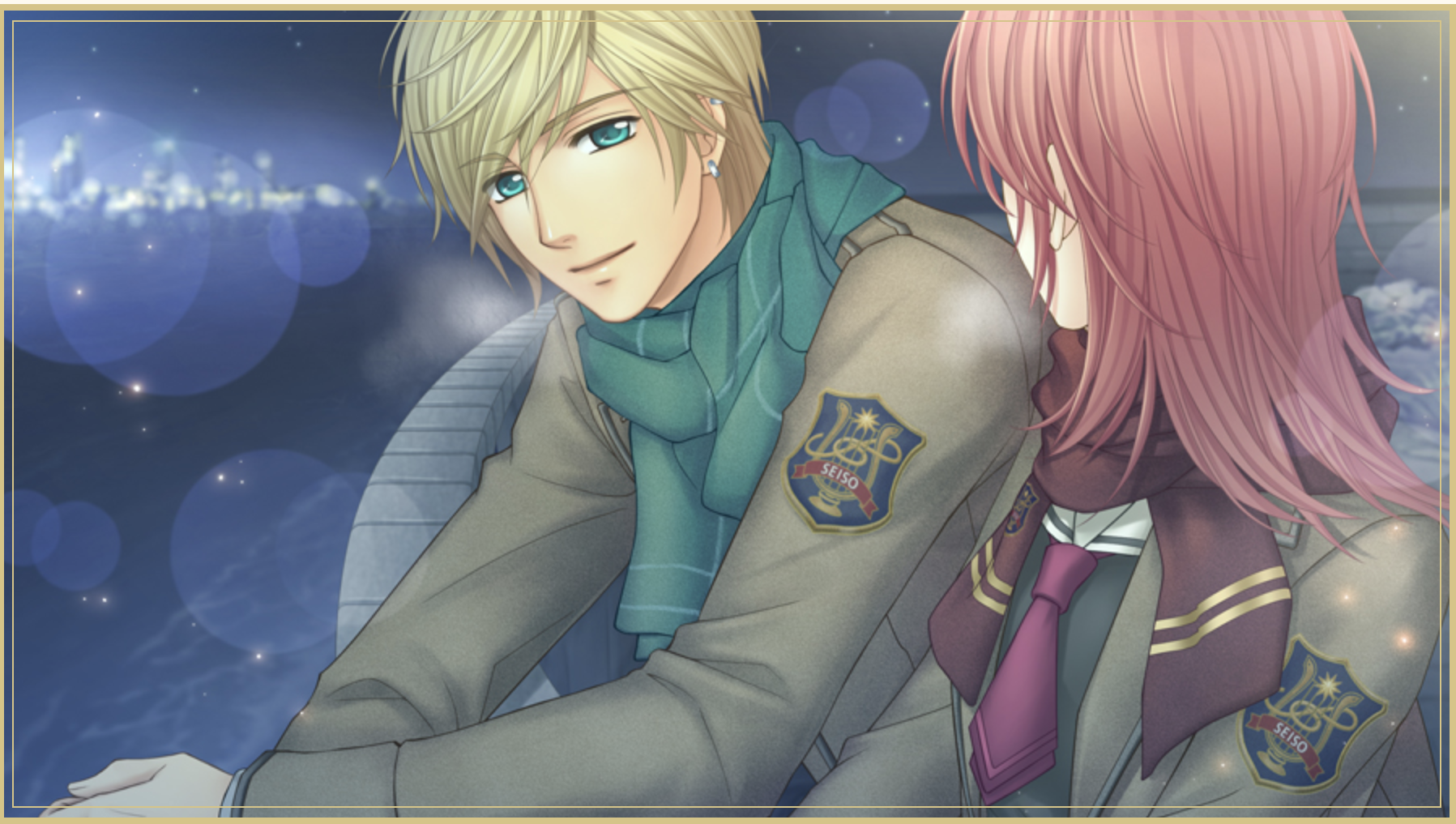
Date back from school with Kaji, stop by the park.
While the protagonist is walking around the academy looking for ensemble members for a church concert, he meets Kaji Aoi, who has recently transferred to the second year of the regular course.
There, the protagonist learns that Kaji and Shinobu Osaki, an alumnus of Hoshinade Gakuin who invited the protagonist to the concert, are acquainted with each other.
Kaji and Shinobu Oosaki used to attend the same violin school.
Does this mean that Kaji can play an instrument?
With such expectations, she invites him to join the ensemble, but he refuses, saying that he does not play the violin "anymore.
When I question him about the implied answer, he says that he still plays the viola.
He asks Kaji to join him as a viola player as a member of the ensemble.
During the rehearsals, the two talk about why they chose the instrument they are playing.
Kaji says that he chose the viola because it does not come in fractional sizes for children, and therefore he had a yearning for an adult instrument that children could not afford.
Kaji, who has a good ear, also enjoys playing the viola because he can hear the treble and bass parts when he plays the viola, which is responsible for the middle part of the sound.
Kaji laughed and said, "It is even more fun to play while listening to the sound of your violin.
After school, the protagonist sees Kaji practicing alone.
Kaji, however, did not want to be seen, and when the protagonist asked him if he wanted to practice with him, he refused. Kaji refuses to be seen, even when the protagonist asks him to practice with him.
He said, "I'm the only one in the ensemble who is at a lower level, so I can't match up with you," and left the scene.
When the protagonist was about to go home after practice, Kaji told him that he needed to discuss something with him, and they decided to go down to school together.
They stopped at a park on the way home and sat together on a bench.
He said that he had no musical talent, that there was a definite difference between his performance and that of the contestants, and that he was not worthy of being a member of the ensemble.
He also said that he admires the main character, and that is why he does not want to do anything to drag him down.
When the protagonist asks him to stay with her somehow, he reluctantly promises to continue.
However, he does not give up and says, "If you decide that I am no longer useful, you can cut me off.
While the protagonist is practicing in the plaza, Kaji hears the sound of the violin and comes over.
Kaji said, "God gave me the ability to hear what great music is, but He didn't give me the gift of music. Kaji told us about his past.
Kaji had entered a violin competition in the past, but he felt he was not as good as the winner, so he gave up playing the violin in frustration.
However, he did not hate music and continued to play the viola as a hobby, which he had always wanted to do.
Kaji met the protagonist practicing outdoors, and was instantly captivated by the sound of the protagonist's playing, the ideal sound he had always wanted to play.
Kaji says that he transferred to the new school because he wanted to see the protagonist and his playing again.
After spending time with him in the ensemble and listening to him play, Kaji said that although he could not be active musically, he wanted to continue playing the viola for his own enjoyment.
Unlike the other day, Kaji invited the protagonist to practice, and the two enjoyed the performance.
After the final concert, Kaji confesses his feelings to the protagonist.
Kaji says, "For a long time, I could not forgive myself for not being able to create great music like the contestants, but now that the concert is over, I can accept that this is who I am.
Through the concert, he realized that he loves music even if he doesn't have the talent.
I want to stop comparing myself to others and love music for things other than playing," Kaji says, and he does not feel the pain he used to feel.
He smiled and said, "Maybe I was given a good ear to praise the beautiful music of the main character.
Suddenly, Lili, the music fairy, appeared and told him, "You have already received the blessing of music, you just didn't know it.
Kaji was the only one among the concert attendees who could not see Lili, and he felt as if he were being reminded that he did not have the blessing of music.
Surprised and pleased, Kaji said, "I owe everything to you," and then confessed to the main character, "I love music, and I love you.
Kiriya ETO
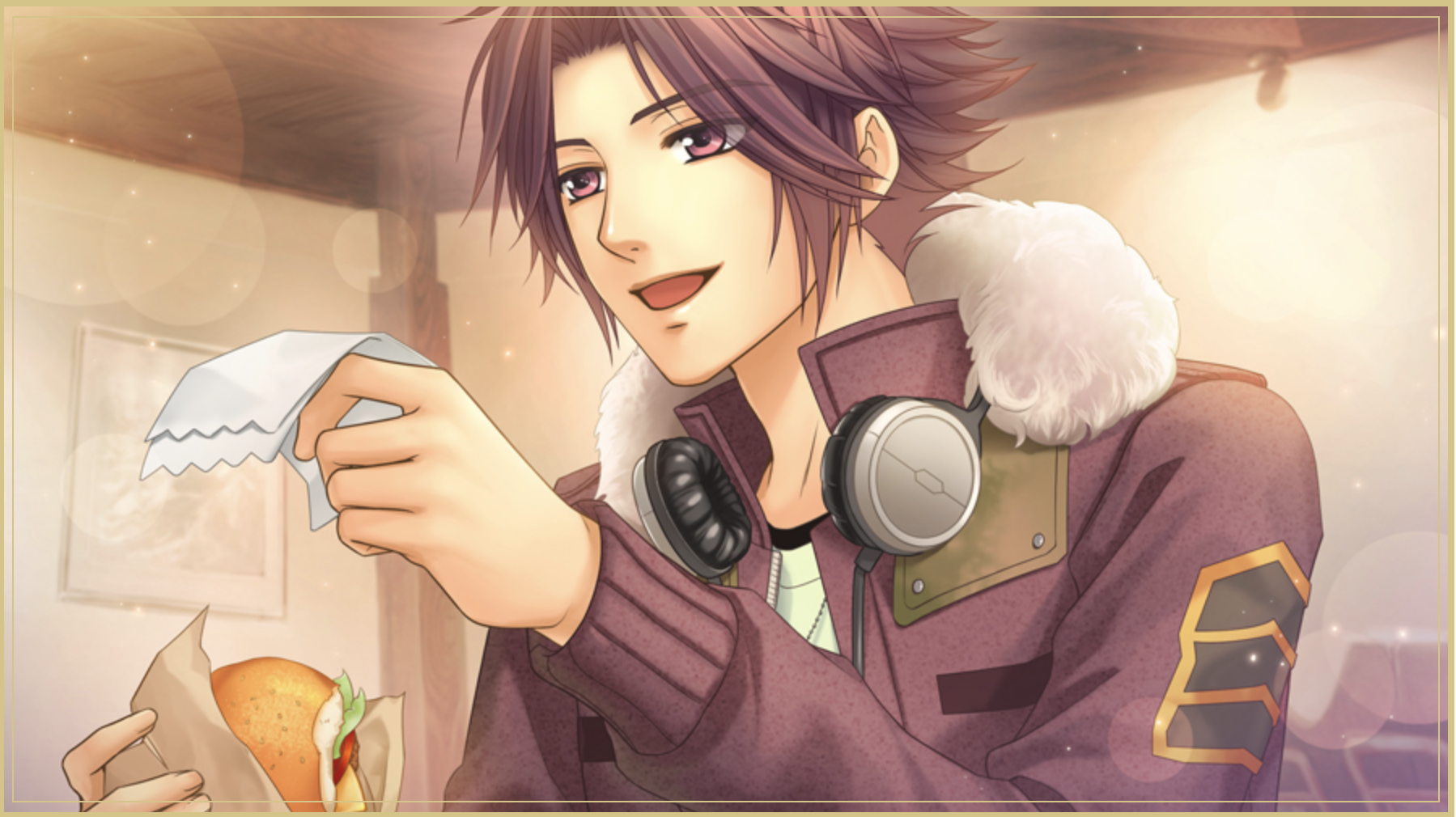
I had a holiday date with Eto and had lunch at my favorite hamburger shop.
The main character begins practicing in the academy's practice room for the concert.
As he is concentrating on his practice, a voice suddenly calls out from behind him, and when he turns around, he is surprised to see a young man in civilian clothes crouched down.
When asked why he is here, the young man nonchalantly replies that he entered on his own because the door was open.
He then teased the protagonist for not noticing him and said, "I heard that Hoshinade Gakuin is a very high level school. He then snickered and left.
On his day off, after practicing by himself, he went out with his friends.
He sees the guy who made a rude comment in the practice room the other day, and immediately chases after him and calls out to him.
He sees that he is also playing with a friend and is introduced as Kiriya Eto.
Eto sees the violin case in the protagonist's hand and asks, "Have you improved since then, practicing on your days off? and again scoffed at the protagonist's skill.
Then Eto's friend said, "Eto plays the violin too, I heard he won an international competition once, he's really good!
The protagonist learned that Eto was a high-level violin player.
When the protagonist passes by the main gate to leave school, he is approached by Eto, who had also snuck into the academy.
He is very conspicuous because he is not wearing the school uniform, but he doesn't seem to care about that.
Eto looks at the protagonist's regular school uniform and asks, "Are you a self-taught musician?" Eto looked at him in his regular school uniform and asked, "Are you a self-taught musician?
He answered, "Yes," and Eto, not knowing what he liked about him, offered to watch him practice the violin if he came to visit him on his days off.
On his day off, he went to see Eto and found him playing the violin.
Eto was playing a piece for an upcoming competition he was entering.
His friends applauded, and they urged him to play.
The friends are more than happy to hear him play, but only Eto is silent and gives him a difficult look.
Eto seemed to be deep in thought as he listened to the protagonist's performance.
One day, he receives a phone call from a friend of Eto's and goes to see him.
To his surprise, he hears that Eto has recently won a national competition.
He was in an even worse mood than usual, saying that there was nothing special to make a fuss about.
He then turned to the main character and began to lash out at him as if taking it out on him, saying that the main character's performance, which he enjoys with his friends and the audience, was sweet.
Eto said that he had been playing music to win many competitions, but after hearing the protagonist's performance, the music he wanted to play had changed.
Eto blames the protagonist, saying, "I've been playing without hesitation, but now I don't feel any response, and it's your fault that I started thinking this way.
I wish I had never met you," he said, throwing away the prize certificate of the competition and leaving the scene.
A few days later, on his way home, Eto stops him.
He told him, "I was shocked that my performance, which I thought was the strongest, had been influenced by someone else. I didn't want to admit it," he confided, and apologized for his outburst the other day.
The protagonist forgives Eto, who apologizes, saying, "I'm sorry for being so stubborn, but it's a lie that I should never have met you.
After the final concert, Eto came to see the performance and seemed impressed with the performance.
Then, in a change from the other day, he told us that he was glad to see the main character.
He said that after hearing the main character's performance, he felt strongly that he too wanted to play music that would touch someone's heart and make them feel loved.
Eto said that he will go on to Hoshinan Gakuin next year.
Seeing his smile as he said, "Wait for me," the protagonist was looking forward to next year.
Fudo 翔麻 (Fudo Myoo)
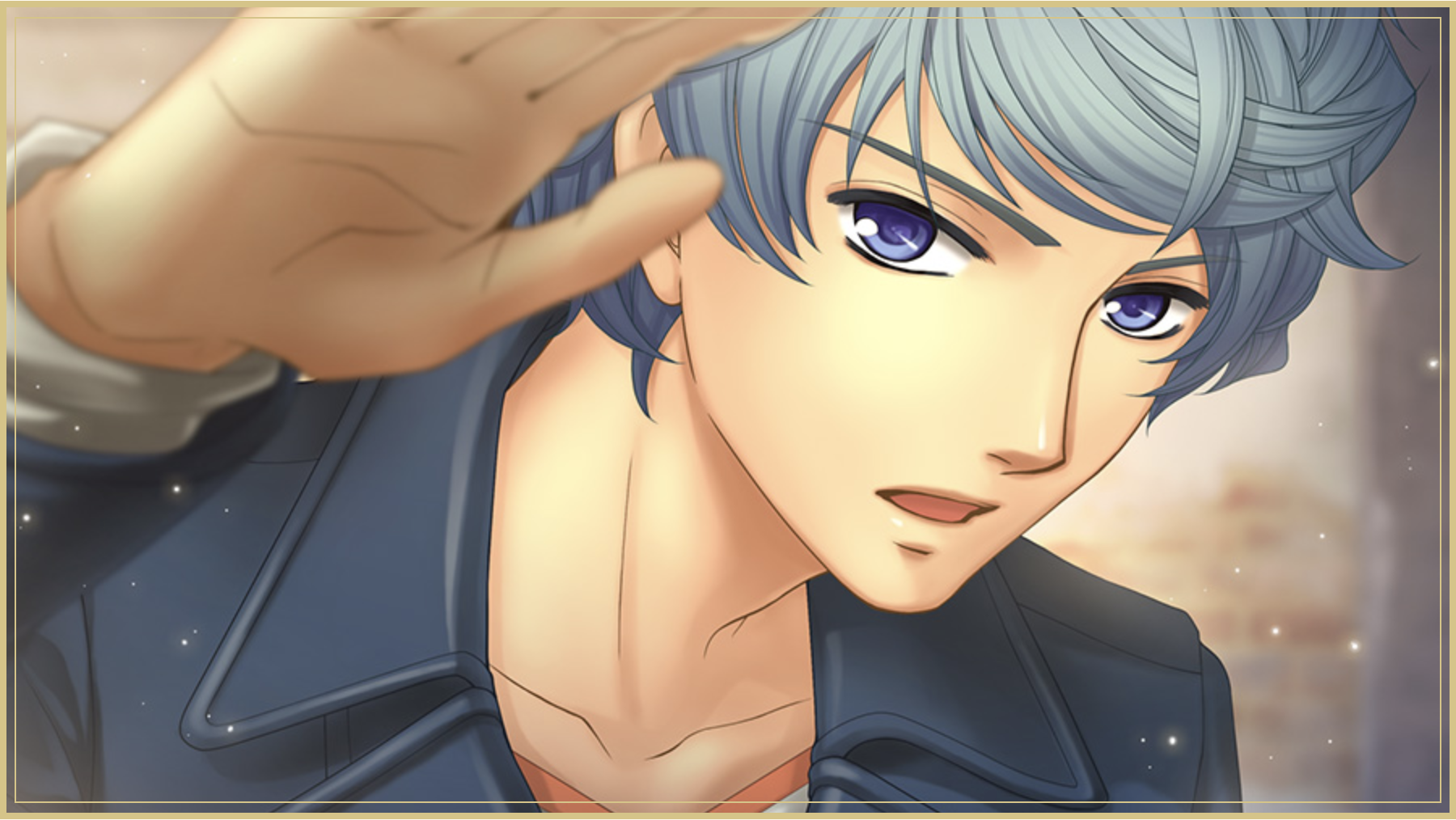
Fudou worries about the main character who has fallen.
One morning, the main character, who is about to be late and hurrying to the academy, meets 翔麻 Fudo, a third year student in the general course, who is also about to be late for school.
He nicknamed the protagonist "Pata-chan" because he was running like a goldfish.
However, the nickname reminds him of the fact that the main character was called "Pata-chan" by a boy one year older than him when he was small, and he realizes that the boy is immobile.
The main character and Fudo were childhood friends who used to get along well.
One day, the main character sees Fudo performing live on the street.
He formed a rock band and made daily efforts to create a light music club at Seongsu Academy, but there was little response from passers-by who asked why students at a school with a music department used rock music.
Even so, Fudo was not discouraged, and he was burning with fighting spirit that he would carve a proof of his activities in this academy.
Looking at him like that, the main character starts cheering for him.
Through the main character who supports him, Fudo becomes able to listen to classical music that he was not interested in until now, and he is excited by the performance of the main character.
Then, knowing that the main character was working hard for the concert with the students of the music department although it was a general course, Fudo also came to support the main character.
At the cultural festival, the Fudo band was to perform on the stage in the auditorium.
Thanks to the band performance by the main character and the ensemble members, many people gathered in the auditorium, and the performances of the Fudos, which had not been properly listened to until now, were delivered to many people.
And he got a good reputation and was able to launch the club.
The main characters, the ensemble members, and Fudo were to celebrate the launching of the cultural festival and the establishment of the light music club together, and the distance between the two was so short that Fudo began to realize that the main character was not just a childhood friend.
After the final concert, Fudo summons the main character to give him a Christmas present.
It was a picture that the main character liked when the two of them had a date before, and a picture of the two of their childhood was decorated inside.
Then, Fudo confessed to him, "I feel like I like you. Why don't you start to fall in love with me?" and the relationship between Fudo and the main character changed from childhood friend to lover.
紘人 KANEZAWA
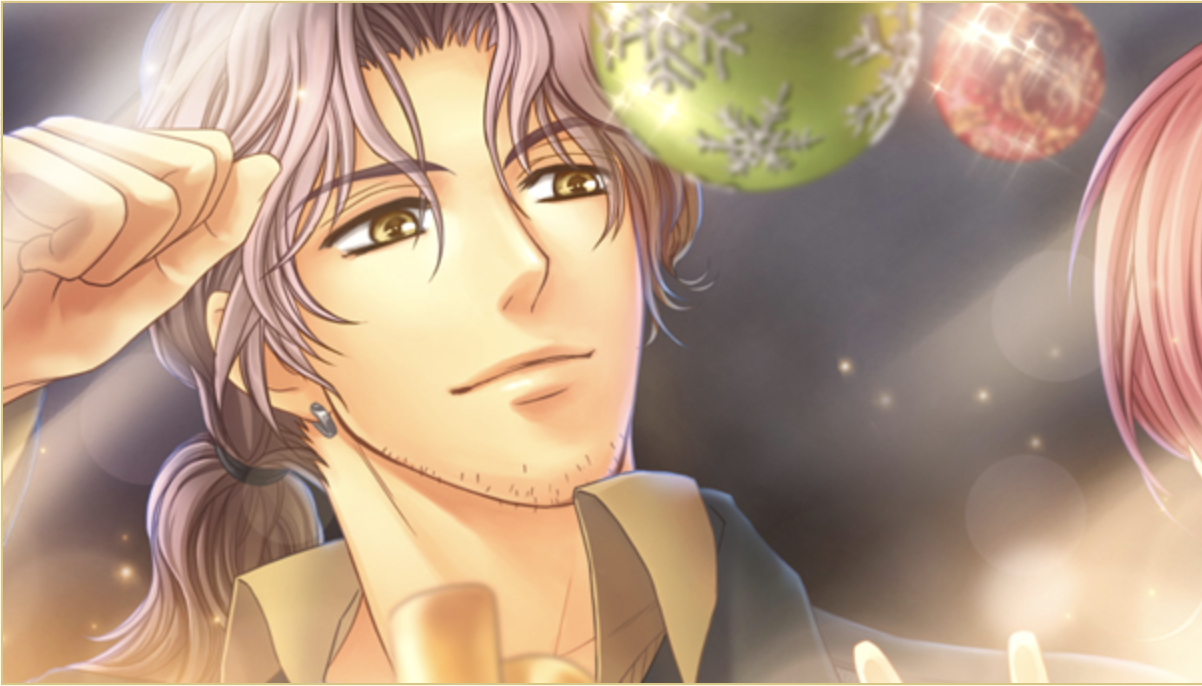
I run into Kanazawa, who practices alone on holidays.
When the main character returns home after training, he meets 紘人 Kanazawa, a music teacher who is also on his way home.
While the two were talking, a car passing by stopped suddenly, and a man came down from inside.
The man who called him "Mr. Kanazawa" was 吉羅 Akihiko, the next president of Seiso Gakuin.
Kanazawa and 吉羅 are seniors and juniors of the university itself, and they have known each other for a long time.
吉羅, who is pleased with the reunion after a long time, invites Kanazawa for a drink, and the main character is also invited, saying, "Would you like to join us?" The three of them head to the bar they are familiar with.
When Kanazawa, a heavy smoker, sits down and tries to smoke, 吉羅 stops, saying, "Please don't hurt your throat any more."
The main character knew for the first time that Kanazawa was suffering from a sore throat.
After school, the main character asks Kanazawa to listen to the performance for advice.
Although he says he is not a professional violinist, Kanazawa, who listened to his performance well, points out that he should point out certain points and sing more.
He tried to set an example by pretending to sing the point he pointed out, but he suddenly stopped.
Then he left the place with a bad look.
The main character became concerned about Kanazawa and decided to go to 吉羅 to ask about his past.
吉羅 told me about Kanazawa's past troubles.
Kanazawa used to be a top opera singer in Europe, but he retired due to a tumor in his throat.
The throat of Kanazawa, whether it was treated or not, was so irresistible that he could not produce his original singing voice.
He suffered the pain of losing his music, which he had honed with all his heart and soul.
Then Kanazawa broke in and told me about himself.
"It's true that my life was made up of songs, so I thought that a life that I couldn't sing was like a remnant, and I lost the desire to sing because I couldn't sing as I wanted."
But recently, he says he wants to sing while watching the main characters who are working hard at concerts.
"Maybe it's time for me to find a new form of music, too," he said with a smile that reassured the main character.
On the way home, he met Kanazawa again, and he had to go home with him halfway.
There, Kanazawa says he is grateful to the main character.
He said that he was able to regain his desire to sing recently because he listened to the performance of the main character who was working hard for the concert.
Kanazawa says he will seriously look for a cure for his throat.
"Even if I don't return completely, I'll sing with the voice I can now," she said, laughing as if she had blown herself out of the past.
After the final concert, Kanazawa declares to the main character, "Today's concert will be an unforgettable treasure."
He smiled and said, "If the main character goes on the path of music, I will stay with him as long as he wants." He wrapped his jacket around him and hugged him as if to warm his skin, which was cold under the cold sky.

Related Articles
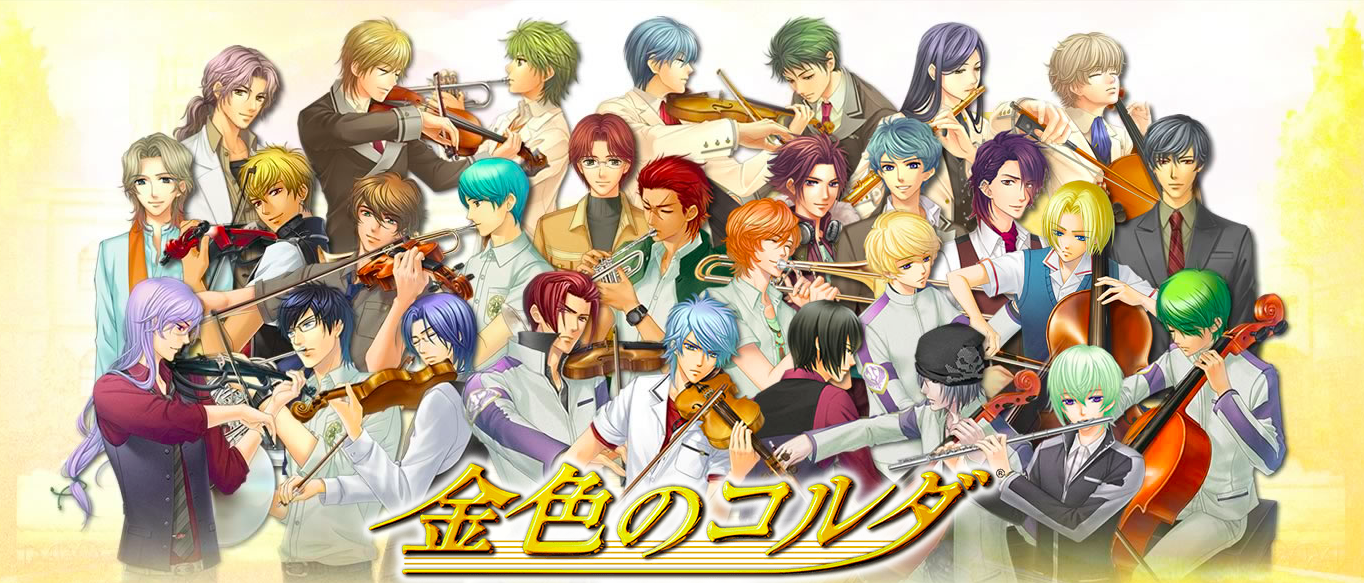
Spoiler commentary and discussion of Golden Corda (game, manga, and anime)
Golden Corda" is a love simulation game for women released by Koei. The original idea was by Ruby Party. Based on it, the character designer Yuhi Kure serialized the manga work in Hakusensha's "LaLa" magazine. The comic was published in 17 volumes. An anime was also broadcast on six TV Tokyo stations. The story is about Hino Kahoko, a complete amateur in the field of music, who is led by the music fairy Lili to fall in love with music and deepen her relationship with the people she meets through the competition.
Read Article
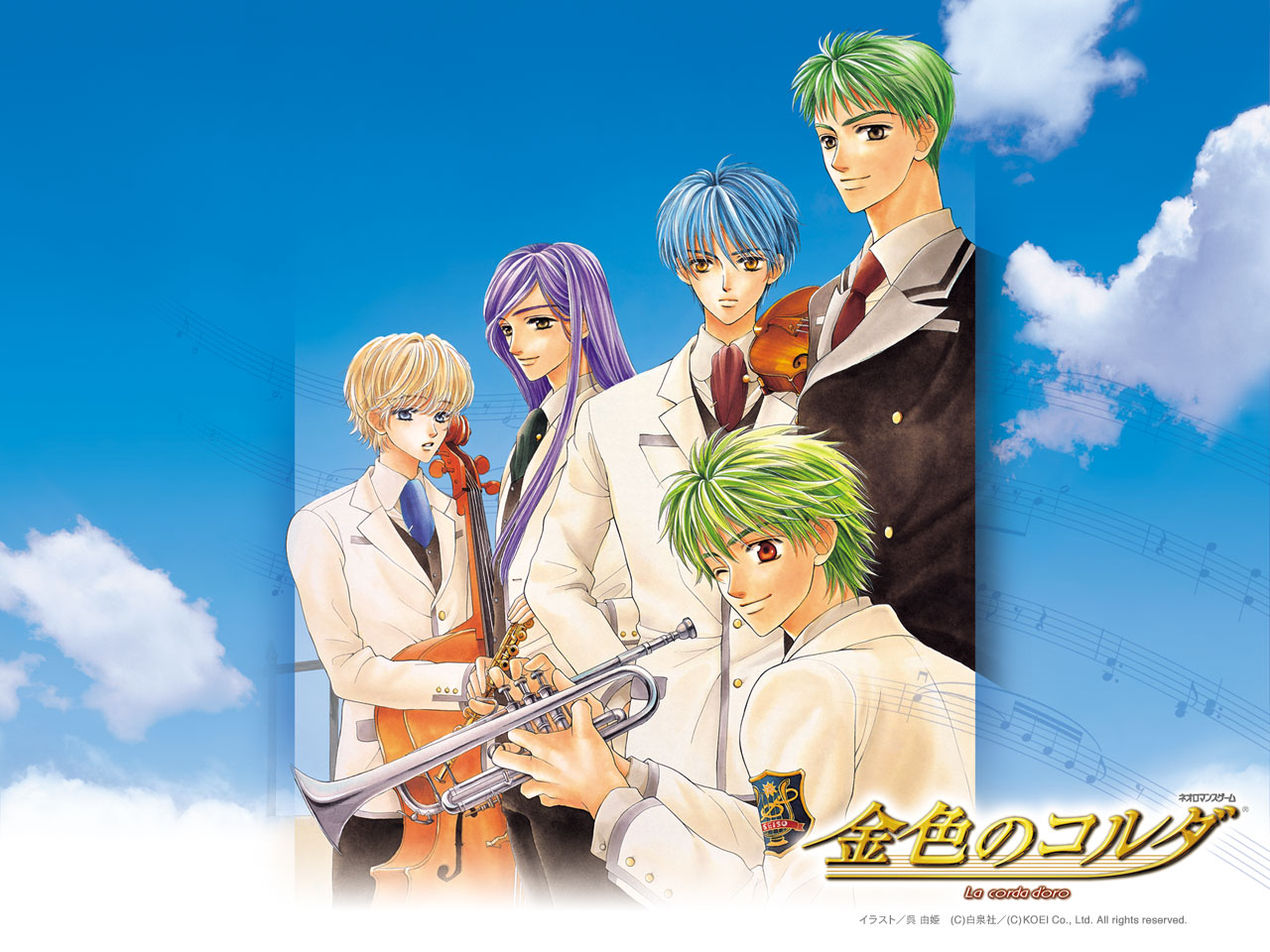
Spoiler commentary and discussion of Golden Corda 1 (game)
Golden Corda 1" is a romance simulation game for women released by Ruby Party, a development team of Koei Tecmo Games Co. It is the third title in the Neo-Romance series. It is an Otome game in which the player falls in love with rivals through "music" at a modern-day school. While practicing for a competition, the players become close to their rivals, encourage each other, and grow together with music. The main character is a violin player who can play many pieces of music in the game, allowing the player to enjoy listening to a variety of classical music while playing.
Read Article
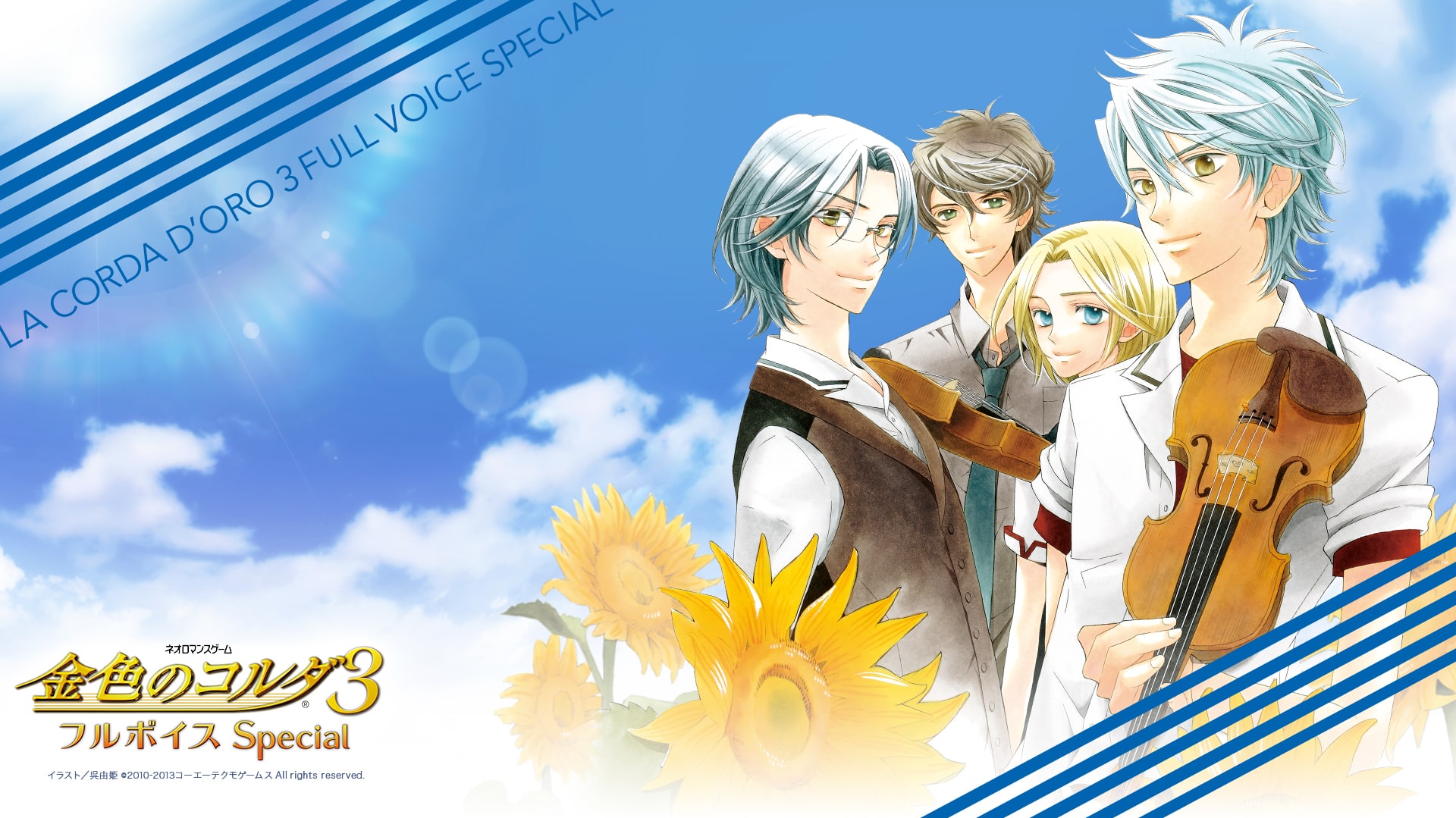
Spoiler commentary and discussion of Golden Corda 3 (Full Voice Special)
KINKIROKORU COLDER 3 (Full Voice Special)" is a new title of "KINKIROKORU COLDER", a female-oriented love simulation game with the theme of "music" released by Koei Tecmo Games Co. The season is summer, and the main character transfers to Hoshinade Gakuin after receiving a certain letter. She joins the orchestra club and aims to win the "National Student Music Competition Ensemble Division". This is a coming-of-age love story in which the protagonist and his friends run through the hot summer to win against powerful rivals from all over the country.
Read Article
金色のコルダ スターライトオーケストラ(スタオケ)のネタバレ解説・考察まとめ
『金色のコルダ スターライトオーケストラ』とは、音楽がテーマの女性向け恋愛シミュレーションゲーム金色のコルダシリーズの、スマートフォン用育成シミュレーションゲーム。世界一のオーケストラを作る夢を持つ主人公・朝比奈 唯が、日本各地を旅して埋もれた音楽家たち集め、国際コンクール出場を目指す。強力なライバルを相手に立ち向かい、仲間たちと共に勝利をつかむ青春恋愛ストーリーである。株式会社コーエーテクモゲームスから企画配信され、2024年3月にサービスが終了している。
Read Article
Spoiler commentary and discussion of Haruka 〜Beyond The Stream of Time 1 (Haruka 1)
Harukanaru toki no nakade 1" is a romance adventure game for PlayStation released on April 6, 2000. It was based on the original Ruby Party by Koei Tecmo Games, with character design by Juko Mizuno. Set in Kyoto during the Heian period, the game follows Akane Motomiya, a high school girl who is drawn into an alternate world called "Kyo. "On February 22, 2018, a renewed version of the game, "Harukanaru toki no nakade Ultimate" was released for PlayStation Vita, smartphones and tablets. iOS, Android versions have been released.
Read Article
Spoiler commentary and discussion of Harukanaru toki no nakade 2 (Haruka 2)
Harukanaru toki no nakade 2" is a romance adventure game for Windows 95 / 98 / Me. The game was written by Ruby Party of Koei Tecmo Games, with character design by Juko Mizuno, and was also released for PlayStation 2 and PSP. The game is set 100 years after the previous "Harukanaru toki no nakade 1," and the game system follows that of the first game. The game follows Hanashi Takakura, a high school girl who is drawn into an alternate world called "Kyo," which is modeled after Kyoto in the Heian period.
Read Article
Spoiler commentary and discussion of Harukanaru toki no nakade 6 (Haruka 6)
Harukanaru toki no nakade 6 (Haruka 6) is a romance adventure game for women produced by Koei Tecmo Games (Ruby Party). It is the sixth title in the "Harukanaru toki no nakade" series and commemorates the 15th anniversary of the series. The protagonist, who is leading an ordinary high school life, is suddenly summoned one day to the other world of Tokyo, the Imperial Capital, as a "child of the Black Dragon," and given the mission to defeat a grudge spirit that is tormenting people. In order to return to his original world, the protagonist is caught in a war between the imperial army and a clan of demons, and fights alongside his friends to save the world.
Read Article
Spoiler commentary and discussion of Golden Corda 3 AnotherSky (game)
The title "Kiniro no Korda 3 AnotherSky" is an IF story of "Kiniro no Korda 3", a love simulation game for women released by Koei Tecmo Games Co. The season is summer. The main character, a violinist, transfers to different schools to find her own music, and aims to win the National Student Music Competition Ensemble Division with the members of each school. The player becomes friends with the characters who appeared as rivals in "Golden Corda 3" and spends time with them, enjoying a coming-of-age romance story filled with music and romance.
Read Article
67 beautiful illustrations all at once! A compilation of end cards you got in the application "Hackador".
Do you use the subculture news app "Hackador"? You can get up to 3 free endcards per day for every article you read on "Hackador"! This time, we'd like to introduce you to 67 of the best end cards we've actually gotten! You'll have a chance to see a large number of graphics from that very famous game! It's not often you get a chance to see them all at once, is it?
Read Article
Voice Actor Satoshi Hino's Otome Game Characters! Thomas from "AMNESIA", Kiriya Eto from "Golden Corda", etc!
The following is a list of characters and characters from Otome games played by voice actor Satoshi Hino. The characters include Thomas from "AMNESIA" and Kiriya Eto from "Corda in Gold", all of whom are very attractive. If you like Satoshi Hino or are interested in Otome games, please check them out.
Read Article
Introduction of the stage "Kinkiro no Korda Blue♪Sky First Stage" ♪
Kinkiro no Korda Blue♪Sky First Stage" will be performed from 9/4 to 9/13 at Zenroko Hall. Here is a brief synopsis of the show and its charms.
Read Article
Tags
Contents
- Overview of La Corda D'Oro 2 (2f / 2 ff / Encore)
- Outline and story of "La Corda D'Oro 2 (2f / 2 ff / encore)"
- Stage of the game
- Beginning
- The first concert (church)
- Second Concert (Foundation Festival)
- Daisan Concert (cultural festival)
- Final concert (Christmas)
- Route ending of "La Corda D'Oro 2 (2f / 2 ff / encore)"
- Tsukimori Ren
- Ryota TSUCHIURA
- Keiichi Shimizu
- Kazuki 火原
- Azuma Yunoki
- Aoi Kaji
- Kiriya ETO
- Fudo 翔麻 (Fudo Myoo)
- 紘人 KANEZAWA
- Nobutake Ozaki
- Akihiko 吉羅
- La Corda D'Oro 2 (2f / 2 ff / encore) game system
- How to play
- Flow to the concert
- Deciding on "music to play"
- Gather "ensemble members"
- Forming an Ensemble
- Practice alone.
- "Ensemble Practice"
- Increase the number of workers
- Perform at a concert
- How to spend time at the academy
- Weekdays
- Holiday
- Make a successful concert
- Deciding on "music to play"
- Gather "ensemble members"
- Form an "ensemble"
- "Practice"
- Perform at a "concert"
- "Other"
- Enjoy love
- "Familiarity" and "Reputation"
- "Love Stage Update Event" and "Chaining Event"
- Conditions for Love Ending and Friendship Ending
- Types of Love Endings
- Romantic Tips
- New elements of La Corda D'Oro 2 (2f / 2 ff / encore)
- "La Corda D'Oro 2"
- New character "吉羅 Akihiko" is introduced.
- Exchange mail with Chara-den characters
- Color coding of characters on the map
- Provide insight into the strategy
- Addition of alarm function
- Characters change costumes according to the season
- "La Corda D'Oro 2f (Forte)"
- New character "Eto Kiriya" is introduced.
- Add Special Event
- Add Date Event
- Cultural Festival Events
- "La Corda D'Oro 2f Encore"
- "吉羅 Akihiko" Becomes Subject of Love
- Can inherit data from 2f
- Add Love Event
- Significant additions to other events
- Characters appear in new uniforms
- "La Corda D'Oro 2 ff (フォルテッシモ)"
- The new character "Fudo 翔麻" is introduced.
- Full Voice
- Remake all graphics and create new stills
- Adding Love Routes and New Episodes
- Launch of DLC "Best Epilogue ff"
- Characters from "La Corda D'Oro 2 (2f / 2 ff / encore)"
- Protagonist
- Hinokahoko (香穂子)
- Ensemble member
- Tsukimori Ren
- Ryota TSUCHIURA
- Keiichi Shimizu
- Kazuki 火原
- Azuma Yunoki
- Aoi Kaji
- Shoko 冬海 (Shoko Yumi)
- Other characters
- 紘人 KANEZAWA
- Shinobu OZAKI
- Akihiko 吉羅
- Nami Amau
- Riri
- "La Corda D'Oro 2f" additional characters
- Kiriya ETO
- "La Corda D'Oro 2 ff" additional characters
- Fudo 翔麻 (Fudo Myoo)
- "La Corda D'Oro 2 (2f / 2 ff / encore)" item
- Practice item
- Leather Armlet
- Metal armlet
- Analog metronome
- Digital metronome
- Silver Tuning Fork
- Digital tuner
- Handy Megaphone
- Special megaphone
- Items to increase familiarity
- Red thread
- Red Ribbon
- Present
- Dress
- Other
- Score
- Term "La Corda D'Oro 2 (2f / 2 ff / encore)"
- About Seiso Gakuin
- Seiso Academy
- General course
- Music department
- Fata
- Fatah's score
- On-campus music competitions
- Foundation festival
- Athletic festival
- Cultural festival
- After-night festival
- Reception room
- Linden's Dormitory (Linden Hall)
- Game system
- Technical Experience (Technical Lv)
- Proficiency
- Maturity
- BP (Bravo Point)
- "La Corda D'Oro 2 (2f / 2 ff / Encore)" Inside Story, Trivia, Small Story / Episode, Anecdote
- "2 ff" recorded for the first time in 8 years, many of the voice actors' impressions are "nostalgic"
- "La Corda D'Oro Encore" is for 12 years old and older
- Count-down illustration project until the release of "2 ff"
- ' 2 ff' Has Plenty Of Downloadable Content