
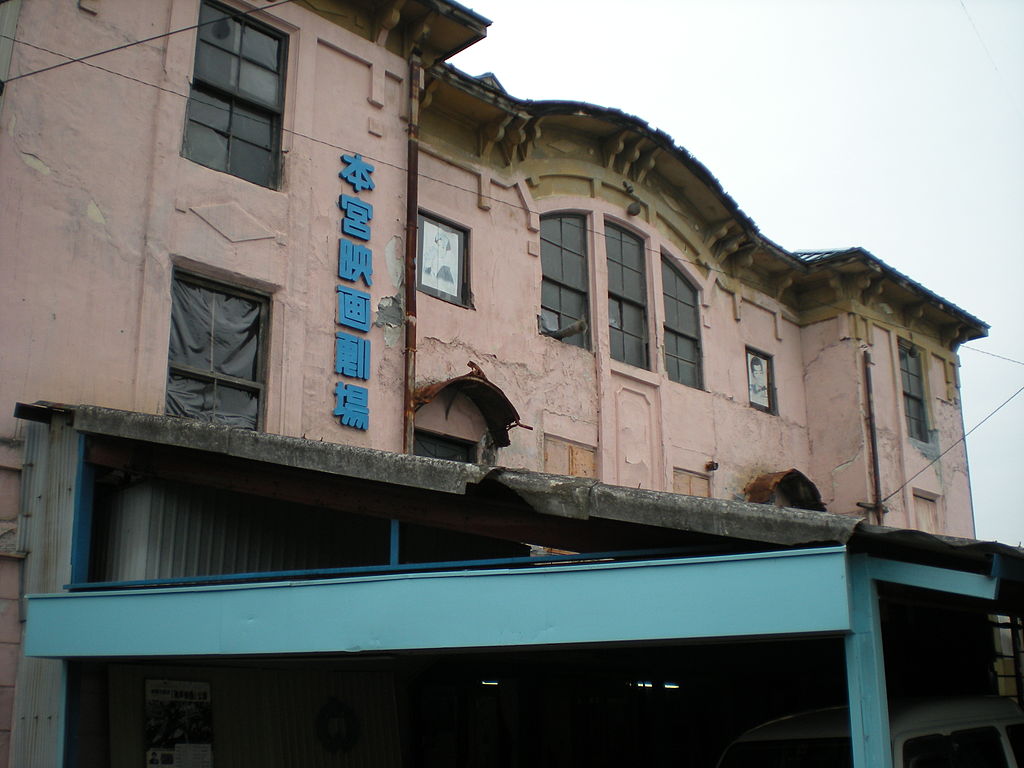
Movies were one of the greatest forms of entertainment in post-World War II Japan. People visited movie theaters all over the country and had a good time. After the war, the number of movie theaters nationwide peaked at nearly 7,500, but by the 1990s that number had dropped below 2,000. In recent years, cinema complexes (multiplexes) with multiple screens have been taking over, and the good old movie theaters are closing one by one.
This article introduces a selection of movie theaters, cinemas, and mini-theaters that continue to operate in the face of such headwinds, and that evoke a sense of Taisho retro and Showa nostalgia.
Introduction.
Introduction.
One by one, the numerous movie theaters that have been built since the end of World War II are being closed. In recent years, cinema complexes have followed suit, and sadly, the number of movie theaters that once crowded the city in the past is really decreasing.
Here, we have compiled a list of only a handful of movie theaters, mini-theaters, and movie theaters that are still in business, with location information.
We have compiled a list of 18 movie theaters ranging from nostalgic scenery and buildings that will numb your sense of time like a scene from a movie, to retro and warm spaces that will make your heart skip a beat. If you are interested in these places, please visit them.
Selected] The god directors and films that make long-form video works! Tomorrow's World - RENOTE
renote.net
Nagasuri is a filming technique in which the camera is kept rolling for a long period of time without cutting in the middle of the shot. It has a different feel from the video works that are made by shooting scenes and then editing them together, and there are many people who prefer long takes.
This article presents a selection of long takes, including Alfonso Cuarón's "Tomorrow's World" and Tarr Béla's "Nietzsche's Horse".
Selected] 20 great books to give to book lovers! Let's get to know the hearts of booksellers and authors! - RENOTE
renote.net
The medium of books is all around us. Since the accelerated distribution of e-books, books have become more accessible than ever before, partly because they are easy to read. It is difficult to find a book that you feel is a "masterpiece" among such a plethora of books.
In this article, we will introduce some great books to help you understand the mind of the author who writes the book in the first place and the mind of the publisher or bookseller who distributes the book, so that you can encounter a masterpiece from a slightly different perspective rather than randomly reading a popular book.
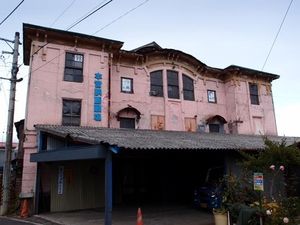
1. Hongu Film Theater (Motomiya City, Fukushima-ken)
Motomiya Movie Theater
Postal Code 969-1133
Honmiya Chujo, Honmiya-shi, Fukushima
Admission: Free
Reservations: Call 1 week in advance
Closed: Closed from December to March
Access: 5 min. walk from "Motomiya Station" of JR Tohoku Line, 10 min. drive from "Motomiya IC" of Tohoku Expressway
A movie theater that has been in operation since 1914 (Taisho 3). The theater was regrettably closed in 1963. Since then, he has been taking care of the theater and projector by himself for more than 40 years, and held a movie screening for the first time in 45 years in 2008.
Industrial Heritage that Contributed to the Modernization of Fukushima Prefecture
http://goo.gl/iFLcl
The style of the elderly who live alone -micro nirvana-" Kyoichi Tsuzuki
http://goo.gl/zh4u6
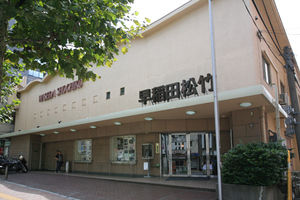
2. Waseda Shochiku (Shinjuku-ku, Tokyo)
Source: area.rehouse.co.jp
Waseda Shochiku
Postal Code 169-0075
Address: 1-5-16 Takadanobaba, Shinjuku-ku, Tokyo
Seating capacity: 153 seats
Access: 5-minute walk from Waseda Exit of Takadanobaba Station on JR Yamanote Line and Seibu Shinjuku Line
Long-established movie theater. Facing Waseda Street. Currently, it mainly screens mini-theater type films and Meiga-za films.
Official website
http://www.wasedashochiku.co.jp/
3. Ginrei Hall (Shinjuku Ward, Tokyo)
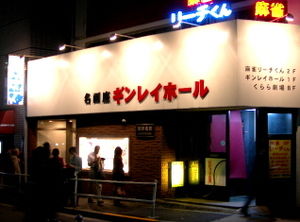
Source: maiei.exblog.jp
Ginley Hall
2-19 Kagurazaka, Shinjuku-ku, Tokyo 162-0825
2-19 Kagurazaka, Shinjuku-ku, Tokyo
Seating capacity: 206 seats
Access: Iidabashi Station, exit JR West Exit through the ticket gate and turn right. 100 meters ahead, cross the Kagurazaka-shita intersection and turn right. 100 meters along Sotobori-dori Avenue, turn left at the traffic light.
GINREI HALL is a famous movie theater started in 1974. You can enjoy two movies at one admission.
Official website
http://www.ginreihall.com/
4. Shin Bungeiza (Toshima City, Tokyo Prefecture)
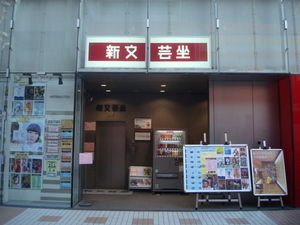
Source: ameblo.jp
Shinbungeiza
Address: 3F MARUHAN Ikebukuro Bldg.
MARUHAN Ikebukuro Building 3F, 1-43-5 Higashi-Ikebukuro, Toshima-ku, Tokyo
Access: 3 minutes walk from Ikebukuro Station East Exit
Since the days of the former Bungeiza, it has been used as a venue for live Rakugo and comedy talk shows, as well as talk shows by film directors and actors. (Source: Wikipedia)
Official website
http://www.shin-bungeiza.com/
5. Ginza Cine Patous (Ginza Tokyo)
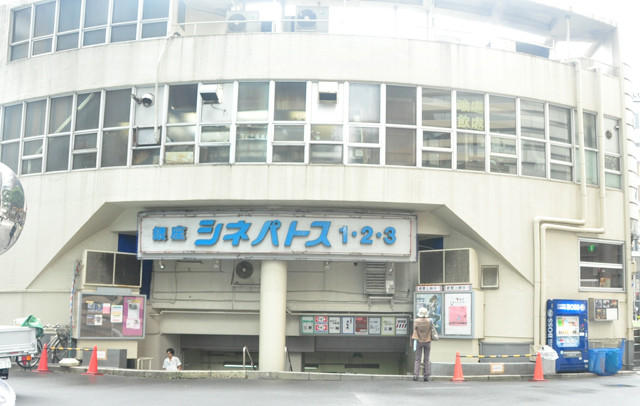
Ginza Cinepathos
Mihara-bashi B1, 4-8-7 Ginza, Chuo-ku, Tokyo 104-0061, Japan
The predecessor of two movie theaters, "Ginza Chikyokuza" opened in 1967 and "Ginza Meigaza" opened the following year.
Due to aging and seismic strength issues, the theater was closed on March 31, 2013.
6. Kawagoe Scalaza Theater (Kawagoe City, Saitama Prefecture)
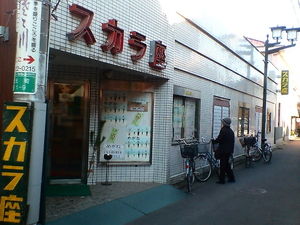
Source: blogs.yahoo.co.jp
Kawagoe Scala Theater
Saitama 350-0062, Japan
1-1-1 Motomachi, Kawagoe-shi, Saitama
Seating capacity: 124
Access: Tobu Bus Ichibangai stop, 15 min. walk from Honkawagoe Station on Seibu Shinjuku Line
The theater was forced to close for a while, ending on May 27, 2007. However, the management was handed over to "Playground," a non-profit organization with experience in holding screenings at this theater, and it reopened on August 18 of the same year with an investment of 5 million yen after recruiting supporting members.
Currently, it continues to operate as a "citizen's movie theater" that mainly screens films suitable for mini-theaters and also invites actors and film directors to give greetings from the stage and hold talk shows. (Source: Wikipedia)
Official website
http://k-scalaza.com/
7. Cinema Jack & Betty (Yokohama City, Kanagawa Prefecture)

Contents
- Introduction.
- 1. Hongu Film Theater (Motomiya City, Fukushima-ken)
- 2. Waseda Shochiku (Shinjuku-ku, Tokyo)
- 3. Ginrei Hall (Shinjuku Ward, Tokyo)
- 4. Shin Bungeiza (Toshima City, Tokyo Prefecture)
- 5. Ginza Cine Patous (Ginza Tokyo)
- 6. Kawagoe Scalaza Theater (Kawagoe City, Saitama Prefecture)
- 7. Cinema Jack & Betty (Yokohama City, Kanagawa Prefecture)
- 8. Teator Isawa (Fuefuki City, Yamanashi Pref.)
- 9. Nishio Theater (Nishio City, Aichi Prefecture)
- 10. Higashiza (Shiojiri City, Nagano Prefecture)
- 11. Palcinema Shinkoen (Kobe City, Hyogo Prefecture)
- 12. Shinsekai Kokusai Theater (Naniwa Ward, Osaka-shi)
- 13. The 7th Arts Theater (Osaka City, Osaka Prefecture)
- 14. Salon Cinema (Naka Ward, Hiroshima City)
- 15. Cinema Onomichi (Onomichi City, Hiroshima Prefecture)
- 16. Kokura Showa Museum (Kitakyushu City, Fukuoka Prefecture)
- 17. Motowatari Daiichi Eigeki (Amakusa City, Kumamoto)
- 18. Cinemasite (Nagoya City, Aichi Prefecture)