
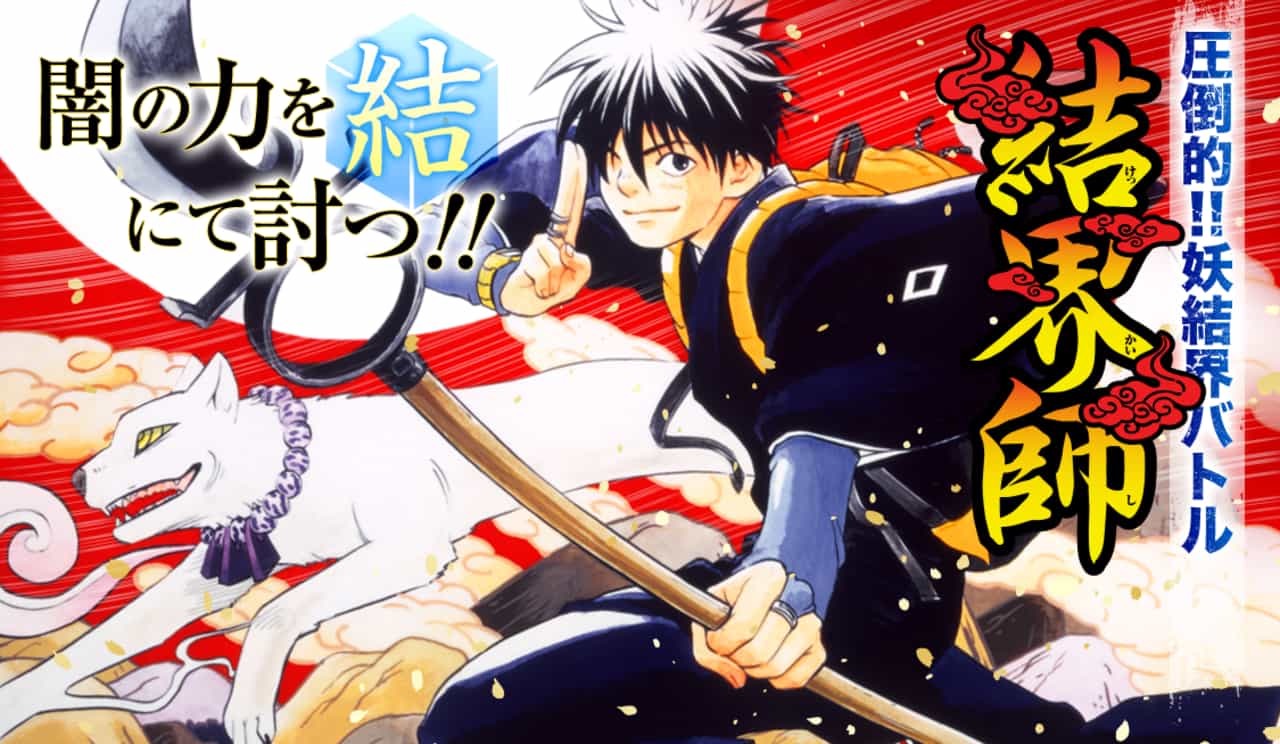
Yugai Shi" is a Japanese manga work by Yeloh Tanabe that was serialized in "Weekly Shōnen Sunday" from issue #47 in 2003 to issue #19 in 2011. It was serialized in "Weekly Shōnen Sunday" from issue 47 in 2003 to issue 19 in 2011, and won the Shogakukan Manga Award 2006 (52nd) in the category for boys. The TV anime was produced by Yomiuri TV and aired from October 2006 to February 2008. The main character, Yoshimori Sumimura, is a member of a family of warders that has been in existence since ancient times. Together with his childhood friend Tokine Yukimura, who lives next door, they use the art of "kaijutsu" to exterminate monsters and protect Karasumori, a place where spiritual energy gathers, from outside enemies at night.
Muso
In particular, Yoshimori mastered it in order to prevent the excessive supply of power from Karasumori and to avoid interference.
Kyogugenmuso
A state in which muso is heightened to the extreme and the manager appears. Without the manager appearing, the sense becomes as sensitive as possible, and the attack becomes unable to fight due to the enlarged sense of pain caused by just skimming on the cheeks. Therefore, it is a condition to decide the ideal state of muso for oneself and to have the manager who matches it appear. When the operator learns extreme muso, all the abilities of the operator are released. Yoshimori mastered this extreme muso at a much faster speed than the average operator.
Hadō
There is a breakthrough.
Utsusemi
The state in which the wave is raised to the limit. It invalidates the attack by the magical power and passes through the operator, but since it requires high sensitivity and fine control of force, it wears out the nerves if you continue to use it. Tokioto learned to meet Mahoro-sama in order to have the land necessary to seal Jushinmaru vacated.
Shikigami
The art of transforming a person or a bird into a human or a bird by putting the magical power of an operator into a talisman. Depending on the level of the operator, it is possible to make the appearance similar to a person or to use the ability.
Repair
The art of restoring a broken object using magic. Since Karasumori is the site of the school, the art of restoration is used to repair it so that it will not be noticed.
Oni-tsukai (ogre messenger)
An operator who made a contract with a tagger. The strength of the tagger who can make a contract is determined by his ability.
Amulet
A tag with a star mark. If you stick it on it, you can prevent Oyou from entering, but it has no effect on high-level Oyou.
Ayaka shimajiri
A person who is born with the power of Oyou in his or her body. It is divided into two types: the parasitic type, in which a part of the body is parasitized, and the integrated type, in which the whole body is parasitized. It changes a part of the body, such as during a battle. It is possible to make a complete change that changes the whole body, but it is prohibited because it may cause the power to go out of control.
Hako-tsukai
An operator of the spatial control system who uses a box as a magic tool.
Administrator
It can be said that they are a part of themselves, and their appearance and roles vary depending on the surgeon.
Tamagura
Power can be stored in the body indefinitely. The stored power can be used as an energy source for various techniques, and in addition to being able to control more powerful techniques, the body can regenerate itself in a short time even if it is damaged so that all of the body disappears unless the power is lost. However, since it is not ageless, if the power is not lost, the body will eventually age to the limit and will continue to live in a state as if it had died while repeating destruction and regeneration.
A person with a Konagura is called' Konagura-mochi' (' Konagura-mochi' means' Konagura-mochi'), and it refers to Mudo, Sora-shin-maru, Kakeru, and Haruka. A person with a Konagura-mochi (' Konagura-mochi' means' Konagura-mochi'), a person with a Konagura-mochi (' Konagura-mochi' means' Konagura-mochi'), a person with a Konagura-mochi (' Konagura-mochi' means' Konagura-mochi'), a person with a Konagura-mochi (' Konagura-mochi' means' Konagura-mochi'), a person with a Konagura-mochi (' Konagura-mochi' means' Konagura- 400 Kuramochi

Related Articles
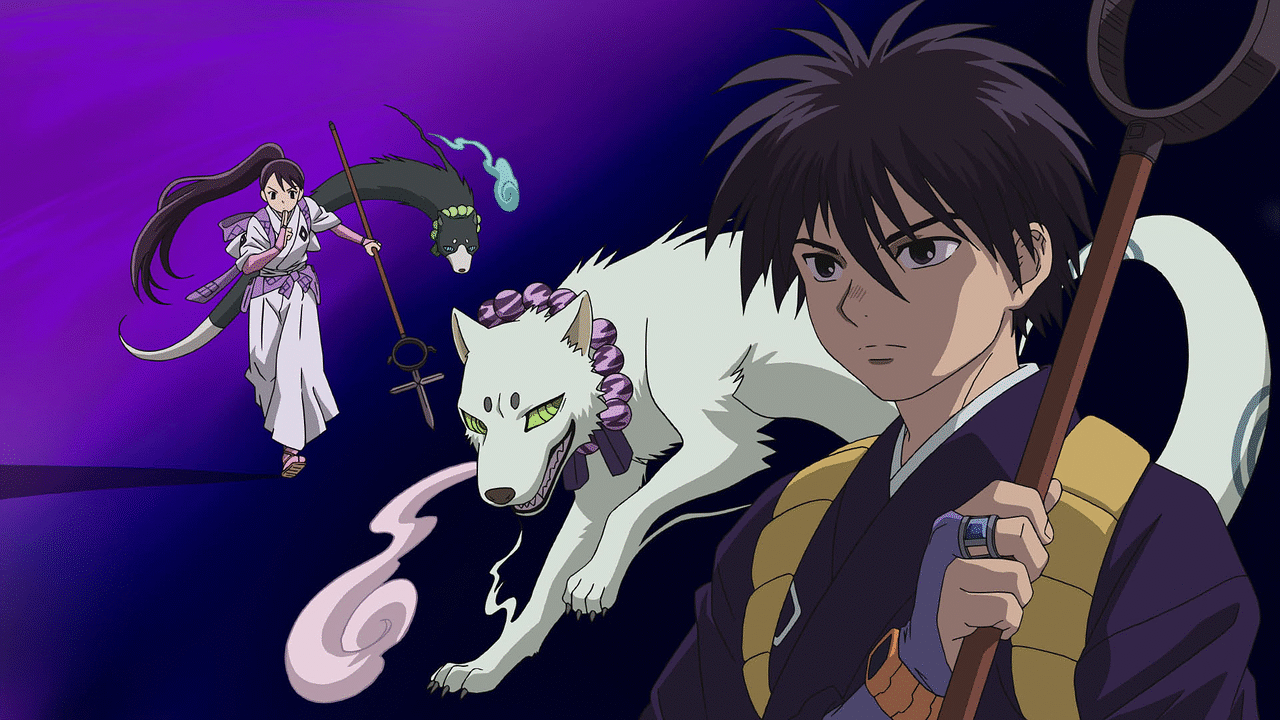
結界師の能力・術まとめ
『結界師』とは、田辺イエロウによる漫画、およびそれを原作としたアニメなどのメディアミックス作品。 妖(あやかし)退治の専門家・結界師(けっかいし)の一族に生まれた墨村良守(すみむら よしもり)が、幼馴染の雪村時音(ゆきむら ときね)とともに、夜中の学校に集まってくる妖を退治する姿が描かれる。 良守と時音が受け継いでいる間流結界術(はざまりゅうけっかいじゅつ)をはじめとして、作中にはさまざまな能力や術が登場する。
Read Article
![Hiromu Arakawa] Actually, that guy too! Summary of Female Manga Artists Who Are Often Considered Men [Fumiya Satou].](https://renote.net/files/blobs/proxy/eyJfcmFpbHMiOnsiZGF0YSI6NjQxMjg1NCwicHVyIjoiYmxvYl9pZCJ9fQ==--524fe80ece6dd3d76db56ecac9a97cc41e63511b/56dfbc2294af71ca80f1a153ca402db7.jpg)
Hiromu Arakawa] Actually, that guy too! Summary of Female Manga Artists Who Are Often Considered Men [Fumiya Satou].
Compared to celebrities and actors, comic book artists are not so much in the public eye, so some people may say that they do not know the face of the author. Although many authors include a self-portrait in the introduction of their comics, it is often deformed so that the gender of the author cannot be determined. In addition, there are many female authors who are often assumed to be male because of their style or pen names. This article introduces information on female manga artists who are often assumed to be male because of their pen names.
Read Article
Contents
- Overview of KEKKAISHI
- Outline and story of "KEKKAISHI"
- History of Karasumori
- Origin of good defense
- Return of my brother
- Goal of Yoshimori
- Emergence of strong opponents
- With my friend's death in my heart
- Final battle against the Black Tower
- Kurokabuto and Karasumori no Nazo
- A decisive battle with Mudo, the seventh guest of the Genjyuni-kai
- Kamiyuchi Hunting
- Muso no Shugyo
- Swaying lining
- The Secret of Karasumori
- Settlement
- List of KEKKAISHI characters
- Sumimura family
- Yoshimura SUMIMURA
- Sumimura Shigemori (Governor of 村繁 Province)
- Masamori SUMIMURA
- 利守 SUMIMURA
- 守美子 YUKIMURA
- Shuji SUMIMURA
- Madarao
- Shimano
- Sesson family
- Yukimura 時音
- Tokiko YUKIMURA
- Isabelle YUKIMURA
- Tokio YUKIMURA
- Shiro
- Mikeno
- Other
- Hazama-tokimori (literally, "room 時守")
- Chushinmaru
- Tsukikage (moon shadow)
- Lining
- 逢海 Hinaga
- Suigetsu (Moon and Water)
- No. 0 (0 go) / 0 (0)
- Hiura 蒼士 / Sango
- 逢海 Tsukihisa
- Kakeru
- Michiru
- Ichigo
- Nigo
- Juninkai (Society of the Twelve Devas)
- Hisatomi YUMEJI
- Kido-in Temple (Kido-in Temple) Nara
- Tatsuhime
- 冥安
- 腐部 骸次
- Gin 魅霞 Gen
- Masamori SUMIMURA
- Ichiro OGI
- Okukuni
- Kazuchika TSUMUGI
- Kitsunezuka Kihei
- 咒宝
- Former executive
- Mudo
- Night train
- Miki Hatori
- Shisho-gen (the last day of Shishi 々尾)
- Hakudo (white path)
- Ecliptic
- Sazanami Keiichi
- Kyoichi 翡葉
- Kagemiya Sen
- Akitsu Shu
- Hakoda
- Centipedes
- Hanajima Ajitora
- Yoshiro Takemitsu
- Daigo TODOROKI
- Misao
- Kasuga 夜未
- Yoki
- Laboratory
- Yashiro
- Kiyoteru YUGAMI
- Ayako Kamidera
- Saikaku of Enjo-ji Temple
- Snake eye
- Nozomi
- Saki
- Ogi clan
- Ogi Nizo
- Ichiro OGI
- Rokuro OGI
- Shichiro OGI
- Black Tower
- Princess
- White
- Kaguro
- Gagin (tusk silver)
- Shion
- Aihi
- Hekian (blue darkness)
- Koshu
- Sakon
- Hanroku (green waves)
- Sekia
- Haisen
- 茶南
- Watcher
- Karasumori Gakuen
- Hiromu TABATA
- Tomonori ICHIGAYA
- Yurina Kanda
- Mao Shinohara
- Kurosu
- Mi no Utatsumi
- Soil Jigami
- Urosama
- Mamezo (bean storehouse)
- 繭香
- Madara-sama (Madara-sama)
- Kokuunsai (Black Unsai)
- Tobimaru
- Lord of 緋田
- Other
- Heisuke MATSUDO
- Kagami
- Risa Kagami
- Yo
- Koya (Steel Night)
- Jaren
- Kurokabuto (black helmet)
- "Beholder."
- Terms of the KEKKAISHI
- KEKKAISHI
- Hazama Ryu Kekkai Jutsu
- Nenshi
- Sekkai
- Shishihōjin (Four Master Square)
- Zekkai
- Exploration Kekkai (barrier)
- Shinkai (the true world)
- Other Techniques
- Muso
- Kyogugenmuso
- Hadō
- Utsusemi
- Shikigami
- Repair
- Oni-tsukai (ogre messenger)
- Amulet
- Ayaka shimajiri
- Hako-tsukai
- Administrator
- Tamagura
- Urakai
- Juninkai (Society of the Twelve Devas)
- Yagyo (night procession)
- Tenketsu
- Trick rock
- Hitokawa (human skin)
- Enjoyu-in
- Ikai
- 妖準 Stone
- Shinyu Chichi Gari
- Muso-bako (a box with no thought)
- Soil Jigami
- Place name
- Karasumori (Crow Forest)
- Mushi-kinuma (literally, marsh ")
- Kuro Japanese pampas glass (black awn)
- Aibazan (meeting Mt. Hayama)
- Tanyu no Kamiyūchi
- 緋田 Village
- Arashizaki-jinja Shrine
- Hakuma
- Words, lines, scenes from "KEKKAISHI"
- IN HIS CHILDHOOD, HE HURT THE SOUND OF TIME WITH THE SWEETNESS OF YOSHIMORI.
- 々尾 no Jigen, killed by Kakuro
- THE AWAKENING OF YOSHIMORI, WHO SHOWED A GLIMPSE OF THE POWER THAT DWELLS IN HIS BODY.
- Behind the Scenes, Trivia, Small Stories / Episodes and Anecdotes of "KEKKAISHI"
- THE STRONGEST CHARACTER IS YOSHIMORI'S MOTHER.
- Anime discontinued
- A life-size hero, Yoshimori, depicted by a female author.
- The heroine 時音 is made with the image of an older and slightly thorny beauty.
- Hard-working backstage hero Masamori
- Theme song and insert song of "KEKKAISHI"
- OP (opening): Saeka Uura "sha la la - Iakashi NIGHT -"
- ED (ending): "Akai ito" (The red thread) by Koshi Inaba (Chapter 1 to Chapter 15, Chapter 38, Chapter 40, Chapter 48, and Chapter 52)
- ED (ending): Aiko Kitahara, "No Matter Where You Look in the World" (Episodes 16-23, 39, 44, 51)
- ED (ending): "Maimirai" (Tales 24 to 30, 41, 46, and 49) by Saeka URA
- ED (Ending): Saeka URA, "Break Time 10 Minutes" (Chapter 31 to 37, 42, 43, 45, 47, 50)