
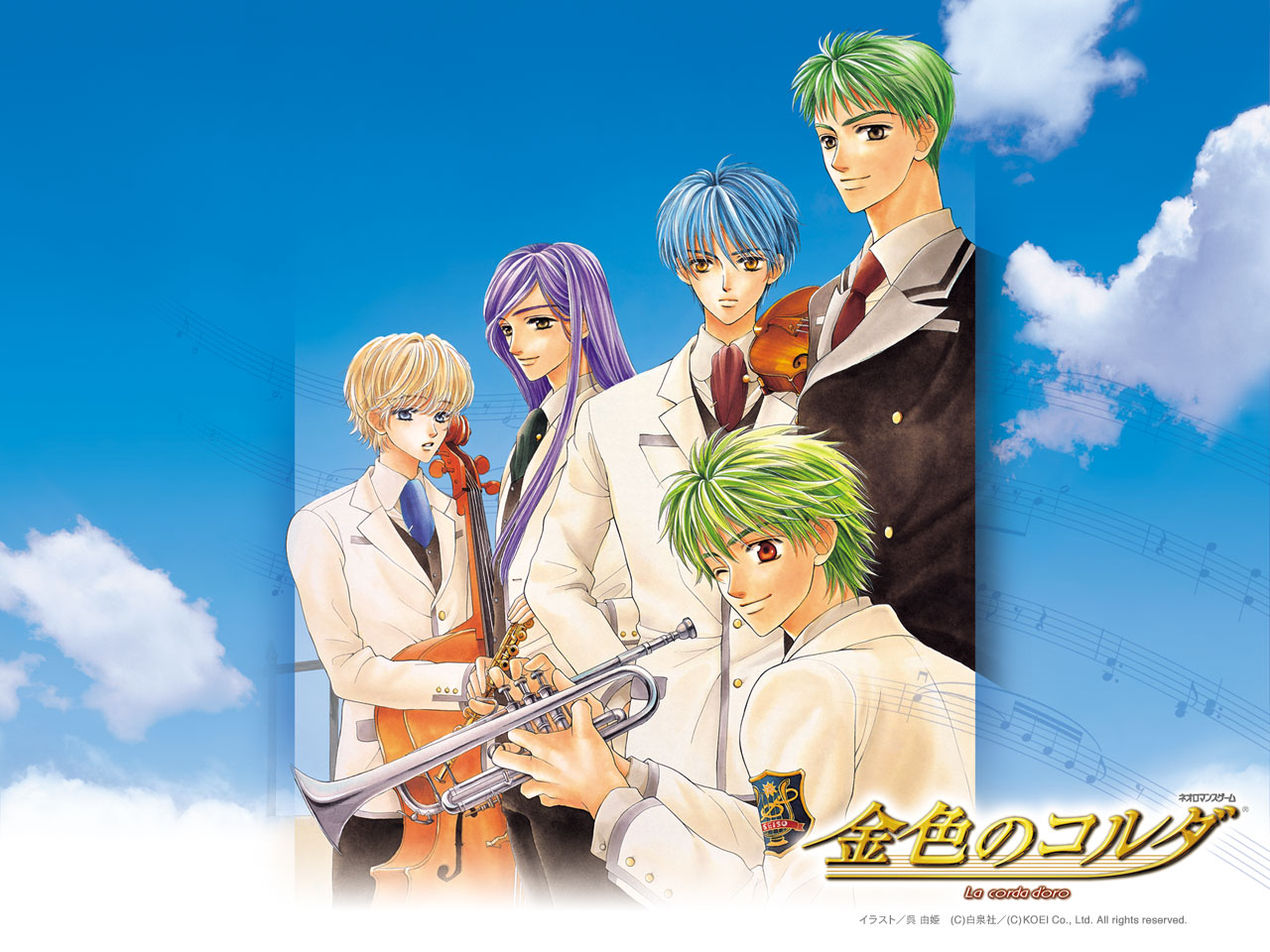
Golden Corda 1" is a romance simulation game for women released by Ruby Party, a development team of Koei Tecmo Games Co. It is the third title in the Neo-Romance series.
It is an Otome game in which the player falls in love with rivals through "music" at a modern-day school.
While practicing for a competition, the players become close to their rivals, encourage each other, and grow together with music.
The main character is a violin player who can play many pieces of music in the game, allowing the player to enjoy listening to a variety of classical music while playing.
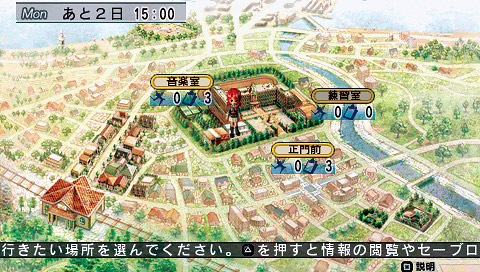
A map of places in the school where you can practice. You can select a place to practice.
In order to play, you first need a technical level.
Each piece of music has a required level of skill, and if you don't have the required skill, you can't play the piece.
The more difficult a song is, the more technical it requires.
Therefore, they need to improve their skills through training and challenge themselves to more difficult scores in order to win the competition.
High-tech songs also give you more experience to improve your performance and make your competitors more competitive.
It is important to start with low-level scores and practice a lot.
By selecting "Music Score Practice" from the "Practice" command in the upper left of the play screen and practicing, the player can improve his or her own technical level.
Exercise Procedure No. 3 Improving Your Musical Score

She chose to practice music notation. Her progress here is 100 (upper limit).
The next step is to improve the performance of the score.
When you practice a sheet music, you get better at it.
Since the' interpretation' required for performance cannot be practiced until the level of improvement in the score is 20 or more, it is necessary to practice the same score many times to improve the level of improvement.
At a level of 20 or higher, you can find a fata with a "bell of interpretation" that enriches the expression of the performance.
At 100, you can learn a certain technical skill and play more songs.
It is good to practice the same score many times to improve your skill.
By selecting "Music Score Practice" from the "Practice" command in the upper left of the play screen and practicing, the user can improve the level of the music score.
Exercise Procedure No. 4 Collect interpretations of songs
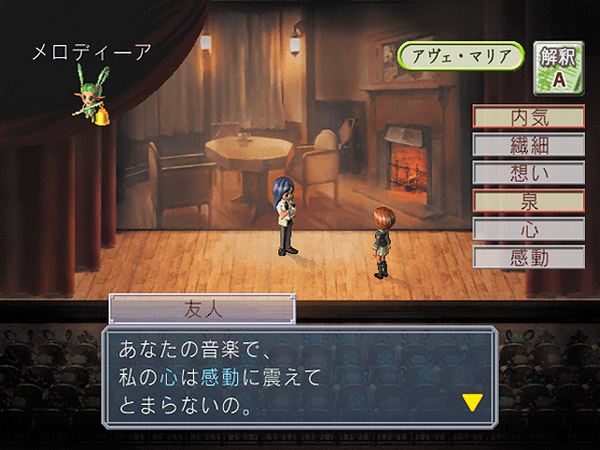
The bell of interpretation is ringing. Keywords in the theme are shown in yellow.
It then gathers the "interpretation" needed to express the song.
Interpretation is like the idea of how you feel, how you feel, how you express the music.
By collecting interpretations, even the same song can be played in a more profound way with your own expression.
This interpretation can be selected at the time of performance by collecting and sounding the "bell of interpretation."
The bell of interpretation is held by a fatah called "Rahme."
If you improve your score by 20 or more, you will see rames everywhere in the school.
Since the place where you can hear the music of the score faintly while walking is the appearance point of Rahme, you can find Rahme by looking for the sound.
You can also get a few keywords by ringing a bell of collected interpretations.
Some of these keywords are in line with the theme of the competition, and a piece of music is judged to be in line with the theme if it is played with an interpretation that includes more of these keywords.
For example, if the theme is "things that are pure (清麗)," it is necessary to obtain keywords that match the expression of 清麗, such as "Uchimi, Izumi, Otome, Kiyomi, Shizen, and Aisuru Kokoro."
The more keywords that fit the theme, the higher the score in the competition.
By selecting "Bell of Interpretation" of the "Practice" command in the upper left of the play screen, it is possible to select and ring the bell of the interpretation desired to be obtained.
Exercise Step. 5 Raising the Representation Level
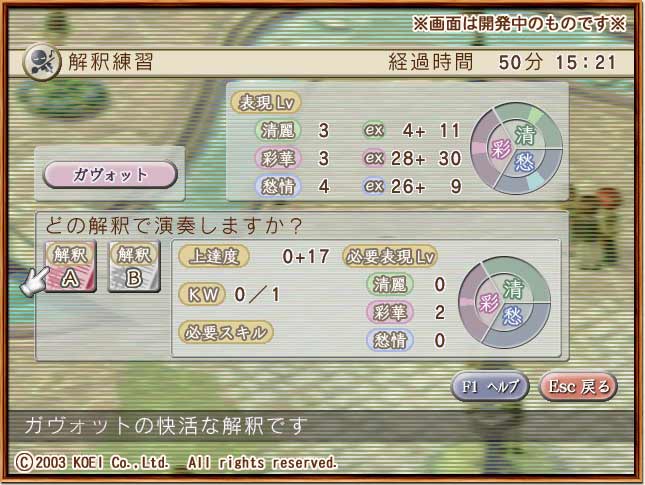
An interpretation exercise in which the expression Lv required to play a piece of music is shown at the lower right.
Next, the expression level of the musical score is raised.
In order to perfect the performance, it is necessary to enrich the expressive power, so it is necessary to improve the level of expression by practicing interpretation.
There are three types of expressions: "清麗", "Saika" and "愁情", and the level of expression required for the music that matches the theme of the selection is raised.
If you practice "清麗" level with 清麗 music, "Saika" level with Saika music, and "愁情" level with 愁情 music, you will be able to improve efficiently.
By selecting "Interpretation Practice" of the "Practice" command in the upper left of the play screen, the interpretation practice can be performed and the expression level can be raised.
Exercise Procedure No. 6 Deepening the Selection Theme Interpretation
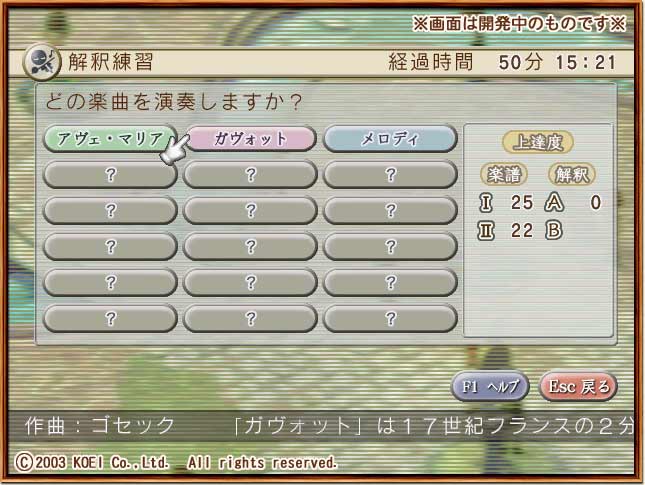
Finally, the degree of improvement in the interpretation of the musical score is further improved to enhance the perfection of the music.
- Improve your musical score
- Get the keyword you got at the interpretation bell
- Raise the level of expression
By doing the above, it is possible to finish the interpretation practice, and proceed to the finish of the music.
In the interpretation practice of the music, if the numerical value is low, only a low level performance can be performed, but by repeating the practice, it is finally completed to a performance of perfection.
It is good to practice the interpretation many times and brush up the music that you have interpreted in your own way to improve the perfection.
By selecting "Interpretation Practice" of the "Practice" command in the upper left of the play screen, it is possible to perform interpretation practice, and to increase the level of improvement in interpretation.
Exercise Procedure No. 7 play in concert
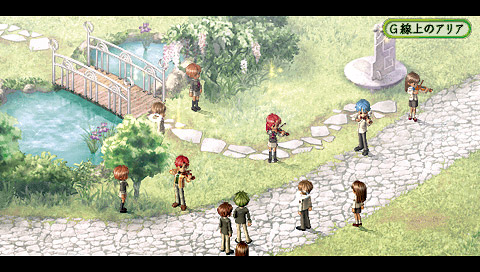
If they can practice the interpretation of scores, they will be able to play with others.
The usual interpretation practice is performed by one person, but the ensemble can be performed by two to five people.
An ensemble can be performed under the following conditions.
- Score proficiency is 30 or higher
- Ringing the bell of interpretation
- I have been practicing interpretation even once.
・ Increasing the closeness of the target character
When practicing, a circle of musical range appears around the main character, but if there is a character with an instrument in this circle, it is possible to play the ensemble.
It can be played with the participants of the competition, the students of the music department, and Ozaki who is an alumnus of the music department.
In order to perform an ensemble, it is necessary to increase the intimacy of the target character, so it is important to get involved with as many people as possible.
By selecting "Ensemble Practice" of the "Practice" command in the upper left of the play screen, it is possible to perform the ensemble with the surrounding people.
Time available for practice
You can practice from 15:00 to 18:00 after school on weekdays, and from 12:00 to 18:00 on weekends.
It takes more than a few tens of minutes to practice a piece of music, so you need to spend your time efficiently.
Where to practice
In the early stages of the game, you can practice only in the practice room, the front gate, the music room and this Sankasho.
After that, as you proceed with the selection, the places where you can practice, such as the rooftop, the lecture hall, the entrance, the forest plaza, and the viewing space, will increase.
You can also practice at the park and Ekimae-dori on weekends.
Selection Theme
First Selection
Any one of the following themes: "Things that are pure (清麗)," "Things that are gorgeous (saika)," or "Things that are cut (愁情)."
Second Selection
One of the themes "Unseen things (清麗)", "Beloved things (Saika)", or "Hidden things (愁情)"
Third Selection
One of the themes "Things to Protect (清麗)," "Things Freed (Saika)," or "Things Lost (愁情)"
Final Selection
One of the following themes: "Things Imagined (清麗)," "Things Released (Saika)," or "Things Lost (愁情)"
What You Get from Musical Score Practice

Related Articles
Spoiler commentary and discussion of Golden Corda (game, manga, and anime)
Golden Corda" is a love simulation game for women released by Koei. The original idea was by Ruby Party. Based on it, the character designer Yuhi Kure serialized the manga work in Hakusensha's "LaLa" magazine. The comic was published in 17 volumes. An anime was also broadcast on six TV Tokyo stations. The story is about Hino Kahoko, a complete amateur in the field of music, who is led by the music fairy Lili to fall in love with music and deepen her relationship with the people she meets through the competition.
Read Article
Spoiler commentary and discussion of Golden Corda 2 (2f / 2ff / Encore)
Golden Corda 2 (2f / 2ff / Encore)" is a sequel to "Golden Corda", a love simulation game for women released by Koei Tecmo Games Co. It was released in the order of "2" and "2 Encore", with "2f", "2f Encore", and "2ff" being ported versions. The season is autumn, and the story takes place half a year after the previous game. The main character, a violinist, receives an invitation to perform in an ensemble concert. Then suddenly, the academy is in danger. The protagonist and his friends work together for the success of the concert for the sake of the academy, and love and bonds grow between them.
Read Article
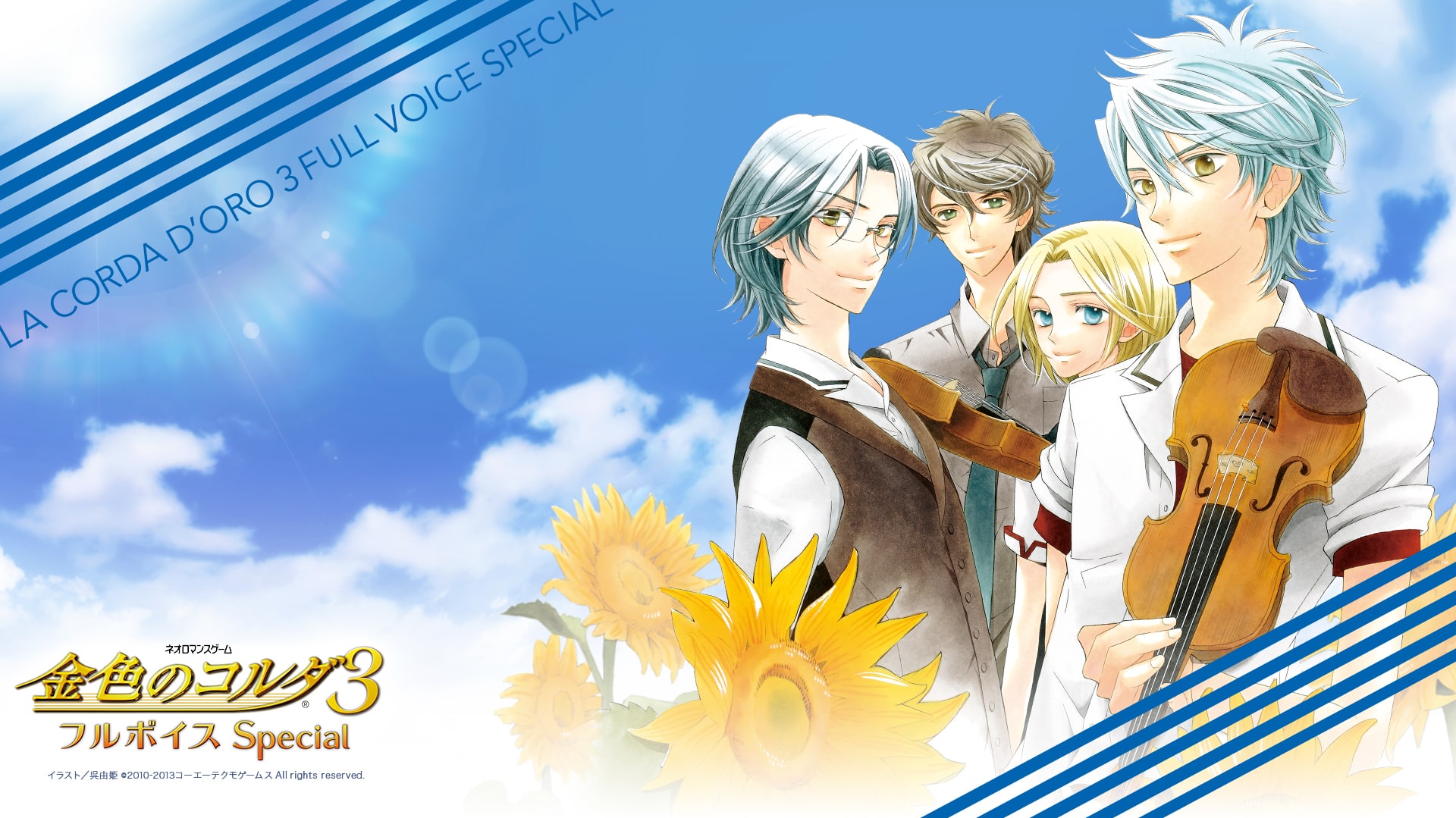
Spoiler commentary and discussion of Golden Corda 3 (Full Voice Special)
KINKIROKORU COLDER 3 (Full Voice Special)" is a new title of "KINKIROKORU COLDER", a female-oriented love simulation game with the theme of "music" released by Koei Tecmo Games Co. The season is summer, and the main character transfers to Hoshinade Gakuin after receiving a certain letter. She joins the orchestra club and aims to win the "National Student Music Competition Ensemble Division". This is a coming-of-age love story in which the protagonist and his friends run through the hot summer to win against powerful rivals from all over the country.
Read Article
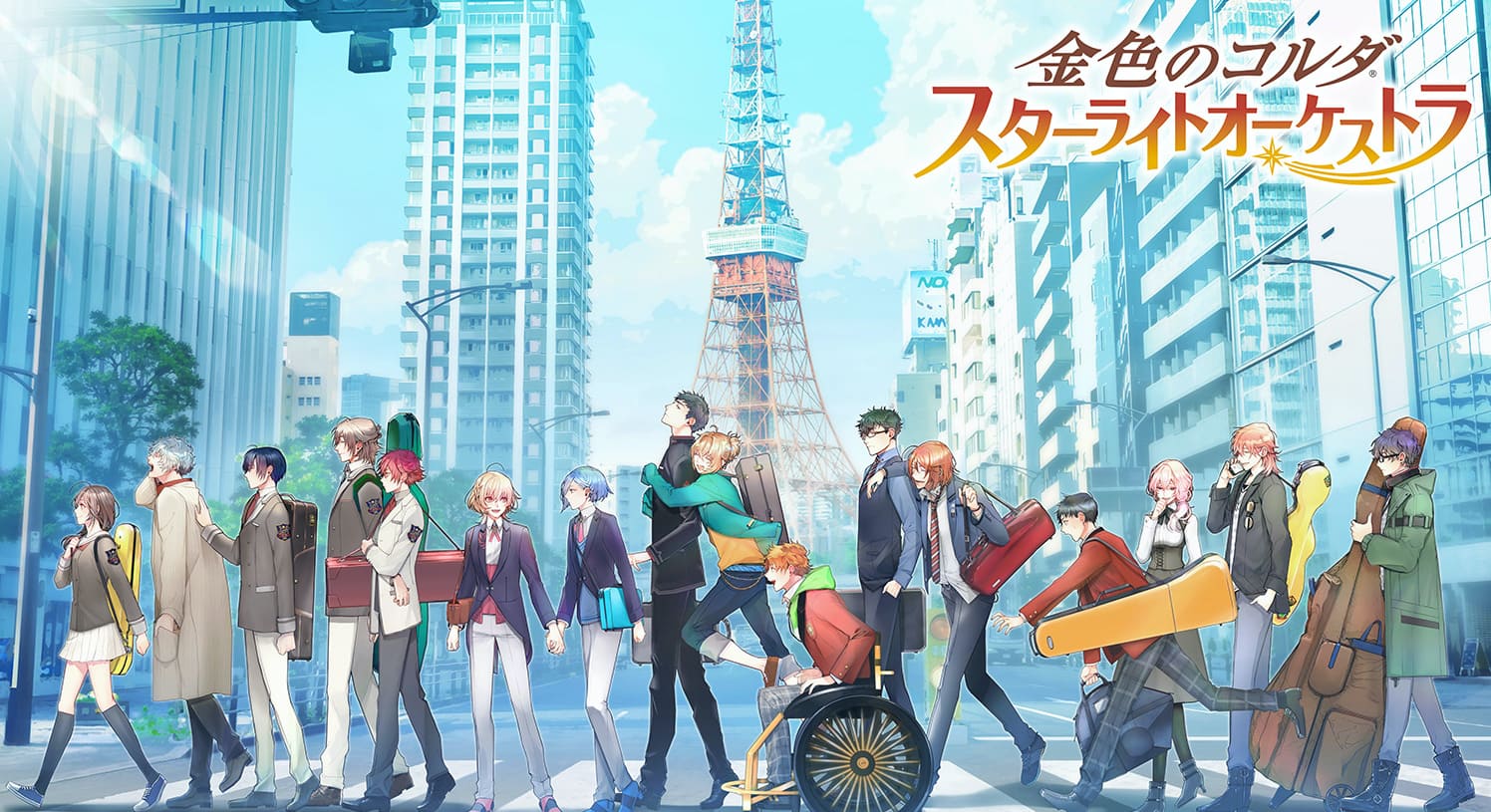
金色のコルダ スターライトオーケストラ(スタオケ)のネタバレ解説・考察まとめ
『金色のコルダ スターライトオーケストラ』とは、音楽がテーマの女性向け恋愛シミュレーションゲーム金色のコルダシリーズの、スマートフォン用育成シミュレーションゲーム。世界一のオーケストラを作る夢を持つ主人公・朝比奈 唯が、日本各地を旅して埋もれた音楽家たち集め、国際コンクール出場を目指す。強力なライバルを相手に立ち向かい、仲間たちと共に勝利をつかむ青春恋愛ストーリーである。株式会社コーエーテクモゲームスから企画配信され、2024年3月にサービスが終了している。
Read Article
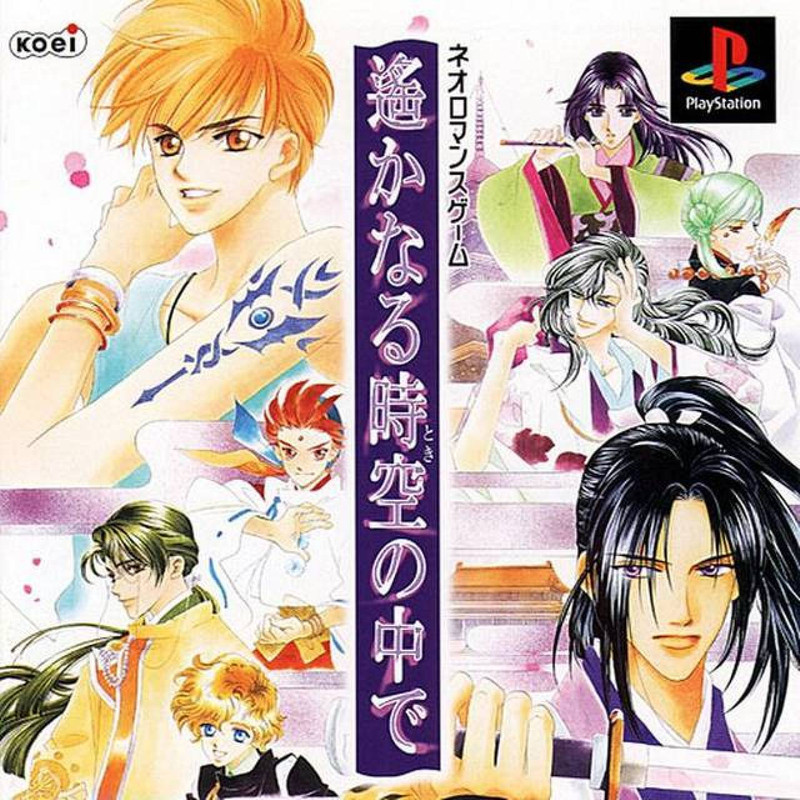
Spoiler commentary and discussion of Haruka 〜Beyond The Stream of Time 1 (Haruka 1)
Harukanaru toki no nakade 1" is a romance adventure game for PlayStation released on April 6, 2000. It was based on the original Ruby Party by Koei Tecmo Games, with character design by Juko Mizuno. Set in Kyoto during the Heian period, the game follows Akane Motomiya, a high school girl who is drawn into an alternate world called "Kyo. "On February 22, 2018, a renewed version of the game, "Harukanaru toki no nakade Ultimate" was released for PlayStation Vita, smartphones and tablets. iOS, Android versions have been released.
Read Article
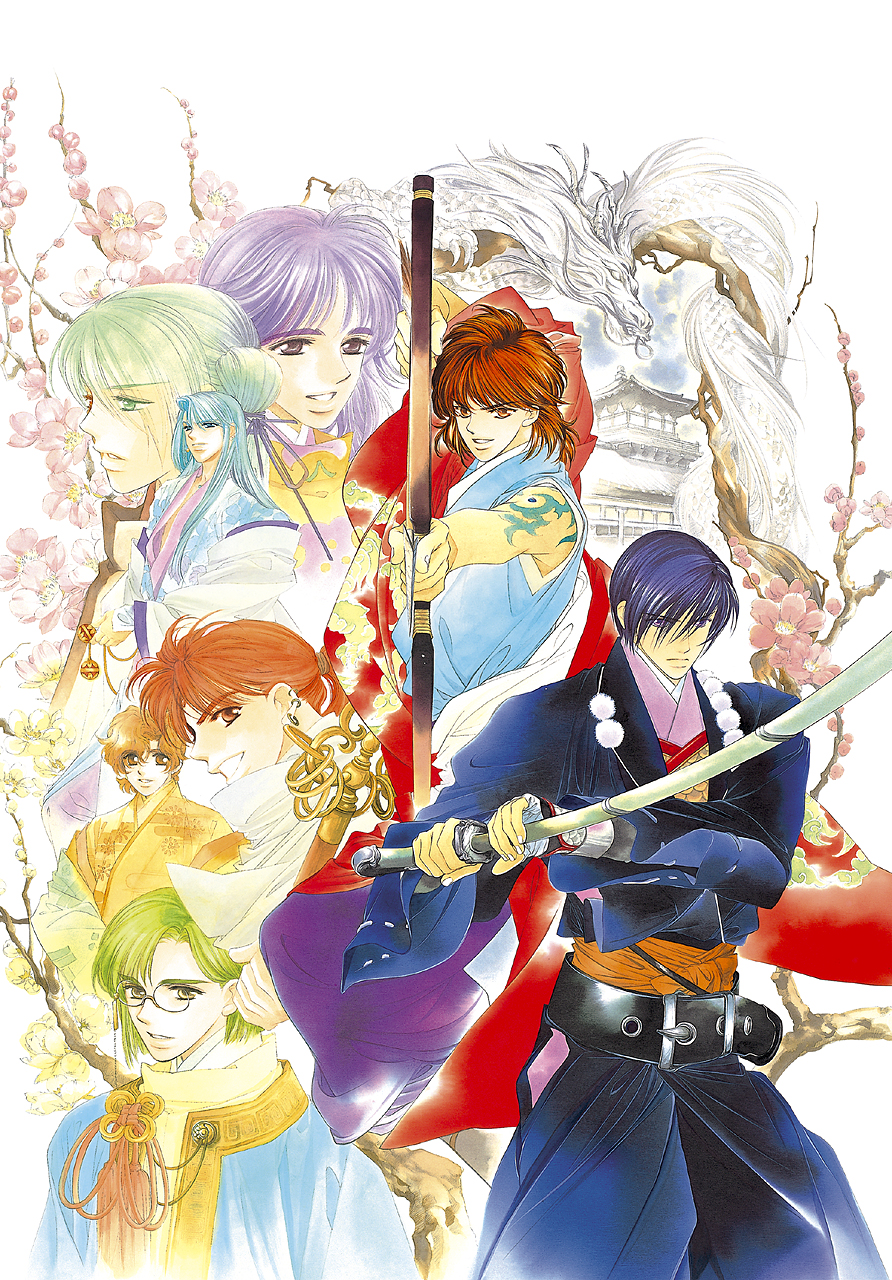
Spoiler commentary and discussion of Harukanaru toki no nakade 2 (Haruka 2)
Harukanaru toki no nakade 2" is a romance adventure game for Windows 95 / 98 / Me. The game was written by Ruby Party of Koei Tecmo Games, with character design by Juko Mizuno, and was also released for PlayStation 2 and PSP. The game is set 100 years after the previous "Harukanaru toki no nakade 1," and the game system follows that of the first game. The game follows Hanashi Takakura, a high school girl who is drawn into an alternate world called "Kyo," which is modeled after Kyoto in the Heian period.
Read Article
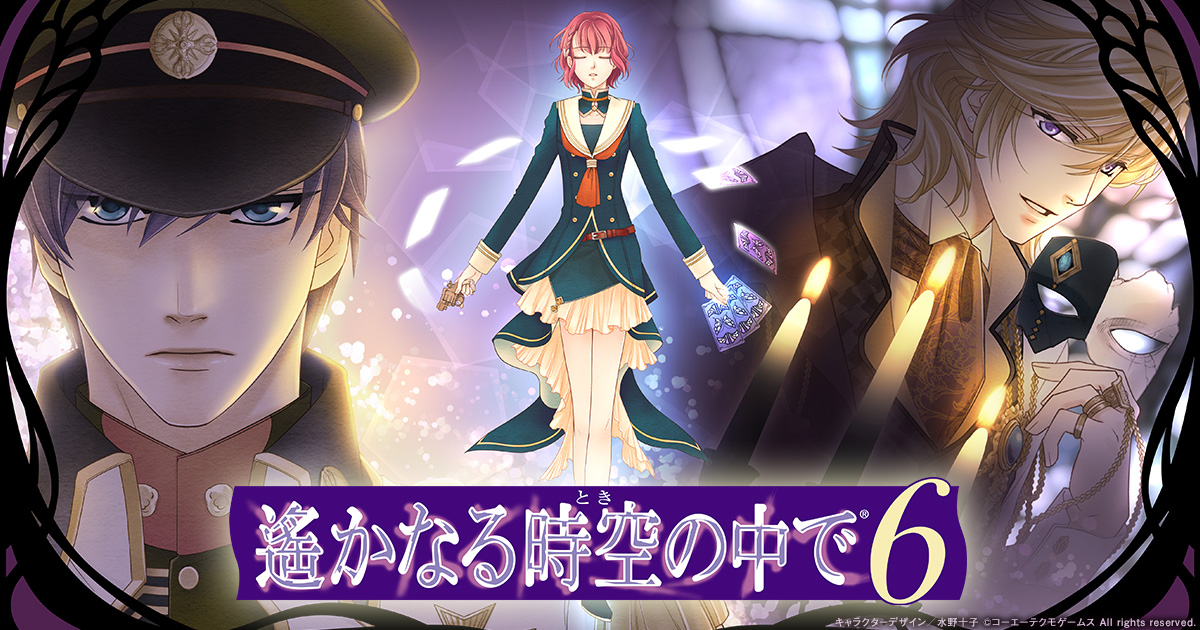
Spoiler commentary and discussion of Harukanaru toki no nakade 6 (Haruka 6)
Harukanaru toki no nakade 6 (Haruka 6) is a romance adventure game for women produced by Koei Tecmo Games (Ruby Party). It is the sixth title in the "Harukanaru toki no nakade" series and commemorates the 15th anniversary of the series. The protagonist, who is leading an ordinary high school life, is suddenly summoned one day to the other world of Tokyo, the Imperial Capital, as a "child of the Black Dragon," and given the mission to defeat a grudge spirit that is tormenting people. In order to return to his original world, the protagonist is caught in a war between the imperial army and a clan of demons, and fights alongside his friends to save the world.
Read Article
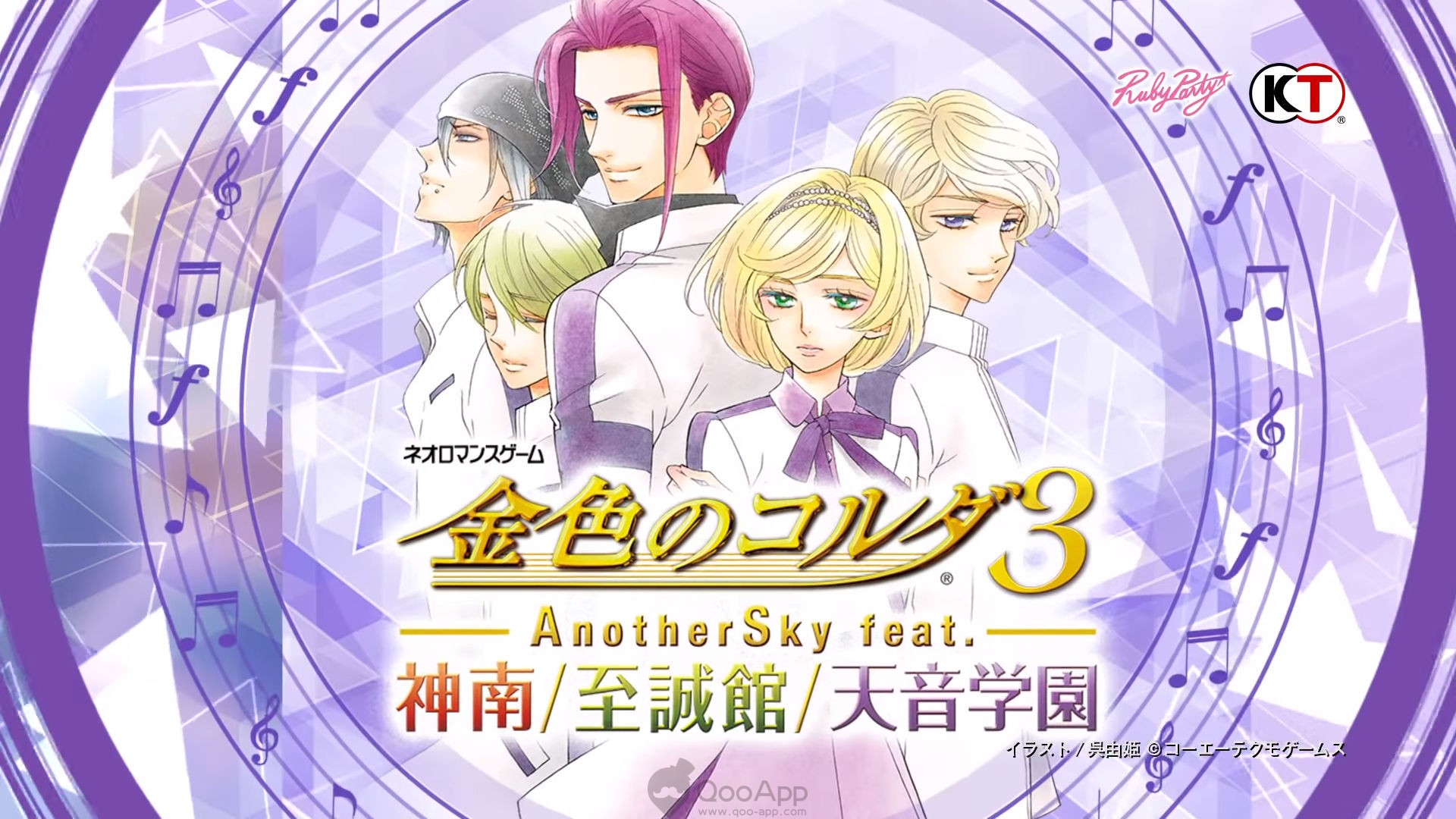
Spoiler commentary and discussion of Golden Corda 3 AnotherSky (game)
The title "Kiniro no Korda 3 AnotherSky" is an IF story of "Kiniro no Korda 3", a love simulation game for women released by Koei Tecmo Games Co. The season is summer. The main character, a violinist, transfers to different schools to find her own music, and aims to win the National Student Music Competition Ensemble Division with the members of each school. The player becomes friends with the characters who appeared as rivals in "Golden Corda 3" and spends time with them, enjoying a coming-of-age romance story filled with music and romance.
Read Article
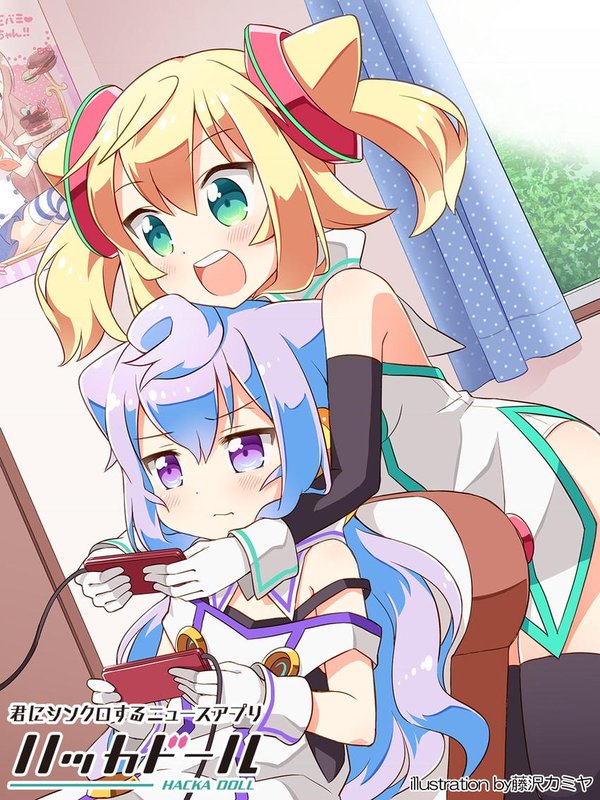
67 beautiful illustrations all at once! A compilation of end cards you got in the application "Hackador".
Do you use the subculture news app "Hackador"? You can get up to 3 free endcards per day for every article you read on "Hackador"! This time, we'd like to introduce you to 67 of the best end cards we've actually gotten! You'll have a chance to see a large number of graphics from that very famous game! It's not often you get a chance to see them all at once, is it?
Read Article
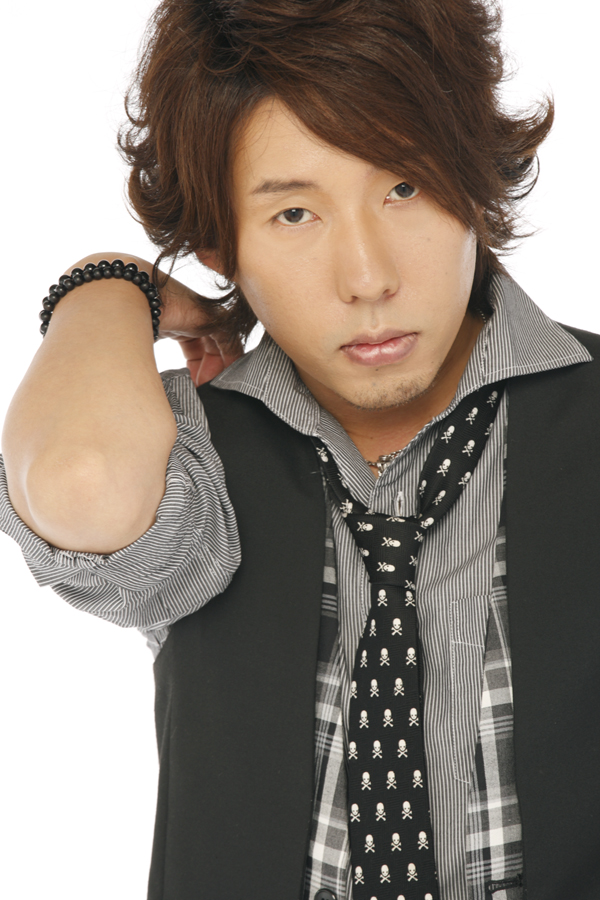
Voice Actor Satoshi Hino's Otome Game Characters! Thomas from "AMNESIA", Kiriya Eto from "Golden Corda", etc!
The following is a list of characters and characters from Otome games played by voice actor Satoshi Hino. The characters include Thomas from "AMNESIA" and Kiriya Eto from "Corda in Gold", all of whom are very attractive. If you like Satoshi Hino or are interested in Otome games, please check them out.
Read Article
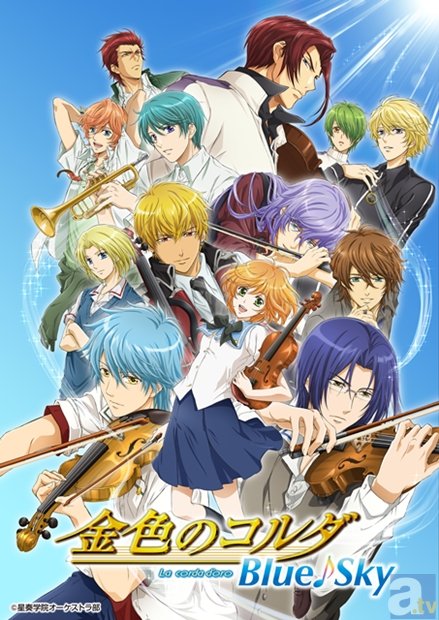
Introduction of the stage "Kinkiro no Korda Blue♪Sky First Stage" ♪
Kinkiro no Korda Blue♪Sky First Stage" will be performed from 9/4 to 9/13 at Zenroko Hall. Here is a brief synopsis of the show and its charms.
Read Article
Tags
Contents
- Overview of La Corda D'Oro 1
- Outline and story of "La Corda D'Oro 1"
- Stage of the game
- The Beginning: Decision to Participate in the Contest
- First Selection
- Second Selection
- Third Selection
- Final Selection
- Ending
- Root ending of La Corda D'Oro 1
- Tsukimori Ren
- The Beginning: Decision to Participate in the Contest
- First Selection
- Second Selection
- Third Selection
- Final Selection
- Ending
- Ryota TSUCHIURA
- The Beginning: Decision to Participate in the Contest
- First Selection
- Second Selection
- Third Selection
- Final Selection
- Ending
- Keiichi Shimizu
- The Beginning: Decision to Participate in the Contest
- First Selection
- Second Selection
- Third Selection
- Final Selection
- Ending
- Kazuki 火原
- The Beginning: Decision to Participate in the Contest
- First Selection
- Second Selection
- Third Selection
- Final Selection
- Ending
- Azuma Yunoki
- The Beginning: Decision to Participate in the Contest
- First Selection
- Second Selection
- Third Selection
- Final Selection
- Ending
- La Corda D'Oro 1 game system
- Get a piece of music
- The first score comes from "Lili."
- I get a score from Fatah.
- Practice music
- Exercise Procedure No. 1 Choose a piece of music that follows the theme of your selection.
- Exercise Procedure No. 2 Raise your skill level
- Exercise Procedure No. 3 Improving Your Musical Score
- Exercise Procedure No. 4 Collect interpretations of songs
- Exercise Step. 5 Raising the Representation Level
- Exercise Procedure No. 6 Deepening the Selection Theme Interpretation
- Exercise Procedure No. 7 play in concert
- Time available for practice
- Where to practice
- Selection Theme
- What You Get from Musical Score Practice
- What You Get from Interpretation Exercises
- What You Get from Ensemble Practice
- Collect BP (Bravo Point)
- How to collect BP
- Recommended place to collect BP
- Make friends with the target character
- To increase one's familiarity
- To become more competitive
- Take on the selection challenge
- Preparing for Selection
- Real selection
- After Selection
- The story ends.
- Song played by the protagonist of La Corda D'Oro 1
- List of La Corda D'Oro 1 characters
- Protagonist
- Hinokahoko (香穂子)
- Participants in the on-campus music contest
- Tsukimori Ren
- Ryota TSUCHIURA
- Keiichi Shimizu
- Kazuki 火原
- Azuma Yunoki
- Shoko 冬海 (Shoko Yumi)
- Other characters
- Nami Amau
- 紘人 KANEZAWA
- Shinobu OZAKI
- RIRI (
- La Corda D'Oro 1 items
- Improvement promotion items
- Magical Loupe
- Miracle Scope
- Analog metronome
- Digital metronome
- Experience Value Up Item
- Leather Armlet
- Metal armlet
- Mint candy
- Mint chocolate
- Hawaiian Ray
- Pretty Aloha Shirt
- Strong eyedrops
- Premium onion
- Practice Time Saving Items
- Magic music stand
- Magic clock
- Big magic clock
- Other Items
- Yellow radar
- Akai Radar
- Aoi Radar
- Magic ticket
- Skill textbook
- Present
- Terms of "La Corda D'Oro 1"
- General course
- Music department
- Magic violin
- On-campus music competitions
- Fata
- Violin Romance
- BP (Bravo Point)
- Bell of Interpretation
- Keywords for interpretation
- Super interpretation
- Greeting of Love
- Behind the Scenes, Trivia, Small Stories / Episodes and Anecdotes of "La Corda D'Oro 1"
- "Corda" in the title of "La Corda D'Oro" means "string."
- "Classical music" added to the setting of "School" and "Modern"
- Production Guidelines: "Works lasting more than 10 years"
- All cast selected by audition