
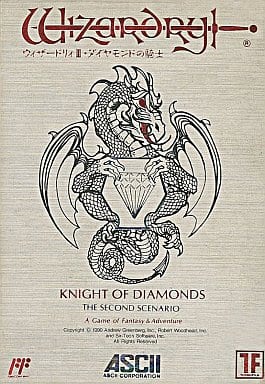
Wizardry #2" is a 3D dungeon role-playing game released by Certec, Inc. in the United States in 1982. It is subtitled Knight of Diamonds.
It is the second installment in the classic RPG series, the originator of the "hack and slash" genre. The mission of the adventurers is to bring back the "Staff of Nilda," which protects the city of Lilgamin and has disappeared into the "Cursed Pit of Dabalps.
A stone that carries the spell of Gilwan (magician spell. Destroy one undead body).
If special power (special power that can be used while equipped) is used, it becomes ash (FC version, SFC version, GBC version).
In the original version and リルガミンサーガ, it's called the "Stone of Destruction," and the penalty is as heavy as lost.
Power Coin

With special power (special power that can be used when equipped), this coin allows you to move to a senior position such as samurai, road, or ninja.
The type of occupation to be changed is random, and the experience value itself does not change. Therefore, if no measures are taken, an enormous amount of experience value will be required for the next level up.
The Power Coin changes in performance once it is used. If you use Special Power again in this state, the character will always die and randomly change to one of the following occupations: warrior, wizard, monk, thief, or bishop.
Wizardry #2 Terminology
I'm in the stone.
It is a message that appears when you move coordinates to a stone mass (originally, you cannot enter) in Meikyū with the teleport spell "Malor" or jump into the treasure chest trap "Teleporter".
The moment this message appears, the party is annihilated. After FC III, everyone dies and is sent back to the castle. But in the original version and リルガミンサーガ, everyone is lost and can never be resurrected.
Energy drain
A special attack that reduces the level of a character when a physical attack hits. An immortal monster (undead) often comes out. A powerful monster may drain more than one level at a time. As a result of the draining, a character whose level drops below 0 is lost.
There is a law between when a character's level drops and when the experience value is corrected, and there are some tricks that take advantage of this.
* Oops *
A message that appears on the camp screen when a resuscitation spell fails or when the treasure chest fails to clear the trap. * OOPS * in English.
Scenes that fail to clear the teleporter trap and are shown as "Whoo! Teleporter" are traumatic for many players, as the risk of jumping into a stone area at some levels.
Critical hit
A special attack by a ninja. When the attack hits, the message "Decapitated!" appears with a certain probability. If a critical hit is made, no matter how much HP is left, no matter how much damage is done, the head will jump and you will die. (As an aside, even a slime monster without a head will give the message "Decapitated!") itated! ")
Even non-Ninjas can play with characters equipped with certain items. Note that the enemy side also has monsters with critical abilities from the beginning.
Special Power
Special force present only in some items. At the end of the item equipment screen, you are asked, "Do you use special force of 0 0?"
You can get various benefits by using it, but there are some items that have a negative effect (ash or lost).
If special power is released, there is a certain probability that it will be damaged or changed to another item, so it is risky to use it carelessly.
Become ashes, lost
If you cast a resuscitation spell on a dead character and fail, the character turns to ashes.
This would double the cost of resuscitation at Kant Temple, and would require a seven level Kadolt priest spell if the character's spell were to be used.
If you fail to revive from the ashes, the character will be lost and can never return to the game.
Character loss can also occur in other situations, such as when a character's energy level drops below 0 as a result of an energy drain, when a character dies, when a character jumps into a stone, or when a character's life force drops below 3 as a result of a level rise at an inn (senility).
Healing
The ability to automatically recover HP that exists in items such as "Ring of Recovery" and "Holy Armor".
With healing + 1, one HP is recovered with each step or turn in battle.
If healing is positive, a "+" appears next to HP on the status screen, and if it is negative, such as possession of poison or cursed items, a "-" appears.
Some monsters also have enemies that have healing powers.
Riddle
This is one of the Labyrinth gimmicks introduced from this work. A mysterious message is displayed, which prompts the player to answer by typing "Answer!". If you don't get it right, you won't be able to proceed or get an item.
It is not implemented in the FC version III, but changed to a system to collect key items such as "master key" instead.
"Wizardry #2", Trivia, Small Stories / Episodes and Anecdotes of "#2"
"Reset technique" to avoid the worst situation such as death or total annihilation

Related Articles
Wizardry #5 (Wizardry #5) Spoilers and Discussion Summary
Wizardry #5 is a 3D dungeon role-playing game released by Certec, Inc. in the United States in 1988. It is subtitled "Heart of the Maelstrom". It is the fifth installment in the classic RPG series, the originator of the "hack and slash" genre. A "calamity" is said to have the power to destroy the world. The Gatekeeper, a wizard with the power to control it, has been captured by the evil witch Thorn. The adventurers must defeat Thorn and save the Gatekeeper in order to save the world.
Read Article
Wizardry #4 (Wizardry #4) Spoilers and Discussion Summary
Wizardry #4 is a 3D dungeon role-playing game released by Certec, Inc. in the United States in 1987. It is subtitled "The Return of Werdna. It is the fourth installment in the classic RPG series, the originator of the "hack and slash" genre. Werdna, the sorcerer defeated in the first game, takes the lead role, summoning demons and slaughtering adventurers on his way to the surface to recover the stolen amulets (amulets).
Read Article
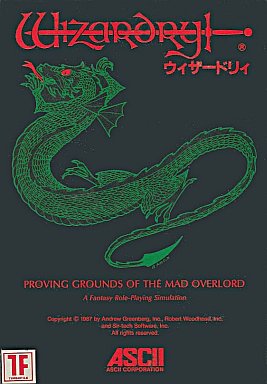
Wizardry #1 (Wizardry #1) Spoilers and Discussion Summary
Wizardry #1" (Wizardry #1) is a 3D dungeon role-playing game released by Certec, Inc. in the United States in 1981. The subtitle is "Proving Grounds of the Mad Overlord," and it is a classic RPG in which a party of six players explore an underground labyrinth, defeat monsters, obtain items from treasure chests, and strengthen and train their characters. This is the first title in the series.
Read Article
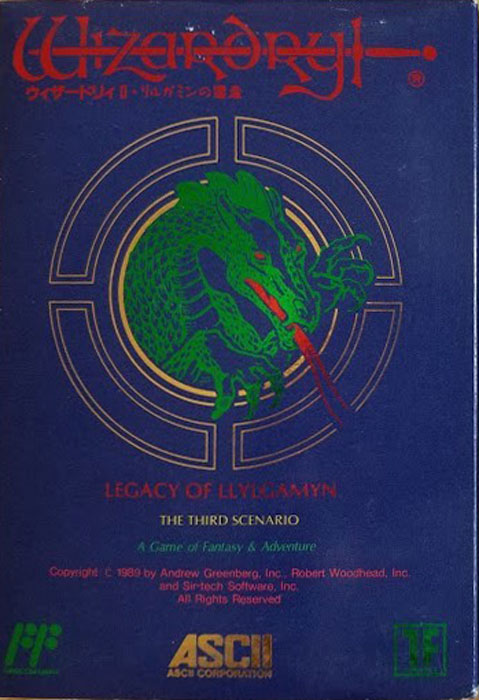
Wizardry #3 (Wizardry #3) Spoilers and Discussion Summary
Wizardry #3 is a 3D dungeon role-playing game released by Certec, Inc. in the United States in 1983. It is subtitled "Legacy of Llylgamyn. It is the third game in the classic RPG series, the originator of the "hack and slash" genre. The mission of the adventurers is to bring back the pearl guarded by the great dragon Le Kevres in order to discover the cause of a worldwide natural cataclysm.
Read Article
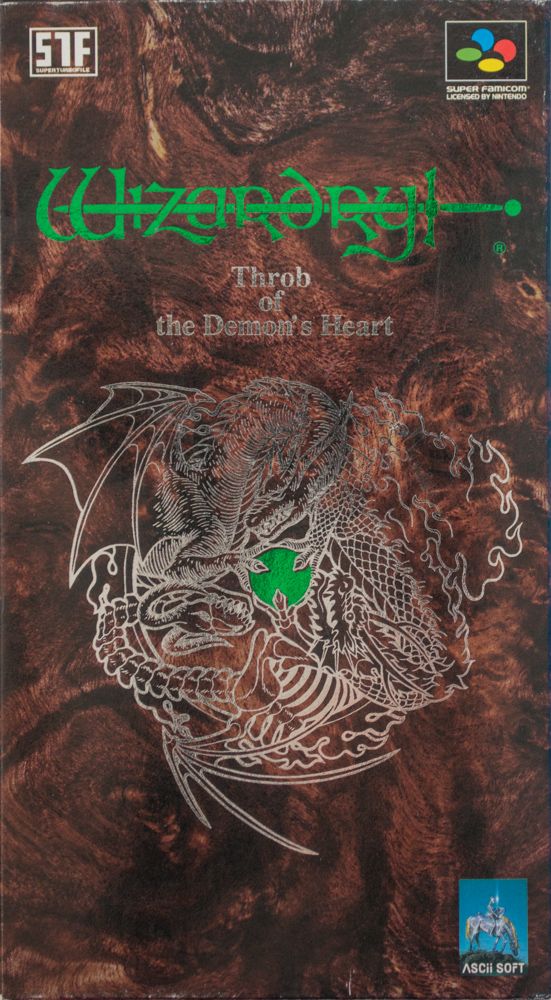
Spoiler commentary and discussion of Wizardry Gaiden IV (The Heartbeat of the Womb Demon)
Wizardry Gaiden IV" is a 3D dungeon role-playing game released in 1996 exclusively for the Super Nintendo Entertainment System. The subtitle is "Throb of the Demon's Heart. It is the fourth Japanese-made Wizardry game. While this title is an orthodox hack-and-slash game, it incorporates a Japanese-style setting, events, and horror elements, and allows players to interact with numerous NPCs and enjoy the struggle for power. The story involves having adventurers collect the "Three Sacred Treasures" in order to control a local uprising triggered by the death of the previous lord of the Scarlet Lotus Castle.
Read Article
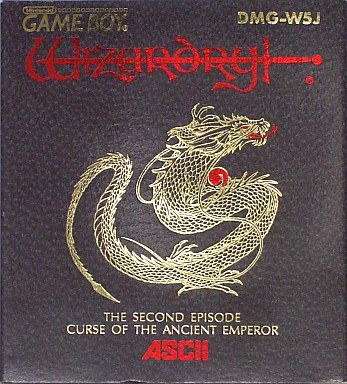
Wizardry Gaiden II (The Curse of the Ancient Emperor) Spoilers and Discussion Summary
Wizardry Gaiden II" is a 3D dungeon role-playing game on a Game Boy cartridge released in 1992. Its subtitle is "Curse of the Ancient Emperor. It is the second Japanese-made Wizardry game. When ruins are excavated in the fortress city of Almar, the curse of an ancient emperor buried there becomes a disaster that strikes the city. The adventurers challenge the ruins in order to remove the curse.
Read Article
Wizardry Gaiden: The Five Ordeals (The Five Ordeals) Spoilers and Discussion Summary
Wizardry Gaiden: The Five Ordeals is a 3D dungeon role-playing game released for Windows in 2006. It is one of the Japanese-made "Wizardry" series. The game, which purports to be a return to the roots of the original "Shoden" series, uses a simple game system with the initial five races and eight occupations, and the UI (user interface) of the previous title, "Battle Prison". In addition to the five official scenarios with independent stories, the game features a built-in editor that allows users to create their own scenarios.
Read Article
Wizardry Gaiden III (The Scriptures of Darkness) Spoiler Commentary and Discussion Summary
Wizardry Gaiden III" is a 3D dungeon role-playing game on a Game Boy cartridge released in 1993. Its subtitle is "SCRIPTURE OF THE DARK. It is the third Japanese-made Wizardry game. King Agan, the ruler of the fortress city of Dalia, has fallen into madness and withdrawn due to the curse of the Golden Mask. Adventurers are gathered to lift the curse and restore the king to sanity.
Read Article
Spoiler commentary and discussion of Wizardry Gaiden I (The Passion of the Queen)
Wizardry Gaiden I" is a 3D dungeon role-playing game on a Game Boy cartridge released in 1991. The subtitle of the game is "Suffering of the Queen. It was the first Japanese-made Wizardry game. After Queen Iras ascends to the throne, the city of Lilgamin has been plagued by a series of disasters. Even the court magician Tylotham has betrayed his court and holed himself up in the "Cursed Hole. Adventurers are summoned to defeat him.
Read Article
A compilation of two legendary RPGs based on Dragon Quest
Dragon Quest" is now so famous that it can be considered a national RPG, but it was not created entirely from scratch. There are two legendary RPGs in the development of Dragon Quest.
Read Article
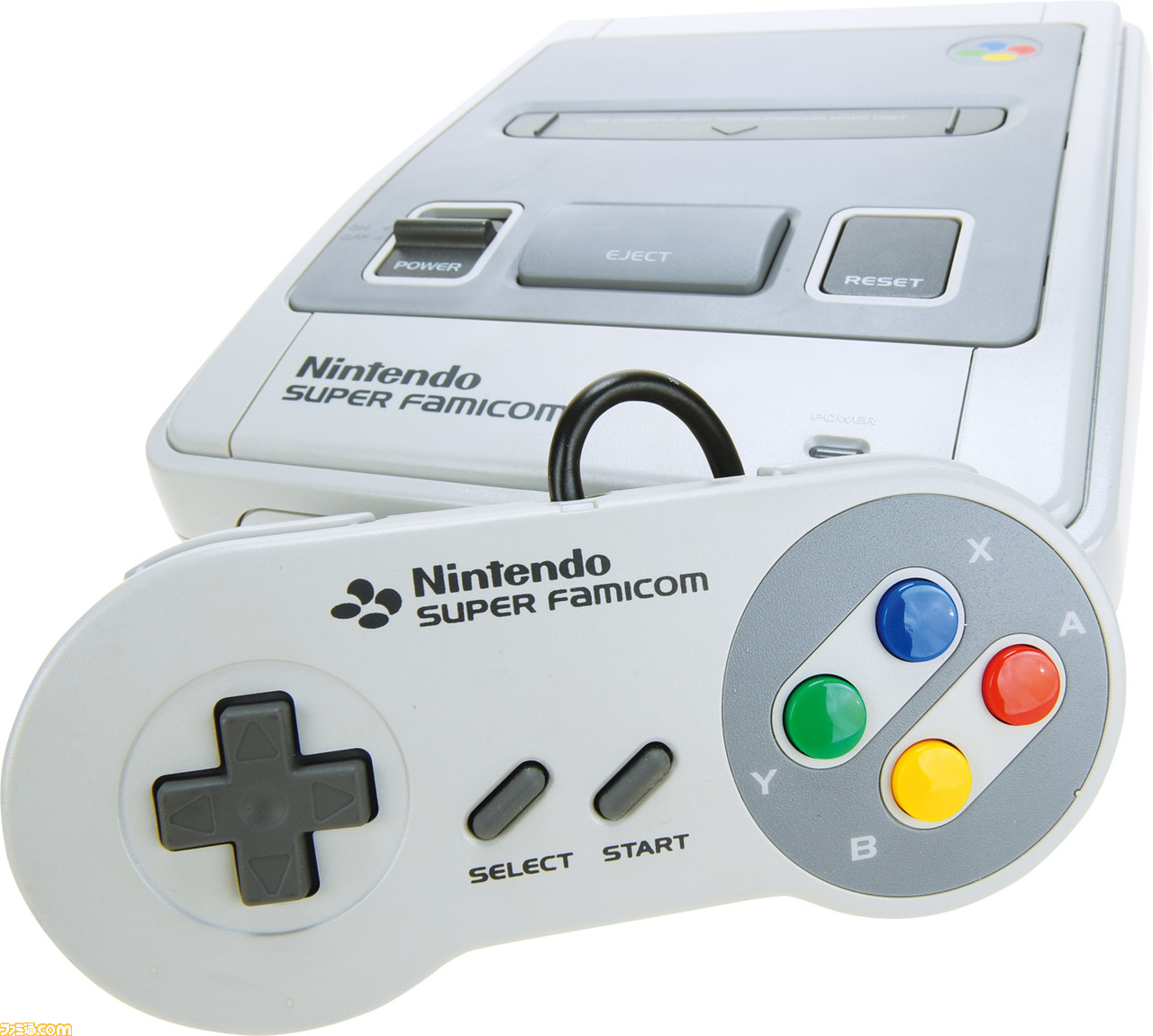
From masterpieces to lost works! Super Nintendo RPG Summary [Wizardry: The Story of Rugamine and others].
Here we have compiled a list of famous RPGs for the Super Nintendo Entertainment System (SNES). The list ranges from well-known masterpieces, to honorable works that are not major, to stray works that are famous in a certain sense. There are also early works such as the popular RPG series "Fire Emblem" and "Final Fantasy".
Read Article
Contents
- Wizardry #2 Overview
- Outline and story of "Wizardry #2"
- Rilgamin, a city protected by the ニルダ Stick
- The tyranny of the evil genie Dabalpus
- The Wandering of マルグダ Princess and Prince Aravic
- Search for the legendary "Knight of the Diamond" equipment
- Battle against the Davarups and the appearance of the "Hole of Curse"
- Touching of マルグダ Princess
- Recapturing ニルダ's Wand
- Wizardry #2 game system
- Facilities in Rilgamin
- Gilgamesh's Tavern in Gilgamesh
- Adventurer's Inn
- Boltac's Trading Post
- Temple of Cant
- Edge of Town
- Game Flow
- About Characters
- Capability value
- Race
- Character
- Age
- AC (armor class)
- Character's occupation
- Warriors (FIG)
- Mags
- Priest (PRI)
- Thieves (THI)
- Bishop (BIS)
- Samurai (SAM)
- Load (LORD)
- Ninja (NIN)
- Formation
- Treasure chest
- Annihilation and Lost
- Character transfer
- Characters from "Wizardry #2"
- Demon Dabalpus (Davalpus)
- Princess マルグダ and Prince Aravic (Margda & Alavik)
- Magic 0 0 (Magic 0 0)
- Murphy's ズゴースト
- Vampire Lord
- Seidel, Sidelle
- Succubus
- Rykka Gas (Lycurgus)
- Demon Lord
- Wizardry #2 item
- Quds Item
- Hersneil
- ニルダ Wand
- Muramasa
- Holy armor
- Shuriken
- Excalibur
- Myhrir Armor
- Ancient Omamori
- Skilled exorcism
- Mystical stone
- Power Coin
- Wizardry #2 Terminology
- I'm in the stone.
- Energy drain
- * Oops *
- Critical hit
- Special Power
- Become ashes, lost
- Healing
- Riddle
- "Wizardry #2", Trivia, Small Stories / Episodes and Anecdotes of "#2"
- "Reset technique" to avoid the worst situation such as death or total annihilation
- Capacity value increase and experience value adjustment using energy drain
- The Magician's Magic Spell: "Mahaman" Surely Revive the Dead
- "Mysterious Stone" saves lost characters (FC version III)
- Using the "Coin of Power" to Improve Performance
- The Japanese FC version #2 is the third one.
- New spell added to Japanese FC version