
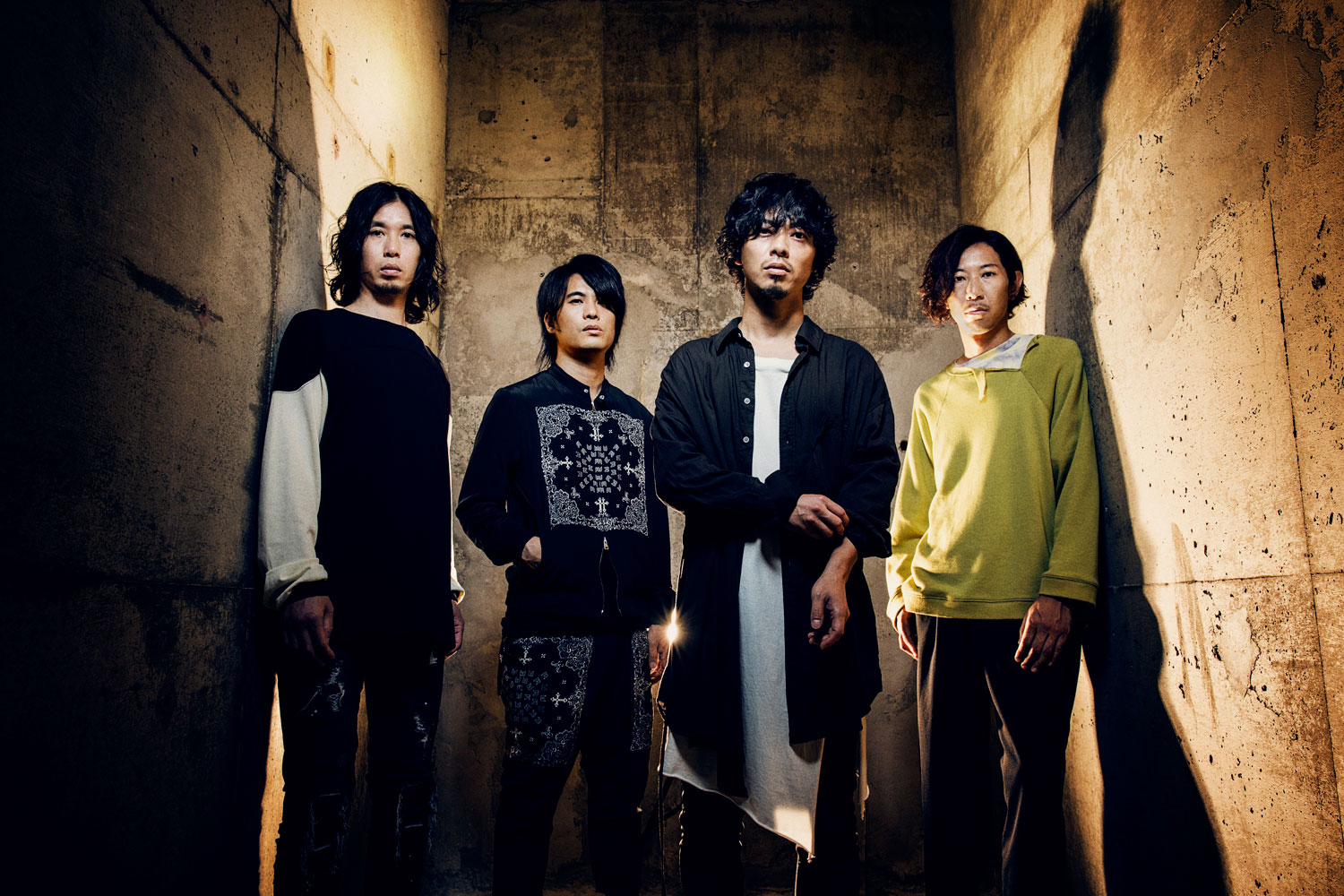
THE BACK HORN is a rock band formed in 1998.
The band made its indie debut in 1999 with the album "Where Are You Going?" and made its major label debut in 2001 with the single "Sunny".
Since their debut, the band has been actively releasing albums every year, touring with them, and performing at rock festivals throughout Japan. 2018 marks the 20th anniversary of the band's formation, and they will be performing at the Nippon Budokan on the last day of their nationwide tour to commemorate the anniversary. The band has become an indispensable part of the rock scene as one of the best live bands in Japan.
The Back Horn Overview
The Back Horn is an alternative rock band that was formed in 1998.
In 1999, she made her indie debut with her album "Where Are You Going" and made her major debut with her single "Sunny" in 2001.
Since her debut, she has been active every year, releasing her works, taking part in tours, and appearing at rock festivals all over the country. In 2018, to commemorate the 20th anniversary of the band's formation, she held a commemorative event (20th Anniversary "ALL TIME BEST one man Tour" - KYO-MEI Festival ~〉), and for the final performance, she held The Back Horn's third performance at Nippon Budokan.
The Back Horn's attractions include a wide variety of music and energetic live performances.
The Back Horn members are all songwriters.
Generally speaking, rock bands, the front man often writes the lyrics and music. Although it is not uncommon for a band to have two songwriters, it is very rare for all members to be in charge of writing the lyrics and music, as is the case with The Back Horn. In the early days, (Gt) Eisei KANBA mainly wrote the lyrics and music, but after the fifth album "Taiyo no Naka no Seikatsu" (Life in the Sun), all members began to write the lyrics and music. The charm of this band is that you can enjoy the world view of the four songwriters' original songs and lyrics with the same artist.
The Back Horn's live shows are powerful enough to move the hearts of those who see them. They are so intense that their T-shirts get soaked with sweat by the end. However, they feel that their hearts have become lighter. This is because they use their music to send their audience the message of "Deliver music that will move your heart" and "Live no matter what", which are the themes of their music activities. I can say that they are definitely the top-level live band among Japanese rock bands.
History of The Back Horn activities
Flow of events leading up to the formation of The Back Horn
The group was formed in 1998 by (Vo) Shoji Yamada (Gt) Einen Kanba (Dr) Shinji Matsuda and former bassist Naoki Hirabayashi, who met at the same music vocational school.
Kanba, who had wanted to join the band since the day he entered the school, asked Yamada, who had a strong presence in the vocal section, if he wanted to join the band. In response, Yamada asked, "Sure, but what about the other members?" Kanba pointed to Matsuda, who was smoking in the smoking area, and said, "That guy is a drummer." Then, Matsuda joined the band. Hirabayashi, a former member of the band, joined, and the The Back Horn was born.
Indie age
They have been working mainly at a live house in Shimokitazawa since their formation in 1998, and released Hatsune Gen's work "Doko ni ikiru" (Where are you going) in September 1999, and appeared in FUJI ROCK FESTIVAL' 99 on July 30 of the same year.
In 2000, he constantly released works such as his second album "Rebirth Yo" and single "Balloon", and in May of the same year, he held a nationwide tour of 21 places and 21 performances, and continued his music activities smoothly. However, in 2001, bassist Naoki Hirabayashi left the band on February 23, 2001, saying,' I can't spend all my time with the band,' and he was forced to work with the three of them for a while.
From 2001 to 2004, the current system was established.
He made his major debut with the single "Sunny" on April 25, 2001. In December 2002, 岡峰, who had been working as a support member for about two years on behalf of former member Naomi Hirabayashi, joined the club as an official member, bringing the club to its current status.
After his major debut, he released an album almost every year and gradually gained popularity through tours and appearances at summer festivals, and in 2004 he successfully performed an outdoor one man concert at the Hibiya Open-Air Concert Hall.
2005 - 2008: The Nippon Budokan was held for the first time to commemorate the 10th anniversary of its formation.
After the release of the 4th album "Headphone Children" in March 2005, the name recognition of the band rapidly increased.
In December of the same year, the special event "Maniac Heaven Vol. 0" was held at the Ebisu Liquid Room in Tokyo, where the members plan and produce their own music, which is now an annual event. This event is packed with The Back Horn's "maniacs" such as live performances of only "rare songs" that are not usually performed at live concerts, a "gallery corner" where paintings and T-shirts that the members have worked on are displayed, and original drinks devised by the members.
Since around 2007, the theme of their music activities has been "KYO-MEI", which means "to deliver music that will move the hearts of people who listen to it," and the title of the tour has always been "KYO-MEI."
In January 2008, to commemorate the band's 10th anniversary, the band released their first album, "BEST The Back Horn." Along with this, "KYO-MEI one man Tour - Barefoot Trail -" will be held from February to June of the same year, and on the last day, the first performance at Nippon Budokan will be held.
2009 - 2013: Dedicated to recovery from the Great East Japan Earthquake
On October 17, 2009, a rock festival called "2.07 million Geniuses: Wind and Rock FES" was held in Fukushima-ken, the hometown of (Gt) Hidezumi Kanba and (Dr Shinji Matsuda), and The Back Horn also performed.
After his first appearance, "Kaze to Rock FES" and The Back Horn established a deeper relationship than that between the host and the performer. Shinji Matsuda became the vice executive chairman of the festival and began to carry out promotional activities.
In July 2010, we held a live concert called "Mebius Sento Katai Ari."
The audience is overtaken by a strong set list that includes the band's longest song in history, "The Cricket Violin," which lasts about eight minutes, as the first song of the concert.
Due to the Great East Japan Earthquake on March 11, 2011, the hometown of the members and the areas where they frequently visited for live performances were damaged. On March 30 of the same year, the distribution of the charity song "Flowers from all over the world" was released, and from April to June, live performances were held in the affected areas of Northern Kanto and Tohoku Regions. Through these and other musical activities, the members worked hard for the reconstruction.
In June 2012, she released her 9th album "Live Call", and along with that, she held "KYO-MEI Tour" - Live Call ~〉. She performed at Nippon Budokan for the second time in this tour.
The MC of (Vo) Yamada of the performance said, "We will always be on the stage, and Buckhorn will always be on the stage. It's not always good, but please come and do it again by saying" Wow! ", and many of the audience were encouraged.
In September 2013, to commemorate the 15th anniversary of the band's formation, "B-SIDE The Back Horn" was released, which is a B-side collection of coupling songs and songs recorded only on compilation albums.
2014 - 2018: Held the third performance at Nippon Budokan to commemorate the 20th anniversary of its formation.
In April 2014, he was the master of the music festival "ARABSKI ROCK FEST. 2014", which he has been performing since the first year of the event. The live concert is a special session with the guests, and top musicians such as Chihiro Onitsuka and Hiroji Miyamoto (Elephant Kashimashi) participate, and the live concert ends in a great success.
From 2015 to 2017, they constantly released their works and appeared in live houses and music festivals all over Japan. In 2018, they will finally celebrate the 20th anniversary of the band's formation.
In 2018, the 20th anniversary of the band's formation, titled "The Back Horn 20th Anniversary," the band released their first mini-album since the indies, "Scenery Thief" in March of the same year, and "ALL INDIES The Back Horn," a rerecording of all the songs they released when they were indies, in August of the same year. From October 2018 to February 2019, they held a nationwide tour of all 20 performances (20th Anniversary "ALL TIME BEST one man Tour" - KYO-MEI Festival ~〉), and on the last day, they will hold their third performance at Nippon Budokan. In order to celebrate the 20th anniversary of the band's formation more deeply with the audience, the tour changed most of the set list for each performance.
From 2019 to 2020, due to the impact of the novel coronavirus, band activities changed.
In October 2019, the 12th album "Carpe Diem" was released and a tour was held along with it, but the tour was postponed because (Vo) Yamada was diagnosed with vocal cord polyps during the tour. A transfer performance was scheduled from May 2020, but the transfer performance was also postponed due to the novel coronavirus. On the day of 13 performances, which was scheduled as an alternative plan, "KYO-MEI MOVIE TOUR-2004 〜 2019 -" was held, in which 13 live video works announced until now were distributed on YouTube.
In September 2020, the collaboration project with the novelist Yoru Sumino, "This Feeling Will Also Be Forgotten Someday," was released. This is a collaboration work of a novel and music produced by Yoru Sumino and The Back Horn after many meetings from the conceptual stage. In response to Yoru Sumino's desire to "immerse yourself in the world of work while listening to The Back Horn's music," "This Feeling Will Also Be Forgotten Someday, Limited Edition" with CDs of songs produced by The Back Horn based on the world view of the novel was also released.
The Back Horn squad
Members
Shoji Yamada
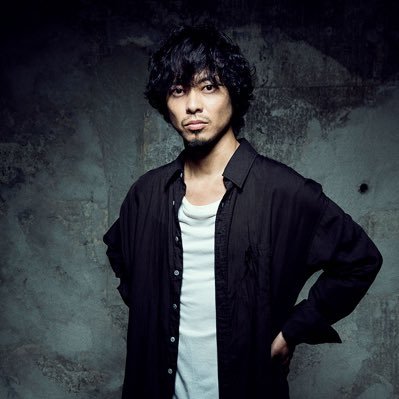
Vocalist.
Date of birth: October 8, 1979
He was from Ibaraki Prefecture
Commonly known as' Shoji.'
Basically, the part is only vocal, but you can play various instruments such as guitar, piano, bass and drum. In the song "Headphone Children", Pianica was also shown.
Since March 2016, he has been working with Shigeru Inaba, the manager of the live house Mitou Lighthouse, as the personality of the radio program "Yoi-pera-jio" (Good Pera-jio), which has been broadcast on IBS Ibaraki Broadcasting.
Yoshizumi SUGANAMI

Related Articles
The Power of Song" Ten songs to listen to when you want to cry.
Work, relationships, family matters, etc... When things just don't work out, you want to cry, don't you? When that happens, don't hold back and cry! Here are 10 recommended Japanese music songs to help you cry.
Read Article
The Power of Song" Ten Cheering Songs for Life
We all have times when we want to move forward but struggle in pain. It is embarrassing to put it into words, but when you put it into music, you can say it! In this issue, we will introduce 10 Japanese cheer songs that will push you forward.
Read Article
Tags
Contents
- The Back Horn Overview
- History of The Back Horn activities
- Flow of events leading up to the formation of The Back Horn
- Indie age
- From 2001 to 2004, the current system was established.
- 2005 - 2008: The Nippon Budokan was held for the first time to commemorate the 10th anniversary of its formation.
- 2009 - 2013: Dedicated to recovery from the Great East Japan Earthquake
- 2014 - 2018: Held the third performance at Nippon Budokan to commemorate the 20th anniversary of its formation.
- From 2019 to 2020, due to the impact of the novel coronavirus, band activities changed.
- The Back Horn squad
- Members
- Shoji Yamada
- Yoshizumi SUGANAMI
- Koshu Okamine
- Shinji MATSUDA
- Former member
- Naoki Hirabayashi
- The Back Horn discography
- Indie singles
- 1st "Balloon"
- Indie album
- 1st "Where to go"
- 2nd "Rebirth Yang"
- Major singles
- 1st "Sunny"
- 2nd "Night of the Sky, the Stars and the Sea"
- 3rd "Under the World Tree"
- 4th "When Tears Fall"
- 5th "Mirai"
- 6th "Crystal of Light"
- 7th "Lifeline"
- 8th "Yume no Hana"
- 9th "Cobalt Blue"
- 10th "Kizuna Song"
- 11th "Black Hole Birthday"
- 12th "First Breath"
- 13th "Chaos Diver"
- 14th "Voice"
- 15th "Beautiful Name"
- 16th "Trap"
- 17th "Awakening"
- 18th "Fighting You"
- 19th "Closed World"
- 20th "Sirius"
- 21st "Battle Ima"
- 22nd "Symmetry / Kowaremono"
- 23rd "The Bad Guy / Beyond"
- 24th "With You"
- 25th "You Are Waiting"
- 26th "Connecting Loneliness"
- Digital Single "Flowers for the World"
- Major album
- 1st "Human Program"
- 2nd "Heart Orchestra"
- 3rd "Ikirosaino"
- 4th "Headphone Children"
- 5th "Life in the Sun"
- 6th "The Back Horn"
- 7th "Pulse"
- 8th "Asylum"
- 9th "Livesquall"
- 10th "Akatsuki no Fanfare"
- 11th "Destiny Flowering"
- 12th "Carpe Diem"
- 1st mini album "Scenery Thief"
- The Back Horn's signature songs and music videos (MV/PV)
- First breath.
- You're waiting.
- Ruri Canvas
- At the end of the world
- Winter milk
- Cobalt blue
- ハナレバナレ
- Until the heart stops.
- Trap
- Words and Remarks of The Back Horn
- (Dr.) Shinji Matsuda says, "I listened to this album, okay! I think I'll walk tomorrow too." It's really something like that. "Confess!" or "Tell me you're quitting the company." (Laughter) That's not what I mean. That's what we do, too. "It's raining and it's damp, so maybe I'll listen to some crisp music" or "It's surprisingly good to listen to summer music in the middle of winter." I think that's all we can do, but that's what we can do best.
- (Dr.) Shinji Matsuda: "I think there are many forms of music, but rather than listening to just one song, I want people to listen to the album, and rather than listening to just one album, I want people to listen to the artist. If it's a band, I think it's fun to listen to it in such a way that you can even worry about the history of the band. There's a more wonderful world on the other side of that song, so if you like one song, you can at least listen to the album and be surprised and say,' This world has been waiting for you.'"
- (Vo) Shoji Yamada: "We'll be on the stage all the time, Buckhorn will be on the stage all the time. It's not always good, but come and do it again like," Wow! "" "
- (Gt) Kanpa: "Music doesn't make you feel bloated. It doesn't revive people's lives. But I think playing music is a flexible way of fighting in that sense."
- The Back Horn's Inside Stories, Trivia, and Small Stories / Episodes and Anecdotes
- Repaying Shibusawa's Debt
- The original band name was' GYORAI.'