
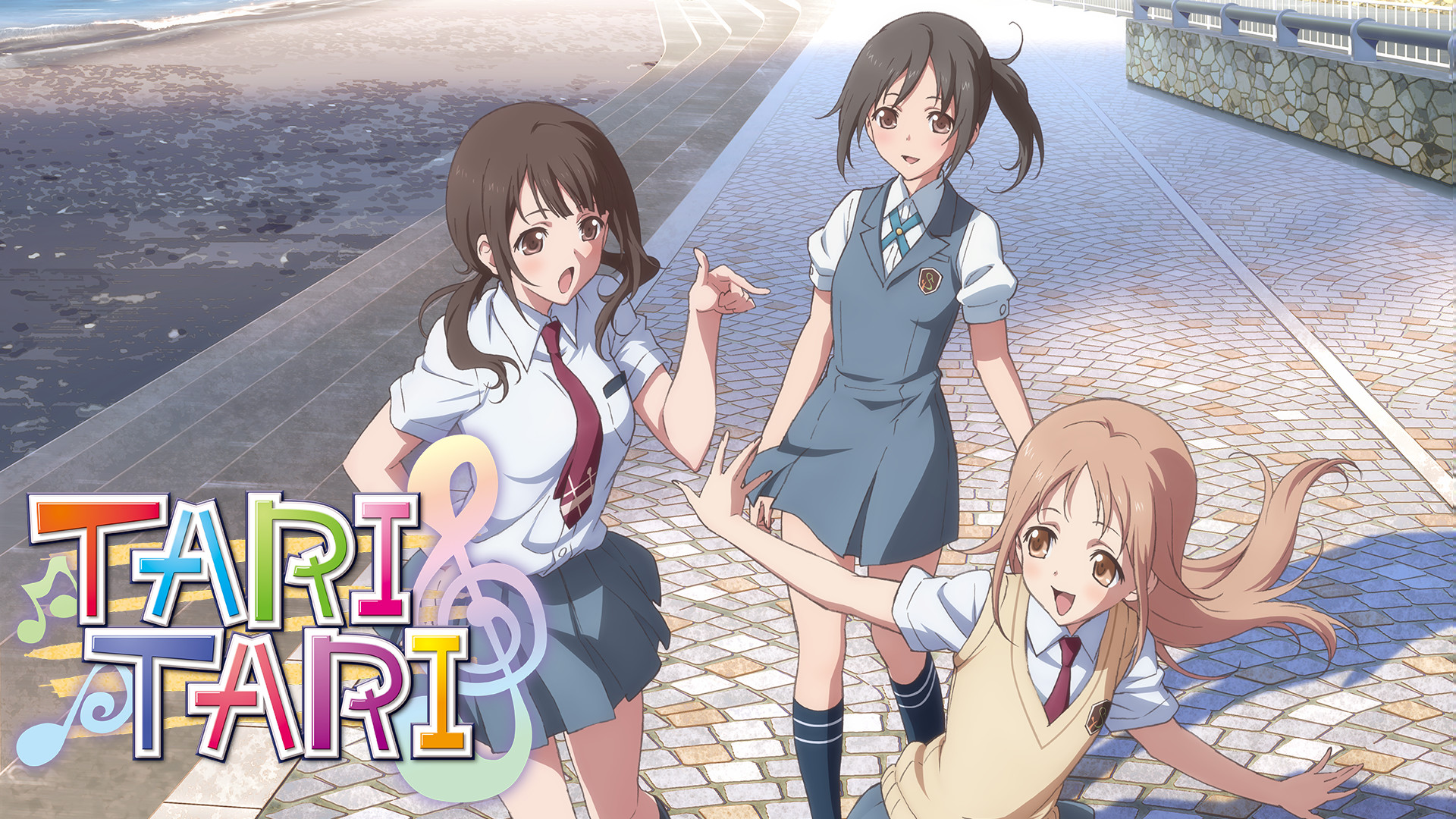
TARI TARI" is an original TV animation produced by P.A.WORKS and a manga based on it that was broadcast in 2012. Set along the Enoden line in Fujisawa and Kamakura cities in Kanagawa Prefecture, the story is about five male and female students at a high school famous for its music department who, each with their own problems, start a chorus club to make their dreams come true and spend their last summer in high school laughing, worrying, sometimes fighting, and even falling in love while growing together with their best friends. Their coming-of-age story has been widely praised and moved, and the Blu-ray released after the broadcast topped the weekly BD ranking.
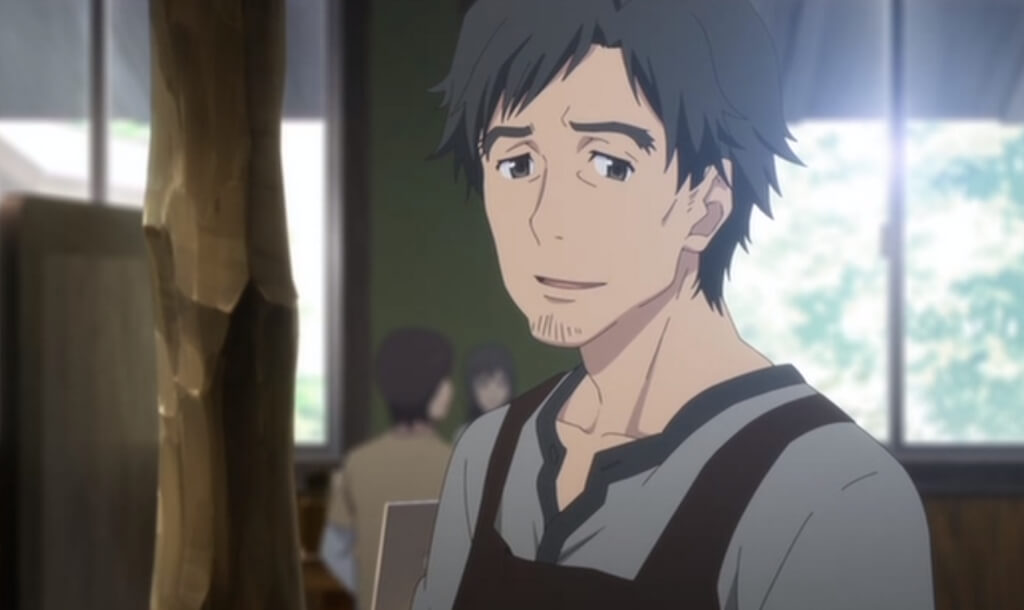
CV: Kenji Hamada
He is the father of Japanese music and lives with his daughter, Wasso, and his male cat, Dora. He runs a teahouse and souvenir shop called "Kokageya" on Enoshima, so he shares the housework with his daughter. He is good at gardening and cooking on the radio. He is very gentle and dotes on his daughter. When a Japanese player suffers from music and tries to throw away all of his memories of the piano and his dead mother, he gently passes on the words of his mother to the Japanese player, leading to the solution of his worries. He also keeps all of the memorabilia that he thought the Japanese player had thrown away, and he did not throw away the piano that his dead wife had sent a song to him as a proposal. Instead, he passes on to his daughter the composition of a song that his wife had begun to compose with the piano. He always takes sides with the Japanese music and choir club and watches over them closely.
Mahiru Sakai
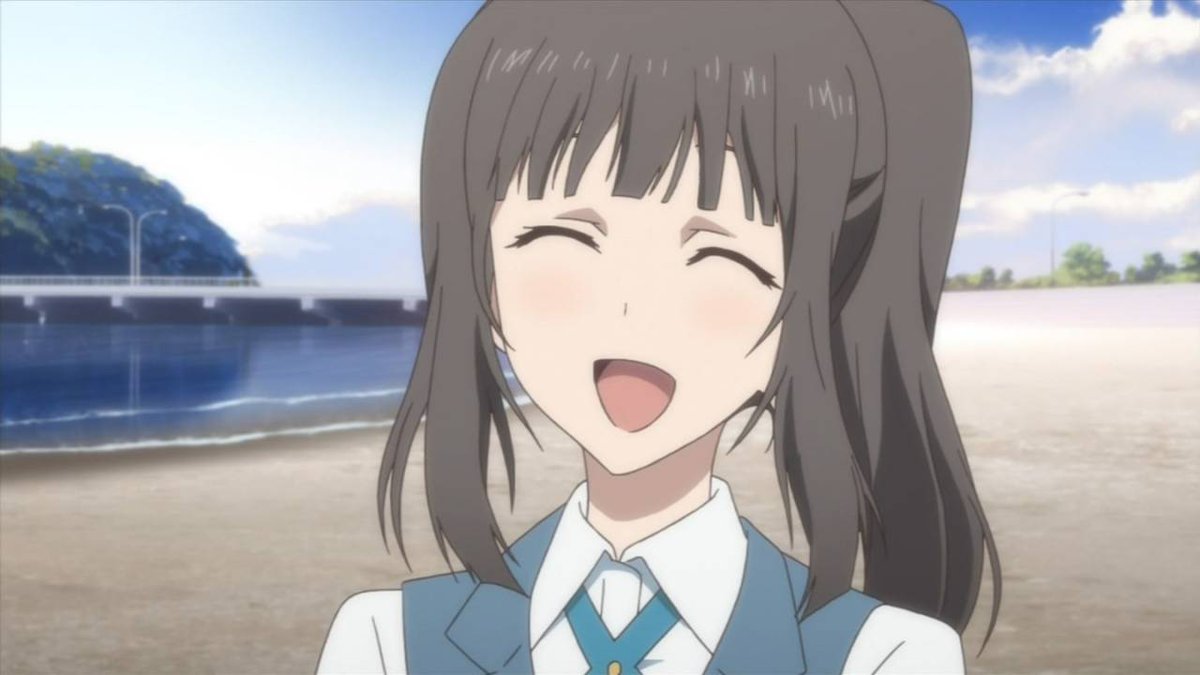
CV: Sayaka Ohara
She was the mother of the Japanese harp. She died of illness when she was a junior high school student. She graduated from the music department at Hakuba Hamasaka High School. She was in the choir club at that time and was a friend of Takakura, who is now the vice-principal. She is also a student of the current principal, Ikezaki. They met and interacted with コンドルクインズ, who was a big fan next summer, while they were still performing on the street. She had a theory that music was something to enjoy sound, and because she had musical talent, she enjoyed making music and singing songs from her heart, and because she had a very bright and positive personality, it was easy for her to win the hearts of people around her, and she was also loved by the music. While she was alive, she wanted to make a song with her daughter so that she would love the music even if she was gone, and so that she would not lose her emotional connection with herself, but she could not make her wish come true because the Japanese harp at that time was cold to her mother because she was an adolescent and was under stress from the entrance examination. Later, with the support of her father and those around her, the reformed Japanese harp composed a continuation of the song that Mahiru had started to write, and the song was completed at the end of the story. She was able to make her wish come true safely.
Shoichi OKITA
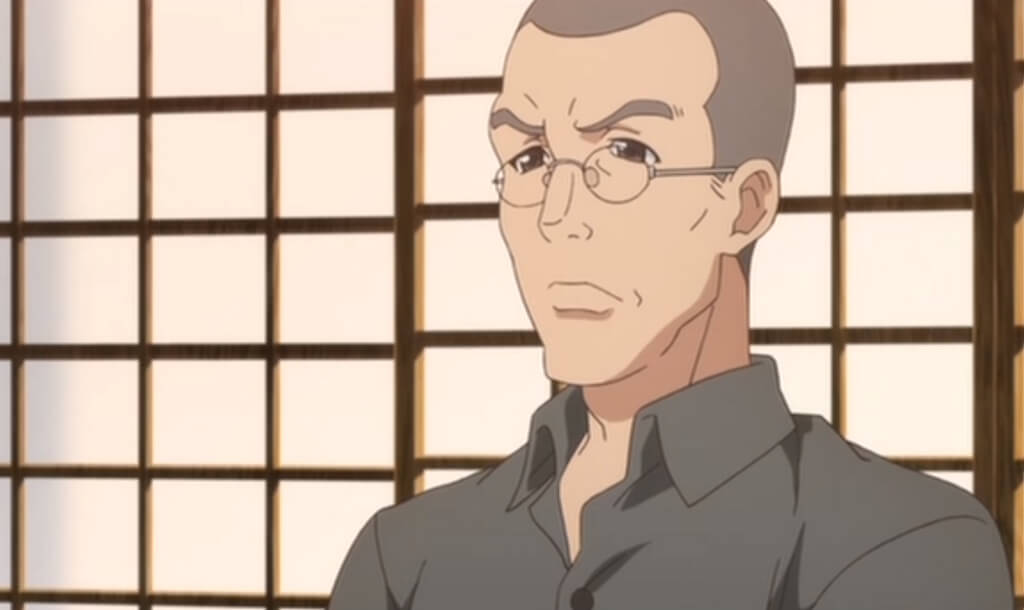
CV: Hiroyuki Kinoshita
紗羽's father is the chief priest of a temple near his school. He has a serious, old-fashioned way of thinking and is very stubborn, so he is not good at conveying his true feelings. He often quarrels and fights with his handsome daughter, 紗羽, who is similar to his father's personality. He has an overprotective side, and when 紗羽 told him that he wanted to become a jockey after graduating from high school, he was fiercely opposed and became very angry, creating a gap between the parents and the child, but seeing his daughter's sincere attitude, he secretly supported her by calling out to the horse racing school that did not meet the application conditions. After that, he reconciled with his daughter and tried to revive the canceled White Festival. He actively supported her by calling out to his friends in the shopping street for her and the choir club, which struggled to have as many people as possible come to listen to their songs.
Shiho OKITA
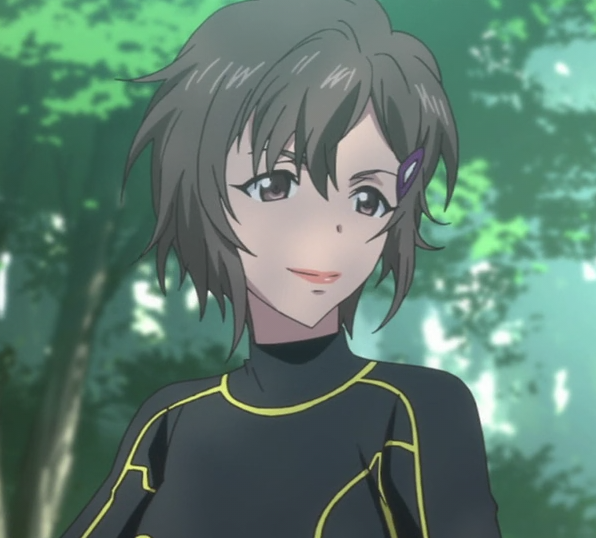
CV: Mamiko Noto
紗羽's mother was also a member of the chorus club at Shirase Hamasaka High School, and was a junior of Takakura, the vice-principal, and Mahiru, the mother of Wasso. Her hobby is surfing and she is good at illustrations. She has a gentle personality, but she also has leadership at meetings in the shopping district, and is like a madonna in the neighborhood association. She is very friendly, gets along well with her daughter's best friend, Konatsu, and is like her sister. However, she is sometimes strict with her daughter as a mother.
Haruka Tanaka
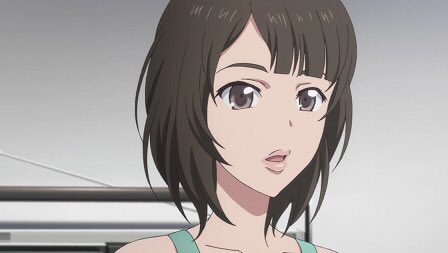
CV: Ayako Kawasumi
The older sister of Daichi, a college student. She lives with her younger brother, Daichi, because her parents have been transferred. She calls Daichi "Tai-kun," and she has a free-spirited personality. She enters Daichi's room without permission, wearing her underwear, and troubles the Daichi by relaxing. She started playing badminton when she was an elementary school student, which influenced her, and so did Daichi. She continues to play badminton as a college student, and she is a reliable older sister who rents her university training space to practice Daichi. She also cheerfully supports the special activities of the Daichi's chorus sometimes called the badminton club.
Other characters
コンドルクインズ
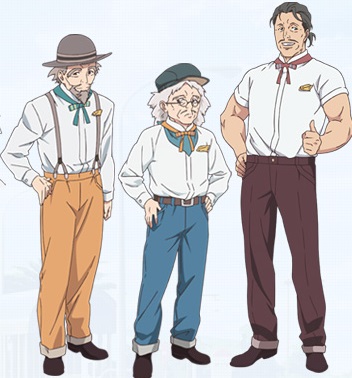
Source: www.taritari.jp
CV: Yutaka Aoyama (cheerful) / Motomu Kiyokawa (small) / Jorge Díaz (foreign)
A musical group consisting of three foreign members, characterized by their gray hats, green casket hats, small glasses, and muscular body. They used to be so popular that they appeared in TV commercials. They met their late mother, Mahiru, at a street concert in the old days, and the song they made together became their biggest hit. Now, they go around the country with their pet, a mini pig called Poem, in a camper and live in rural areas. At the World Music Festival World Music Festival held in Enoshima next summer, and were informed of Mahiru's death by the Japanese music, and later performed a memorial performance in front of Mahiru's gravestone. When they learned that the Japanese music was traumatized by Mahiru's death and that they were away from the music, they handed Mahiru a letter they had received from him in the past to the Japanese music group, giving them a chance to regain the bond with the mother of the Japanese music.
Jan
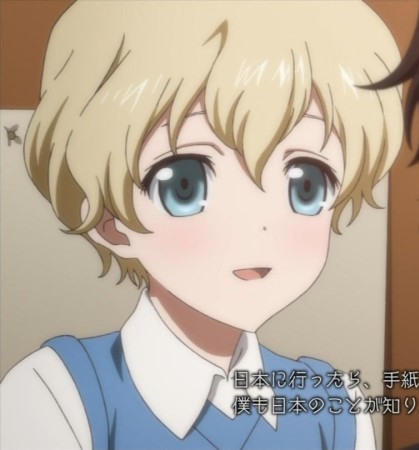
Source: ameblo.jp
CV: Mikako Komatsu
Viennese was his best friend in Austria, where he had lived before he moved to high school. He was a blond-haired 7-year-old boy. He became friends with Viennese because of his common hobby, gun Baray jar. When he left for Japan, he received a figurine as proof of his friendship. However, after Viennese came back to Japan, Yang had moved. There was no way to let him know, and all the letters Viennese sent were returned. As a result, there was a gap in friendship, but at the end of the story, a letter was sent from Yang to Viennese and they reconciled. Viennese was able to meet again safely after graduating from high school.
TARI TARI terminology
Bai Hamasaka High School
A high school located around Enoshima in Fujisawa and Kamakura in Kanagawa Prefecture. It has a music course and a general course. The music course is so traditional that it won a prize in a competition.

Contents
- Overview of TARI TARI
- The plot and story of "TARI TARI"
- Choral Sometimes Until the Badminton Club is Established
- Meeting at the World Music Festival and Mother's Wish
- New Goal of "Shirosai" and Barriers to a New Future
- To the main stage selection
- Despair over the cancellation of the White Festival and hope for its holding
- From the long-awaited cultural festival to graduation
- Characters of "TARI TARI"
- Chorus occasional badminton club
- Konatsu MIYAMOTO
- Sakai Wasso
- 紗羽 OKITA
- Daichi TANAKA
- Viennese / Maeda 敦博
- Vocal club
- Hirohata Tanae (Hiroha)
- Ueno Midori
- Masami OTANI
- Student council
- Fumiko MATSUMOTO
- Makoto Miyamoto
- Art club
- MIZUNO Yoko
- Toru Hamada
- White Hamasaka High School faculty
- President
- Principal: Yori Ikezaki
- Vice Principal: Naoko TAKAKURA
- Tomoko TAKAHASHI
- Chorus sometimes family members of the badminton club
- Keisuke SAKAI
- Mahiru Sakai
- Shoichi OKITA
- Shiho OKITA
- Haruka Tanaka
- Other characters
- コンドルクインズ
- Jan
- TARI TARI terminology
- Bai Hamasaka High School
- Chorus occasional badminton club
- Vocal club
- World Music Festival
- Hero Gunbariger
- Hakusai
- "TARI TARI" I TARI "
- Okita 紗羽 "Are you going to leave without doing anything with all these people involved! Don't you have any regrets! There's no more!"
- Sakai Wasso: "I couldn't say. I'll go. I'm sorry. Thank you. I can't sing with you anymore."
- 紗羽 Okita "Don't make me laugh, will you? What are you talking about when you're just running on the rails that the vice-principal laid out for you? Do you think you can't do anything just because you don't know? Why don't you stop thinking with that happy head? Why do you think it's impossible when it's still like this? It might work! And you won't even get a chance. Why don't you be crazy!"
- Gamballed: "Dreams and hope act as a force to move people and turn the earth. Tomorrow doesn't come because the sun rises. It rises because people live with hope! We turn the earth!"
- Mahiru Sakai: "Music means' enjoying the sound'! We have to enjoy it!"
- Next Summer MIYAMOTO: "I can't do without singing!"
- The principal said, "What is education? You don't know about people's weaknesses or the music that cures them. It may be just an asset for you, but it's an important place for the students! Why don't you get together and sing?"
- "TARI TARI" Inside Stories, Trivia, Small Stories / Episodes and Anecdotes
- Stamp rally held all over Enoshima
- The casting of voice actors focused on singing
- The theme choral song "Kokoro no Senritsu" (Melody of the Heart) is loved by many people and is actually sung in chorus. For example, the score is sold.
- Aburaya, the Holy Land, Remains Popular Years After Anime Broadcast
- The story of 10 years later is novelized.
- Theme song and insert song of "TARI TARI"
- OP: AiRI "Dreamer"
- Ed Ending: Shirayuki Hamasaka High School Choir Club "Shiokaze no Harmony" (Episode 1, Episode 3-5, Episode 7-12)
- ED (ending): Yuka MIYAMOTO (Asami Seto) & 紗羽 OKITA (Saori Hayami) "Kokoro no Senritsu (#2 ed Ver.)" (Episode 2)
- Ed Ending: Shirasu Hamasaka High School Choir Club "Kokoro no Senritsu (#6 ed Ver.)" (Chapter 6)
- Ed Ending: Shiro Hamasaka High School Choir Club "Shiokaze no Harmony (#13 ed Ver.)" (Chapter 13)
- An inserted song: "The school song of Shiro Hamasaka High School" by all the students of Shiro Hamasaka High School (the first and thirteenth episodes)
- Inserted song: "Reflexia (chorus version)" (the first episode) by the vocal music club of Shiro Hamasaka High School
- Insert: "goin' my way!" (Episode 1) by Asami Seto
- Inserted song: "goin' my way! (chorus version)" (Episode 2) by the vocal music club of Shiro Hamasaka High School
- Insert: コンドルクインズ (Ricardo Cruz and his friends) "Amigo! Amigo!" (Episode 2 and 4)
- Inserted song: "Shiro Hamasaka High School Song (Latin Ver.)" (Chapter 3) by the chorus club of Shiro Hamasaka High School
- Inserted song: Hakurei Hamasaka High School Choir "Hau' oli ♪" (Chapter 4)
- Insert: Nishino Bata Hero Shotenger "Netto Hero Gambaraiger" (Episode 9 and Episode 10)
- Inserted song: "radiant melody" (Chapter 12 and 13) by Shirayuki Hamasaka High School Choir & Vocal Music Club