
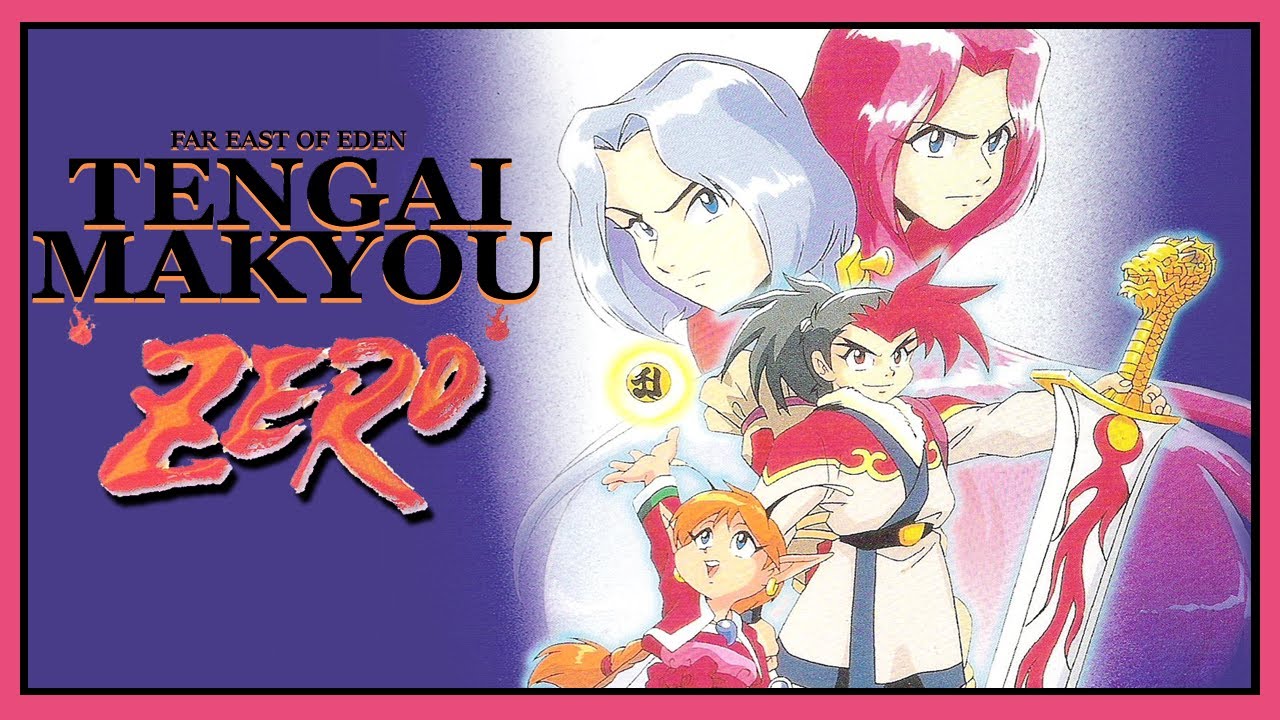
Tengai Makyo ZERO" is a role-playing game released by Hudson (absorbed by Konami in 2012) in 1995, and is the only Super Nintendo Entertainment System (SNES) title that is an offshoot of the Tengai Makyo series that has been developed for the PC Engine and other platforms. The game was planned and drafted by Oji Hiroi, known for his "Sakura Taisen" and "Majin Eiyuuden Wataru" series.
The story takes place in the fictional country of "Zipangu," based on the concept of "a false view of Japan from a foreigner's perspective. The story depicts a battle between a tribe of fire, a race different from humans, and an army of hell, which descended to earth 600 years ago from the heavens.
family of fire
A family created by the god Agni.
Their home was the heavenly land of Takamagahara, but 600 years ago, during a battle against the legions of hell, they came down to earth and cooperated with the divine beasts who betrayed Ninigi, and succeeded in sealing Ninigi in the gates of hell.
However, he did not allow Agni to return to the High Heavenly Plain by allowing humans and divine beasts to remain on earth.
Although he looks like an ordinary human, he has mysterious powers, such as being able to manipulate magic.
Fairies of the Fire Clan are easy to distinguish from each other because they possess a sense of touch and wings.
They also have a very long life span, as Tenzin, who has been alive for 600 years, looks young, but fairies can only live for 20 years.
In the country of fire bears, there is a "hidatate village" where the fire clans live together.
In order to get as close to the heavens as possible, the houses are lined up on stilts, and some places offer a view of the high heavenly sky.
Army of Hell
Demons created by the god Ninigi.
These include the captains of hell who ruled over the countries of Zipangu and the demons that attacked them on their journeys.
The divine beasts mentioned below were originally from hell, but they betrayed Ninigi and joined the human side.
Incidentally, the captains of Hell were also originally called Shinju, and there were 12 in all (including Mizuki).
In some cases, such as Kokubyaku (formerly a fairy) and Shiranui (formerly a member of the Fire Clan), they were seduced or altered by Ninigi and ended up on the side of the Legions of Hell.
divine beasts
A sacred beast that protects the countries of Zipangu.
Originally created by Ninigi, it belonged to the Legion of Hell.
However, touched by the hearts of the Fire Clan and humans, it betrayed Ninigi and became the guardian deity of humans.
Basically, they cooperate with the Fire Clan because of the favor they owed them in the battle 600 years ago, but there are some, like Inugami, who are skeptical of the Fire Clan.
In this game, they are sealed by the Captain of Hell, and one of the objectives of the game is to defeat the forces of Hell in various places and unseal them.
the heavens
A land floating in the sky, the home of the Fire Clan.
There are three villages, Katana Village, Tamatsukuri Village, and Kagami Village, and in the center is the Takatenpara Grand Shrine, where Agni resides.
Eggs of fire fairies are born here and are brought down to earth to hatch in the Dream Hall on the iceberg, where they become fairies.
Eggs that hatch outside of the Dream Hall become ma-nei, which are used as pets or summoned by Subaru.
The people who live in the high heaven are different from the Fire Clan, and basically do not have the concept of death.
For this reason, they were very panicked when they were attacked by the Army of Hell, and some villagers blamed Higan and his group for "bringing strife" into the area.
eternal fire
Sacred fire enshrined in the fire clan's village, Hidatachi Village. It is believed to be the messenger of the god Agni.
The king who rules Zipangu is determined by the will of this eternal fire.
The story begins when the younger king, who was chosen by the eternal fire, is killed by the elder king who was seduced by Ninigi.
The eternal fire then chose Higan as the new king of Zipangu, the hero of fire.
mountain man (esp. a hermit)
Hermits are found throughout Zipangu. Each of them has mastered their own techniques through training, and they teach them to others by putting them on scrolls.
There are also hermits who can teach Higan the secrets of the art, but basically, Higan must win a one-on-one battle with them in order to be taught the art.
Some hermits are also bigoted, saying, "If you have a lot of money, you are not a fire hero.
meeting place for assignations, drinking, etc.
Source: twitter.com
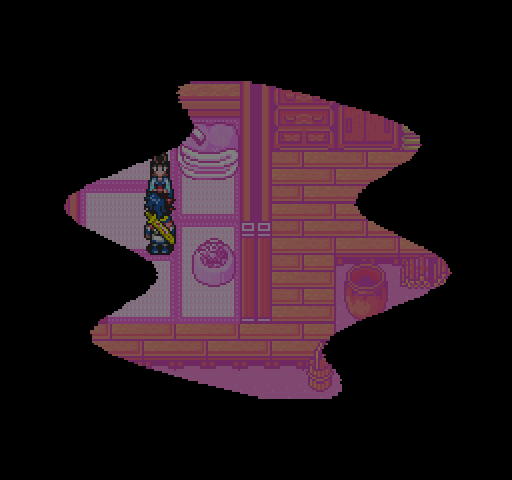
In Zipangu countries, there are stores with a system similar to a modern-day cabaret club called "Dating Tea House.
After buying a manju (a sweet bun) in exchange for an admission fee, you are taken to a room where women are waiting for you, where you can talk with them and even spend a hot night with them.
(Only higan are allowed to enter.)
Some women may ask you for a house or expensive souvenirs,
Some of them are equipped with very effective equipment.
Some of the women will give you "hand-knitted series," which are highly effective equipment, and this system has its advantages.
However, the PLGS is closely related to the events with these women.
If you don't go to see her for too long, it will affect the relationship.
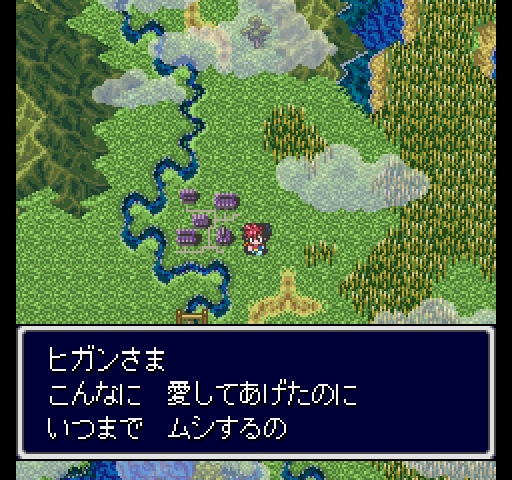
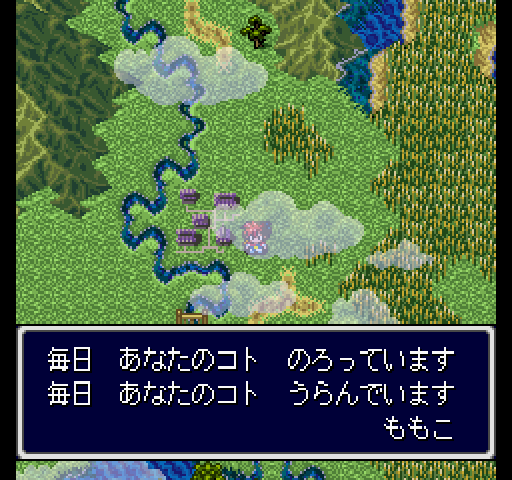
Some women send letters of resentment and hint at suicide if left alone too long, so be careful.
Source: twitter.com
The "Momoko letters" sent to a woman named Momoko when she is left alone for an extended period of time have very frightening content.
Source: twitter.com
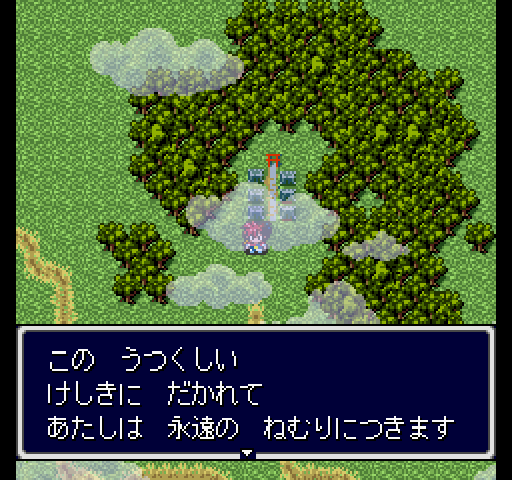
Source: twitter.com
egg dealer
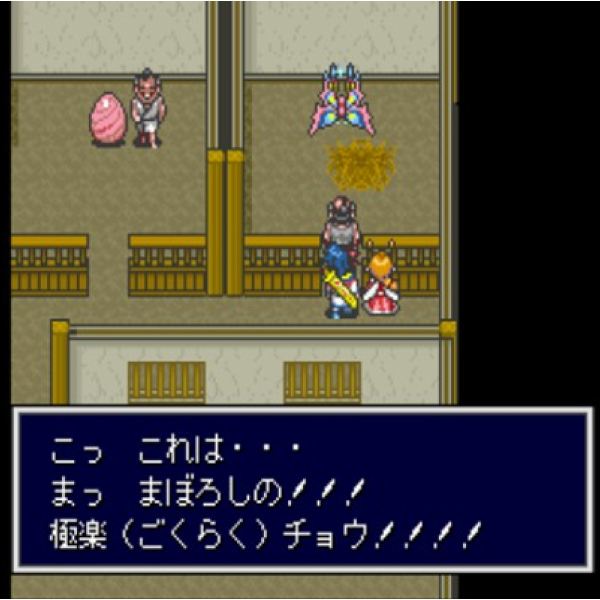
Source: www.sirohebi.com
A facility in Fire Bear Country where you can raise pets that hatch from eggs.
Pets grow hungry over time and will die if left unattended for days, but will grow up quickly if cared for carefully. This is another PLGS-based system.
The summoner's mamono, which Subaru handles, can also be raised here, but the results depend on the type of food and how long the mamono is left in chrysalis form, so it takes a lot of effort to get the mamono you want. There is a less powerful "Inoshikacho," which deals a fixed 20 damage to the opponent, and the most powerful "Gokurakucho," which deals a fixed 500 damage to the opponent.
Backstory, Trivia, and Small Stories/Episodes/Anecdotes of "Tengai Makyo ZERO" (Japanese only)
The development of "Tengai Makyo ZERO" was inspired by the staff's desire for children to play the game.
Tengai Makyo ZERO is the only Super Nintendo Entertainment System (SNES) title in the series.
Its development was prompted by Prince Hiroi, who heard that although the children of his staff members played RPG games such as the "Dragon Quest" and "Final Fantasy" series on the SFC, they sadly did not play the "Tengai Makyo" series.
The "Tengai Makyo" series had previously been released on the PC Engine and other hardware, but these were not familiar to children. The idea of releasing Tengai Makyo on the SFC, which was popular among children, so that the children of the staff could also play it, was the starting point for the development of ZERO.

Related Articles
Tengai Makyo II Manji MARU (MANJI MARU) Spoiler Commentary and Discussion Summary
Tengai Makyo 2 is a role-playing game that was originally released for the PC Engine. It has since been remade in various media. Set in the fictional country of Zipangu, Sengoku Manjimaru, a descendant of the "Fire Clan," cuts the dark orchids scattered throughout the land and confronts the evil god "Yomi" with his friends in order to stop a conspiracy by his arch enemy, the "Root Clan.
Read Article
Spoiler commentary and discussion of Princess Tomato in the Land of Salad (game)
Tomato Princess in Salad Land" is an adventure game released by Hudson in 1984 for the personal computer and in 1988 for the Family Computer. The game takes place in the Salad Kingdom, where vegetables and fruits live in peace. However, a rebellion by the minister, Pumpkin King de Avalle, deposes the Onion King and imprisons Princess Tomato. The Cucumber Warriors stand up to restore peace from the minister, who calls himself the Pumpkin King and rules the kingdom.
Read Article
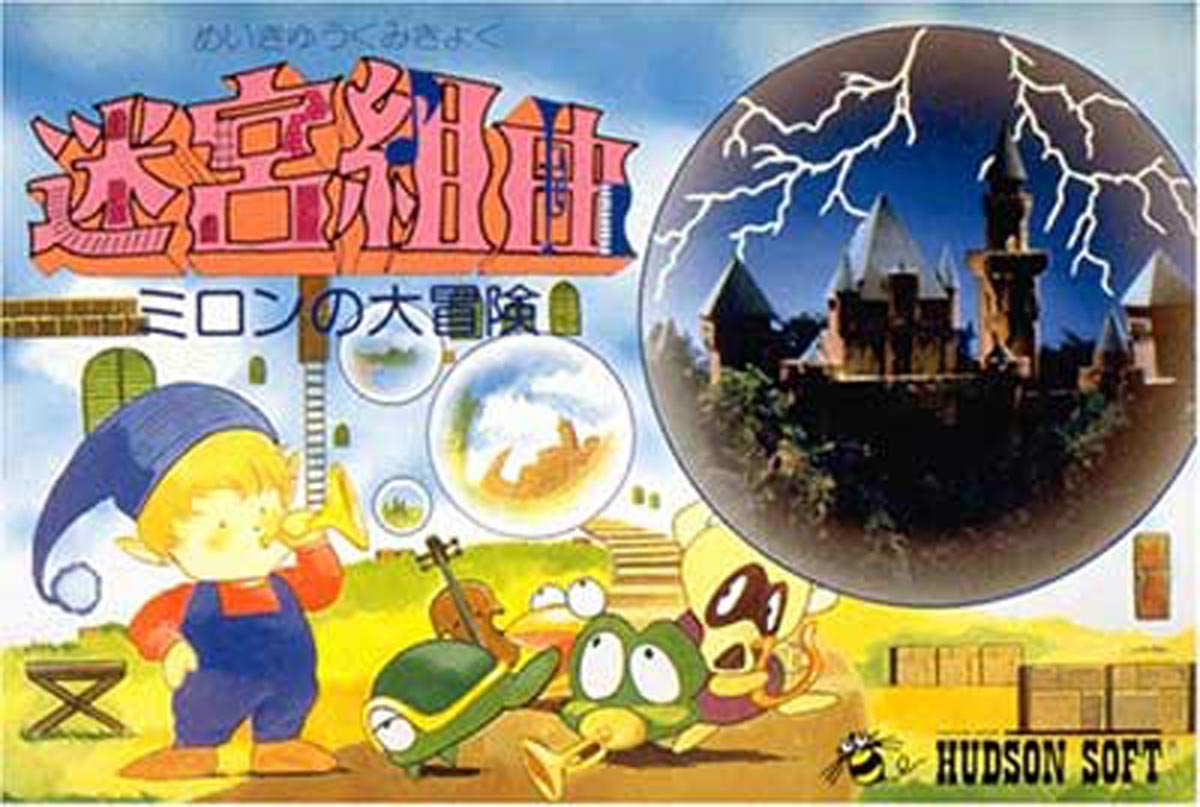
Labyrinth Suite: The Great Adventure of Myron (game) spoiler commentary and discussion.
Labyrinth Suite: Milon's Great Adventure" is an action RPG for the Family Computer released by the Japanese game maker Hudson in 1986. The player controls the main character "Miron" and aims to defeat the demon Maharito, recover the stolen musical instruments, and rescue the princess Ersila. The word "Suite" in the title is also an important element, and "music" is the core of the atmosphere throughout the game. The bonus stage, in which the BGM changes not only on the game screen but also as the story progresses, is particularly impressive.
Read Article
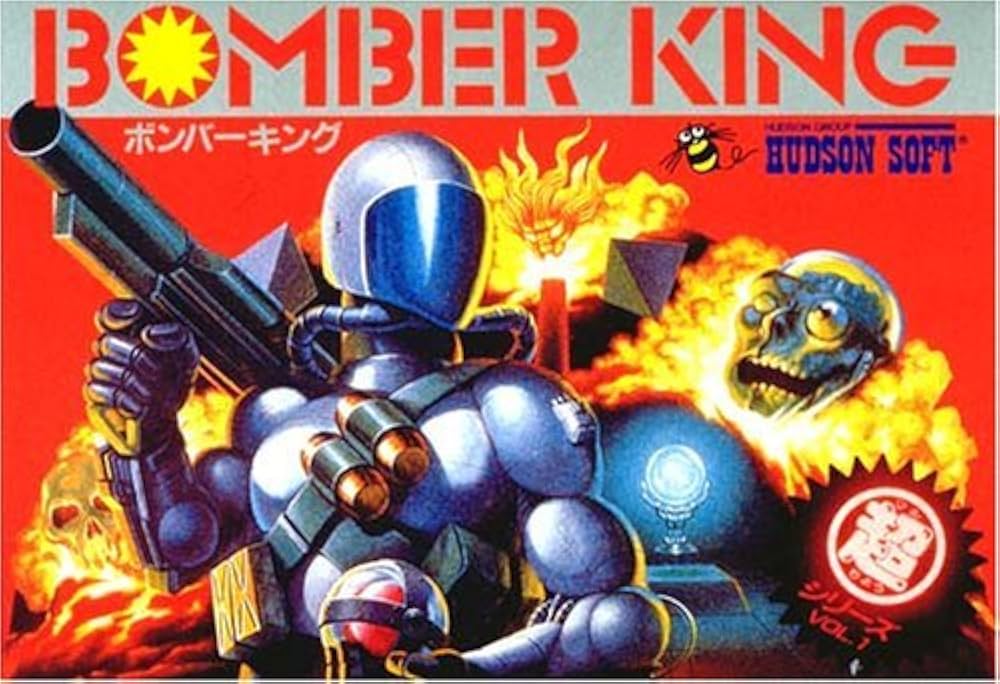
Exhilarating! Nostalgic game software! Bomber King.
It may still be popular today. Its name is Bomber King! The super-gekimuz action game from Hudson! Many of you may have fond memories of it. Let us introduce you to such Bomber King.
Read Article
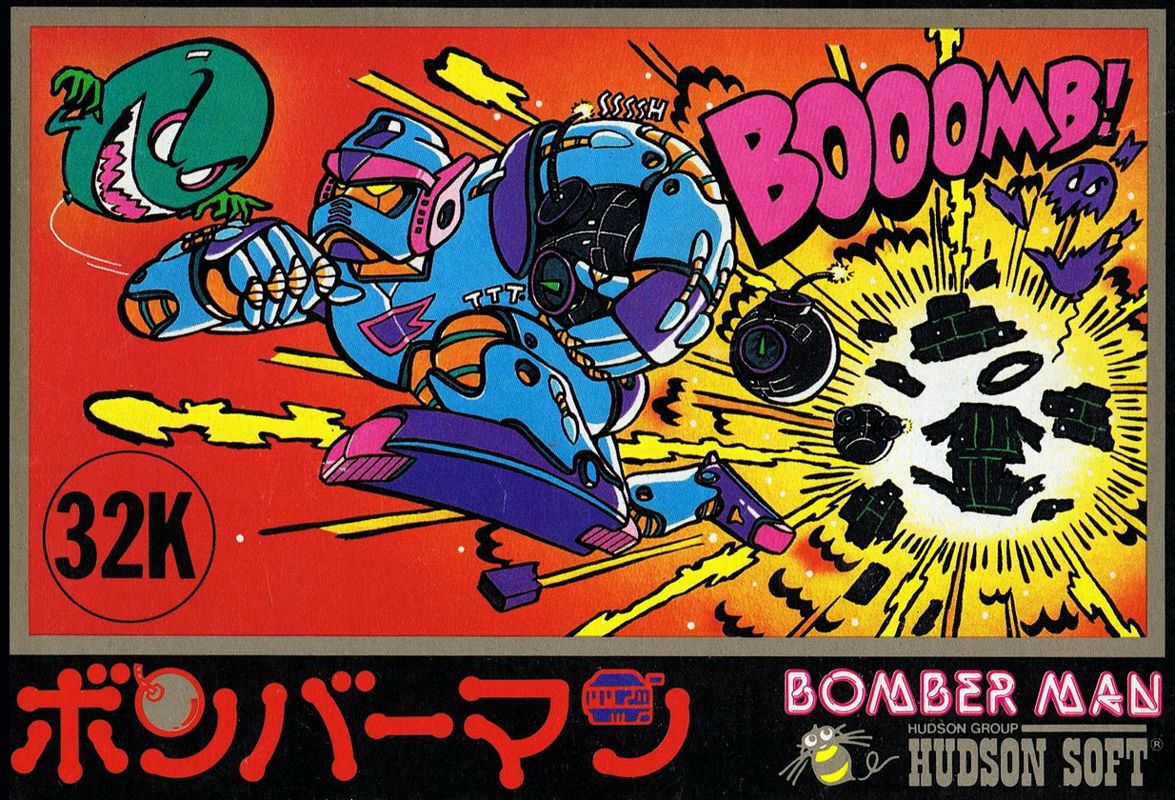
ボンバーマン(初代・元祖)のネタバレ解説・考察まとめ
『ボンバーマン』(初代・元祖)とは、ファミリーコンピュータ用ソフトとして1985年12月にハドソンが発売したアクションゲーム。 地底王国で悪の手先として爆弾製造を行っていたロボットのボンバーマンは、地底を脱出し人間になろうと試みる。ボンバーマンを裏切り者として追ってくる強敵に対し、ボンバーマンは武器の爆弾を手に対抗する。 ファミコンのみならずゲームボーイアドバンスやプレイステーションにて収録・リメイクされ、初代『ボンバーマン』以降も多数の作品がシリーズ化された。
Read Article
![A Masterpiece] I want to play it again before I die! Super NES Game 【Recommended】.](https://renote.net/files/blobs/proxy/eyJfcmFpbHMiOnsiZGF0YSI6MTgwNzkyLCJwdXIiOiJibG9iX2lkIn19--89a512c082c743fd6aa77efd98b378b2f9c670a1/z_5fb7b0d7ec722.jpg)
A Masterpiece] I want to play it again before I die! Super NES Game 【Recommended】.
I want to play it again before I die! This is a compilation of Super Nintendo Entertainment System (SNES) game titles. There are more than 1,000 Super Nintendo Entertainment System (SNES) game titles, so we took the time to compile this list. Generally, the further back you go, the older the release.
Read Article
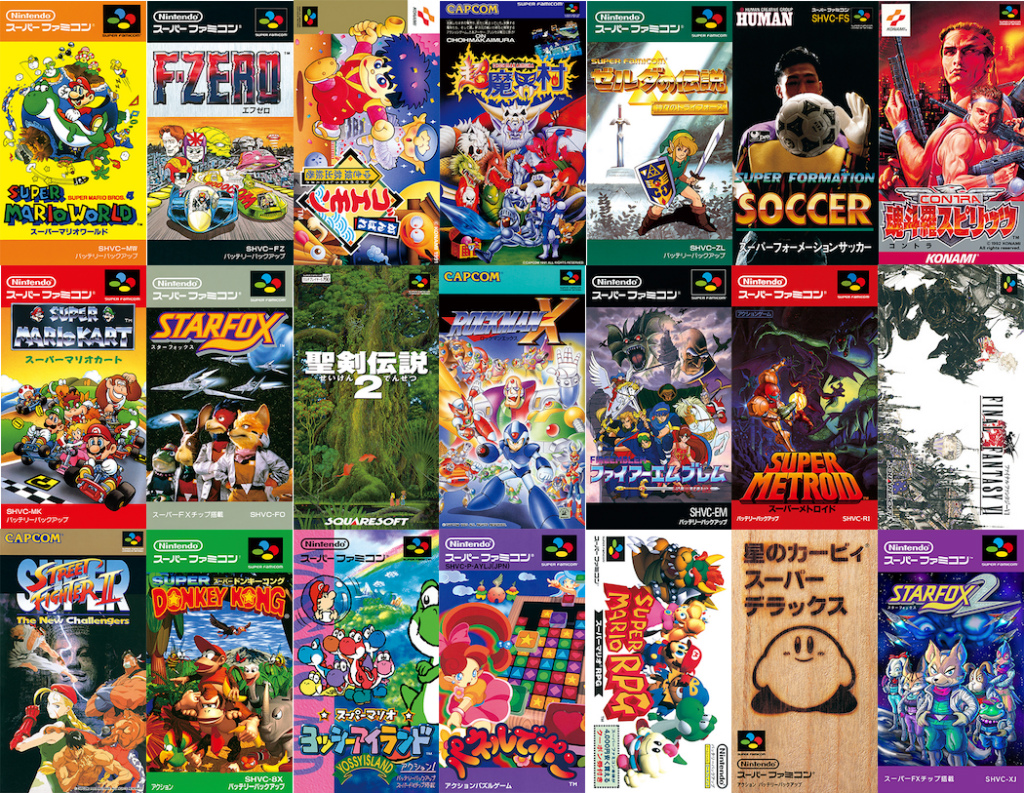
A compilation of recommended Super Nintendo Entertainment System (SNES) software classics.
We will compile a list of the most interesting and highly rated SFC classic software in the series by genre. The SNES is still colorful even if you play it now. Some of them have appeared on the Virtual Console.
Read Article
If you were born between 1985 and 1990, you know what I'm talking about! A compilation of nostalgic toys and fads [mini 4WD, etc.].
We have compiled a list of nostalgic toys and popular items that those born between 1985 and 1990 know. Toys such as Mini 4WD and Zoids, stationery such as KAMITSUKI GRANDMA and Batoen, and other items that make you say, "I miss them! and "I miss them so much! The following is an introduction with images.
Read Article
Interesting history! Summary of the history of "Bomberman" from its birth to the present
The Bomberman series, a super classic by the popular game maker Hudson, is an action game in which players use bombs to battle and enjoy the story. The game's simplicity, depth, and addictive gameplay have been passed down from generation to generation. However, when we lift the lid on its history, we find that it has undergone many changes and interesting facts in the past. In this article, we summarize the interesting and profound history of the very popular game "Bomberman.
Read Article
Three of the best burning SFC party games
These days, there are fewer and fewer places to play outside. Going out somewhere costs a lot of money. In this case, we have no choice but to play at home. So, I would like to introduce the hottest party game you can enjoy on the SFC.
Read Article
Momotaro Dentetsu (Momotaro Tetsu) Gaiden, The Legend of Momotaro
Introducing Momotaro Densetsu, an RPG outside of Momotetsu. It is a masterpiece that is as popular as Momotetsu.
Read Article
A compilation of classic Nintendo 64 games
We have compiled a list of games that were released on the Nintendo 64 and are now even called masterpieces.
Read Article
Contents
- Outline of "Tengai Makyo ZERO
- The story of "Tengai Makyo ZERO
- beginning
- Bear Bear Country
- Bengalese peacock (male peacock)
- Tsurukuni (second highest of the eight hereditary titles)
- turtle country
- Inukami
- Ryukyu Kingdom
- Takamagahara
- Final battle - Ending
- Characters from "Tengai Makyo ZERO
- family of fire
- Fire eyes
- Subaru
- Tenjin
- Mizuki
- Jade
- Army of Hell
- absolute raid
- Akamaru in Hell
- Kyokoku no Doki (The Rage of Kyokoku)
- Sara
- Juri
- Kingin (gold and silver)
- Castanopsis sieboldii (species of chinquapin)
- Bambusa multiplex var. elegans (variety of hedge bamboo)
- divine beasts
- frizzled fake hair
- peafowl (inc. the male peacock, female peahen, and young peachick)
- crane (any bird of the family Gruidae, esp. the red-crowned crane, Grus japonensis)
- turtle
- evil dog spirit
- promoted rook (shogi)
- Other
- Byakuen
- beat down one's opponent's belt
- slap
- coal hermit
- Shiranui
- Agni (Vedic god of fire)
- lesser cuckoo (Cuculus poliocephalus)
- older brother king
- Emperor of Japan
- kabuki family
- Sugoi armorer Rokusuke
- Mankichi the Treasure Hunter
- every (usu. with events, e.g. every weekend)
- one thousand years
- Vinan Hermit
- Karen (celestial being)
- rat-bastard
- Hanamaru family
- Princess Mitsuko
- Elders in the village of Hidatachi
- pair of compasses
- Koji Imada
- Game System of "Tengai Makyo ZERO
- Combat screen, basic notation
- mysteries
- The depths of higan
- flaming sword
- bolt cutter
- bomb slash
- assassination of a thousand men
- killing a samurai on the job (e.g. in the Edo period)
- dragon slash
- The Depths of Subaru
- flame elephant
- electric catfish (any species of family Malapteruridae, esp. species Malapterurus electricus)
- HAYABUSA of the wind
- The Lion of Steel
- daddy longlegs (arachnid of order Opiliones)
- chevrotain (Tragulidae spp.)
- lingual butterfly (esp. the Japanese lingual butterfly, Zostera japonica)
- common kestrel (Falco tinnunculus)
- Strelitzia reginae
- The depths of Tenzin
- conveying by word of mouth
- exact resemblance
- accidental resemblance
- dream copy
- a tracing of the moon
- fickleness
- deep knowledge of Mizuki
- flaming retaliation
- rotating stage machinery, which rolls backwards 90 degrees to reveal the next scene
- rotating stage machinery, which rolls backwards 90 degrees to reveal the next scene
- overturning a table in anger
- swallow-tailed swift (Apus nipalensis)
- unexpected twist (at end of story)
- Other character depths
- belligerent person
- double slap in the face (second slap administered by the return motion of the back of the hand)
- good-bye
- Depth cut-in
- headliner
- makimono
- PLGS (Personal Live Game System)
- List of festivals by month and the countries where they are held
- January: New Year Festival (Peacock Country)
- February: Setsubun Festival (Hinokumakuni)
- March: Doll Festival (Tsurukuni)
- April: Hanami (Peacock Country)
- May: Children's Day (Turtle Country)
- June: Gembu Festival (Turtle Country)
- July: Tanabata Festival (Inugamikuni)
- August: Tanabata Festival of the lunar calendar (Tsurukuni)
- September: Moon-viewing festival (Inugamikuni)
- October: Tsurumi Festival (Tsurukuni)
- November: Godless month
- December: Sanda Festival (Hinokuma Country)
- Items from "Tengai Makyo ZERO
- Weaponry / The Three Sacred Treasures
- The Stone of the Divine Beast
- recovery item
- seed ball ("kusa-dango" technique)
- steamed yeast bun with filling
- toad oil
- the cost of one's life
- miraculous (miracle-working) drink
- mandala flute
- Terms of "Tengai Makyo ZERO
- family of fire
- Army of Hell
- divine beasts
- the heavens
- eternal fire
- mountain man (esp. a hermit)
- meeting place for assignations, drinking, etc.
- egg dealer
- Backstory, Trivia, and Small Stories/Episodes/Anecdotes of "Tengai Makyo ZERO" (Japanese only)
- The development of "Tengai Makyo ZERO" was inspired by the staff's desire for children to play the game.
- The secret of raising the level using the "Mirroring" technique.
- Multiple staging in case of defeat provided.
- Post-clear options and "Again" mode
- Guest appearances by familiar characters from the "Tengai Makyo" series
- Guest appearance by comedian "Koji Imada
- Tengai Makyo Zero: Shonen Jump no Chapters", a fantastic cassette that was produced only in small numbers.