

World of Warships" (WoWs) is a free-to-play naval warfare online game developed and operated by Wargamig.net. More than 200 types of naval vessels, mainly from countries that were active during World War I and II, can be controlled. Famous warships such as the Yamato, Bismarck, and Iowa appear in the game. Also, phantom vessels that were never actually built appear. The aim of the game is to battle naval battles in the vast ocean and destroy enemy naval vessels. Players select one of various ship types and battle as the captain of the ship.
It is the fastest of the vessels and has excellent maneuverability. It has thin armor and low HP.
Although its damage from gunfire is low, its torpedoes are powerful and can cause flooding that inflicts lasting damage.
They also have good cloaking ability, using smoke screens to hide friendly ships and surprise attack enemy ships.
Destroyers differ in characteristics by country, with the Japanese equipped with high concealment and high-power torpedoes and the Americans with high-firing main guns.
cruiser
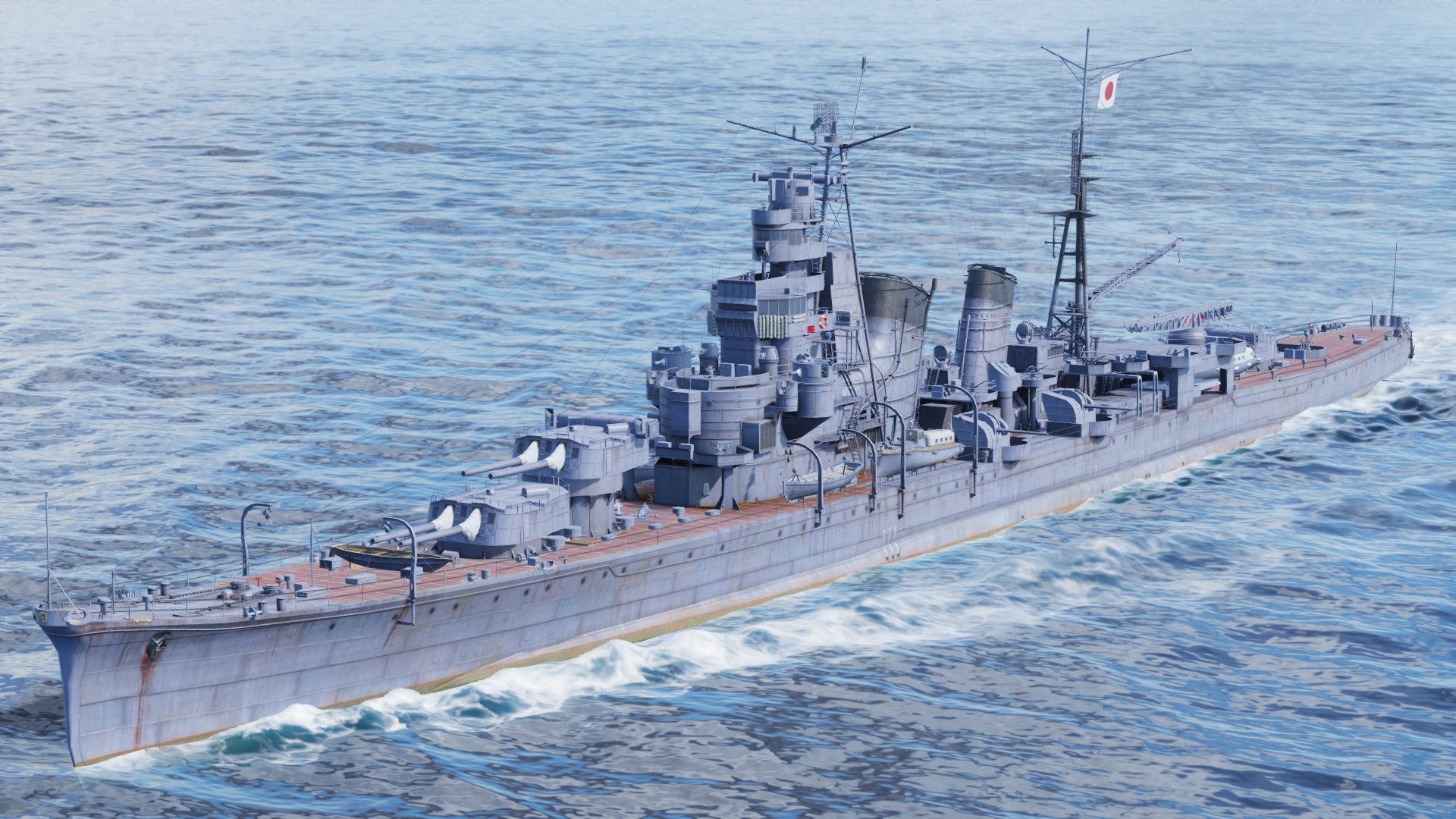
Tier 6 Japanese ship, cruiser Aoba.
Cruisers are thickly armored but highly maneuverable. They are more versatile than other types of ships.
They have fast loading times and turning speeds for their main guns, and they carry torpedoes, which provide high firepower in close quarters combat.
In addition, U.S. cruisers of Tier 6 and above do not carry torpedoes.
battleship
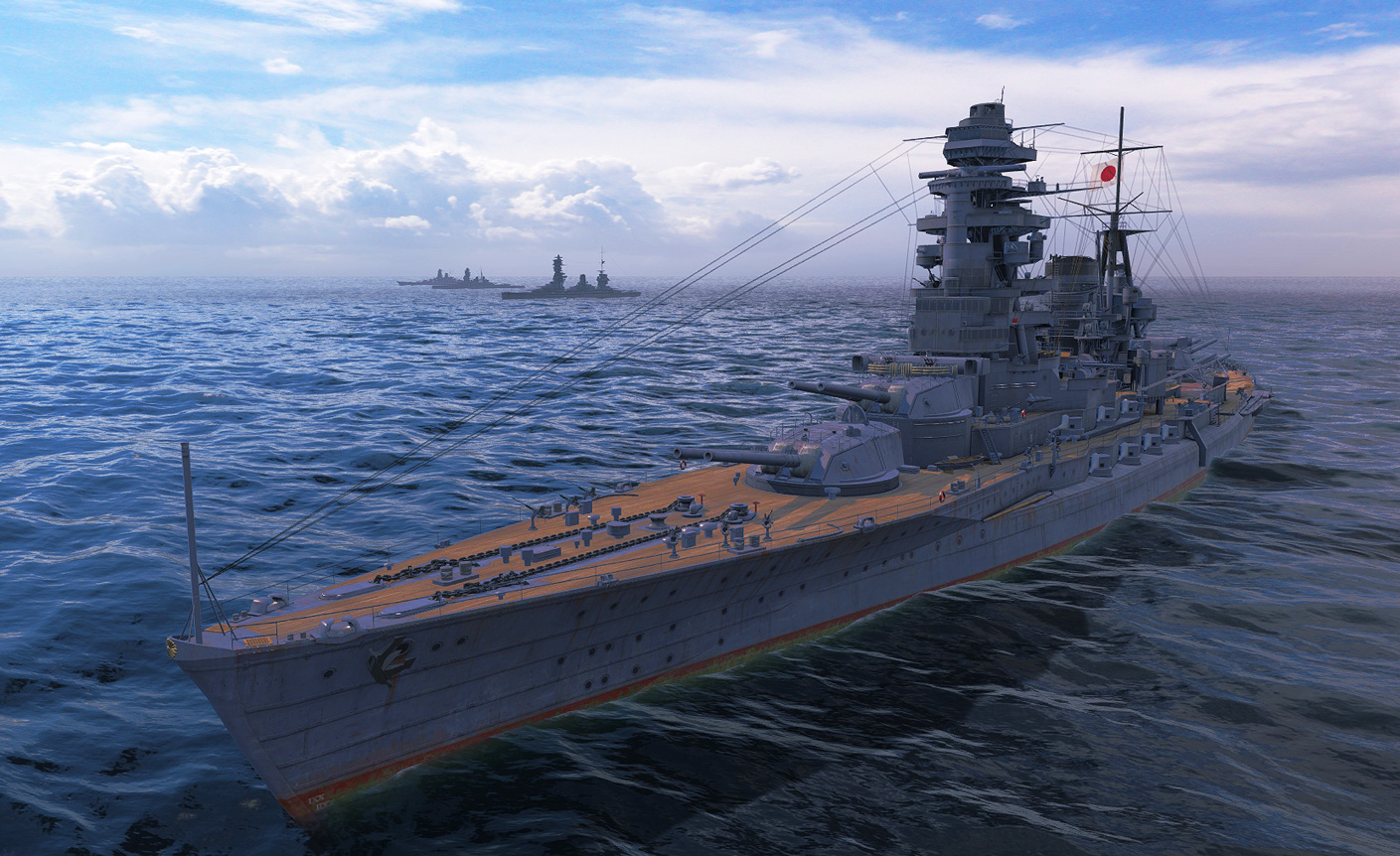
Tier 7 Japanese naval vessel, battleship Nagato.
Battleships are equipped with thick armor and large-caliber main guns.
Although their sailing speed is slow and their maneuverability is low, their main guns are powerful enough to sink enemy ships with a single blow.
In addition, only battleships can recover their HP with a consumable called "repair manpower".
Aircraft Carrier (Carrier)
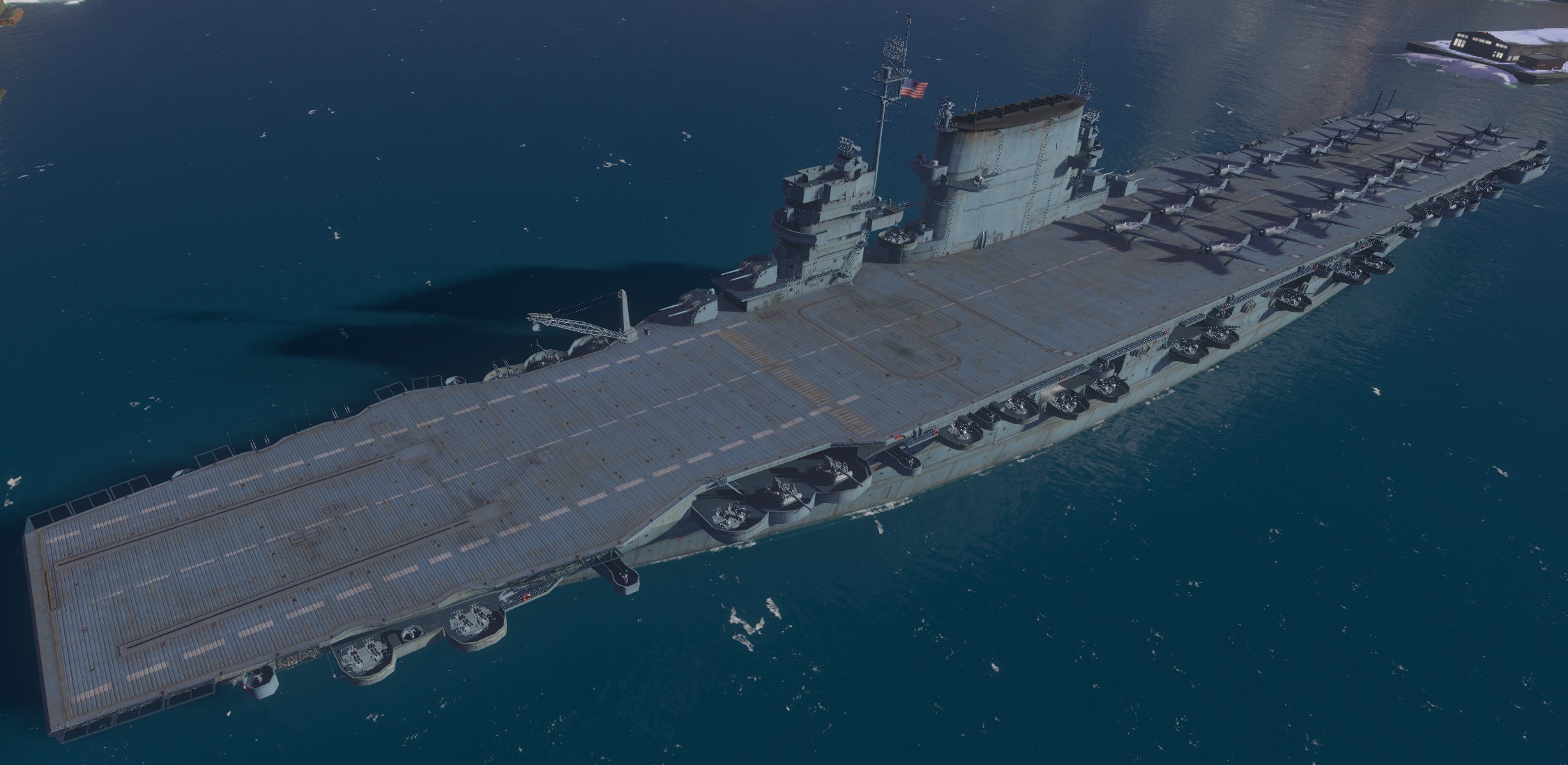
Tier 8 U.S. naval vessel, the aircraft carrier Lexington.
Aircraft carriers are positioned differently from other ship types.
Carrier hulls do not have offensive capabilities, and are basically used for reconnaissance by on-board aircraft and attacks by bombers.
It is also capable of attacking many enemy ships simultaneously.
main battery
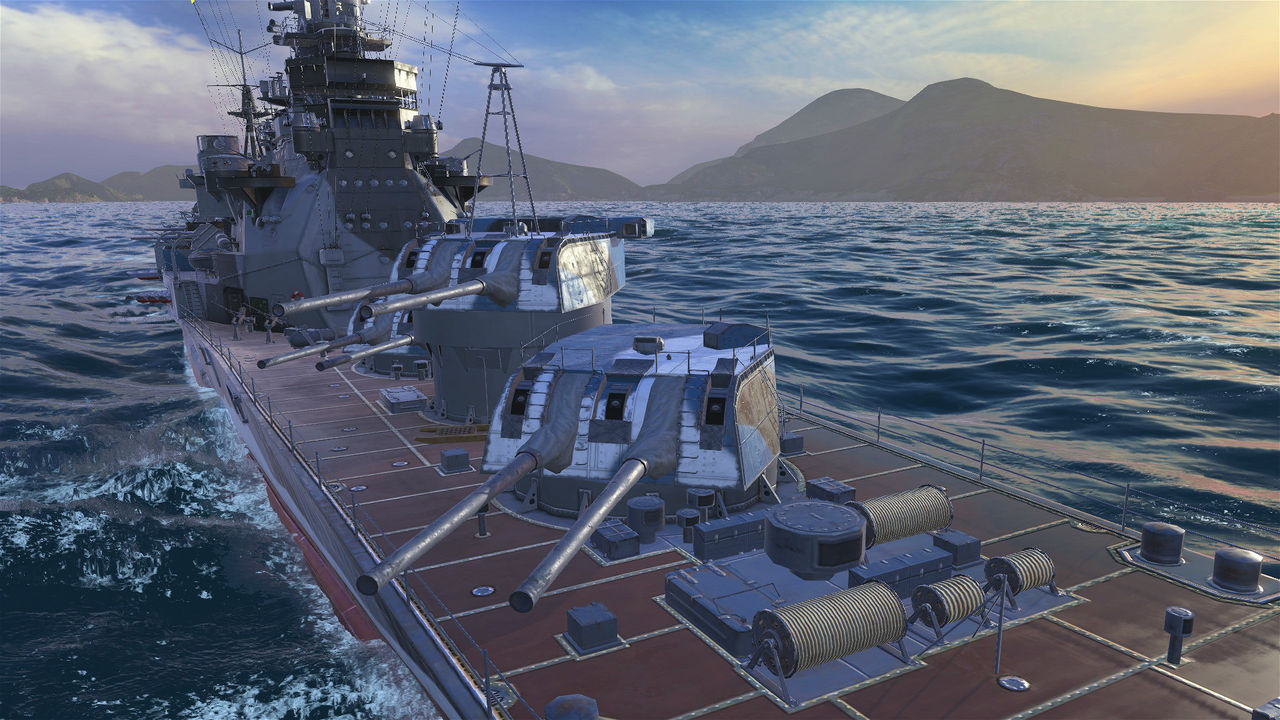
Tier 8, double main gun on cruiser Atago.
It is one of the armaments equipped on naval vessels. It is also not equipped on aircraft carriers.
The player basically controls the main gun.
The damage and armor penetration of the main gun varies greatly depending on the caliber and type of ammunition.
caliber
The caliber determines the damage.
The larger the caliber, the more damage, but the longer the loading time.
Caliber is expressed in mm (millimeters).
The largest caliber in the game is the 460mm main gun of the battleship Yamato.
number of guns
Two guns are represented as two guns, and three guns as three guns. If a ship has four double guns, it has eight guns.
The number of guns varies from ship to ship, and the greater the number, the greater the firepower.
loading speed
Loading times vary by ship and caliber.
The larger the caliber, the slower the loading time tends to be.
The fastest ships load in about 4 seconds and the slowest in about 30 seconds.
The loading time can also be reduced by captain skills and upgrades.
Turning speed
Turning speed varies greatly depending on ship type and caliber.
The larger the caliber, the slower the turning speed tends to be.
Battleships with slower turning speeds are more likely to be attacked unilaterally in close quarters battles, so long-range bombardment is important.
The turning time can also be reduced by captain skills and upgrades.
(ammunition) cartridge
There are two types of bullets: HE bullets (howitzers) and AP bullets (armor-piercing rounds). The AP rounds do the most damage.
When HE rounds hit a ship, they explode and can set the hull on fire. However, they cannot penetrate thick armor.
AP rounds are effective against thick armor, exploding inside the hull and inflicting heavy damage. However, if the armor is too thick, they will ricochet.
Also, shelling thin armor causes over-penetration, where the shell penetrates the armor before exploding.
When over-penetration occurs, the explosion does not occur and the amount of damage is reduced.
secondary firearms

Tags
Contents
- Overview of "World of Warships
- Combat types in World of Warships
- random game
- conventional mode
- overwhelming battle mode
- Central Offensive Battle Mode
- forward-backward-battle mode
- Introductory Mission
- Co-op Games
- scenario
- Newport Naval Base Defense Battle
- Aegis (system)
- Narai operation
- killer whale
- Operation Raptor Rescue
- cherry blossom
- Hermes
- Extreme Frontiers
- dynamo operation
- Light that illuminates the darkness
- ranked competition
- clan warfare
- training
- space battle
- Game System of "World of Warships
- port
- map
- military vessel
- destroyer (ship)
- cruiser
- battleship
- Aircraft Carrier (Carrier)
- main battery
- caliber
- number of guns
- loading speed
- Turning speed
- (ammunition) cartridge
- secondary firearms
- Anti-aircraft guns (anti-aircraft machine guns)
- being outfitted
- torpedo
- depth charge
- armored
- ship-borne plane
- surface-to-air missile
- attack aircraft
- strafing machine
- bomber
- hydroplane
- Tier
- captain (of a warship)
- technology tree
- premium naval vessel
- collaboration vessel
- In-game points
- Mission Record EXP
- captain EXP
- warship EXP
- free EXP
- in-game currency
- credit
- doublon
- The nations featured in World of Warships
- Japan
- America
- Germany
- United Kingdom
- France
- Italy
- (former) Soviet Union
- Pan-Asian
- Commonwealth of Nations (formerly British Commonwealth)
- European countries
- Equipment for World of Warships
- consumable goods
- emergency rescue team
- repair party
- seaplane
- in-flight observer
- underwater auscultation
- warning radar
- anti-aircraft fire
- smoke generator
- Engine Boost
- Main gun loading booster
- Torpedo loading booster
- module
- upgrade
- exterior
- camouflage
- signal flag
- flag
- Terms for World of Warships
- WoWs
- DD
- CL
- adult children
- B.B.
- CV
- AA
- APR
- direct memory access
- dps
- FF
- emb
- plastic
- fist fight
- capper
- sigma
- unicam
- co-op store
- Backstories, trivia, small stories/episodes, and anecdotes from "World of Warships".
- Serialized four-frame manga "Puka Puka Fleet" and characters from Japan's original project
- Yamamoto Seagull
- Togo Mikan
- Naru Ito
- Toto Arisugawa
- Nene Arisugawa
- Reida Tokko
- Oguri Penko
- Sakura Nishimura
- Tatiana Rozhestvenskaya
- Goro Yashiro
- April Fool's Day Limited Event "Space Battle" and the appearance of space ships
- FlyFire
- Galaxy
- Hellcarrier
- Paris
- Zaya
- Norma
- Aurora
- Alldestroyer
- Blue Aster
- Mods that can be installed and are frequently used
- Tracers
- Camera "Zeiss