
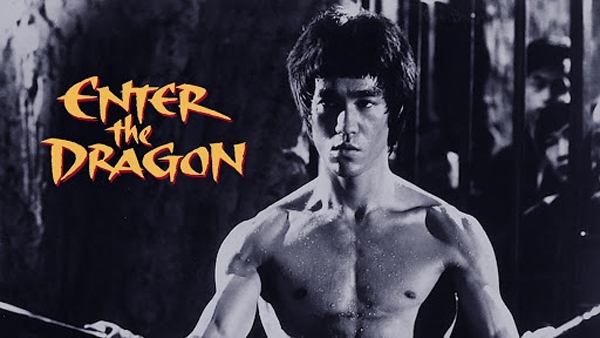
Burning Dragon" is a kung-fu action film produced in 1973 as a co-production between Hong Kong and the United States. The film was a worldwide hit and sparked a kung fu film boom. The film stars Hong Kong actor and martial arts master Bruce Lee. He died suddenly shortly after completing this film, making this his last work. On a fortress island off the coast of Hong Kong, a tournament is held for martial arts masters. Lee, a young Chinese man who participates in the tournament as a secret agent at the request of the British government, obtains evidence of drug trafficking on the island and confronts a powerful evil using Shaolin Kempo as his weapon.
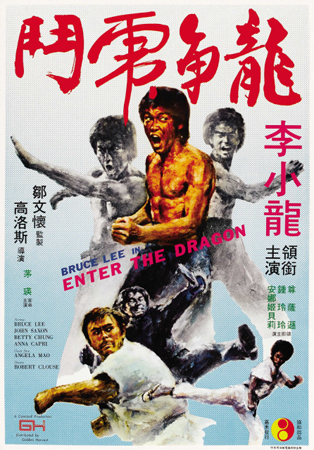
Hong Kong release version poster
The English title of this film is "ENTER THE DRAGON", but at the time of initial planning, it was "BLOOD AND STEEL", "DEADLY THREE", or "HAN'S ISLAND". Originally, "ENTER THE DRAGON" was the title prepared for the previous film "The Road to the Dragon," and "The Road to the Dragon" was introduced as "ENTER THE DRAGON" in the Hong Kong media at the time. Eventually, following the production of this film, the English title of "The Way to the Dragon" was changed to "THE WAY OF THE DRAGON". This change was made at the sole discretion of Bruce Lee, the actual producer.
In case you are wondering, the Chinese title "龍爭虎鬥" means in Japanese "大闘(multiple) fierce battles", and there are apparently many films with similar titles before and after this one. The Japanese title "Burning Dragon" was inspired by a bookstore copy of Ryotaro Shiba's historical novel "Burning Sword" about the Shinsengumi, which Shoji Sato, the advertising manager of Warner, the film's distributor, saw in a bookstore and got the author's permission to use the word "Burning" in the title.
Kyokushinkaikan is behind the big hit in Japan
In the first half of 1970, before this film was released, kung fu had not yet become popular in Japan. Since Bruce Lee had passed away before the release of this film, and no one knew about it, Warner Brothers, the film's distributor, initially tried to make a profit by combining this film with other films instead of focusing on this one. According to the manga author and karate master Hisao Maki, Warner asked Kyokushinkaikan, a karate dojo presided over by Oyama Baetatsu, to view the film, and Maki, his brother Kajiwara Ikki, and Oyama Baetatsu visited Warner's screening room to see the film. After viewing the film, Oyama's evaluation was not good (the pamphlet of the film's release stated that it was highly praised), while Kajiwara praised the film, saying, "The setting, in which guns cannot be used regardless of friend or foe, is good and interesting without being ridiculous. This contributed to the publicity and led to the film becoming a major hit in Japan.
There was a scene only in the Hong Kong release version.
At the beginning of the film, Lee is told by the head monk of the Shaolin Monastery, "The real enemy is an illusion created by man. Strike the statue! This scene was actually used only in the Hong Kong release version of the film, and was cut from the international release version at Warner's request. However, this scene was inserted in the "Director's Cut" version of the Warner version released in 1998. Incidentally, another take of this scene, with altered dialogue, was later appropriated for "The Tower of Death.
In addition, there was a Hong Kong release version in which Lee's action moves rhythmically in a cutout-style animation with a green title background in the opening titles, and a revival screening version in Hong Kong in which the making-of footage from the filming was also inserted. These images have been commercialized in Hong Kong on VCD and other formats.
On the other hand, some scenes were cut. The opening scene in which a girl delivers a tournament invitation to the airport on a motorcycle (the girl wearing a yellow jacket riding through Hong Kong on a motorcycle) was performed by Tien Mi, an actress active mainly in the Shaw Brothers at the time, as a guest star, but that scene was cut entirely. In this film, she is only seen in a close-up scene as one of the entourage who sticks a knife in the air into the first apple Han throws after Han's speech at the celebration scene.
About Lee's Family
The Japanese version of the film refers to Soo Lin as a younger sister, but the original Mandarin version clearly refers to her as an older sister (姊々). However, in the end credits, the role is given as "Li Sister," which may have caused the misunderstanding.
In the English version, he urges Lee to visit the graves of his "Mother" and "Sister," but he does not say "Wife" and "Daughter," and there are no scenes in which the parent-child relationship can be confirmed. There are no scenes where the parent-child relationship can be confirmed. In the play, he is called "Old Man" and behaves more like a bokujin (Chinese butler) than a father, but there is no confirmation of either.
Extra challenges Lee.
According to the testimony of Bob Wall, who played the role of O'Hara, the extras playing Han's subordinates were a group of hoodlums and others who were near the shooting location, and there was a sense of disquiet. One of the extras was a challenger who wanted to make a name for himself by beating Bruce Lee, but he was no match for Lee, who was a fighter, and the atmosphere of disquiet was cleared away. Incidentally, it is said that the film of the fight was destroyed after editing because Warner considered it unnecessary.
Theme song and insert song for "Burning Dragon
Theme music: "Enter The Dragon Main Theme" by Lalo Schifrin
Related video clips from "Burning Dragon
Original Trailer (English version)

Related Articles
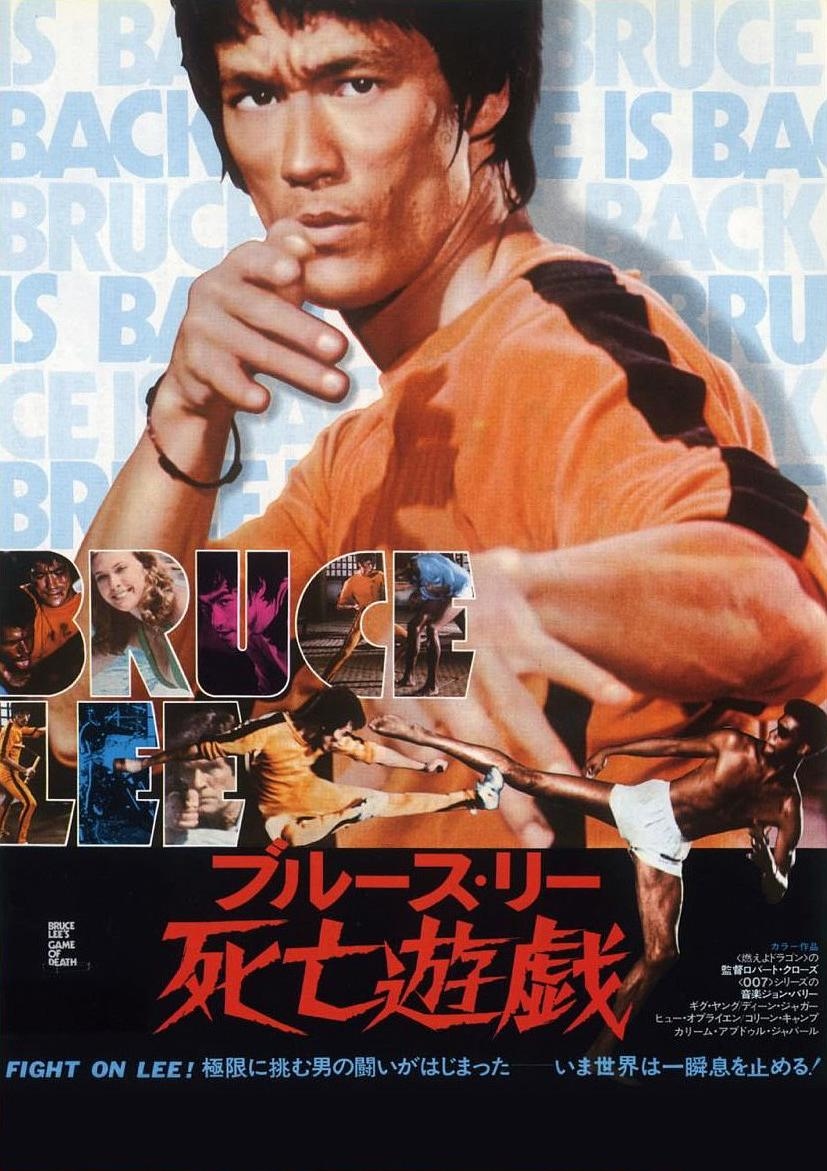
Spoiler alerts and discussion of the death play (Hong Kong movie).
Death Play" is a 1978 Hong Kong film directed by Robert Close and starring Bruce Lee. Star actor Billy Law is offered a contract by a syndicate organization, but he stubbornly refuses. One day during filming, Billy is shot and thought to have been killed by a bullet, but in fact Billy is not dead and takes the fight to the syndicate single-handedly. After shooting the action scenes in 1972, Bruce Lee passed away suddenly. A few years later, a substitute stuntman was used for additional filming, and the film was produced in 1978.
Read Article
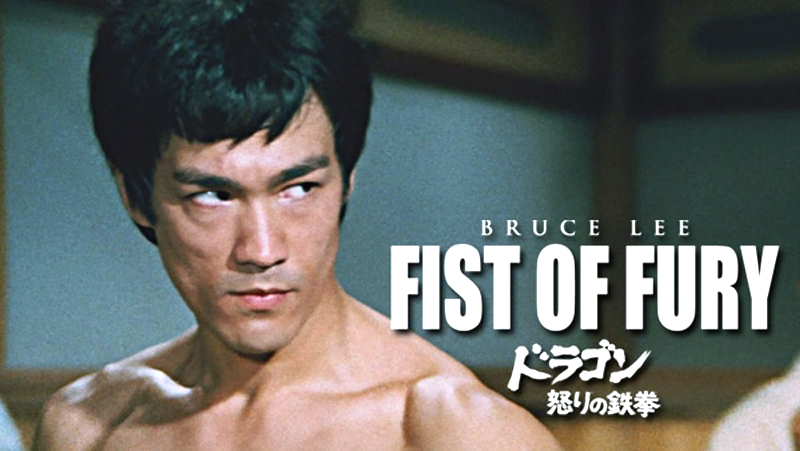
Spoiler commentary and discussion of Dragon's Fist of Fury (Fist of Fury)
Dragon Fury" is a Hong Kong film produced in 1972. It is the second in a series of kung fu films starring Bruce Lee, who became a top star in Hong Kong after the success of his previous film, "Dragon Crisis. It was released in Japan in 1974. Set in Shanghai in the early 1900s, when Japanese imperialism was rampant, the film depicts a young man whose former teacher was killed by a faction of Japanese martial artists who are plotting to destroy the Chinese martial arts dojo "Seibukan," and he single-handedly confronts the faction in order to exact revenge.
Read Article
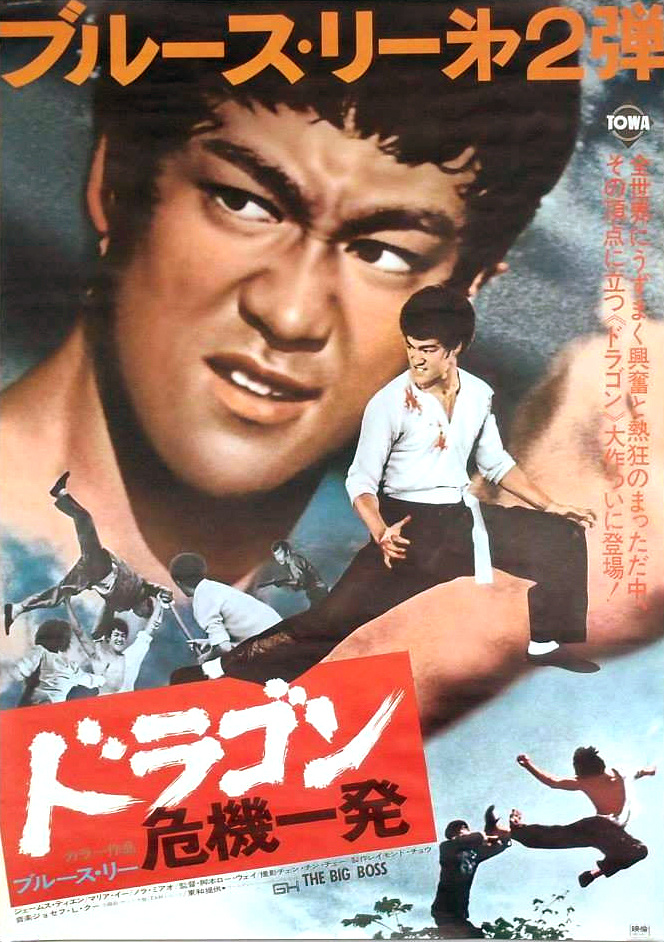
Dragon Crisis (film) Spoiler Commentary and Discussion Summary
Dragon Crisis is a Hong Kong film produced in 1971. It was the first in a series of kung fu films starring Bruce Lee, who made a triumphant return to Hong Kong from the United States, under contract to Golden Harvest. It was a huge hit in Hong Kong, breaking box office records at the time. In Japan, it was released in theaters in 1974, following the popularity of the hit film "Burning Dragon. A young man from the countryside goes to work at an ice factory in town, but when he discovers that the factory is involved in drug crimes, he challenges the factory gang to a fight.
Read Article
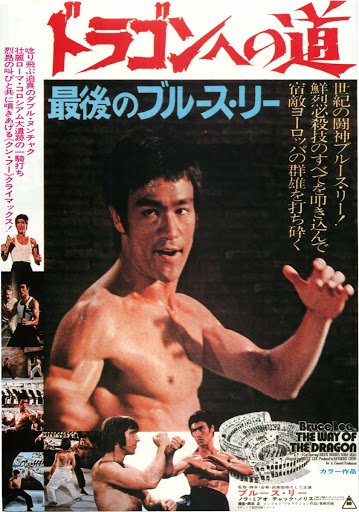
Spoiler commentary and discussion of The Road to the Dragon (Bruce Lee)
The Road to the Dragon" is a kung-fu film set in Rome, Italy, about a kung-fu master and a Chinese restaurant worker who confront a gangster's misdeeds. It is the first overseas location film directed by Bruce Lee, and in contrast to his two previous films, "Dragon Crisis" and "Dragon's Wrath", his performance in this film is often comical. The climactic confrontation scene between Bruce Lee and Chuck Norris at the Colosseum is still talked about today and has influenced many filmmakers.
Read Article
Who is the coolest guy in the eyes of men?
We have compiled a list of the coolest men to choose from.
Read Article
Late Night Gintama⁉"Osomatsu-san" Episode 7 Parody Summary
Episode 7 is all about Totti! We've also included a parody of Totti... and this time we've put together a parody of episode 7!
Read Article
Tags
Contents
- Outline of "Burning Dragon
- Synopsis and story of "Burning Dragon
- Major characters in "Burning Dragon
- Lee (played by Bruce Lee)
- Roper (played by John Saxon)
- Williams (played by Jim Kelly)
- Han (played by Shi Kien)
- Tania (played by Ana Capri)
- Braithwaite (played by Jeffrey Weeks)
- O'Hara (played by Bob Wall)
- Soo Lin (played by Angela Mao)
- May Lin (played by Betty Chun)
- Boro (played by Yang Sue)
- Parsons (played by Peter Archer)
- Famous quotes, lines/scenes and scenes from "Burning Dragon
- Don't think! FEEL!" Don't think...FEEL!"
- Destroy the image and you will break the enemy! Destroy the image and you will break the enemy."
- Tragic sister's suicide
- Nunchucks explode
- The Epic Battle of the Mirror Rooms
- Backstory, trivia, small stories/episodes, and anecdotes from "The Burning Dragon
- Episodes in Production
- Change from initial plot
- Starring many stars from an era of obscurity in the Hong Kong film industry
- Accident during filming that hit Lee
- What is the story behind the title?
- Kyokushinkaikan is behind the big hit in Japan
- There was a scene only in the Hong Kong release version.
- About Lee's Family
- Extra challenges Lee.
- Theme song and insert song for "Burning Dragon
- Theme music: "Enter The Dragon Main Theme" by Lalo Schifrin
- Related video clips from "Burning Dragon
- Original Trailer (English version)