
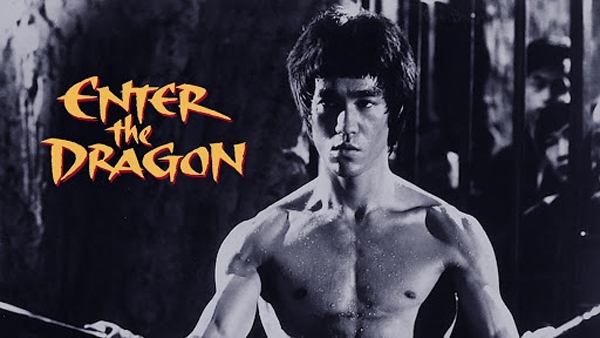
Burning Dragon" is a kung-fu action film produced in 1973 as a co-production between Hong Kong and the United States. The film was a worldwide hit and sparked a kung fu film boom. The film stars Hong Kong actor and martial arts master Bruce Lee. He died suddenly shortly after completing this film, making this his last work. On a fortress island off the coast of Hong Kong, a tournament is held for martial arts masters. Lee, a young Chinese man who participates in the tournament as a secret agent at the request of the British government, obtains evidence of drug trafficking on the island and confronts a powerful evil using Shaolin Kempo as his weapon.
Lee pursues Han as he flees into the castle. Han replaces his prosthetic hand with a metal claw, and he confronts Lee. The two continued their fierce battle, but Han, seeing that he was at a disadvantage, quickly fled into a room with mirrors. There, he sees his own image in multiple layers of mirrors, making it difficult to determine his position in relation to his opponent. The words that came to Lee's distressed mind were "The real enemy is an illusion created by human beings," which he had been taught by the head monk of the Shaolin monastery. He then connected these words.
The words appear at the beginning of the film in the scene where he is taught by the abbot of the Shaolin monastery, but there they are merely words in a story. No one would have expected that the words would come back again in the climax of the film, and that Lee, in desperate need of help, would be saved. It is a brilliantly foreshadowed line.
Tragic sister's suicide
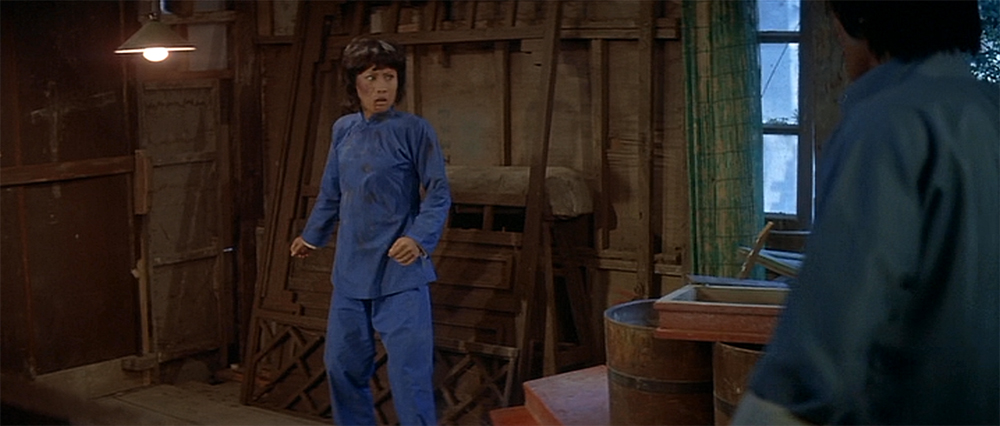
Upon returning to his parents' home in Hong Kong and informing his father of his participation in the wushu tournament, Lee was informed by his father that his sister's death was a suicide.
Three years ago, during a martial arts tournament, Lee's sister, Su Lin, was walking the streets with her father when they were tangled up with a group of young hoodlums who had come to town. Her father tried to escape by slashing the face of the boss of the gang, a man named O'Hara, who worked for Han, with a knife, but this angered O'Hara even more, and the thugs chased Suu around everywhere. With nowhere to run, Sue quickly ran to a barn, but O'Hara stood in her way. In desperation, Sue picked up a shard of glass that had fallen and stabbed herself in the stomach in front of O'Hara.
Lee's revenge against Han is added to the purpose of participating in the tournament, and his melancholy expression after hearing the story from his father is very impressive.
Nunchucks explode
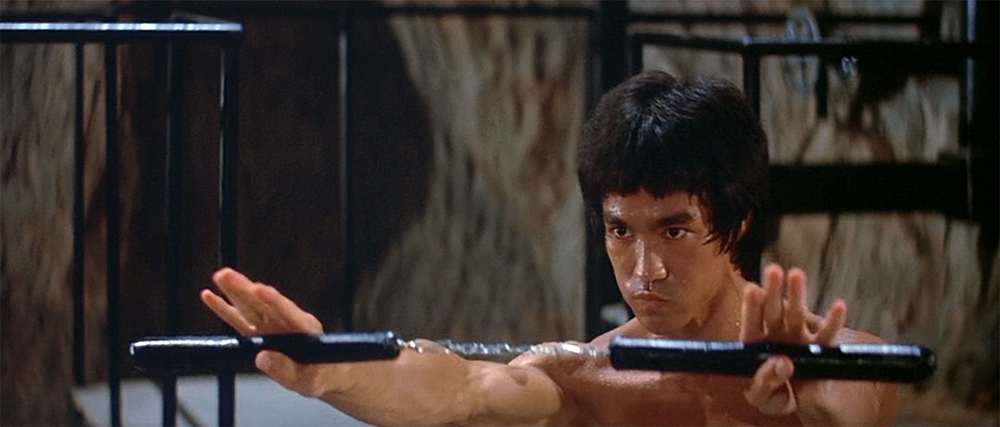
After finding the underground factory, Lee slipped out of his room at night and went underground. There, he discovers evidence of various crimes, including a drug factory, and manages to enter the radio room and send a signal to the intelligence station where Braithwaite is waiting. However, an emergency bell soon rings, and he finds himself in a fierce battle with Han's men, who come after him one after another. At that moment, he snatches the nunchakus from his opponent's hands and shows his brilliant nunchakus handling.
This scene marks the first appearance of the nunchaku, a weapon that has become popular in Japan. The weapon used by Lee is a weapon of the Filipino martial art Kali, called "Tabak Toyok" to be precise, and is said to have been taught to Lee by his close friend and disciple, a Filipino-American named Dan Inosanto.
The Epic Battle of the Mirror Rooms
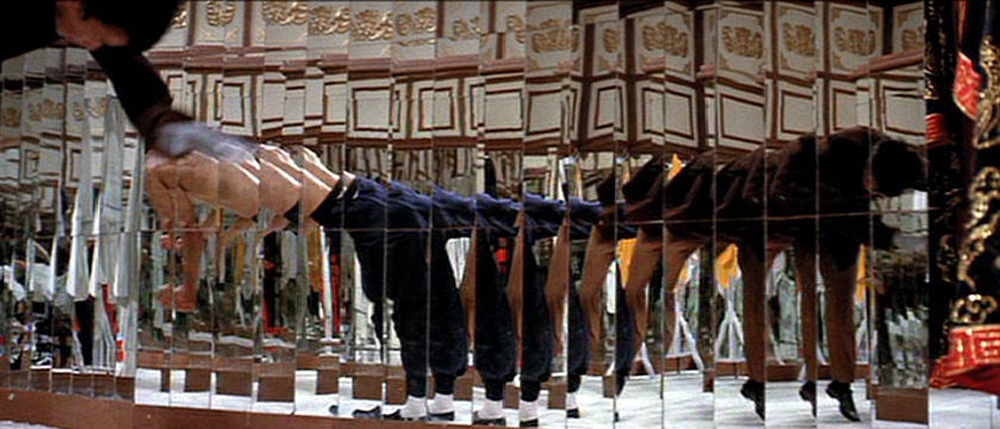
The climax of this film is the confrontation scene between Han and Lee. Han puts on a prosthetic hand with iron claws on his left hand and flees into a room with mirrors all around. Lee is tossed about and attacked by several reflections of Han in the mirrors. There, Lee remembers his master's teachings and shatters the mirrors on the wall with his fists. By breaking the mirrors, he was able to see where the real Han was. Lee's kick then explodes on Han, and Han is pierced through the chest by a spear he had thrown and stuck in the door.
The countless reflections of Lee and Han in several mirrors create a fantastic atmosphere, and it is said that about 8,000 mirrors were used in the filming of this scene. It is no exaggeration to say that this scene left the strongest impression in the film.
Backstory, trivia, small stories/episodes, and anecdotes from "The Burning Dragon
Episodes in Production
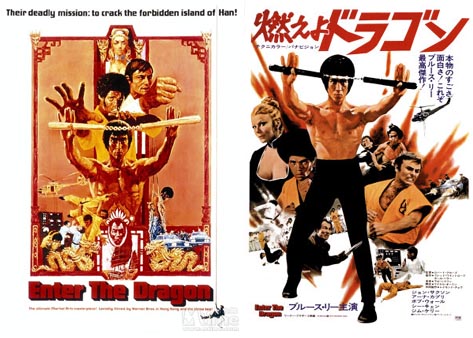
This film has elements of a compilation of Bruce Lee's previous starring roles, and is a condensation of the essence of the Bruce Lee action shown in each of his films. It is an important film for him as a culmination, and it is also the first major work for new director Robert Close, and Lee told Close, "You and I are the only ones who care about how this film turns out. Initially, the film was shot by Tadashi Nishimoto (a Japanese cinematographer who had worked on 47 films for Shaw Brothers in Hong Kong; his Hong Kong name is Ka Lan Shan) at Lee's insistence. His Hong Kong name is Ga Lan Shan) was to be in charge of the film. However, Nishimoto was anxious about communicating with Close in English, and Lee promised to give Nishimoto his full support by acting as an intermediary. However, Close felt the same uneasiness, and he was replaced by a cameraman who could speak English. Lee apologized to Nishimoto by promising to shoot the next film, and Nishimoto readily agreed. Gilbert Hubbs, who took Nishimoto's place as cinematographer, was a man from the documentary field who had never worked with Panavision before, or even turned 35mm film. However, despite Lee's misgivings, Gilbert Hubbs showed off his skills in the big fight scene, which made extensive use of a handheld camera. Incidentally, almost the entire film was shot in Technicolor and Panavision (the only film starring Bruce Lee).
The sound of the completed film was all recording, and although it was recorded at the same time, the source of the recording is said to be missing. It is said that the reason for the all-recording was because Golden Harvest did not have a synchronizer (equipment to synchronize video and audio) at the time.
Since Lee did not speak Mandarin, all of his films were dubbed by voice actors, as was customary in Hong Kong films of the time, both in Mandarin and in English, but all of the dialogue in the English version of this film is spoken by Lee himself.
Change from initial plot
The film's script had a plot that screenwriter Michael Olin had put together prior to the first draft of the published screenplay. It was "just a martial arts tournament element to what would have been inspired by '007 is the Number to Kill,'" which was not an appealing plot, and Bruce Lee was not involved. There, Bolo, who was nominated to replace Roper, fought Lee, and after Lee won, an enraged Han was to fight Roper at the end. In other words, Roper was to avenge his old friend Williams, who had been killed by Han, and it was made clear that Roper, played by John Saxon, was the "strongest man alive. Bruce Lee changed that last scene drastically. Lee's cues and dialogue were mostly reworked with screenwriter Ho Shunlin, and later, after Lee became involved in the scriptwriting process, he added the setting of Han as a traitor to the Shaolin Temple to make the final confrontation between Lee and Han more significant. The point where Han tries to attract Roper to his group instead of Lee, and the scene where Han tries to get Roper to kill the captured Lee, are still in the script, and the main plot is retained in the finished version.
Starring many stars from an era of obscurity in the Hong Kong film industry
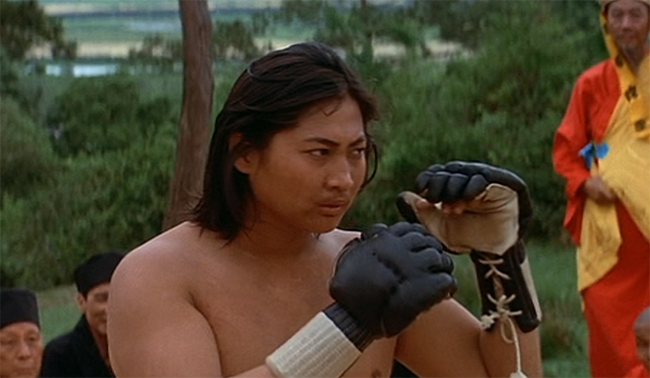
Scenes featuring Sammo Han Kimpo
The film features a number of stars from the era of obscurity who would later become major players in the Hong Kong film industry.
<Samo Han Kin-po.
Samo Han Kinkpo appears in the opening scene as Lee's sparring partner. The scene, in which both fighters wear open-fingered gloves invented by Lee, begins with a striking match and ends with an arm wrestling match, became the prototype for the mixed martial arts that was to follow. (Incidentally, this scene was filmed for the last time, and Lee's naked, dying body is clearly slimmer than in the fight scene in the film.)
<Jackie Chan.
When Lee infiltrates the underground base, he plays a guard who has his neck broken and is attacked in the face with a long club in another cut, and finally is beaten with nunchakus and falls into a pool. At this time, Lee's nunchaku hit him in the face, and Lee apologized every time he saw his face swollen purple.
<Yun Pyo>.
Yun Pyo appears in two cuts, but only briefly.
<Lam Cheng Ying>
Although he was only 21 years old at the time, he was selected for the role because of Lee's trust and recognition of his ability, and was in charge of teaching martial arts as an assistant. In addition to being an assistant, he also performed stunts in all kinds of scenes, and most of the prisoners in the big fight scene performed stunts.
Other actors in the film include Tony Liu, who has co-starred in a series of Bruce Lee's Hong Kong films, and Jackie Chan film regulars Mars, Tai Po, and Wu Ming Tsai.
Accident during filming that hit Lee
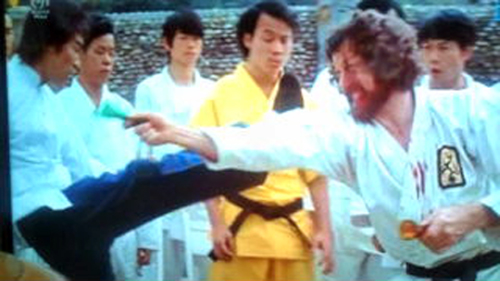
The scene where Bob Wall as O'Hara breaks the bottle and attacks Lee. The scene was supposed to be shot using a safe, made-up sugar bottle, but for some reason a mistake was made during the filming of the scene and no such bottle was available. The real glass bottle was used, but it accidentally injured Lee's wrist. Lee was bleeding so badly that there was a commotion on the set for a while, and the extras even called for Wall to be killed. There is also a scene in which Lee catches a cobra as he enters the basement, where he mistimed his grip on the cobra and was bitten on the arm. Fortunately, the poison had been removed from the cobra, so he only suffered a scratch.
What is the story behind the title?
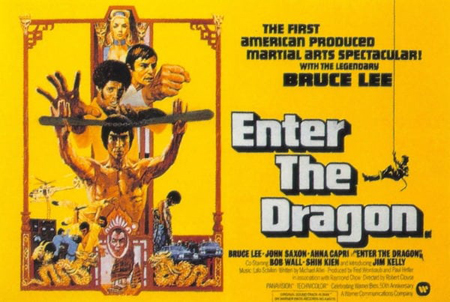
Original poster for the Warner edition (English version)

Related Articles
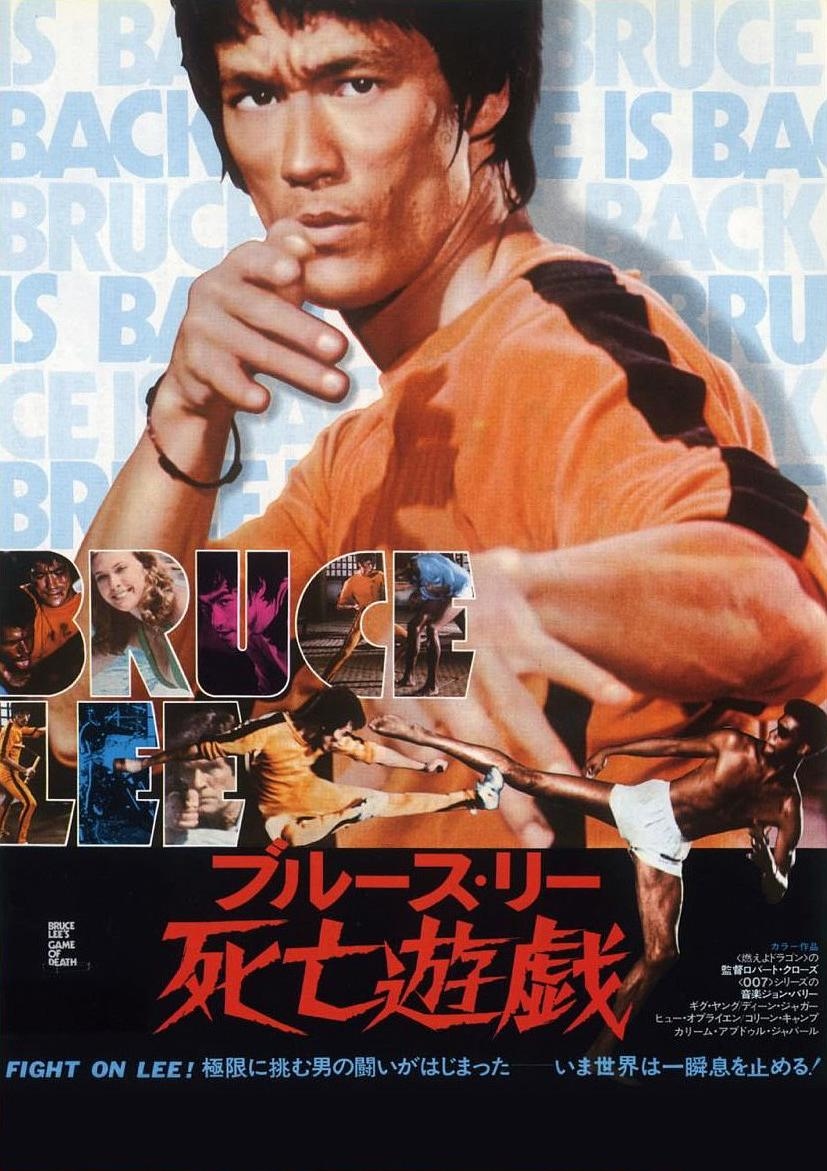
Spoiler alerts and discussion of the death play (Hong Kong movie).
Death Play" is a 1978 Hong Kong film directed by Robert Close and starring Bruce Lee. Star actor Billy Law is offered a contract by a syndicate organization, but he stubbornly refuses. One day during filming, Billy is shot and thought to have been killed by a bullet, but in fact Billy is not dead and takes the fight to the syndicate single-handedly. After shooting the action scenes in 1972, Bruce Lee passed away suddenly. A few years later, a substitute stuntman was used for additional filming, and the film was produced in 1978.
Read Article
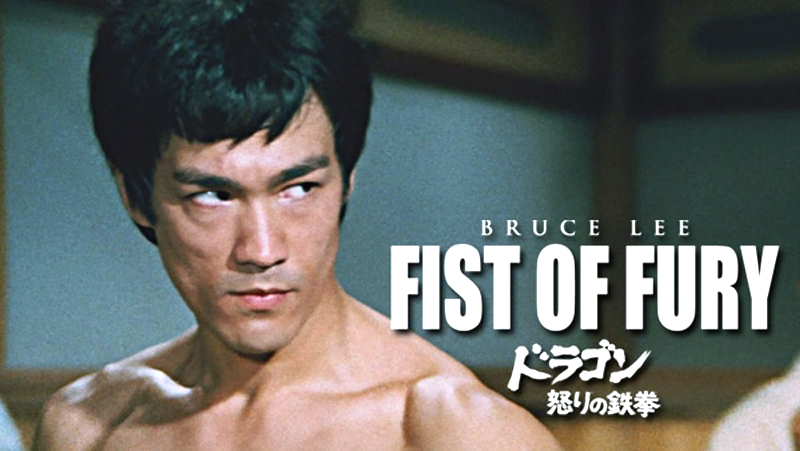
Spoiler commentary and discussion of Dragon's Fist of Fury (Fist of Fury)
Dragon Fury" is a Hong Kong film produced in 1972. It is the second in a series of kung fu films starring Bruce Lee, who became a top star in Hong Kong after the success of his previous film, "Dragon Crisis. It was released in Japan in 1974. Set in Shanghai in the early 1900s, when Japanese imperialism was rampant, the film depicts a young man whose former teacher was killed by a faction of Japanese martial artists who are plotting to destroy the Chinese martial arts dojo "Seibukan," and he single-handedly confronts the faction in order to exact revenge.
Read Article
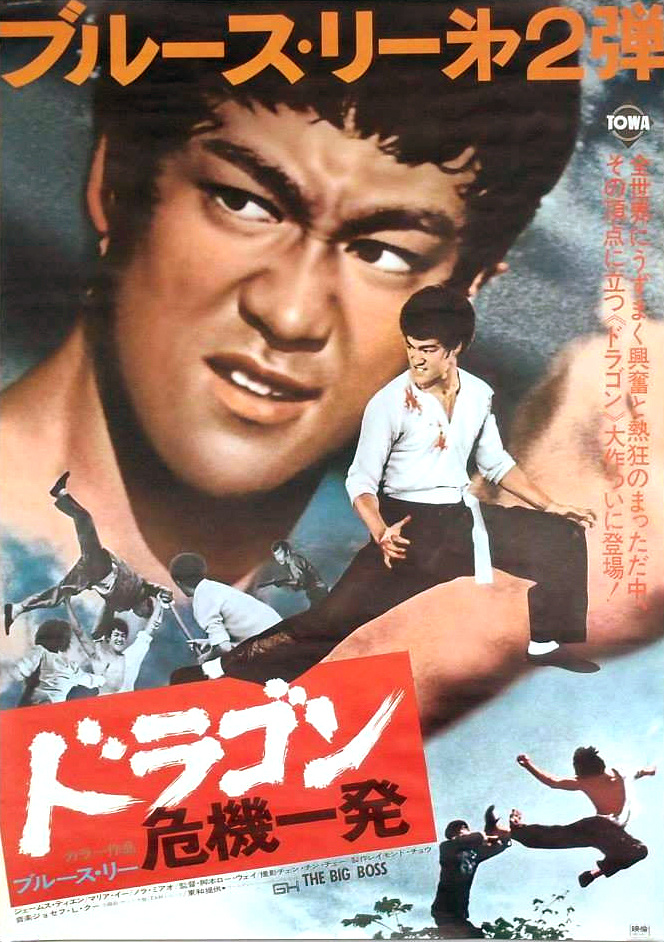
Dragon Crisis (film) Spoiler Commentary and Discussion Summary
Dragon Crisis is a Hong Kong film produced in 1971. It was the first in a series of kung fu films starring Bruce Lee, who made a triumphant return to Hong Kong from the United States, under contract to Golden Harvest. It was a huge hit in Hong Kong, breaking box office records at the time. In Japan, it was released in theaters in 1974, following the popularity of the hit film "Burning Dragon. A young man from the countryside goes to work at an ice factory in town, but when he discovers that the factory is involved in drug crimes, he challenges the factory gang to a fight.
Read Article
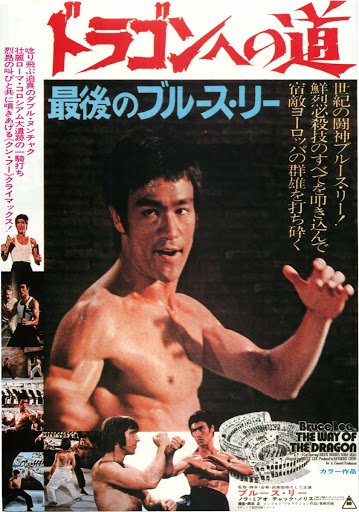
Spoiler commentary and discussion of The Road to the Dragon (Bruce Lee)
The Road to the Dragon" is a kung-fu film set in Rome, Italy, about a kung-fu master and a Chinese restaurant worker who confront a gangster's misdeeds. It is the first overseas location film directed by Bruce Lee, and in contrast to his two previous films, "Dragon Crisis" and "Dragon's Wrath", his performance in this film is often comical. The climactic confrontation scene between Bruce Lee and Chuck Norris at the Colosseum is still talked about today and has influenced many filmmakers.
Read Article
Who is the coolest guy in the eyes of men?
We have compiled a list of the coolest men to choose from.
Read Article
Late Night Gintama⁉"Osomatsu-san" Episode 7 Parody Summary
Episode 7 is all about Totti! We've also included a parody of Totti... and this time we've put together a parody of episode 7!
Read Article
Tags
Contents
- Outline of "Burning Dragon
- Synopsis and story of "Burning Dragon
- Major characters in "Burning Dragon
- Lee (played by Bruce Lee)
- Roper (played by John Saxon)
- Williams (played by Jim Kelly)
- Han (played by Shi Kien)
- Tania (played by Ana Capri)
- Braithwaite (played by Jeffrey Weeks)
- O'Hara (played by Bob Wall)
- Soo Lin (played by Angela Mao)
- May Lin (played by Betty Chun)
- Boro (played by Yang Sue)
- Parsons (played by Peter Archer)
- Famous quotes, lines/scenes and scenes from "Burning Dragon
- Don't think! FEEL!" Don't think...FEEL!"
- Destroy the image and you will break the enemy! Destroy the image and you will break the enemy."
- Tragic sister's suicide
- Nunchucks explode
- The Epic Battle of the Mirror Rooms
- Backstory, trivia, small stories/episodes, and anecdotes from "The Burning Dragon
- Episodes in Production
- Change from initial plot
- Starring many stars from an era of obscurity in the Hong Kong film industry
- Accident during filming that hit Lee
- What is the story behind the title?
- Kyokushinkaikan is behind the big hit in Japan
- There was a scene only in the Hong Kong release version.
- About Lee's Family
- Extra challenges Lee.
- Theme song and insert song for "Burning Dragon
- Theme music: "Enter The Dragon Main Theme" by Lalo Schifrin
- Related video clips from "Burning Dragon
- Original Trailer (English version)