
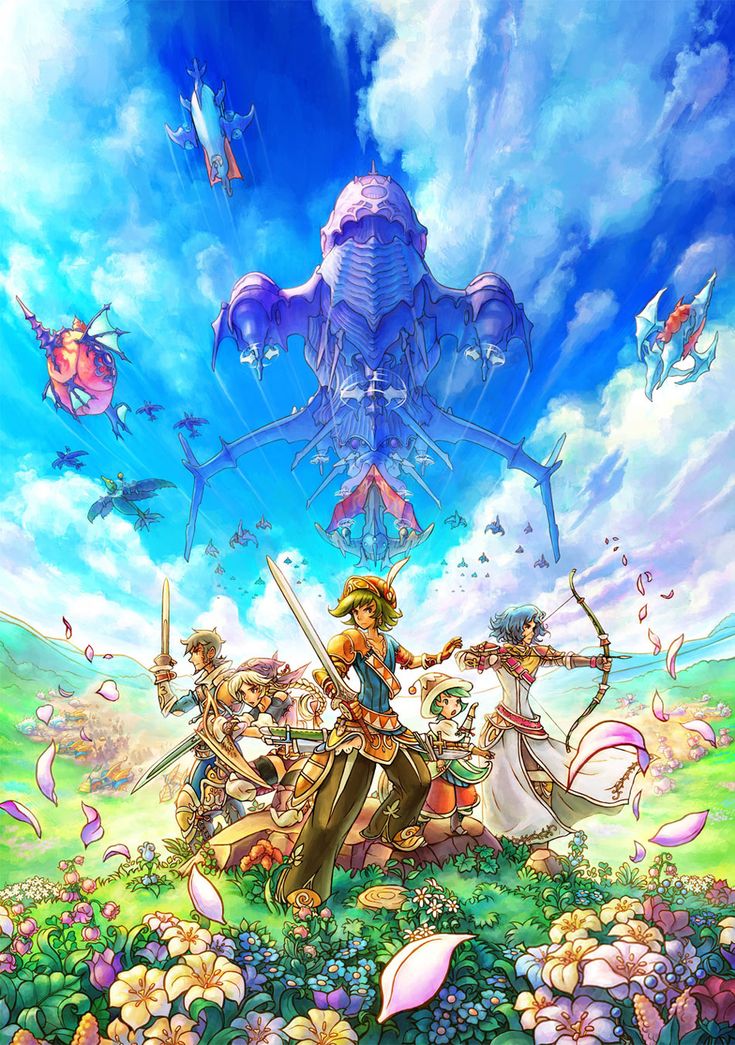
Seiken Densetsu: HEROES of MANA" is an extravaganza in the "Seiken Densetsu" series released on March 8, 2007 on the Nintendo DS, set 19 years before "Seiken Densetsu 3".
This is the first strategy RPG in the series to employ a real-time strategy system (RTS).
It features a battle mode in which players battle each other via wireless communication. The setting is the world 19 years before "The Legend of the Sword 3," and the story of the "ancient city of Pedan," which appeared as a ruined country, is depicted through the main character Roger.
A facility to summon divine beasts. Construction itself requires a large amount of "Gaia stones".
Each attribute of each divine beast is set up separately.
For example, the "Altar of Fire" is a facility to summon Zan Bieh, the divine beast of fire.
The number of types of altars that can be installed increases as the story progresses.
It is a trump card to summon powerful divine beasts.
Once summoned, the facility is removed, and in order to summon it again, the facility must be installed again.
play-mode
story mode
Story mode to follow the story.
There are 27 episodes in total, and the story is a single storyline.
The story progresses through a mixture of battles and events.
Each unit has its own dialogue when it is defeated.
The menu can be called up on the world map screen in between stories to save the game or to get help.
Free Battle Mode
A mode in which players can enjoy free battles using saved data from the Story Mode.
The number of stages available for free battles will increase as you advance through the story or receive them via Wi-Fi connection. In some stages, a short story is inserted during the battle.
In Free Battle, the time it takes to conquer a stage is reflected in the ranking results.
versus mode
This mode allows players to fight each other using the Nintendo DS wireless communication function.
Players can choose either the side of Roger, the protagonist in the story, or the side of Pedant, the enemy.
Hard mode (after the second lap)
Once you clear the main story, you can take over the data and play from the beginning of the story mode.
As a bonus for clearing the story mode, the cleared data will be carried over to the second and subsequent rounds, including items acquired, and a hard mode will be added, which increases the difficulty level dramatically.
In Hard Mode, you can obtain more powerful items than in the previous clear.
Backstories, trivia, and small stories/episodes/anecdotes about "Seiken Densetsu: HEROES of MANA".
Brownie Brown, who developed
Brownie Brown, the developer of "Seiken Densetsu: HEROES of MANA", was established in 2000 as a subsidiary of Nintendo Co.
His representative works include "Magical Vacation", a completely original Game Boy Advance title, and "MOTHER 3".
He also worked on Square Enix's "Seiken Densetsu" (The Legend of the Holy Sword).
The company's name is derived from a hard-working fairy named Brownie, who also appears in "Seiken Densetsu," and the brown of Brownie became the company's image color.
Shinichi Kameoka, who served as president and representative director, was a graphic designer at Square (now Square Enix).
Kameoka was a graphic designer on the "Seiken Densetsu" team, working mainly on 2D characters.
In the late 1990s, the former Square decided to focus on Final Fantasy and changed to a 3D graphics line, mainly using CG.
As a result, 2D designers, called "dot artists," were left out in the cold, and many 2D designers left Square around this time.
Shinichi Kameoka was one of them. He gathered together staff who wanted to make 2D dot-picture games, left Square to start his own company, and launched "Brownie Brown," led by the development team of "Seiken Densetsu: LEGEND OF MANA".
On February 1, 2013, the company changed its name to "1-UP Studio Inc." and brought in a director from parent company Nintendo. Shinichi Kameoka stepped down as president and Gen Kadoi, the company's graphic designer, was named president. Kameoka established a new company, Brownies Inc.
Difference between RTS and SLG
The game genre of "Seiken Densetsu HOM" is "real-time strategy" (RTS).
Strategy means strategy, and RTS is often mistaken for "real-time simulation.
RTS refers to a simulation game (SLG) in which the player controls a battlefield from a bird's-eye view, and in which the game progresses in real time.
The company's real-time simulation games include "Front Mission" and the non-turn-based simulation RPG "Front Mission Alternative," which are classified as RTS.
Some strategies include management and city development simulation games, but these are classified as management simulations and are distinguished from RTS, which are primarily combat-oriented.
In a typical RTS, strategic planning such as production, development, and logistics, and tactical operations such as scouting, marching, combat, and supply are conducted on the same time axis and map.
Therefore, players have much more to do than in ordinary real-time simulations or simulation RPGs, and those who are addicted to RTS will be addicted to it to the hilt.
This, in turn, gives the impression that RTS is a difficult game to play.
The reason why "Seiken Densetsu HOM" has been divided into two halves in terms of evaluation is because of the genre of RTS, which clearly divides people into two groups: those who like it and those who dislike it.

Related Articles
Seiken Densetsu - Final Fantasy Gaiden (FF Gaiden) Spoiler Commentary and Discussion Summary
The first title in the "Seiken Densetsu" series. Originally released as a derivative work of the "Final Fantasy (FF)" series, this action RPG features the familiar chocobos, airships, and magic of the FF series. The story is heavy with themes of life and death, encounters and partings, but it also has comical elements and puzzle-like puzzles to solve. A remake of the game, "The Legend of the Sword of the Holy Sword: New Testament," was made, and it was also fully remade in 3D.
Read Article
Seiken Densetsu: LEGEND OF MANA (LOM) Spoiler Commentary and Discussion Summary
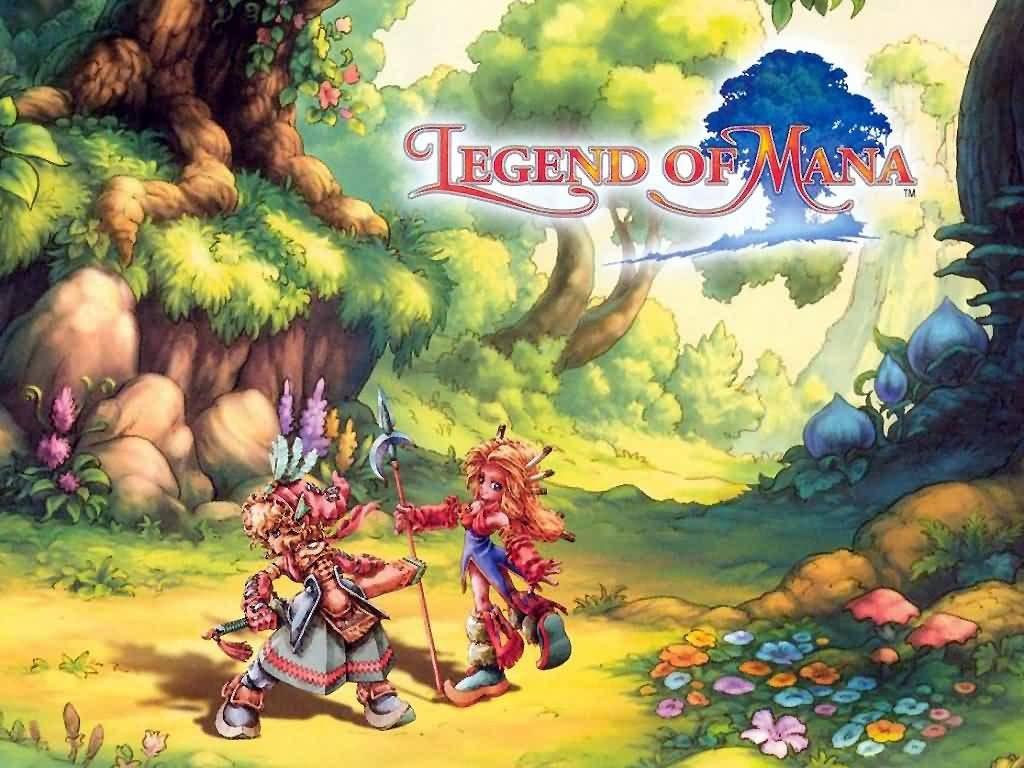
A PlayStation game released by Square in 1999. This is the fourth game in the "Seiken Densetsu" series, but it is a unique world that is not connected to the previous games. It is a rare game in a time when 3D screens using polygons were beginning to become the mainstream, and it is a game that uses detailed and delicate 2D dot pictures. This is an RPG in which the player builds a world by placing towns and dungeons in an empty land, and by coming into contact with the people who live in the world, the player builds the world together with them.
Read Article
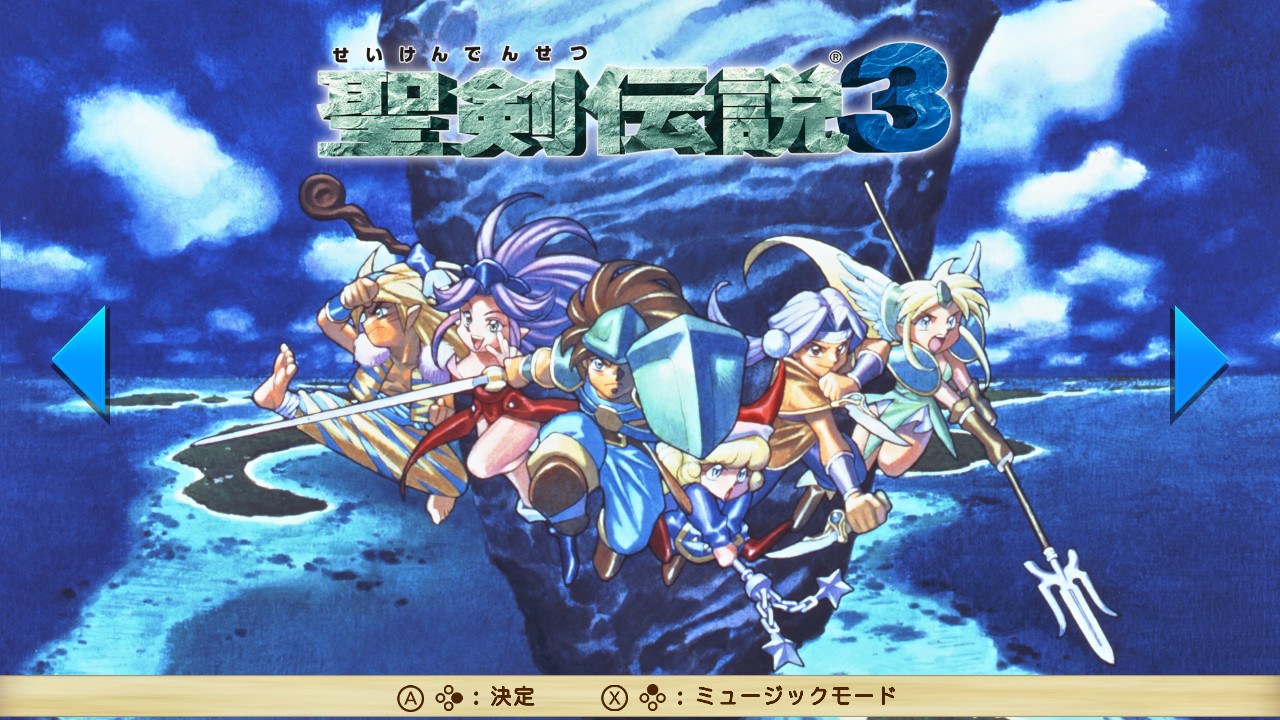
Spoiler commentary and discussion of Seiken Densetsu 3 (TRIALS of MANA)
Seiken Densetsu 3" is an action role-playing game released in 1995, and is the third title in the "Seiken Densetsu" series. It was the last in the series to be released for the Super Nintendo Entertainment System (SNES), and the player could choose three of the six characters to play as, which changed parts of the storyline and led to different final bosses. Six young men caught in the middle of a war fight to restore peace to the world, guided by the power of mana, despite their different circumstances.
Read Article
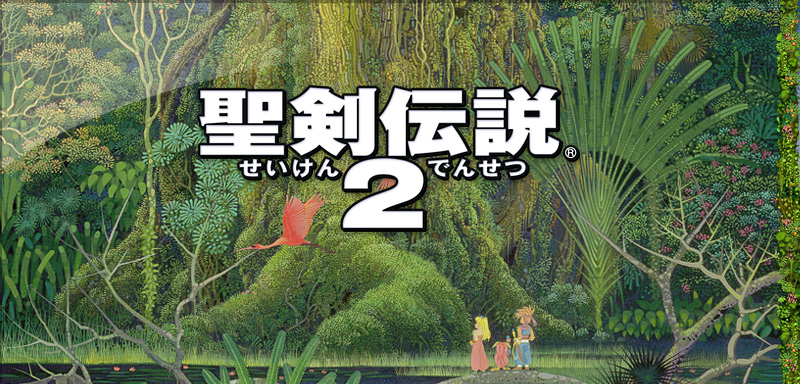
Seiken Densetsu 2 (SECRET of MANA) Spoiler Commentary and Discussion Summary
Seiken Densetsu 2" is an action RPG released in 1993 for the Super Nintendo Entertainment System. It was an ambitious work that introduced new systems such as "Motion Battle" and "Ring Command," and its music was also highly acclaimed, leading to the development of the series that followed. The main character, Randy, accidentally pulls out the holy sword and, together with his friends he meets on his journey, gets caught up in a war with the empire over the "mana" that sustains the world.
Read Article
Seiken Densetsu 4 (DAWN of MANA) Spoiler Commentary and Discussion Summary
The fourth title in the "Seiken Densetsu" series. Released on PlayStation 2, this is the first 3D action adventure game in the series. The system has been completely redesigned from the previous titles in the series, and the game is now a stage-clearing type game. Under the theme of "going back to the roots," the game uses the names of the characters from the previous games in the series. The game depicts the birth of the "Goddess of Mana" and the "Holy Sword" through the main character Eldi, who was given the power by a sacred tree.
Read Article
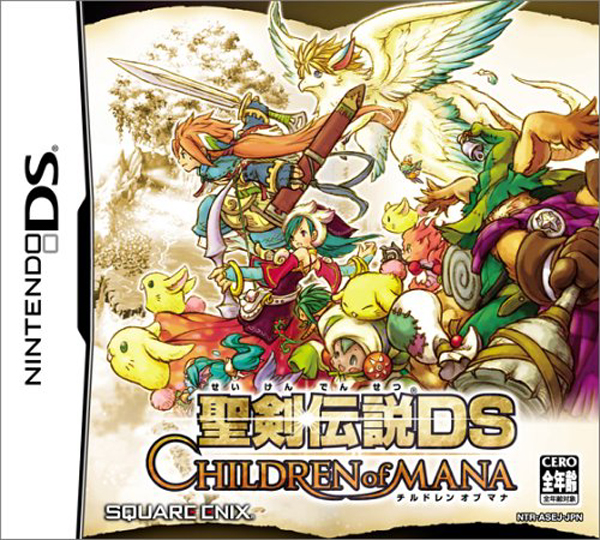
Seiken Densetsu DS CHILDREN of MANA (CoM) Spoilers and Discussion Summary
The first "Seiken Densetsu" series software for the Nintendo DS. Up to four players can now play multiplayer via DS wireless play. Chronologically, the story takes place 10 years after "Seiken Densetsu 4," making it an "outside-the-box" story. This action RPG adds a new system called "Gems" to the existing system of the series. Set in the world of Fadir, the story centers around four protagonists from different backgrounds and backgrounds, and centers on the soon-to-be-born Goddess of Mana and the Sacred Sword.
Read Article
Summary of works by genius programmer Nasha Zibelli [FF1~3] [Seiken Densetsu 2
Nasha Jibelli, a computer game programmer from Iran who is praised as a "genius programmer," was involved in the development of "Final Fantasy Series" and "Seiken Densetsu 2," two of Japan's most famous RPGs. We will introduce some of the works he worked on, which boasted of his legendary talent, including the fact that he called in the code to fix a serious bug.
Read Article
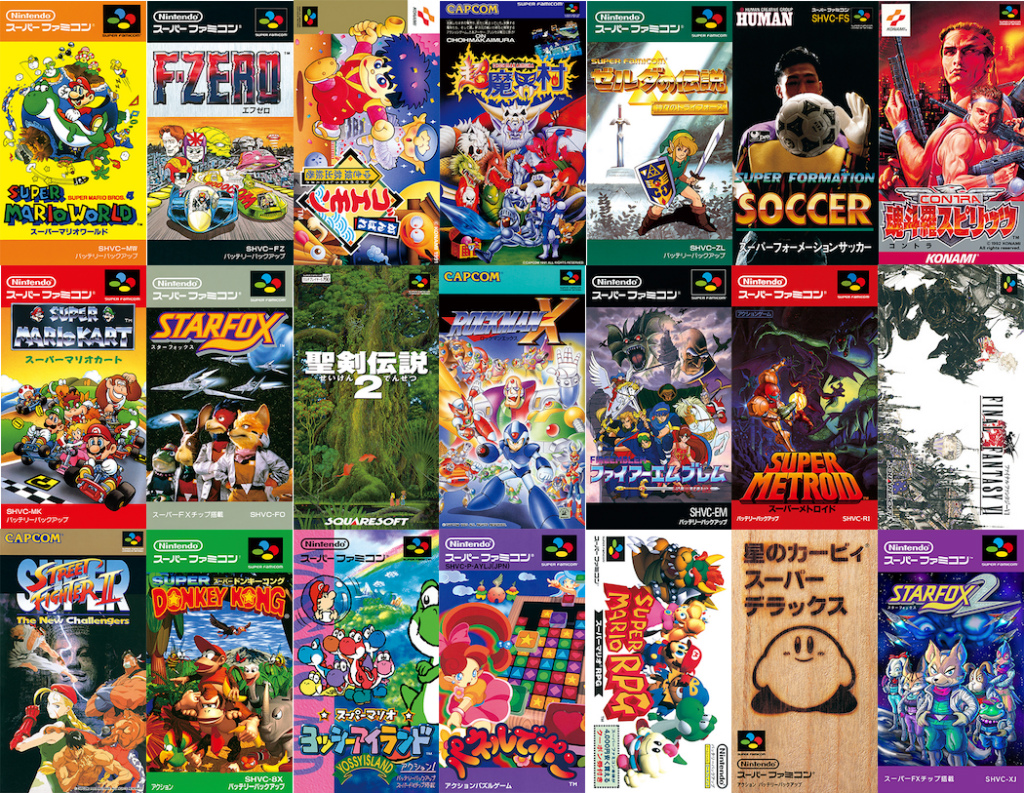
A compilation of recommended Super Nintendo Entertainment System (SNES) software classics.
We will compile a list of the most interesting and highly rated SFC classic software in the series by genre. The SNES is still colorful even if you play it now. Some of them have appeared on the Virtual Console.
Read Article
![A Masterpiece] I want to play it again before I die! Super NES Game 【Recommended】.](https://renote.net/files/blobs/proxy/eyJfcmFpbHMiOnsiZGF0YSI6MTgwNzkyLCJwdXIiOiJibG9iX2lkIn19--89a512c082c743fd6aa77efd98b378b2f9c670a1/z_5fb7b0d7ec722.jpg)
A Masterpiece] I want to play it again before I die! Super NES Game 【Recommended】.
I want to play it again before I die! This is a compilation of Super Nintendo Entertainment System (SNES) game titles. There are more than 1,000 Super Nintendo Entertainment System (SNES) game titles, so we took the time to compile this list. Generally, the further back you go, the older the release.
Read Article
Contents
- Overview of "Seiken Densetsu: HEROES of MANA
- The story of "Seiken Densetsu: HEROES of MANA" (The Legend of the Holy Sword: HEROES of MANA)
- Programming in Logic
- Formation of rebel army
- Traveling Around the Countries
- Return to Pedan
- Defeat the Mother Goddess of Perdition!
- ending
- Characters in "Seiken Densetsu: HEROES of MANA
- The Ancient Kingdom of Pedan
- Roger (Rebel)
- Uriel (rebel)
- Jeremiah (rebel)
- Te Keli (rebel)
- Cuca (rebel)
- anais
- Celestan
- basilios
- Elena.
- yuhani
- Bishop of Visionary Dreams
- Beast Kingdom
- Gauzer, King of the Beast
- Aerial Citadel Lorant
- ALMA
- red-whiskered bulbul (Lepidotrigla microptera)
- jester
- Minerva
- Father of the Winged One
- Wendel, the City of Sacred Light
- Berger
- Priest of Light
- Navar, a fortress city of sand
- falcon
- sand arrow
- Flame Khan
- Oulu Beaks.
- Forsena, Kingdom of the Meadows
- Loki (dwarf planet)
- Richard.
- Magical Kingdom of Altena
- Varda.
- Queen Althena
- Terms of "Seiken Densetsu: HEROES of MANA
- Ψ Plan (Rhino Plan)
- Mirror of Ennis
- Mage Fortress Rougeomaris
- tribe comprising the dragons
- Game System of "Seiken Densetsu: HEROES of MANA
- unit
- charismatic unit
- Collecting MOB (Rabbi, etc.)
- Ground MOB (e.g. myconid)
- Heavily armed MOB (petit granche, etc.)
- Flying MOB (e.g. Needlebird)
- Bow MOB (e.g. Poron)
- Special MOB
- Facilities in Combat
- aircraft carrier
- subpoena facility
- healing home
- revival
- Altar of the Divine Beast
- play-mode
- story mode
- Free Battle Mode
- versus mode
- Hard mode (after the second lap)
- Backstories, trivia, and small stories/episodes/anecdotes about "Seiken Densetsu: HEROES of MANA".
- Brownie Brown, who developed
- Difference between RTS and SLG