
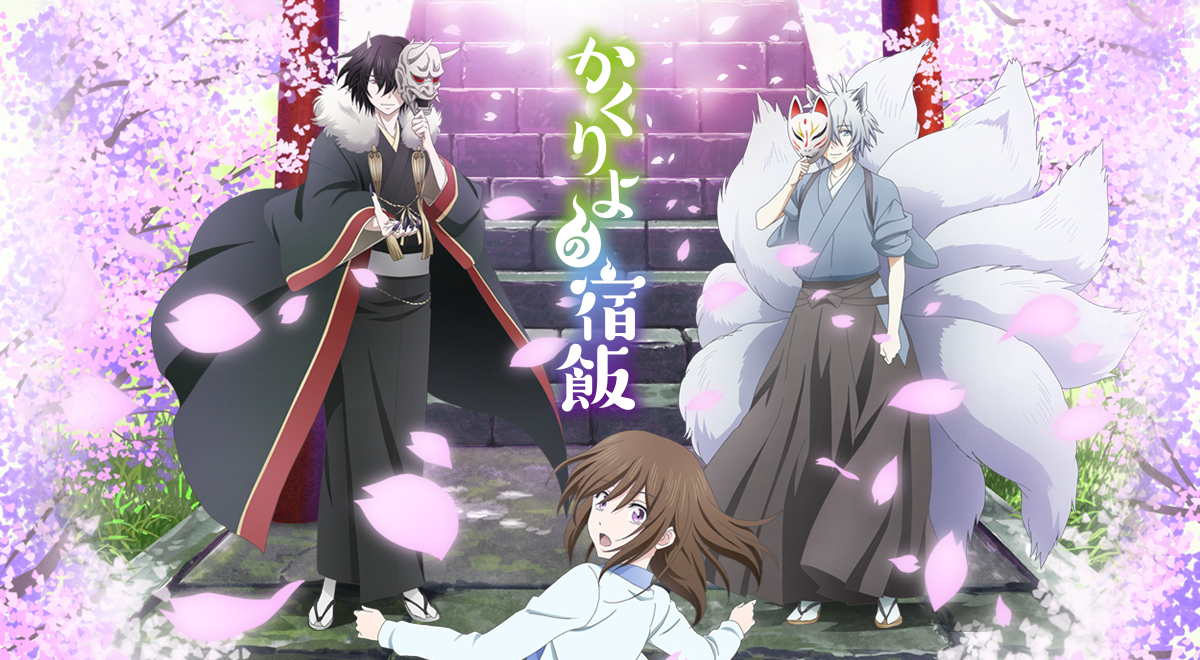
Kakuriyo no Shukuhan" is a character novel by Aoi Tomoma, published by Fujimi L Bunko. Laruha was in charge of illustrations.The anime was adapted into two seasons in 2018. The anime was produced by GONZO and directed by Yoshiko Okuda.
Aoi Tsubagi, a college student who can see ayakashi, is taken away by a demon god who calls himself the grand master of Tenjinya, a long-established inn in Kakuriyo, and she uses her cooking skills to run a small restaurant. The highlight of the film is the way she develops a rapport with the ayakashi through cooking.
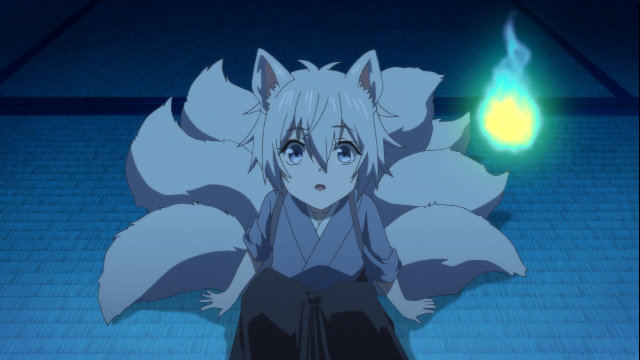
It is a nine-tailed fox spirit or specter. It can transform into nine different forms.
According to the history books of various Chinese dynasties, the nine-tailed fox is considered to be a zuiju (*), which indicates the era of peace or the reign of the Ming Dynasty, when its appearance is confirmed. According to books such as "The Book of Zhou" and "Taiping Guangji," it is said to be a divine beast sent from the heavenly realm.
On the other hand, it has also been said to be an evil being that deceives people by incarnating itself as a beautiful woman. Here at Tenjinya, it helps Aoi.
Zuiju are four special spirit beasts that are thought to be the chief of all animals in the world.
It is said that there are 360 species of animals: scale insects with scales like fish, winged insects with wings like birds, hairy caterpillars like animals, and beetles with hard shells and carapaces like crustaceans.
Snow Woman
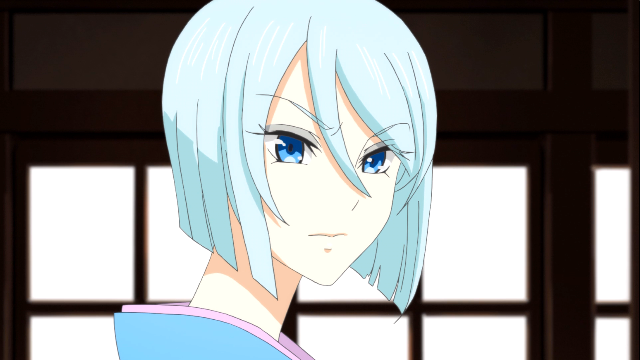
Yuki-onna (snow women) are said to be imaginary and do not exist,
However, they are widely feared as "yokai (specters of snow)" because they always wear white clothes that represent "death," breathe cold air on men to make them freeze to death, and suck out the essence of men to kill them.
Here in Kakuriyo, it is Oryo who is the young proprietress of Tenjinyaya.
tsuchigumo (people of ancient Japan who were not subjects of the Yamato court)
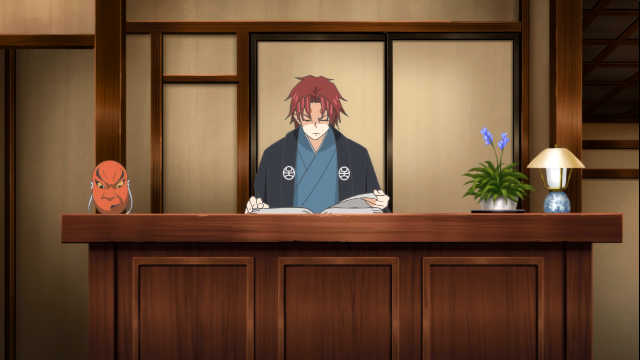
Tsuchigumo (earth spider) was the name given in ancient Japan to those who refused to bow down to the imperial court and emperor.
Since the early modern period, tsuchigumo have come to be widely regarded as a yokai in the form of a spider.
Here in Kakuriyosho, they are the keepers of the Tenjinyaya.
Nephila clavata (an Oriental species of golden orb-weaving spider)
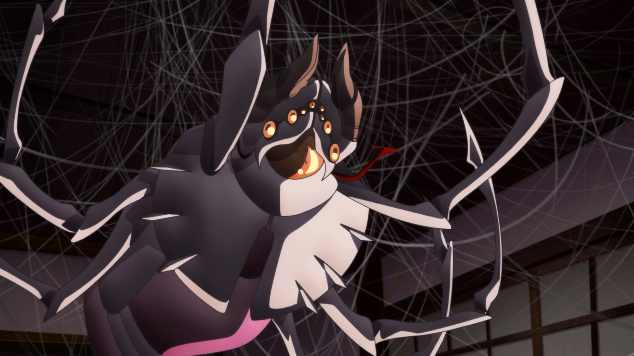
Also written joro-shinbu (絡新婦). A type of yokai that has been handed down throughout Japan.
Since it can disguise itself as a beautiful woman, the original meaning of the name is "Onna-ro-jokumo," and "Jyoro-shinbu" is an idiomatic Chinese character reading of the Chinese name.
There is also a legend about the master of the waterfall. When a man was resting by the waterfall basin, many threads of spider silk became entangled in his legs.
When the man tied the threads to a nearby tree stump, the stump was pulled merrily into the waterfall.
The female spider was trying to pull the man into the waterfall.
Here she appears as the sister of the Tsuchigumo, the Dawn.
wet woman
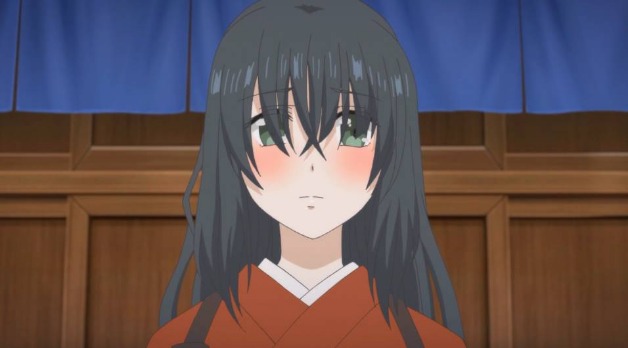
Nure-onna (wet woman) is one of the Japanese yokai, also known as "nureyomejo," a sea monster. Many of them are said to eat humans, but they are not uniform in appearance or nature.
Some believe that Nureyomejo is an incarnation of Ushioni (Gyuki).
Here at Kakuriyoko, she is the guardian of the women's baths at Tenjinyaya. She is a quiet ayakashi who does not like to stand out.
Gyū-ki is a yokai from western Japan that appears mainly on the seashore and attacks people walking along the beach.
Temari Gappa
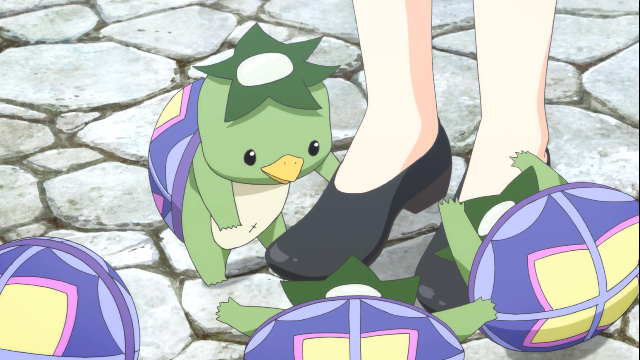
It is much smaller in size, about the size of a human fist. It can roll around in the shape of a ball.
Their entire body is green. It often has a plate on the top of its head. The dish is a circular, smooth, hairless area that is always wet with water and loses its power or dies if the dish dries out or cracks.
The mouth is a short yellow bill with a turtle-like carapace on the back that is brightly colored with a handball pattern. Its arms and legs are often covered with water scraps, and it is said to have three anuses.
Both arms are connected inside the body, and it is said that when one arm is pulled, the other arm shrinks and may fall out.
Chibi, a handball kappa, will follow Aoi to Kakuriyo.
bogeymanuki (cunning devil)
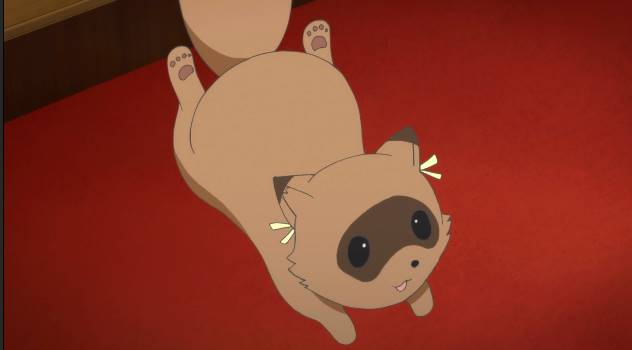
The raccoon dog (yokai) is a demon of the raccoon dog. The Japanese raccoon dog has been deified since ancient times as an animal that governs all things in the forest, but after Buddhism was introduced, animals other than those regarded as messengers of the gods (foxes, snakes, etc.) lost their divine status, leaving only the image of beasts with special abilities. They were therefore regarded as evil or yokai. The Japanese raccoon dog, however, does not have the same frightening impression as the wild cat, and has formed an image as a humorous monster, often playing the role of a dumb animal in folk tales such as "Kachikachiyama" and "Bunbuku Chagama".
Compared to the fox, which is a representative animal that can turn into a monster, the raccoon dog is considered to be a better monster than the fox, as in "foxes turn into seven monsters, raccoon dogs turn into eight monsters.
This is because the fox disguises itself to seduce people, while the raccoon dog disguises itself to make fun of people, and it is said that the raccoon dog likes to disguise itself.
Kasuga here at Tenjinyaya is a cute, pet-like haunted raccoon dog.
Tengu
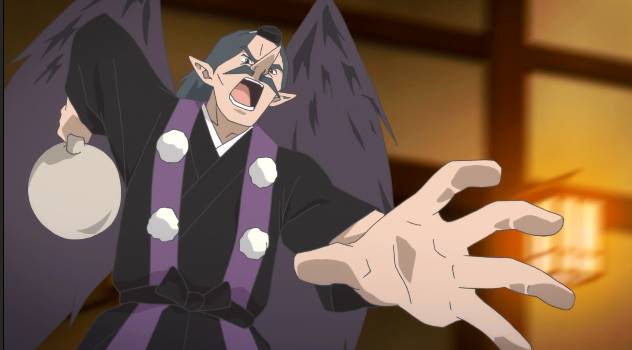
Tengu are said to be legendary creatures. Generally dressed as mountain priests, they have red faces, high noses, and large wings on their backs that allow them to fly through the air.
It is commonly believed to be a demon that leads people to evil ways, and is also called Gehosama (*). It was also the alias of Emperor Go-Shirakawa.
It is described in the Tale of the Heike as "a man who is not a man, a bird who is not a bird, a dog who is not a dog, a man with legs and hands, a dog with wings on both sides, and a thing that flies and walks.
*: "Gaihosama" refers to the laws other than Buddhism (internal Buddhism), which are the laws of Buddhism. It also refers to religions other than Buddhism and paganism as seen from the Buddhist viewpoint.
cotton (once)

Contents
- Outline of "Kakuriyo no Shukuhan
- The story of "Kakuriyo no Yakushuhi" (The Story of Kakuriyo no Yakushuhi)
- Ayakashi no Yado "Tenjinya
- Yugao, a small restaurant, opens.
- Wedding anniversary of Mr. and Mrs. Yoko Wang
- Shizuna and Tokihiko
- tailor's (shop)
- quarrel between pine needles and leafbirds
- Kaiho's肴
- Aoi deprived of voice and taste
- Rituals and sea monks
- Characters in "Kakuriyo no Yakuhan
- human being
- Aoi Tsubaki
- Shiro Tsubaki
- Ritsuko
- noh mask for roles involving dead or ghost characters
- O-Danna.
- Ginji
- coolness of the evening
- Dawn
- Suzuran (lily of the valley)
- Shizuna
- small, cute versions of manga, anime, etc. characters, typically with oversized heads
- Kasuga
- Matsuba (pine needle)
- Tannosuke
- White Night
- male bathhouse attendant
- Mukabo (light greenish-blue)
- Golden child
- Sewing Inn
- Chiaki
- leafbird
- Tokihiko
- spear squid (Loligo bleekeri)
- Dr. Saraku Hakase
- Ranmaru
- Hideyoshi
- Taichi
- bed-time (for a baby)
- Precepts (Kai), Ming (Ming)
- YODOKO
- Mitsunari
- eye
- Sasara
- Raiju (a type of wildebeest)
- Princess Isohime
- sea monster
- Terms for "Kakuriyo no Yakushoku Ie
- The Hidden World
- Gensei, Gensei, Utsushi-yo (present world)
- apparition
- Kijin
- nine-tailed fox
- Snow Woman
- tsuchigumo (people of ancient Japan who were not subjects of the Yamato court)
- Nephila clavata (an Oriental species of golden orb-weaving spider)
- wet woman
- Temari Gappa
- bogeymanuki (cunning devil)
- Tengu
- cotton (once)
- Shirasawa, Shirasawa (Hakutaku)
- Irimichi priest
- Zashiki Warashi
- Tube kitten
- Shiranui
- dog apparition
- iron rat
- Sennen mole
- Komainu (stone guardian dog)
- Night Sparrow
- fire rat (Felis silvestris)
- Tsuru-doji (Crane child)
- woman whose presence seems to cause rain
- Tenjinya
- the devil in the midst of the devil's gate (Kiimon)
- Hachiho (eight leaves)
- Ayakashi Gomi-no-Mori no Aji (Taste of Ayakashi Only)
- Shumon Mountain
- Tengu Uchiwa (Tengu Fan)
- Sorafune (space ship)
- Camellia hairpin (Tsubaki no Kanzashi)
- Ayakashi no mask
- Yokuto
- Yahataya
- Yokai Igaku Hyakka (Specter Medical Encyclopedia)
- Oxcart
- Yokuto Shimbun (Yokuto Newspaper)
- correspondence style
- Senjutsu (art of fountain)
- Famous quotes, lines, scenes, and scenes from "Kakuriyo no Yakuhan
- Shiro: "People who can see ayakashi are easy targets. Be careful, Aoi."
- Grand master: "How are you feeling, my dear bride?"
- Ginji: "Yes, Aoi-san, why don't you open a restaurant here?"
- O-Danna: "You are an eyesore, Tsubaki Aoi, you are nothing but a nuisance to this Tenjinya with a large debt."
- The Grand Master: "If I may say so, raw blood and organs of young humans."
- Oryo: "Aoi's cooking has a special effect to restore spiritual power."
- O-Danna: "Will you come to Kakuriyo again?"
- Sasuke "Aoi-dono, you are very much like Shiro-dono, that you are."
- Grand Master "Follow me."
- O-da: "I don't care how many more creases (wrinkles) there are on the cloak, as long as Aoi is comfortable with it."
- The head chef said, "This selfishness, quibbling, and arrogant talk, she must be Shiro's granddaughter.
- Ritsuko: "By continuing to eat Kakuriyo's food, we get a little bit closer to being ayakashi-like."
- Tokihiko: "There is a place for you to return to, so go for it as you wish."
- The grand master said, "I like anything that Aoi made."
- O-Danna: "I'm willing to be a butt for Aoi."
- Aoi: "I am asking for Ginji-san back."
- Aoi said, "I can't go back. I can't go back without Ginji."
- Commandments and Ming "So, I need your help with the Utsushi-Yo idea."
- Leaf Bird: "Your daughter is a good, honest girl."
- Sasara: "All families must stay together."
- Aoi: "This is something I have to do."
- Isohime: "You should handle the snacks for Kaiho].
- Aoi: "Hey Hideyoshi, do you happen to like Nene?"
- The Thunder Beast: "How do you defend yourself against someone whose weapon of choice, cooking, doesn't work? What if they can't cook anymore?"
- Ranmaru said, "I have no choice but to go. I'll climb mountains, climb over mountains, I'll do whatever it takes."
- Ginji said, "Don't worry, Aoi-san. The actuality that you can't taste the food as it is, it can't be like that. There is no way that it should be like that.
- Aoi said, "I don't mean ha-ha, but hey, Grand Master. I'm glad you came to pick me up, but I can't leave now. I'm in charge of making the ceremonial snacks, for Princess Isohime, no, for Ranmaru."
- The little guy said, "Mr. Aoi, why do you let Mr. Haibo alone? Kaibo-san is a lonely person. Just like me, all alone and always hungry."
- Backstory, Trivia, and Anecdotes of "Kakuriyo no Yakushuhi" (The Hotel Guests of Kakuriyo)
- The original author, Heki Tomoma, who drank alcohol for the first time when the anime adaptation was officially decided.
- Director Yoshiko Okuda's Thoughts on "Kakuriyo no Shukuhan
- Theme song and insert song for "Kakuriyo no Yakuhan
- OP (Opening): Nao Higashiyama "Touka no mani mani" (Episodes 1 - 9, 11 - 14)
- ED (Ending): Aimi Numakura "Aya -color-" (Episodes 1, 2, 4, 6, 7, 9 - 12)
- ED (Ending): O-Danna (Katsuyuki Konishi) "Wish Flower" (Episode 3)
- ED (Ending): Satoru (Yuma Uchida), Suzuran (Marie Uchida), "Sands of Time" (Episode 5)
- ED (Ending): Byakuya (Atsushi Tamaru) "My Sweet Sweet Love" (Episode 8)
- ED (Ending): Ginji (Shunichi Toki) "Kaze" (Episode 13)
- OP (Opening): Nano "Utsushiyono Yume" (2nd season episodes 14 - 26)
- ED (Ending): Ai Nakajima "Shiranai Kioku" (2nd season episodes 15 - 17, 19, 20, 22, 24, 26)
- ED (Ending): Yashihonohana (2nd season episode 18) by Hayatori (Takuatsu Terashima)
- ED (Ending): Hideyoshi (Tetsuya Kakihara) "Koi Mamoruta" (2nd season episode 21)
- ED (Ending): Raiju (Satoshi Hino), "Setsuna no shimmering" (season 2, episode 23)
- ED (Ending): Ranmaru (Kaito Ishikawa) "Eien no Kizuna" (2nd season episode 25)
- Insert Song: Aoi (Nao Higashiyama) "Haruiro" (2nd season episode 20)