
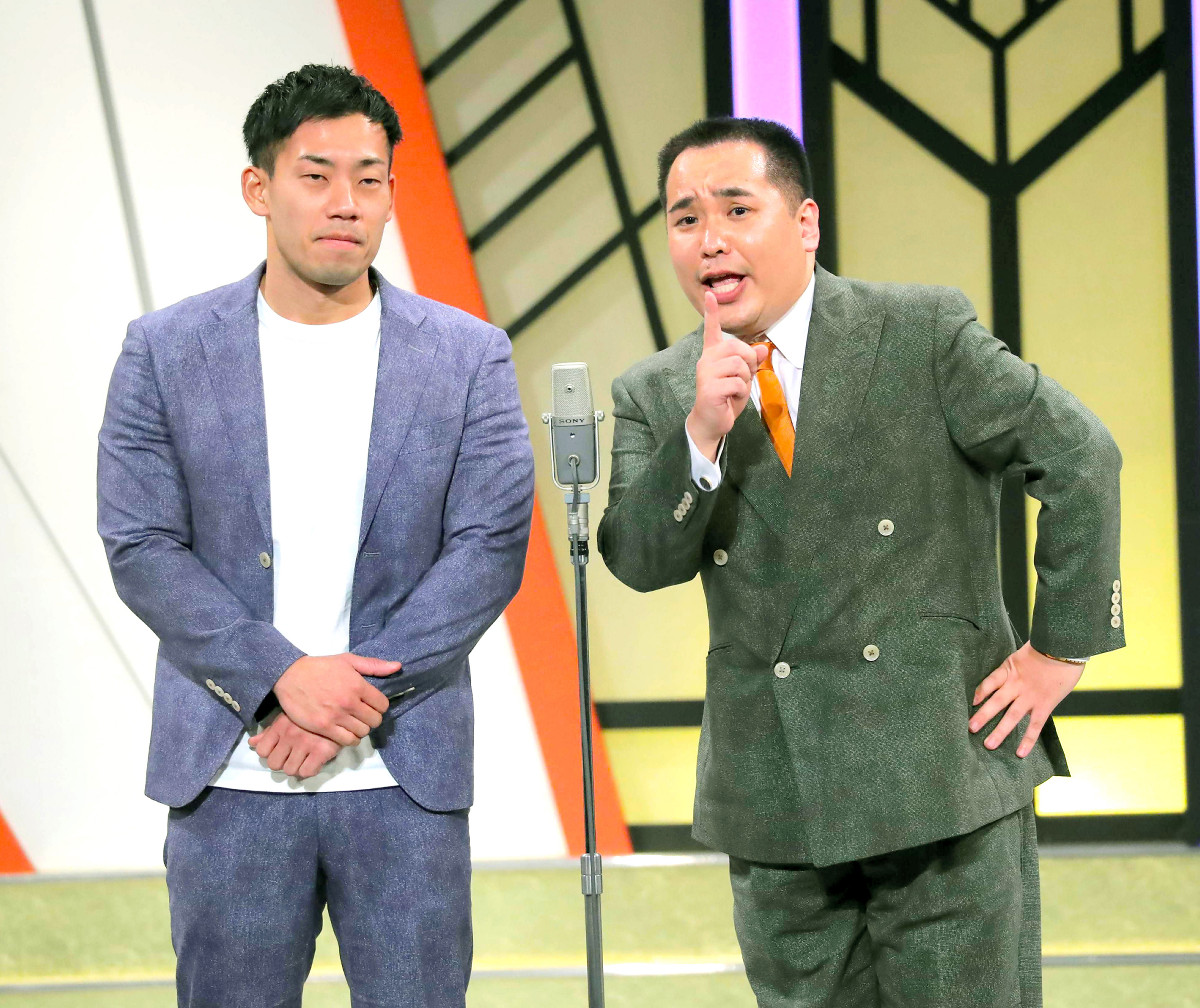
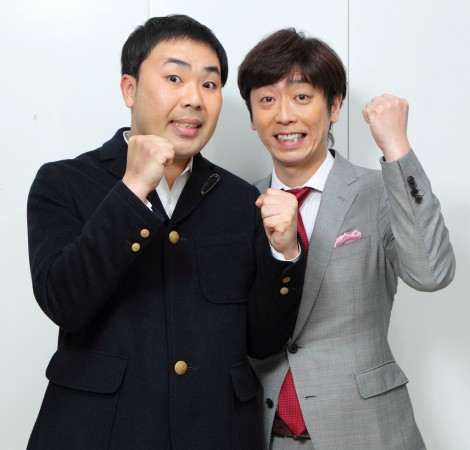
We have compiled a list of comedians, celebrities, singers, and animals who have made their mark in the entertainment industry! We have compiled many of them, including Peko Pa and Milk Boy, so please be sure to read to the end! Milk Boy is a Japanese comedy duo consisting of Takashi Utsumi and Takashi Komaba from the Osaka branch of Yoshimoto Kogyo, formed in July 2007, and are classmates of the 27th and 10th NSC students in Osaka and Tokyo, respectively. They are the champions of M-1 Grand Prix 2019.
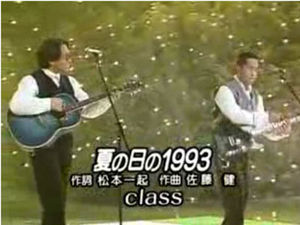
Source: photo.kttb-hokkaido.net
class
1993 works
Popularity: ★☆☆
Male duo group. Debut song "Natsu-no-hi no 1993" was a million hit that sold more than 1.7 million copies. It was dissolved in 1996, re-formed in 2003, and restarted in 2008 with Koso Okazaki, the CEO of GMA Enterprise belonging to class, as a member instead of Takanori Hiura, but was suspended due to the death of Katsuyuki Tsukui in 2009.
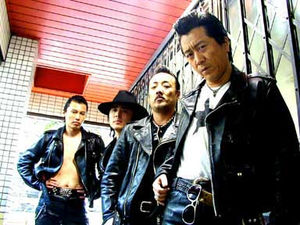
Source: b1.rimg.tw
The Tra-bryu
1993 works
Popularity: ★☆☆
The rock band debuted in 1982. The single "Koppa-Tsubi-no-R & R" (coupling is "Load") was released. Since it was based on letters from fans, when a TV program broadcasts "Load", it goes up the charts by wire broadcasting and becomes a big hit with 2,200,000 copies. Since around 2004, Vo's George Takahashi has been business since around.
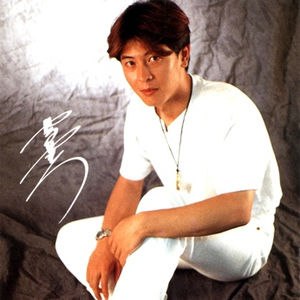
Source: ex-img.com
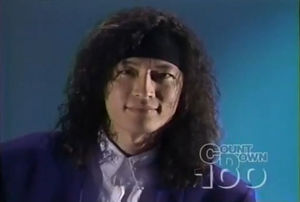
Yasuhiro Yamane
1993 works
Rock singer songwriter. His debut single "Get Along Together", which was released on January 21, 1993, sold a record million copies. The total number of copies shipped was 1.74 million. At the end of the year, he won the Best Newcomer Award at the 35th Japan Record Awards and also participated in the NHK Red and White Singing Contest.
Source: blog-imgs-61.fc2.com
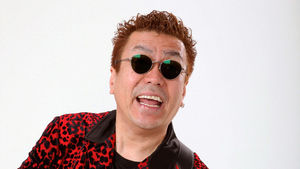
Masatoshi Ono
1992 works
It is said to have a range of 4 octaves since its debut, and it has become a topic of conversation with its clear and penetrating high-tone voice that is comparable to that of foreign HR/HM singers. In 1992, his 3rd single "You're the Only …" became the theme song of the Fuji TV drama "Kimi no Tame ni Tsukuru Koto" (Things You Can Do for You) and became a big hit. In the same year, he was awarded the Best Newcomer Award at the 34th Japan Record Awards and also participated in the Red and White Singing Contest.
Source: rpr.c.yimg.jp
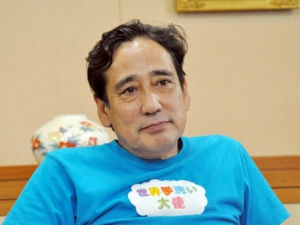
Tatsuo Kamon
1991, 2011 to 2012
SINGER SONGWRITER. BECAME AN APPRENTICE TO Tsuruko Shofukutei (AT THE AGE OF 27) DURING HIGH SCHOOL. RECEIVED THE NAME "Shofukutei SHOKO". AFFILIATED WITH SHOCHIKU GEINO. EXCOMMUNICATED BY Tsuruko Shofukutei IN YEAR 1980. TERMINATED EXCLUSIVE CONTRACT WITH SHOCHIKU GEINO. DROPPED OUT OF ALL PROGRAMS. DEBUTED AS A SINGER IN 1982 UNDER THE NAME OF TATSUO KAMON. IN YEAR 1991, "Kaita Medley" sold 820000 copies, making it his biggest hit. THEN MADE A SMALL COMEBACK FROM 2011 TO 2012.
Source: www1.saga-s.co.jp
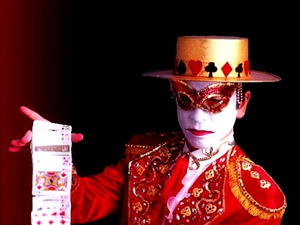
Lou Ohshiba
First half of 1990s + 2007
A comedian. In 1989, he took part in the launch of カンコンキンシアター, a theatrical troupe led by Sekine. His unique character was in the limelight. He was famous for the phrase "Let's do Together!" used in the commercial for "Aderans." At this time, however, Lu was 35 years old and late blooming. After a short break in the first half of the 1990s, he had fewer opportunities to appear on TV, and his exposure to the public remained "modest." However, from around the beginning of 2007, he started to break again with his blog, which was too loud, and his words were called "Lu language", which became a topic of conversation among high school girls, who used to be the most hated.
Source: pds.exblog.jp
Trumpman
Professional magician
The real name, real face, place of birth, etc. are not disclosed. The original magic (magic) is also announced under a different name. He made his debut in the travel and information quiz program "Indeed! The World" of Fuji TV. He regularly appeared for seven years from June 1990.
Source: userserve-ak.last.fm
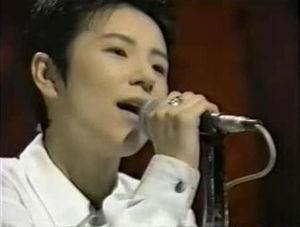
GAO
1992 works
Female singer songwriter. Features a unisex look that looks like a boy at first glance and a husky voice. "GAO" is a nickname derived from her voice when she hoarse during voice training. One of her representative songs became a million seller, "Sayonara" (the ending of "NNN News Plus 1", the theme song of the NTV drama "Kanna ni Damadete!").
Source: cdn-stf.line-apps.com
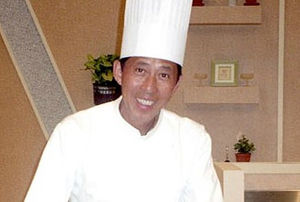
The late Tomitoku Shu
Early 1990s
He is a chef of Cantonese cuisine, commonly known as the Chef of Flame. He appeared on TV programs "Kyo-no-Ryori" (Today's Cooking) (NHK) from the time of' Minami-en,' but in the 1990s, he became popular nationwide by appearing in "Asakusabashi Young Clothing Store" (affiliated with TV Tokyo), "Waido! Watcher" (affiliated with TBS), "Tahoiya" (affiliated with Fuji Television), and so on. After that, although the boom was reduced due to the suspicion of sexual harassment and tax evasion (tax evasion), he ran many Chinese restaurants and gave lectures in various places. On April 8, 2014, he died of pneumonia at the age of 71.
Source: www.les2.net
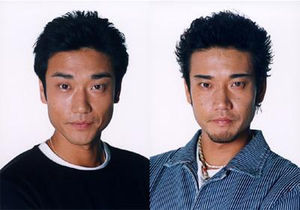
Kudo Brothers
1992 to 1994
A Japanese celebrity of twins (identical twins). Originally a member of Hori Productions, he became independent in 2008 and established JK Sports. For two and a half years from April 1992 to September 1994, he worked for the 8th Iitomo Youth Corps of "Waratte Iitomo!"
Source: userserve-ak.last.fm
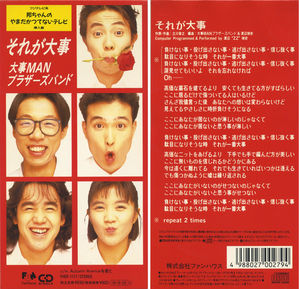
The Important Man Brothers Band
1991 works
The third single "That Matters" released in 1991 as the theme song of "Kunichan no Ya: Unheard-of TV" was a huge hit with 1.8 million copies.
"Don't lose, don't throw up, don't run away, and don't believe ♪ When you're about to die, that's the most important ♪"
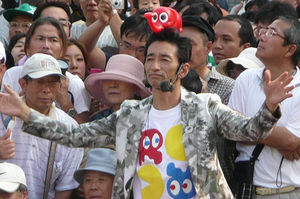
Source: art16.photozou.jp
Lucky Ikeda
Around 1990
In 1989, Arnold Schwarzenegger was featured in a TV commercial for "Cup Noodles" of Nissin Food Products Co., Ltd. where he danced with a yakan (Japanese-style toy), and his unique fashion when appearing on TV attracted attention, and he appeared on many variety programs as an entertainer with unique characters.
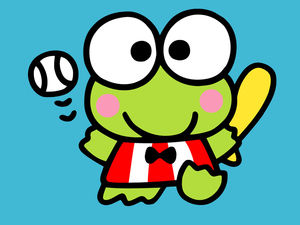
Kero-kero-keroppi
It's not a living thing, it's a fictional character (smile). "Kero-kero-keroppi" is a set of characters for character goods designed by Sanrio. The main character is Hasunoue Keroppi. He is a healthy frog boy. He is a unisex character.
Source: pbs.twimg.com
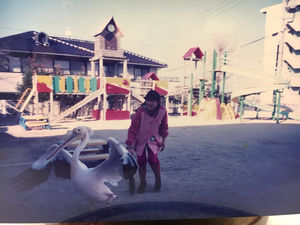
Katta.
Between 1985 and 1995
A male Great White Pelican free-ranging in a Tokiwa Park in Ube, Yamaguchi Prefecture, became famous nationwide after he was shown playing with children on TV news and other media. In 1989, he received an award from the Japan Society for the Protection of Animals for providing a cheerful topic.
Source: moriagetai.evesta.jp
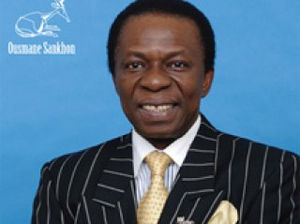
Ousmane Sankhon
1984 -
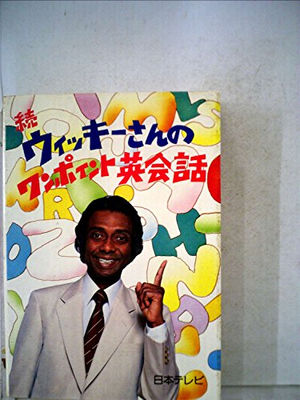
A TV personality from the Republic of Guinea, author, adviser to the Guinea-Japan Exchange Association, and former diplomat. He is a bright character with a constant smile and a so-called natural fool. Along with Dave Spector and Kent Derricott, he became popular as a "strange gaijin" TV personality. The usual phrase is "1 con 2 con, sun con!"
Source: www.amazon.co.jp
Anton Wicky
March 1979 to March 1994
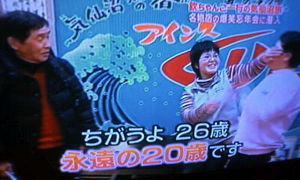
Born in Sri Lanka and living in Japan, he is an international comparison scholar and foreign personality. In March 1979, the first segment of NTV's "Zoom-In! Asa!" (Zoom In! Morning!), "Wicky's one point English conversation", was launched and became famous nationwide. It continued for 15 years until the program was renewed in March 1994.
Source: takeiteasy.blog.eonet.jp
Kesennuma-chan
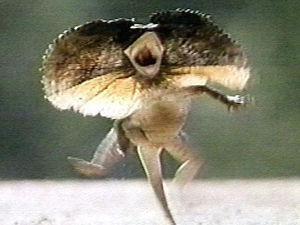
Born in Kesennuma City, Miyagi Prefecture, she was a former female entertainer and businessman (manager of a guest house). From 1977 to 1978, she appeared on the Fuji TV program "Kinchan no Don to Yatte Desu!" (Kin-Don!) by public invitation. She gained popularity with her Tohoku dialect, "Park Doo-na."
Source: stat.ameba.jp
Frill-necked Lizard
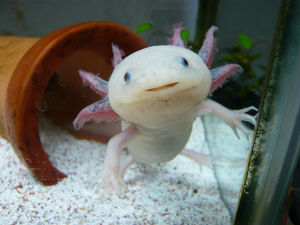
A lizard belonging to the genus Frill-necked Lizard of the family Squamata, family Agamidae. Distributed in northern Australia and Papua New Guinea (southern New Guinea). In Japan, it became a topic of conversation in TV commercials of Mitsubishi Mirage in 1984 and was once very popular.
Source: image.blog.livedoor.jp
Upalupa
A group of Mexican amphibians and salamanders, the Upalupa is a nickname given when it was brought to Japan. Its official names are Axolotl (Spanish) and Mexico salamander (English). Therapeutic characters became popular in commercials and created a boom.

Related Articles

M-1グランプリのネタバレ解説・考察まとめ
『M-1グランプリ』とは、漫才師の日本一を決める大会のことを指す。2001年から2010年までは出場資格としてコンビ歴10年以下であったが、復活した2015年からはコンビ歴15年まで引き上げられた。歴代優勝者に中川家、ますだおかだ、フットボールアワー、アンタッチャブル、ブラックマヨネーズ、チュートリアル、サンドウィッチマン、NONSTYLE、パンクブーブー、笑い飯、トレンディエンジェル、銀シャリ、とろサーモン、霜降り明星、ミルクボーイ、マジカルラブリー、錦鯉、ウエストランド、令和ロマンがいる。
Read Article
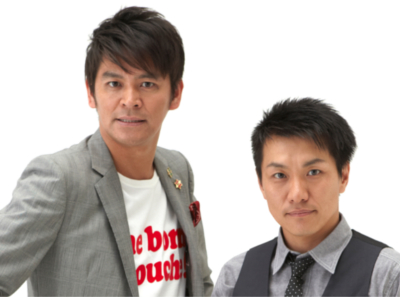
M-1 Grand Prix 2003 - Football Hour's third appearance as M-1 champion...
Football Hour became the M-1 champion for the third time at the 2003 M-1 Grand Prix. This year was also the year when the three-way battle between Football Hour, Laughing Rice, and Untouchable, who made it to the finals from the loser's bracket, took place. In this issue, we will be focusing on Football Hour, who became the M-1 Grand Prix Champion, and explain the battle. Enjoy....
Read Article
M-1 Grand Prix 2002...Masuda Okada's thoughts on the M-1 Grand Prix...
The "M-1 Grand Prix" successive champions series has been started as a serial series since the last issue. In this second installment of the series, we will introduce you to the M-1 Grand Prix 2002 champion, Masuda Okada. We will introduce the human aspects of the M-1 Grand Prix in 2002 and the path to the championship. Enjoy!
Read Article
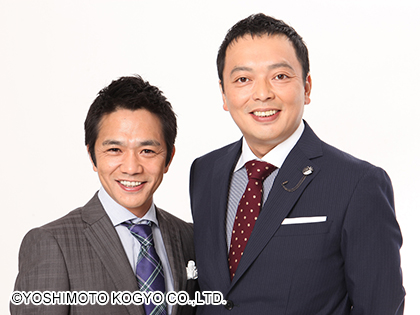
Back after 5 years! Charm of "M-1 Grand Prix Reigning Champion" -The Nakagawa Family, the First Champion
The "M-1 Grand Prix" has returned after a five-year absence. The M-1 Grand Prix is a "combat sport of manzai" for manzai performers. So, starting from this issue, I will be writing a series of articles on the appeal of the "successive champions of the M-1 Grand Prix" in my own way. I will talk about the charms of the "successive champions of the M-1 Grand Prix" in my own way. The first installment will be about the Nakagawa Family, the first champions. Enjoy....
Read Article
Contents
- One-hit wonder entertainer, one-hit wonder celebrity, one-hit wonder singer.
- 2019 works
- 2018
- 2017 works
- 2016 works
- 2015 works
- 2014 works
- 2013 works
- 2012 works
- 2011 works
- 2010 works
- 2009 works
- 2008 works
- 2007 works
- 2006 works
- 2005 works
- 2004 works
- 2003 works
- 2003 works
- 2001 works
- 2000 works
- 1999 works