
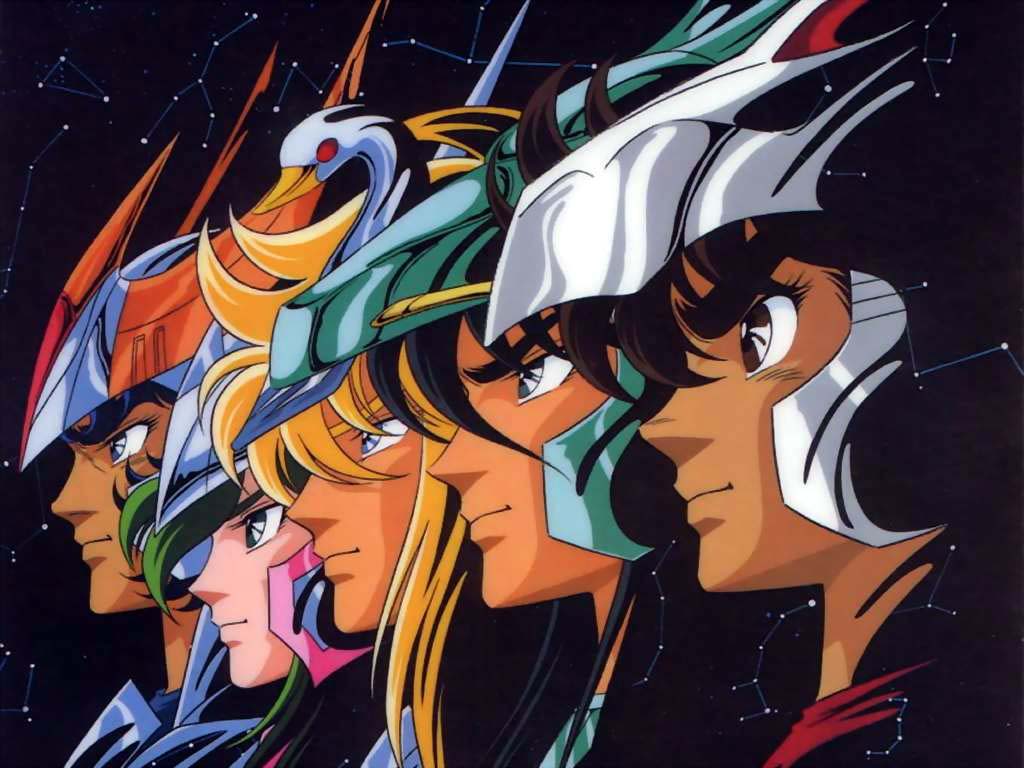
Saint Seiya" is a fantasy action manga by Masami Kurumada, serialized in Weekly Shonen Jump since 1986. It is a story of passionate battles between boys called "Saints" who wear the holy robe of their patron constellation (cross) and gather under Athena, the protector of love and justice on earth. With a style based on the motifs of constellations and Greek mythology, it is a masterpiece that has captivated fans not only in Japan but also around the world.
Saint.
The Saint of Athena is an entity of hope that is said to appear whenever evil infests the world. They are also called "Athena's saints," a generic name for fighters who fight to protect the goddess Athena. Their existence is legendary among the masses, and their superhuman abilities are said to be such that "their fists can split the sky and their kicks can crack the earth.
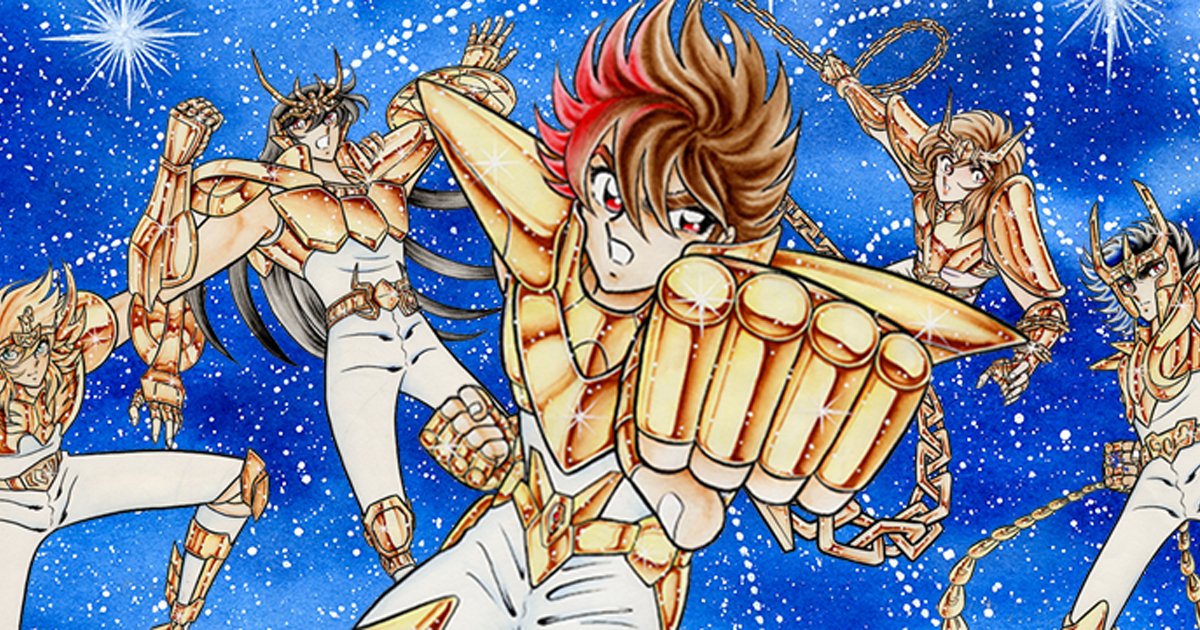
Holy Clothes (Cross)
It is an armor worn by saints, which disassembles and transforms from the object form of each patron sign to wrap around the body of the saint. When the wearer's microcosm is low, such as when the saint has no fighting spirit, it is merely heavy armor, but as the microcosm increases, it becomes lighter and its offensive power increases. There are three types of saintly garments: the bronze cross, the silver cross, and the gold cross.
Microcosm (Cosmo)
It is the cosmic energy that exists in the body. The fighters burn this energy and use it in their fighting techniques. They are so powerful that they can tear the sky with their fists and crack the earth with their kicks. However, since the physical body of a saint is no different from that of a human, each fighter must wear a protective garment to compensate for this. Since the microcosm increases in proportion to and in response to mental power and concentration, it can be explosively increased by intentionally blocking one of the six senses to help.
Famous quotes, lines, scenes, and scenes from "Saint Seiya
Seiya of Pegasus: "Burn, my microcosm!"
Burn, my microcosm! is the main character Seiya's signature line.
Because of the sound of the word "microcosm," it is often used in parodies, and for this reason, many people know this phrase even if they do not know the contents of "Saint Seiya. It is one of the representative words that appear in the work.
Backstories, trivia, small stories/episodes, and anecdotes from "Saint Seiya
Major line and works that are reader-conscious
After the serialization of his previous work "Otokozaka" came to an end, the author, Masami Kurumada, was conscious that his next work would take a major route and be well received by readers. The idea was that a story based on Greek mythology would appeal to girls, while a saintly garment incorporating plastic model elements would appeal to boys.
This aim proved to be a success, and the magazine became popular, with names such as "Saint" and "Cosmo". The popularity of the magazine was also boosted by such projects as the "Saint's Clothing Disassembled and Fitting Diagram," which explained in detail the structure of the saint's robe, and by soliciting ideas for the design of the saint's robe from the readers.
In 1986, the series was made into an animated television series, and Bandai, the sponsor of the series, released toys and game software. The "Saint Cloth Cloth Compendium," a toy figure reproduction of the holy robe, became the biggest-selling men's toy of 1987.
Poseidon's version, which was the key to the work.
In the Poseidon Arc, there are many highlights, including many descriptions that can be seen as milestones for the next Arc of Hades, the Dark Lord. It is the final chapter of the series, in which the grown-up Seiya and his friends show their appropriate activities.
The blood of the Golden Saint, which is necessary for the restoration of the holy robe, was used for the blood of the Golden Saint, which dramatically increased the ability of the holy robe, and is one of the factors that made it second to none for the Kaijogens. The other Gemini half, Kanon, became a Seadragon and used the gods to rule the earth and the sea world. Later, he is rehabilitated as a Gemini Gemini Saint with Athena's forgiveness.
From the Poseidon Arc, his battle with the gods of Greek mythology begins in earnest. It was also made into an animated movie version, and the Poseidon Arc is credited with giving him the opportunity to fight the evil god Eris, Athena's brother Abel, Lucifer, and others.
Theme songs and insert songs for "Saint Seiya
OP (Opening): MAKE-UP "Pegasus Illusion
ED (Ending): Hironobu Kageyama & BROADWAY "BLUE DREAM - Yume Tabibito

Related Articles
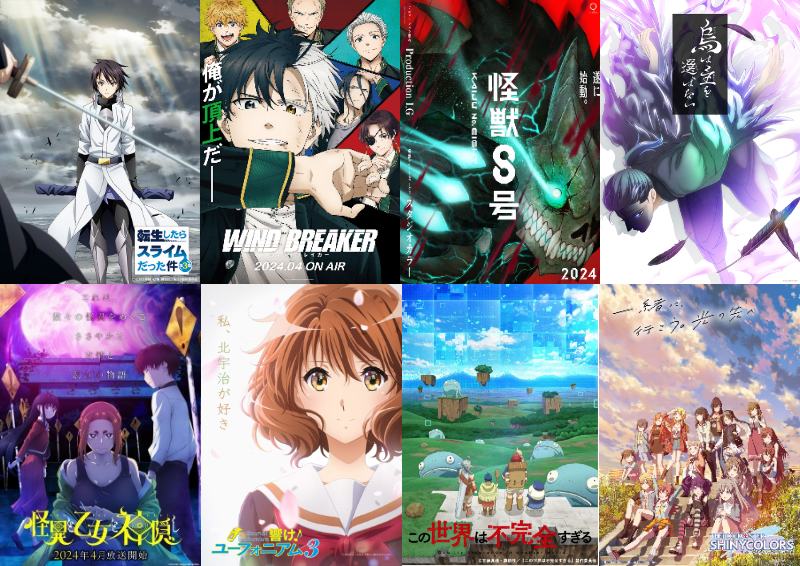
April 2024 Spring Anime (First Semester Anime) Summary
This is an alphabetical list of spring anime that will start airing in April 2024.The April 2024 spring anime lineup includes many hot new anime and sequels to popular series. Information such as anime titles, broadcast information, cast voice actors and staffs are compiled in an easy-to-understand format.
Read Article
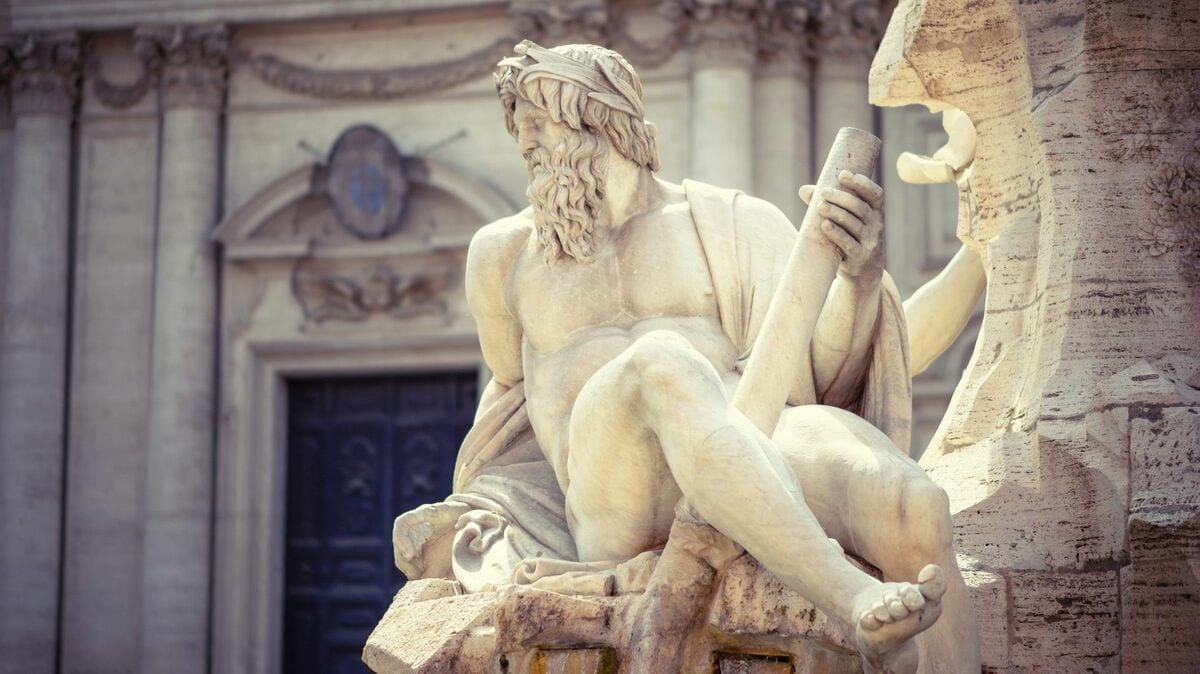
A thorough explanation and discussion of Greek mythology! Interesting and easy to understand!
Greek mythology is a mythological system believed mainly in ancient Greece. It depicts the interaction between gods and human heroes, centering on the twelve pillars that gather on Mount Olympus. The characters in Greek mythology, such as the womanizing god Zeus, his jealous wife Hera, and the demigod and half-human hero Heracles, who sometimes fought valiantly and was sometimes rewarded for his folly, were known for their very "human" characteristics, which led to the popularity and decline of the mythology. This led to both the popularity and decline of the myths. Among myths from around the world, Greek mythology is particularly well known, and is often featured as a subject in Japanese manga and anime.
Read Article
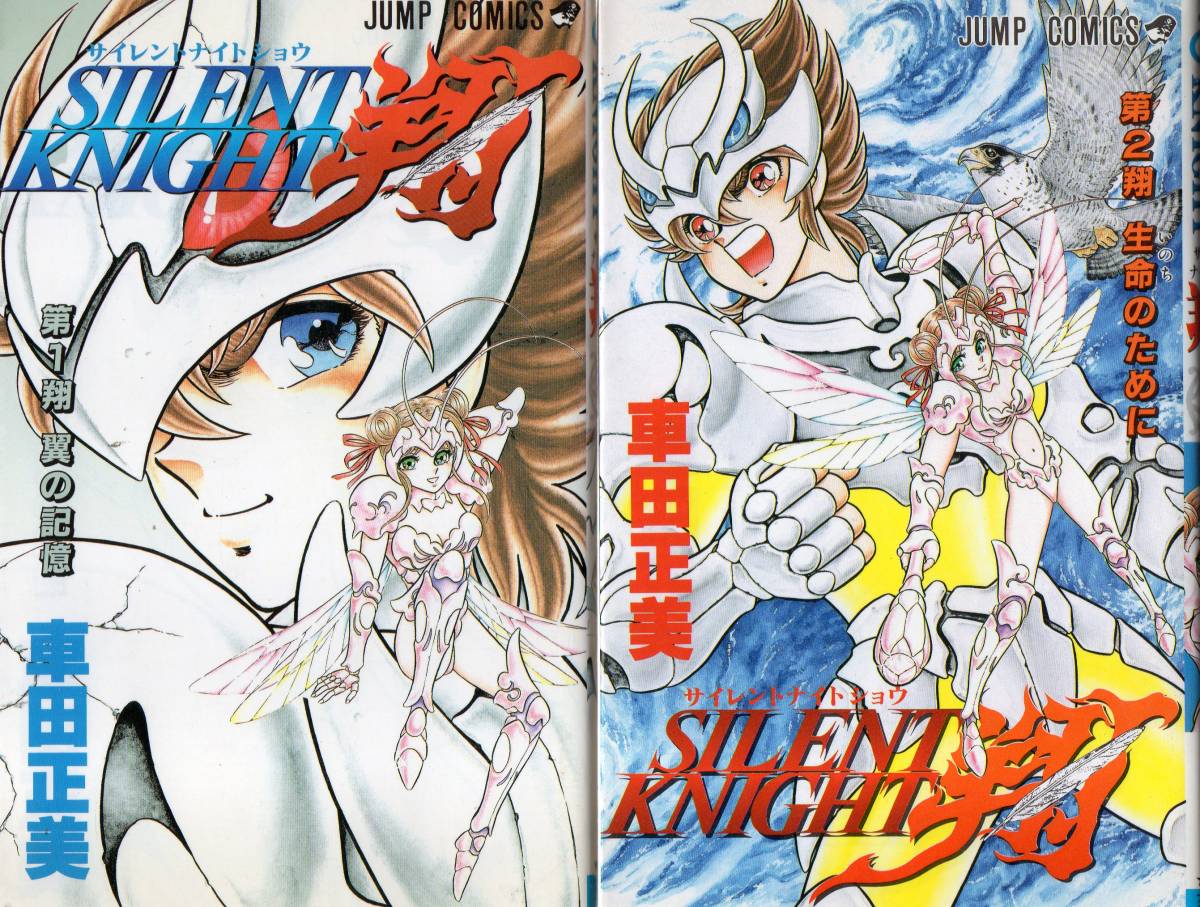
Spoiler commentary and discussion of SILENT KNIGHT Sho (manga)
SILENT KNIGHT Sho" is a battle manga by Masami Kurumada that was serialized in Shueisha's "Weekly Shonen Jump" in 1992. It follows the line of "Saint Seiya," the author's hit work. The story is about a boy named Sho who awakens to Hayabusa's evolution ability and challenges the mysterious organization Neo Society to a battle. The final story ended abruptly with the page "NEVER END," and Masami Kurumada left the comment "GOOD-BYE" at the end of the volume.
Read Article
![Weekly Shonen Jump] Manga from the late 80's to the mid 90's [Golden Age].](https://renote.net/files/blobs/proxy/eyJfcmFpbHMiOnsiZGF0YSI6MjM4ODkzLCJwdXIiOiJibG9iX2lkIn19--cc2dd65e70fb4742d9b63b02febb4cbc447f7095/db19ee5b.jpg)
Weekly Shonen Jump] Manga from the late 80's to the mid 90's [Golden Age].
Manga from the Golden Age of Jump (manga started in the late 80's to mid 90's) are summarized here.
Read Article
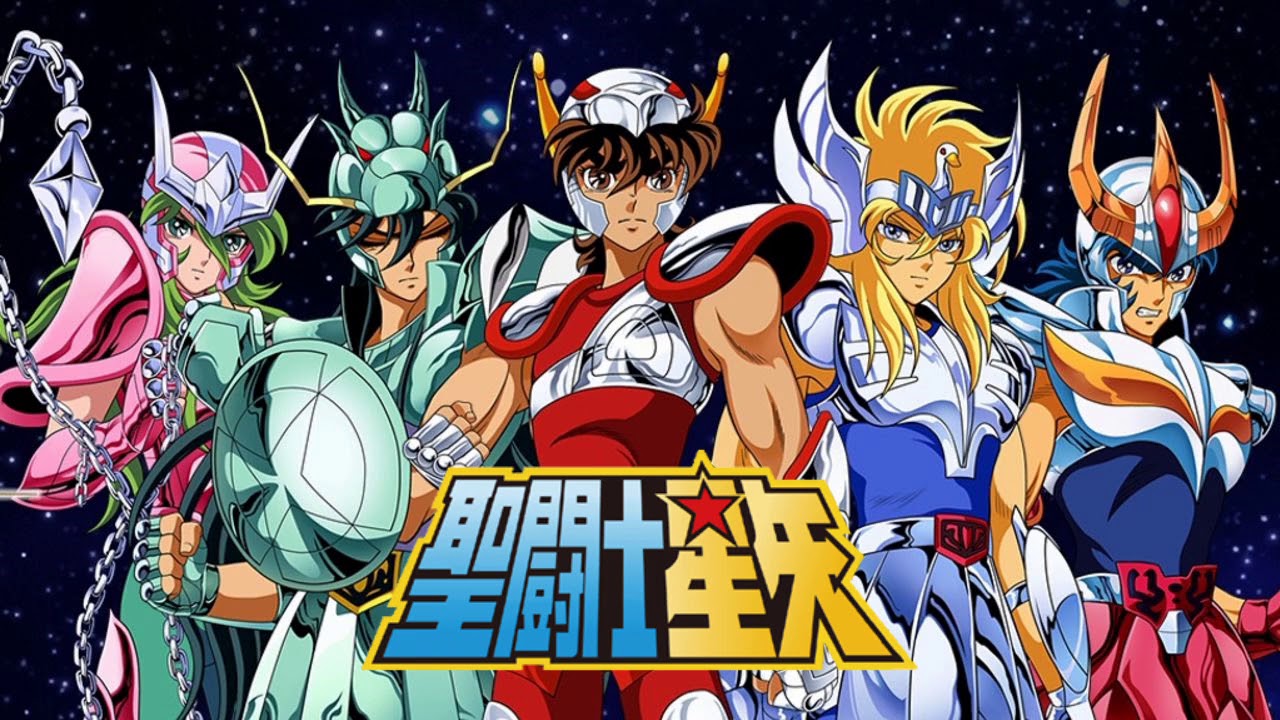
Summary of special moves and secrets of all "Saint Seiya" saints
This section summarizes the special moves and secrets of the saints in the manga and anime "Saint Seiya" written by Masami Kurumada. The focus is on the "Twelve Palaces Arc," "Nordic Asgard Arc," and "Sea Emperor Poseidon," which became highly popular after being adapted into an anime.
Read Article
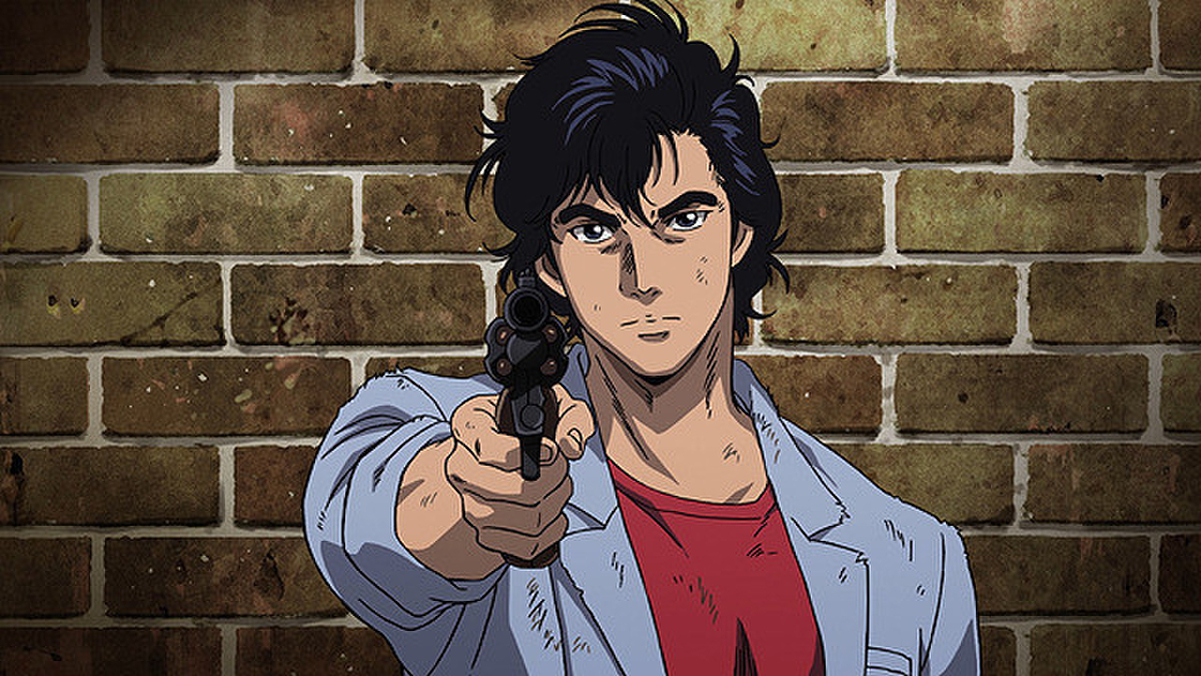
Top 20 recommended anime from the 80's that are highly acclaimed even overseas!
Anime is a major culture that Japan is proud of. Japanese anime has a reputation for its detailed storylines and character settings, as well as its high level of drawing techniques, and is especially highly acclaimed in foreign countries. There are even cases where anime broadcast in Japan is newly produced in other countries. This article introduces 20 titles of 80s anime from Japan that were highly acclaimed overseas.
Read Article
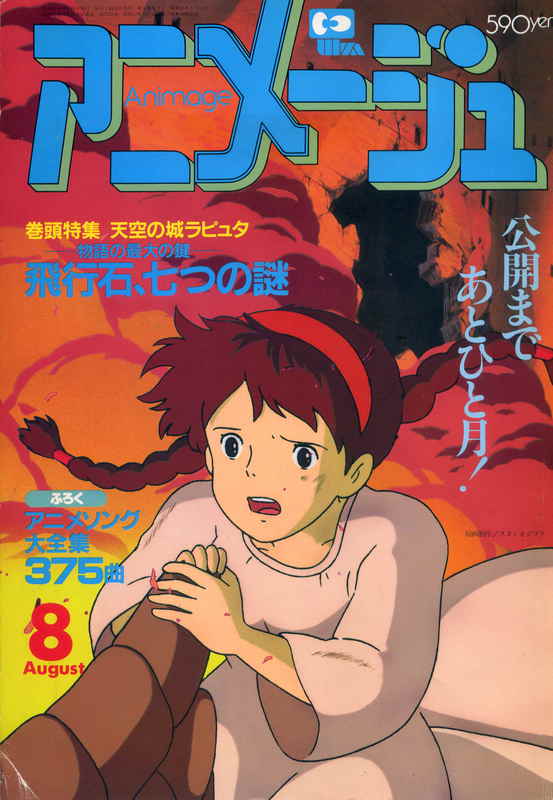
Ten animated films from 1986, which celebrates its 30th anniversary this year.
This year, 2016, marks the 30th anniversary of "Saint Seiya" and "Dragon Ball". It can be said to be the golden age of Shonen Jump, including anime. On the other hand, it was also a time when the anime boom centered on real robot anime was over, original works were waning, and anime magazines such as "The Anime" and "My Anime" were going out of business. We have selected 10 works that represent such an era.
Read Article
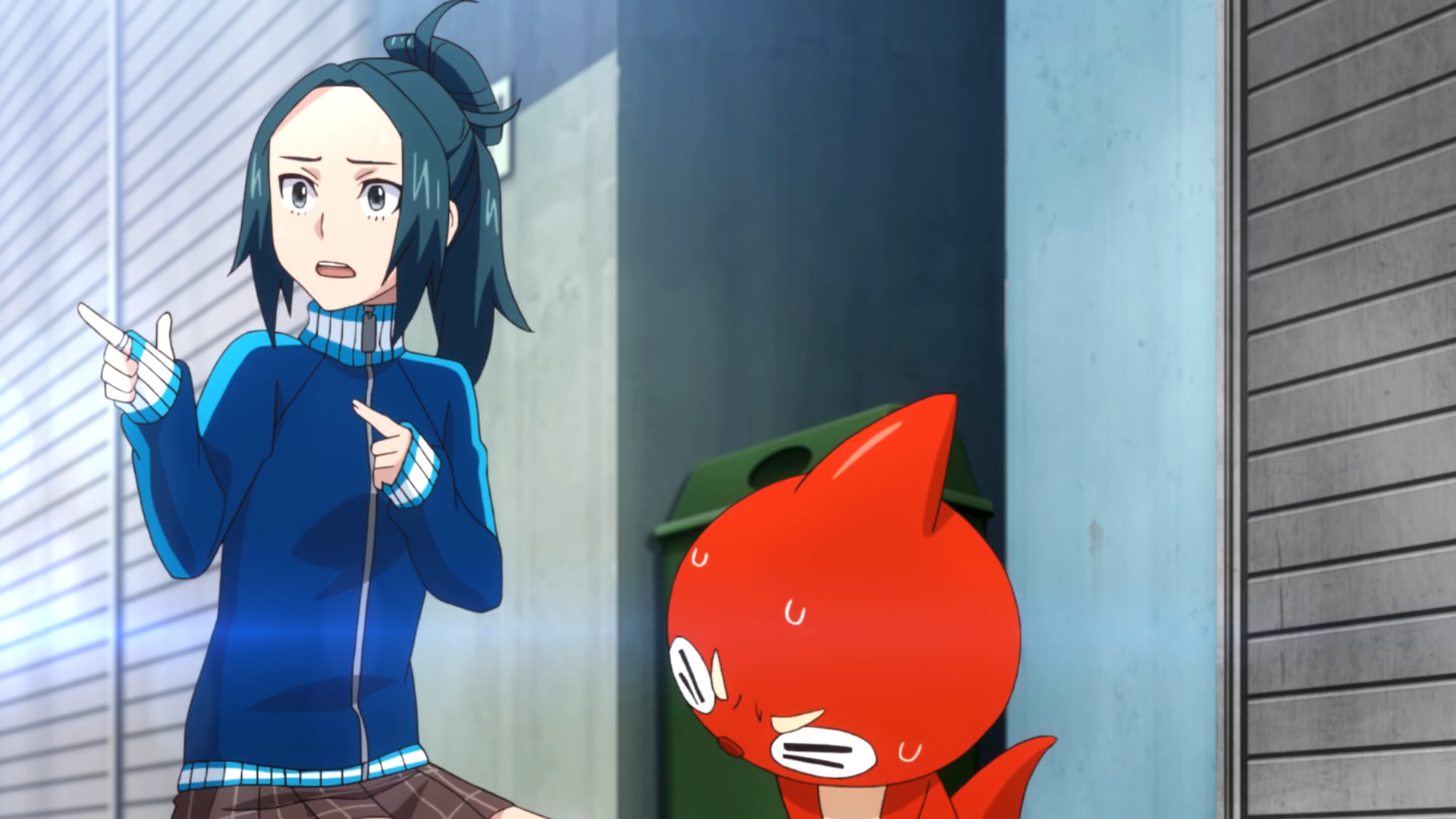
Not Just an Adventure Anime! A Parody of "Monstro" Episode 9
Monstar was adapted from a game application into an anime. It was a normal adventure anime...or so we thought, but it had a lot of parody elaborated in it. In this episode, we'll be compiling the parody material from episode 9 of Monstro!
Read Article
What kind of story is Saint Seiya? A historical masterpiece explained!
Saint Seiya is a manga by Masami Kurumada serialized in Weekly Shonen Jump from 1986 to 1990. The story is about a man who fights against evil in order to protect love and peace on earth, clad in a cross-shaped suit of armor in the shape of a star sign. The following is an explanation of Saint Seiya.
Read Article
![Saint Seiya Ω] For those of you who missed it! Spoiler summary of the synopsis and story!](https://renote.net/files/blobs/proxy/eyJfcmFpbHMiOnsiZGF0YSI6NzU5MDc0MSwicHVyIjoiYmxvYl9pZCJ9fQ==--ac931d5d365981bb83d84b52d2d1f70670c2c83a/SID0011321.jpg)
Saint Seiya Ω] For those of you who missed it! Spoiler summary of the synopsis and story!
Masami Kurumada's masterpiece "Saint Seiya" was serialized from 1986. Saint Seiya Ω," which depicts the activities of characters from subsequent generations, began an anime in 2012 and has gained a new fan base. This article summarizes the synopsis and story of "Saint Seiya Ω". If you missed the anime, check it out!
Read Article
Contents
- Outline of "Saint Seiya
- Synopsis and story of "Saint Seiya
- Galactic War Edition
- Dark Saints, ed.
- Silver Saints, ed.
- Golden Saint Arc (Twelve Palaces Arc)
- Poseidon bias
- Pluto Hades bias
- Characters in "Saint Seiya
- protagonist
- Seiya of Pegasus
- saint
- Purple Dragon of Dragons (Shiryu)
- Andromeda's moment of truth
- Ikki in Phoenix
- Glacier of Kignas
- goddess
- Athena (Greek goddess)
- gold saint
- Doko, a child tiger in Libra
- Aries Mou.
- iolos
- Terminology for "Saint Seiya
- Saint.
- Holy Clothes (Cross)
- Microcosm (Cosmo)
- Famous quotes, lines, scenes, and scenes from "Saint Seiya
- Seiya of Pegasus: "Burn, my microcosm!"
- Backstories, trivia, small stories/episodes, and anecdotes from "Saint Seiya
- Major line and works that are reader-conscious
- Poseidon's version, which was the key to the work.
- Theme songs and insert songs for "Saint Seiya
- OP (Opening): MAKE-UP "Pegasus Illusion
- ED (Ending): Hironobu Kageyama & BROADWAY "BLUE DREAM - Yume Tabibito