
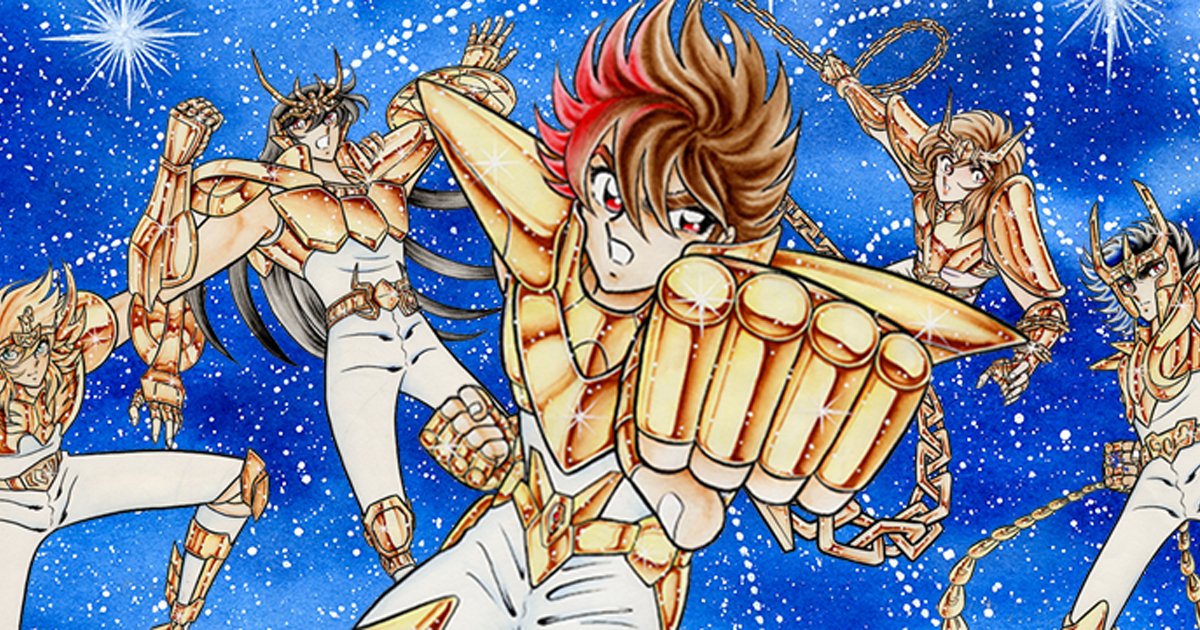
Saint Seiya is a manga by Masami Kurumada serialized in Weekly Shonen Jump from 1986 to 1990. The story is about a man who fights against evil in order to protect love and peace on earth, clad in a cross-shaped suit of armor in the shape of a star sign. The following is an explanation of Saint Seiya.
summary
Saint Seiya was serialized in Weekly Shonen Jump from 1986 to 1990 and was adapted into an anime in the same year, and was one of the manga that supported the golden age of Jump.
The story depicts five Seiya and other boys, including the Bronze Saints, wearing the cross-shaped armor of the constellations and fighting to protect love and peace on earth by burning the microcosm hidden in their hearts.
The story begins with the Galactic Wars, continues with the Black Saints and Silver Saints, and ends with the Golden Jubilee, which depicts their fierce battle with the Gold Saints. The Golden Jubilee Arc is one of the most popular episodes in the series, and many people consider it the climax of the series. The story then concluded with battles against the gods of Greek mythology in the Sea Emperor Poseidon Arc and the Underworld King Hades Arc.
The readership of the series was diverse, including young boys and young men as well as young women, and the popularity of the series grew. One of the reasons for this is the fact that many of the characters in the series are beautiful boys, or rather, beautifully shaped, and the strong enemies are often beautifully shaped.
Another characteristic of this manga was its manly fighting style, emphasis on righteousness, and delving into brotherhood, friendship, and bonds.
For example, Shiryu, the Dragon of the Dragon Zodiac who values fairness and fair battles, and Glacier, the Kignas of the Swan Zodiac who practices what his teacher taught him to stay cool. Shun of the Andromeda constellation, who is determined not to hurt anyone, and Shun of the Andromeda constellation, who is like a lone wolf. Then there is Kazuki, the Phoenix Ichiki, the Phoenix of the Phoenix constellation, a lone wolf who fights alone and without a pack. And Seiya, the main character, is a reckless boy with a strong sense of justice and a heart that is more passionate than anyone else's. That is what makes Saint Seiya (Seiya) so special. These are the personalities of the boys in Saint Seiya.
As the various characters' thoughts swirl and the boys' battles intensify, they overcome crises, awaken to the ultimate microcosm (cosmos), and triumph over powerful enemies who attack them one after the other. In the final chapter, the boys fought a battle against Hades, the king of the underworld, and won the battle wearing the holy robe (God Cloth) revived by the blood of Athena, thereby winning the future. This is a brief summary.
Synopsis/Story
Why were they destined to become saints in the first place? It began when Aeolus of Sagittarius, the Golden Saint, protected the young Athena from the clutches of Sagittarius Sagittarius, the Gemini Gemini, who pretended to be the Pope, and escaped from the Sanctuary, where he was stigmatized as a renegade. After surviving a serious injury by Shura, the Capricorn Golden Saint of Capricorn, he was rescued by Mitsumasa Kido, who later became his grandfather-in-law, and entrusted Athena to him. The baby was Saori Kido (Athena).
Mitsumasa Kido sent his own children to the training ground of the saints to make Athena a true saint to protect, and the 10 bronze saints including Seiya returned.
They conducted a galactic war that pitted them against each other and made a spectacle of them, but in fact, the purpose was to expose the Gemini saga, which reigned as Pope in the Sanctuary Sanctuary and was planning to conquer the earth. With irregularities and the rebellion of Phoenix Phanix Ikki, they fought to the death against the Dark Saints (Black Saints) and narrowly won, but Seiya and his team struggled against the overwhelming power of the new assassin, the Silver Saints.
However, the situation worsened, leading to an all-out war with the Sanctuary Sanctuary, and a fierce battle with the Golden Saints at the Golden Twelve Palaces was set off.
During the battle, they awakened the Seven Senses, the ultimate microcosmic cosmos, and fought the Golden Saints on equal terms to clear the names of Athena and Aeolus, and peace seemed to have returned to earth for a short time.
However, Poseidon, the Sea Emperor, awoke again and the earth was in danger of sinking into the sea. Seiya and five other young men stand up again. A mortal battle unfolds against the Sea Generals, who are more powerful than the Golden Saints. However, this battle of Poseidon was also a trap set by Gemini Gemini's brother Kanon.
The battle to the death with the awakened Poseidon is won, and the seal is successfully broken, but the real battle begins from here. The Holy War, the mythological relationship between Pegasus, Athena, and the Dark Lord Hades.
They sacrificed a lot to move forward and seize the shining tomorrow. This is the legend of the Seiya boys.
Seiya of Pegasus in the zodiac sign of Tenma
Seiya of Pegasus. Age 14.
He is a boy with an upright heart, a brave warrior who has fought many powerful enemies in the holy robe of Pegasus. He is also known as "Pegasus the God Killer" because he has fought many gods since the age of mythology.
His soul is always by Athena's side, and he has fought in many holy battles in the past, earning him this nickname. He is also the heir to the soul of the saint who was traumatized by Hades as the one who injured the body of the Dark Lord Hades in the Age of Myth.
His special moves include the Pegasus Meteor Fist, Pegasus Comet Fist, and Pegasus Rolling Crash. He was also the first to awaken the Seven Senses, and his potential specifications are presumed to be quite high.
And when he was in a tight spot, the will of the Golden Saint Aeolus of Sagittarius Sagittarius helped him, and the Golden Garment often came to his rescue in many situations, saving him in many phases, although it was shattered in front of Aeolus of Leo, against Poseidon, the Sea Emperor, and against Thanatos, the God of Death. In the anime version, this development is often the case, and the climax is often a victory thanks to this Golden Cloak.
The Seigetsu, which had awakened to the Eight Senses, a higher sense than the Seven Senses called "Arayashiki," and had received the blessing of Athena's blood, became the God Cloth, and together with four others succeeded in defeating and destroying the Dark Lord Hades, but was struck back by Hades, piercing his heart. His survival after that was unknown, but in the sequel comic Saint Seiya EPISODE G Assassin, it was confirmed that he survived. However, there is a scene in which he is silenced in his wheelchair, and it is also interesting to note that he is cursed by the Dark Lord Hades, as he is described as having been missing for a while. He fought to the death with gladiator gladiator to save the Purple Dragon from danger, and returned to the battlefield wearing the sacred robe again.
His signature line is "Burn, my Cosmo.
Purple Dragon of the Dragon Constellation Dragon
The purple dragon of dragons.
He is a man who lives on the path of righteousness and has a strong conviction to protect his friends and Athena rather than himself.
He trained under the Golden Saint Libra Libra Dotora at Lushan Goro Peak, became a Dragon Saint, participated in the Galactic War, and was reunited with his friends.
The shield of the dragon's holy robe is the most solid and unbreakable of all the 88 constellations' holy robe, but it was cut in half by Capricorn Capricorn Shura's Excalibur during the fight with Seiya.
His special moves include Lushan Shoryu Ha, Lushan Ryu Hisho, Lushan Hyakuryu Ha, and his signature Lushan Anti-Ryu Ha. He has also acquired Excalibur from Shura and has won many battles.
He also has his own style of fighting, and in the battle against the death mask of the Cancer Cancer, he fought against the death mask, which had been abandoned by the golden robe, by taking off his own robe and fighting in a backwater battle.
This element is also reflected in the anime, where he takes off his robe when he is in a tight spot, and the ascending dragon appears on his back.
He is also a loyal and humane character, showing a sense of awe and respect for those with whom he has fought. Since the Poseidon Arc, he has been wearing the golden robe of Libra, and he is positioned as the successor to Libra.
In the later works, many of the Shiryu are portrayed as the successors of Libra, especially in Saint Seiya EPIODE G Assassin, Saint Seiya NEXT Demesion, and Saint Seiya Omega.
Glacier of Cygnus Cygnus
Glacier of Kignas.
The only half-Russian of the five main characters in the film, he is a frozen-heart warrior who was always expected to be loving yet cool.
Trained under Camus, the Golden Saint Aquarius Aquarius, and clad in the holy robe of Cygnus Cygnus, who was sleeping in perpetual freezing ice at the place of his training in the extreme cold, he is a glacier who can be called an ice saint who has continued to win many battles.
His special moves include the Diamond Dust, the Kalitso, the Horodoni Smelch in the original work (the Aurora Thunder Attack in the anime), and the Aurora Excution, which he inherited from his master.
However, his unfulfilled love or rather, his kindness was a disaster, and in the battle of the Twelve Palaces, he was confronted by Camus, who is also his master, at the Libra Palace, and when Glacier was angered by being pushed down into a deeper trench from the extremely cold ocean floor where the body of his deceased mother lay, Camus was so angry that he did not want to see his beloved disciple cruelly scattered in a possible future battle against the Golden Saints. He was later rescued by the visiting Shiryu with the swordsword of Libra.
Later, in a fight with Milo the Scorpion Scorpion, he asked himself, "Surrender or die? Death?" He was faced with the ultimate choice of "Surrender or Death?" He was determined to win the duel with his master again, and awakening to the ultimate Seven Senses, he succeeded in freezing the Golden Garment beyond his master's cold air at absolute zero. However, it was also an eternal farewell to his master.
In the Poseidon Arc, Isaac of the Kraken, who was also his friend, accused him of not being cool enough, but he insulted his master and said that he had not forgiven him for giving Poseidon his power and that it was sanctioned by his master, and he unleashed the Aurora Excution, the secret he had inherited from his master, to win the battle. He then unleashes the Aurora Excution, a technique he inherited from his mentor, and wins the battle. Although he is a tragic character, this time experiencing the bereavement of his best friend, it is typical of him that he does not make it seem that way.

Related Articles
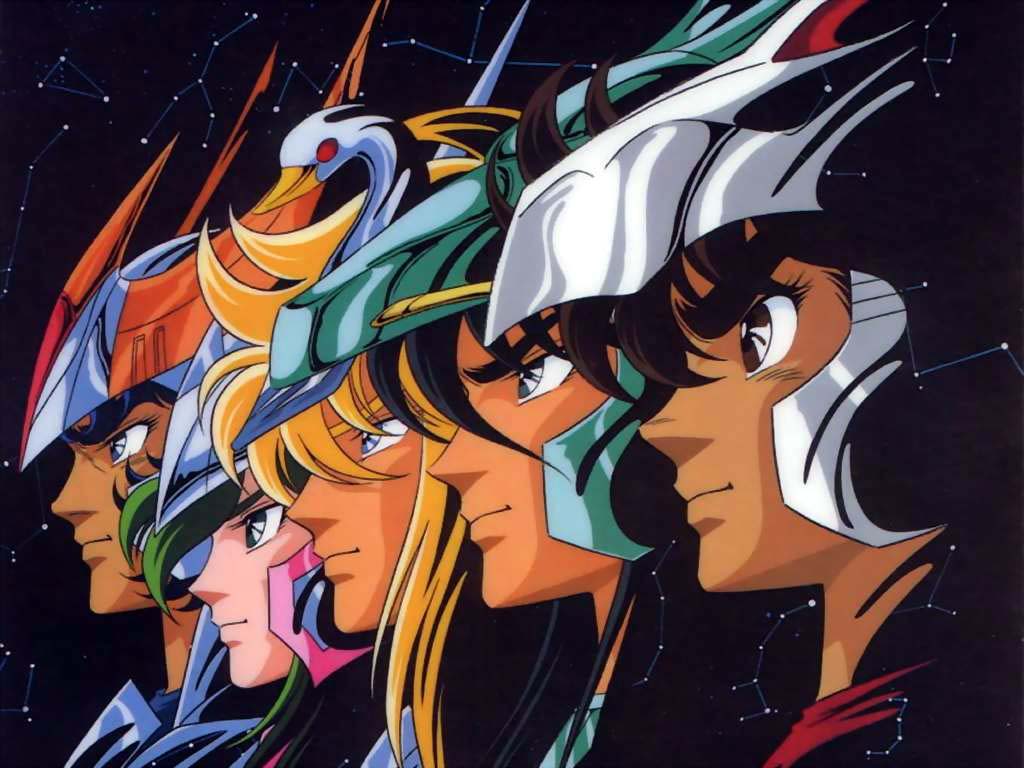
Spoilers and discussion of Saint Seiya (Saint Seiya)
Saint Seiya" is a fantasy action manga by Masami Kurumada, serialized in Weekly Shonen Jump since 1986. It is a story of passionate battles between boys called "Saints" who wear the holy robe of their patron constellation (cross) and gather under Athena, the protector of love and justice on earth. With a style based on the motifs of constellations and Greek mythology, it is a masterpiece that has captivated fans not only in Japan but also around the world.
Read Article
April 2024 Spring Anime (First Semester Anime) Summary
This is an alphabetical list of spring anime that will start airing in April 2024.The April 2024 spring anime lineup includes many hot new anime and sequels to popular series. Information such as anime titles, broadcast information, cast voice actors and staffs are compiled in an easy-to-understand format.
Read Article
A thorough explanation and discussion of Greek mythology! Interesting and easy to understand!
Greek mythology is a mythological system believed mainly in ancient Greece. It depicts the interaction between gods and human heroes, centering on the twelve pillars that gather on Mount Olympus. The characters in Greek mythology, such as the womanizing god Zeus, his jealous wife Hera, and the demigod and half-human hero Heracles, who sometimes fought valiantly and was sometimes rewarded for his folly, were known for their very "human" characteristics, which led to the popularity and decline of the mythology. This led to both the popularity and decline of the myths. Among myths from around the world, Greek mythology is particularly well known, and is often featured as a subject in Japanese manga and anime.
Read Article
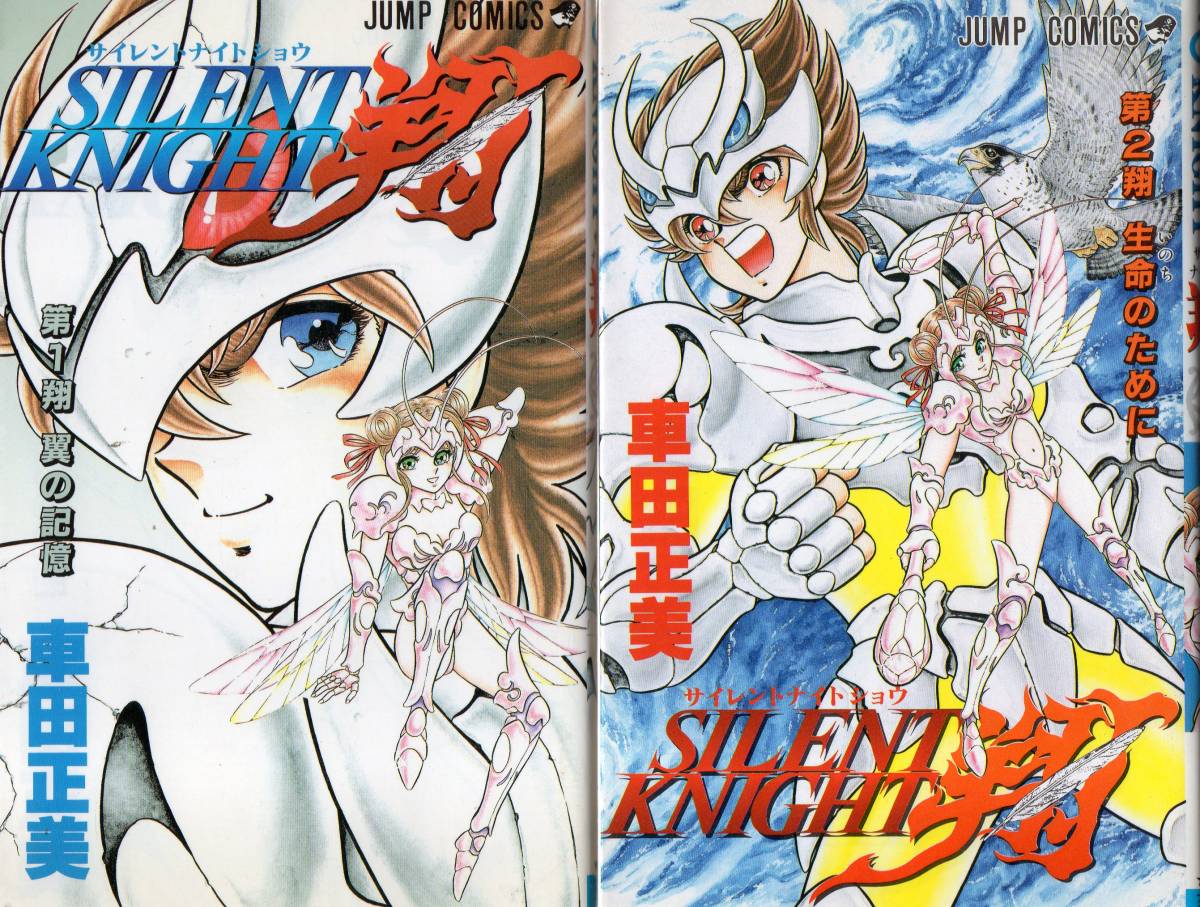
Spoiler commentary and discussion of SILENT KNIGHT Sho (manga)
SILENT KNIGHT Sho" is a battle manga by Masami Kurumada that was serialized in Shueisha's "Weekly Shonen Jump" in 1992. It follows the line of "Saint Seiya," the author's hit work. The story is about a boy named Sho who awakens to Hayabusa's evolution ability and challenges the mysterious organization Neo Society to a battle. The final story ended abruptly with the page "NEVER END," and Masami Kurumada left the comment "GOOD-BYE" at the end of the volume.
Read Article
![Weekly Shonen Jump] Manga from the late 80's to the mid 90's [Golden Age].](https://renote.net/files/blobs/proxy/eyJfcmFpbHMiOnsiZGF0YSI6MjM4ODkzLCJwdXIiOiJibG9iX2lkIn19--cc2dd65e70fb4742d9b63b02febb4cbc447f7095/db19ee5b.jpg)
Weekly Shonen Jump] Manga from the late 80's to the mid 90's [Golden Age].
Manga from the Golden Age of Jump (manga started in the late 80's to mid 90's) are summarized here.
Read Article
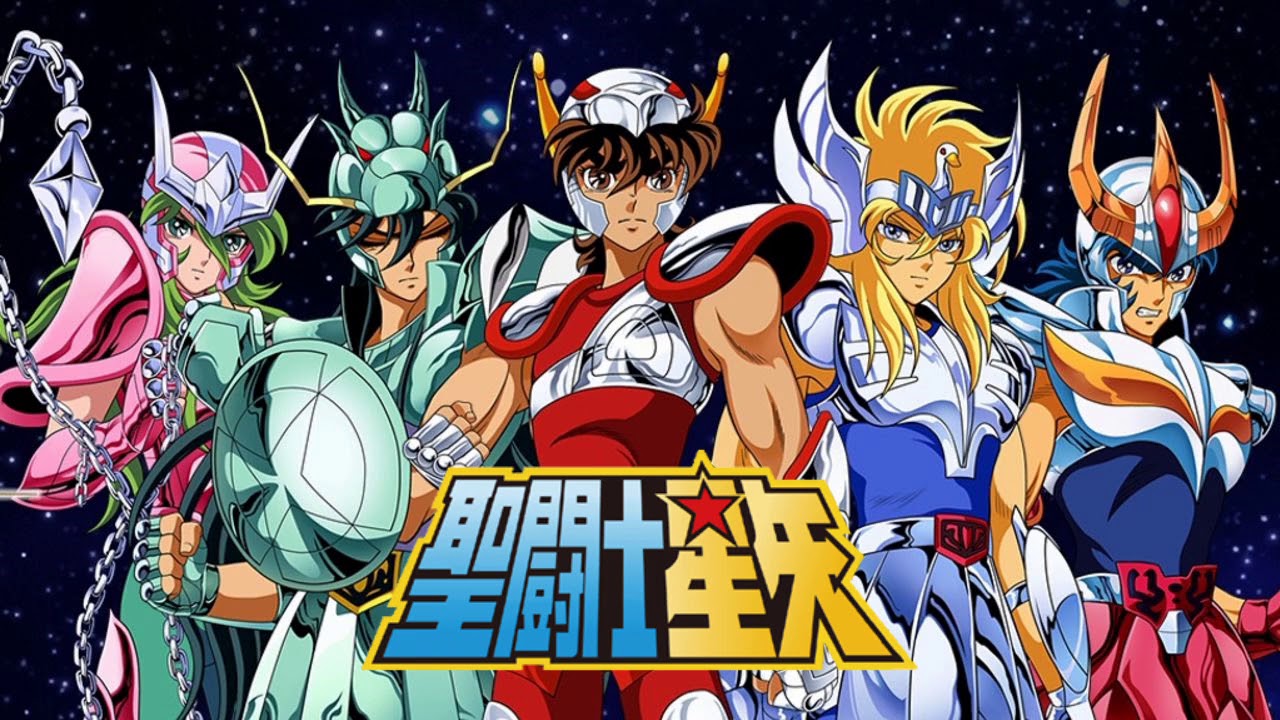
Summary of special moves and secrets of all "Saint Seiya" saints
This section summarizes the special moves and secrets of the saints in the manga and anime "Saint Seiya" written by Masami Kurumada. The focus is on the "Twelve Palaces Arc," "Nordic Asgard Arc," and "Sea Emperor Poseidon," which became highly popular after being adapted into an anime.
Read Article
Top 20 recommended anime from the 80's that are highly acclaimed even overseas!
Anime is a major culture that Japan is proud of. Japanese anime has a reputation for its detailed storylines and character settings, as well as its high level of drawing techniques, and is especially highly acclaimed in foreign countries. There are even cases where anime broadcast in Japan is newly produced in other countries. This article introduces 20 titles of 80s anime from Japan that were highly acclaimed overseas.
Read Article
Ten animated films from 1986, which celebrates its 30th anniversary this year.
This year, 2016, marks the 30th anniversary of "Saint Seiya" and "Dragon Ball". It can be said to be the golden age of Shonen Jump, including anime. On the other hand, it was also a time when the anime boom centered on real robot anime was over, original works were waning, and anime magazines such as "The Anime" and "My Anime" were going out of business. We have selected 10 works that represent such an era.
Read Article
Not Just an Adventure Anime! A Parody of "Monstro" Episode 9
Monstar was adapted from a game application into an anime. It was a normal adventure anime...or so we thought, but it had a lot of parody elaborated in it. In this episode, we'll be compiling the parody material from episode 9 of Monstro!
Read Article
![Saint Seiya Ω] For those of you who missed it! Spoiler summary of the synopsis and story!](https://renote.net/files/blobs/proxy/eyJfcmFpbHMiOnsiZGF0YSI6NzU5MDc0MSwicHVyIjoiYmxvYl9pZCJ9fQ==--ac931d5d365981bb83d84b52d2d1f70670c2c83a/SID0011321.jpg)
Saint Seiya Ω] For those of you who missed it! Spoiler summary of the synopsis and story!
Masami Kurumada's masterpiece "Saint Seiya" was serialized from 1986. Saint Seiya Ω," which depicts the activities of characters from subsequent generations, began an anime in 2012 and has gained a new fan base. This article summarizes the synopsis and story of "Saint Seiya Ω". If you missed the anime, check it out!
Read Article