
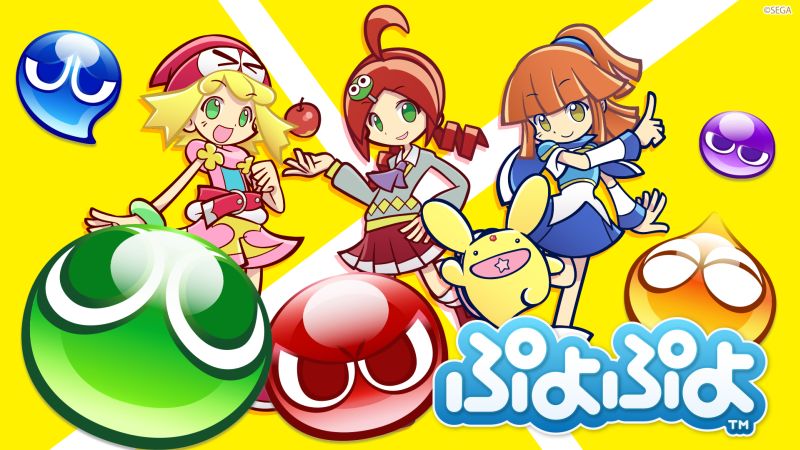
Puyopuyo" is a falling puzzle game in which players line up four "Puyos" that fall as block pieces and make them disappear. The series is still popular for its charming characters and their interactions with each other. The Puyo Puyo series has a long history, and it can be said to have laid the groundwork for a wide range of falling object games, including game rules, chain voices, and production effects.
The main character, Aruru, goes to punish Satan, who causes disturbances at every turn, and fights him with Puyo Puyo.
Outline of "Puyopuyo
Puyopuyo" is a series of puzzle games released by Compile Inc.
The series is currently marketed by the Sega Group companies. The intellectual property rights to the "Puyo Puyo" series were sold to Sega (later Sega Holdings) when the publisher, Compile, went bankrupt in March 1998 and filed for bankruptcy settlement.
The title "Puyo Puyo" is also the name of a slime-type monster that appears as a block throughout the series, and both are called "Puyo" in contraction.
The advent of "Tetris," a game synonymous with falling objects, triggered an unprecedented boom in falling object puzzle games, and from the late 1980s to the early 1990s, many subgenre puzzle games appeared.
Puyopuyo" is one of the puzzle games that emerged during this period.
Director and sound designer Masanobu Tsukamoto and designer Kengo Morita were inspired by a user-submitted game that appeared in "DiscStation," a series of PC software packages that included a magazine and a CD-ROM, both of which were available from Compile at the time. The game was inspired by a user-submitted game that appeared in DiscStation, a PC software series.
However, when we actually made it to the stage where it could be played, it was no fun at all, and we had to redesign it.
The game was developed in the form of replacing the falling blocks with "Puyopuyo" tiles that appeared in the "Magic Story" and changing the rules to a new game, which later became popular as the "Puyopuyo" series. It later became popular as the "Puyo Puyo" series.
One of the innovative features of "Puyo Puyo" at the time was the "chain voice.
This was a successor to the "Character Voices" in the RPG "Marauder's Tale," from which the characters and settings were taken, and which was also rare for RPGs of the time.
In addition to this, the BGM, the frames surrounding the field, and the facial expressions of the characters change according to the situation, and when the player makes a very large chain reaction, the voice of the character overlaps with the "Ba-ba-ba-bayo~n! when a very large chain is formed, is based on the magic of "Magic Story" in which the number of times a chain overlaps increases with each increase in magnification (diacute).
Synopsis and story of "Puyopuyo
Although the content varies somewhat from work to work, the story is generally about Arul Nadja, an aspiring mage who has unlocked the "owanimo" spell, punishing Satan, the nobleman of the demon world, for his annoying ideas (which sometimes escalate into incidents), as is the case throughout the series.
Along the way, he has unique interactions with familiar characters such as Lulu and Shezo, as well as with monsters.
Game System of "Puyopuyo
The basic rules are almost the same in each work (although details may differ).
In this section, the points that are common to the series are described.
basic rule
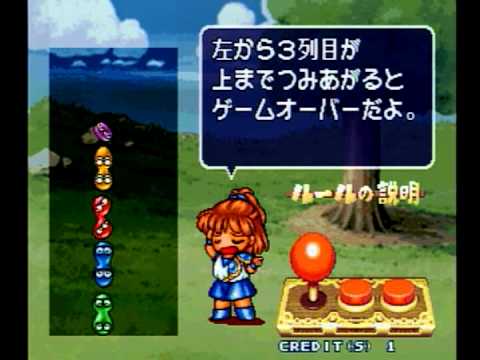
When the third row from the left is stacked to the top, the game is over. Be careful when stacking Puyos for a big chain.
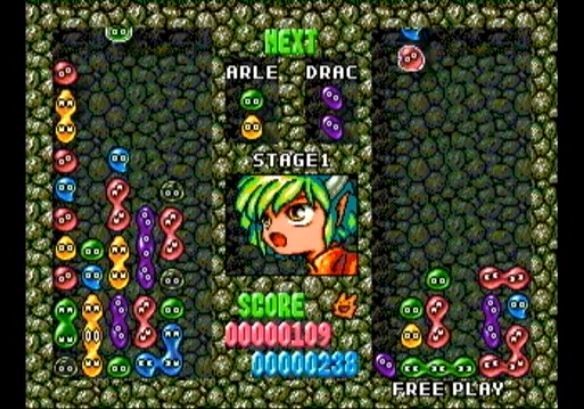
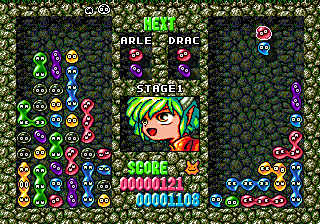
The field consists of a grid of 12 vertical by 6 horizontal squares, and one block (hereinafter referred to as "Puyo") can be placed in each square of the grid.
The Puyos fall in pairs from above and are placed on the field by either rotating, moving horizontally, or falling at high speed.
Each type of Puyo has a different color, and there are three to five colors (usually four).
The next Puyo to fall on the field is announced outside the field as the NEXT Puyo, and the distribution of Puyos is compared to the "Tsumo" game of Mahjong.
When a falling Puyo collides with the floor or other Puyos on the field, the Puyo is fixed at that position.
However, if the falling Puyo is placed on its side, for example, and there is a space of even one square downward on the Puyo, only that Puyo is forced to fall.
If there are other Puyos of the same color as the fixed one in the four surrounding directions, they will stick to each other, and if four or more of the same color stick to each other, they will disappear and score points.
If four or more Puyos of the same color are attached to each other, they disappear and a chain of four or more Puyos of the same color is created.
Just the act of erasing four colors in a row is counted as one chain, and the number of chains is counted according to the number of times the Puyos are erased. Even when multiple colors are erased at the same time, it is counted as one chain.
The points awarded for erasing Puyos are calculated by multiplying the number of erased Puyos by a set "chain multiplier.
When the third row from the left of the field is filled to the top, the game is "choked" and the game is over.
versus rules
Puyopuyo is basically focused on battles against the CPU or human players, and in a battle format, when you erase a Puyo, a colorless, transparent Puyo called "Ojama Puyo" falls on your opponent's field in proportion to the amount of points you score.
The maximum number of "Ojama-Puyo" that can fall on the screen at one time is 30, and if more than 30 Ojama-Puyo are sent, they will fall two or more times.
If four or more "Ojama-Puyo" are connected to each other, they will not disappear. If four or more of the same color are connected near an Ojama-Puyo and disappear, the adjacent Ojama-Puyo will disappear with them.
In "Puyo Puyo Dori" and later, there are also "Solid Puyo" and "Score Puyo" as special Ojama Puyos.
Solid Puyos do not disappear completely unless they are adjacent to each other two or more times or surrounded from two places.
In "Puyo Puyo Dori" and later, when a warning Puyo and a Jyama-Puyo are displayed, if you make a chain of them, the number of Jyama-Puyo falling on the field will be reduced by the amount of points you score.
If you erase all the Ojama-Puyo displayed on the warning Puyo and have enough Ojama-Puyo left over to offset your points, you can send the difference to your opponent.
game mode
Puyopuyo by yourself
A computer-controlled mode with a storyline (called a comic demo) in which you play against a character.
In case you are wondering, the story is a simple one: Aruru Nadja, a girl who is a mage's egg who has unleashed a spell called "Owanimo" that causes four or more demons of the same color to disappear into the void of time and space, faces "Puyopuyo Hell".
However, the setting of the Owanimo spell is only described in the instruction manual that was partially sold as home-use software, and is not mentioned in the game at all.
Puyopuyo for Two
A mode in which two humans play against each other.
Each player can select a level as a handicap setting.
The levels are named "very sweet," "sweet," "medium spicy," "spicy," and "very spicy," which are similar to curry and rice, and these level names have been carried over to the later series.
Puyopuyo tokoton
This is a mode in which the player erases Puyopuyo until the game is endlessly over.
There are three levels to choose from at the start: "very sweet," "medium-hot," and "very hot.
Riddle Puyo Puyo
A mode in which Puyopuyo are erased according to the conditions presented. In the original "Puyo Puyo", this mode was included only in some game models.
It is the basis of the system used in the later stand-alone version, "Nazo Puyo".
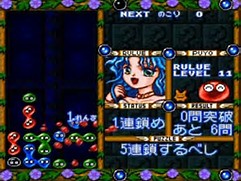
The image shows "Nazo Puyo," a game based on "Nazo Puyo Puyo," which was later released.
In this mode, the objective is to clear the conditions of a given puzzle.
Characters in Puyopuyo
arul najjah

Related Articles
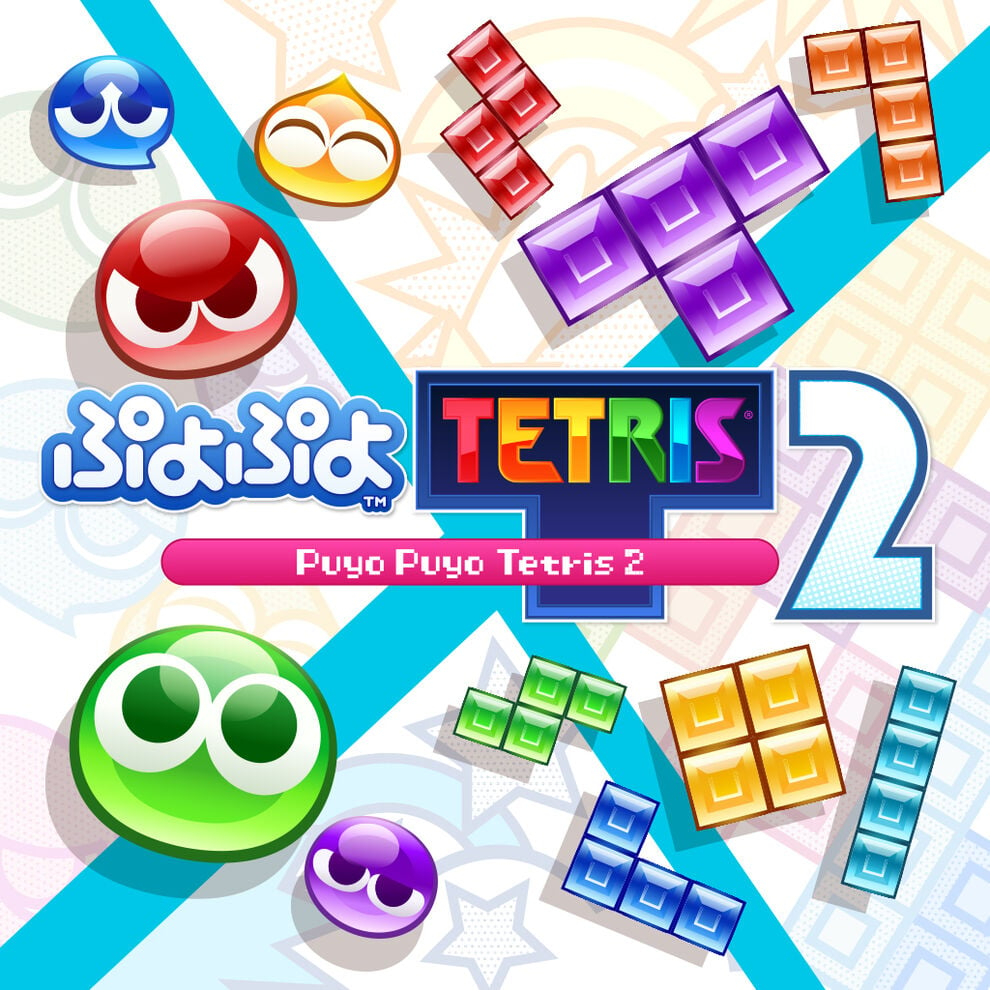
Spoiler commentary and discussion of Puyo Puyo Tetris 2 (game)
Puyo Puyo Tetris 2" is a collaboration between "Puyo Puyo" and "Tetris", the action puzzle game released by Sega in 2020. Like its predecessor, "Puyo Puyo" can be played against "Puyo Puyo", "Tetris", and "Puyo Puyo" versus "Tetris", and the presentation has been enhanced and a completely new battle format called "Skill Battle" has been implemented. The game became popular among distributors for its simple rules. The storyline is a continuation of the previous game.
Read Article
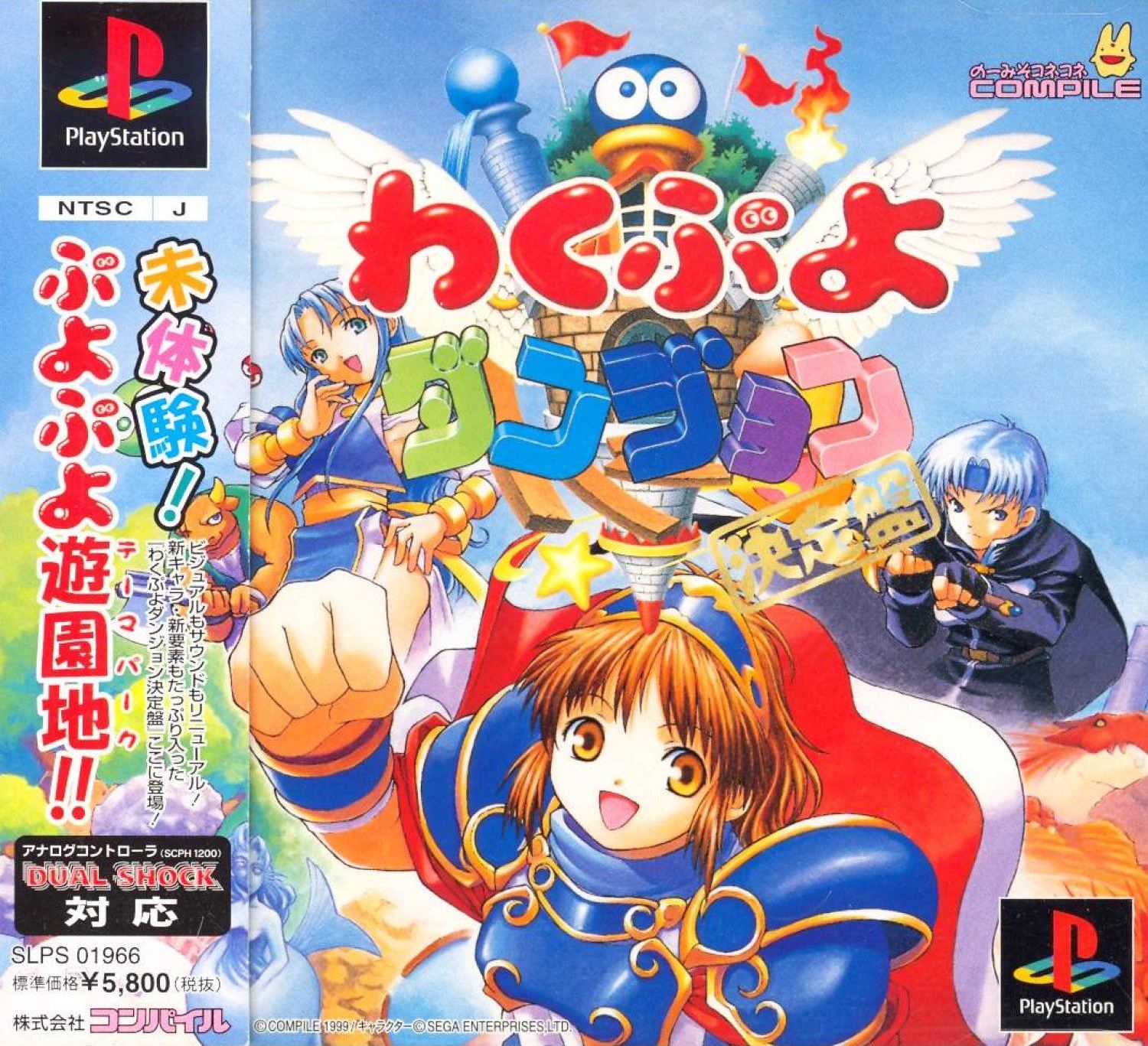
Waku Puyo Dungeon Decision Panel (Waku Puyo Puyo Dungeon) Spoilers and Discussion Summary
Waku Puyo Dungeon Decisive Edition" is a roguelike game for PlayStation released by Compile in 1999. Although the game is named after the classic puzzle game "Puyo Puyo," it is not a puzzle game, but rather an RPG in which the player selects one of three characters to play as the main characters and attempts to conquer a dungeon. The three main characters, Aruru, Leroux, and Shezo, enter a theme park where they are told there is an "amazing magic item" somewhere. With high expectations, each of them embarks on a great adventure in the theme park, which is lined with mysterious dungeons.
Read Article
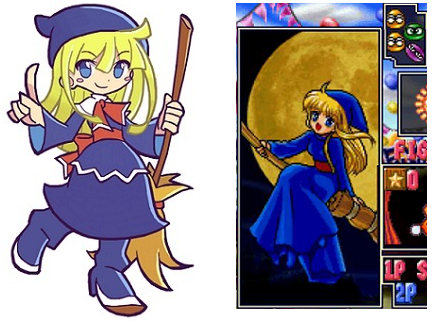
Characters Then and Now! ~PuyoPuyo Edition~!
The game has been in existence for decades. As the series continues for a long time, the characters also change. So in this article, we will compare the characters of the Puyo Puyo series, now and then. The series has undergone a lot of changes, so please take a look.
Read Article
The origin of Puyopuyo characters, girl version
The very popular Puyo Puyo series. Many of the female characters are beautiful and lovely. There are a few names here and there that I have heard of, so I wondered how they were arranged, and tried to track down the original story.
Read Article
The origin of "Puyopuyo" characters
Puyo Puyo" remains as popular as ever. Here is a summary of the character's original story.
Read Article
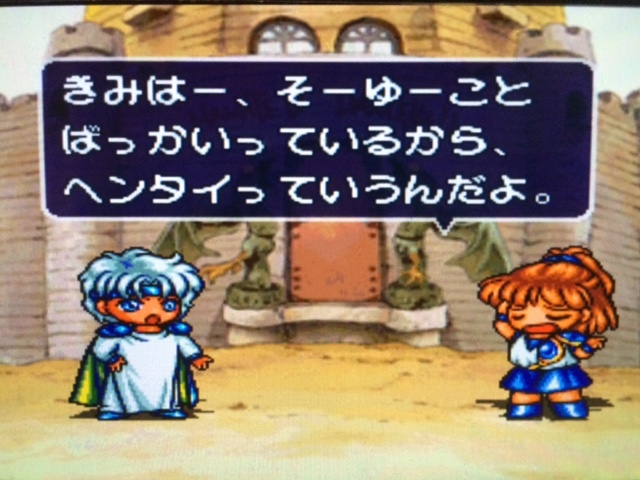
The treatment of Shezo Wiggy (pervert) in "Puyopuyo.
Do you know the character Shezo Wiggy from "Puyopuyo"? He is, to my surprise, a genuine perverted character (plus an idiot) who has not changed at all since the beginning (laugh). We have tried to unravel Shezo's perversity as well as his various unique characters.
Read Article
The entity of the "Puyopuyo" creature
Puyo Puyo" is one of the most popular falling object games. This time, I would like to think about the character "Puyo Puyo" rather than the game itself.
Read Article
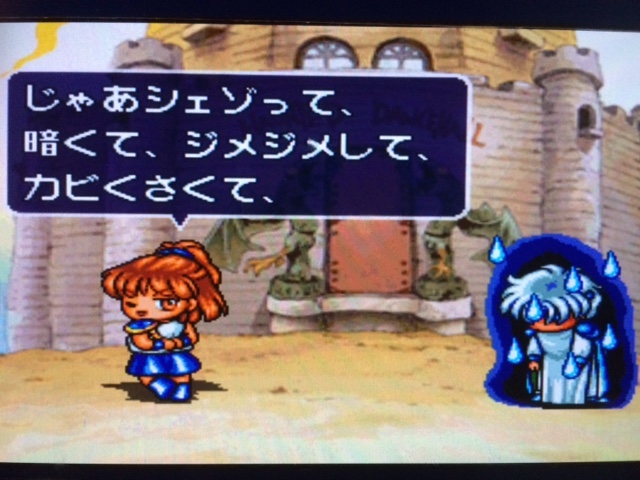
Now is the time to see the "Puyopuyo SUN Decisive" comedy.
SEGA's popular "Puyo Puyo" game, "Puyo Puyo Fever," is now the mainstream, but the offset and prototype of the game was in SUN. The classic "Puyo Puyo" pre-game comic dialogue has been fully voiced since then! The popular stories of the time and the old-fashioned blurts and tsukkomi are so unique and funny that you can't help but laugh at them. This time, we have compiled a list of such manzai from "Puyo Puyo SUN Decisive Disc".
Read Article
Tags
Contents
- Outline of "Puyopuyo
- Synopsis and story of "Puyopuyo
- Game System of "Puyopuyo
- basic rule
- versus rules
- game mode
- Puyopuyo by yourself
- Puyopuyo for Two
- Puyopuyo tokoton
- Riddle Puyo Puyo
- Characters in Puyopuyo
- arul najjah
- Arul Najjah's Chain of Custody Voice
- carbuncle
- Carbuncle chain voice
- Satan
- Satan's Chain Voice
- Leroux.
- Leroux's Chain Voice
- Shezo Wigy
- Shezo Wigy's Chain Voice
- amity
- Amity chain voice
- Rafina.
- Rafina's chain of voice
- SIG
- Sig's Chain Voice
- apricot (Prunus armeniaca)
- Ando apple chain voice
- Introduction to the "Puyopuyo" series
- Puyo Puyo" series
- Pu-Yo Pu-Yo
- Puyopuyo Street
- Puyopuyo SUN
- sound of something squishy going round and round
- Fever" series
- Puyo Puyo Fever
- Puyo Puyo Fever 2
- Puyo Puyo 7
- Backstories, Trivia, and Small Stories/Episodes/Anecdotes of "Puyopuyo