
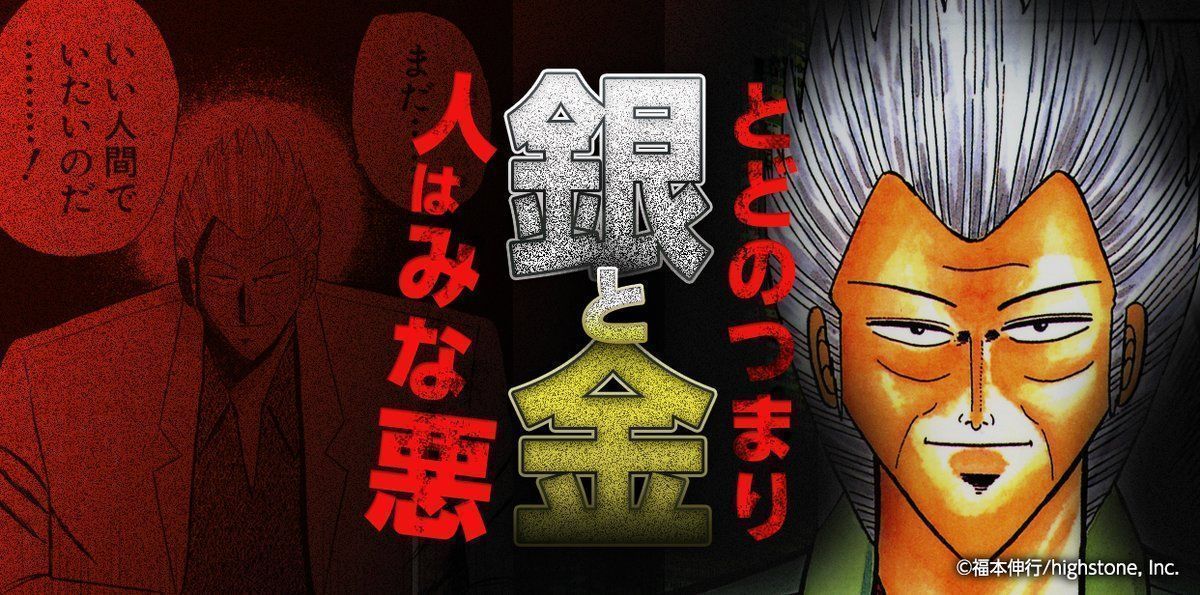
Silver and Gold" is a manga by Nobuyuki Fukumoto serialized in "Action Pizzazz" (Futabasha) from 1992 to 1996, as well as a TV drama and V-cinema based on the manga. Tetsuo Morita jumped into the underworld after meeting Ginji Hirai, a man who controls the underworld business world called the Silver King. The film depicts their deadly money wars, including stock speculators' wars and huge gambling, in pursuit of the dark veins of money that are groaning in the post-bubble era.
Outline of "Silver and Gold
Silver and Gold" is a manga by Nobuyuki Fukumoto serialized in "Action Pizzazz" (Futabasha) from 1992 to 1996, as well as a TV drama and V-cinema based on the manga.
Tetsuo Morita jumped into the underworld after meeting Ginji Hirai, a man who controls the underworld business world called the Silver King. The film depicts their deadly money wars, including stockbroker wars and massive gambling, in search of the dark veins of money that are groaning in the post-bubble era.
The series of "Kaiji" became so busy that it was put on hiatus at the 11th volume of the book, with the story still in progress. Even today, there are no plans to resume the serialization.
The story of "Silver and Gold
Speculative Stocks Edition
Tetsuo Morita spends his days doing day labor and gambling. When he helps a man named Hirai Ginji at a racetrack, he finds himself in the underworld where crooks roam in search of money.
Morita's first big job as a member of Ginji's faction is a stock "war". The "war of attrition" is a battle between the mastermind side, which purchases large quantities of stocks and intentionally raises the stock price in order to sell them off, and the corporate side, which tries to protect the stocks.
Ginji and his team find out that the mastermind behind the scheme is Tetsu Umetani, the head of the Maruho Group, who has already run out of money. The goal is to freeze the loan to Asahi Japan by exploiting the weakness that Takeshi Domon, the president of Teinichi Bank, the main bank of Asahi Japan, has been illegally funneling money to his son-in-law, Kaido Masayuki, a member of the Diet. As planned, Ginji and his team obtain a tape of a conversation that confirms the corruption, but while negotiating with Kaido for the tape, they are abducted by a gang that Kaido has called in.
Morita manages to escape with the tape and plans to rescue Ginji and the others. After meeting and negotiating with Atsushi Izawa, a member of the Democratic Party, who was introduced by Umetani, Morita promises to release Ginji and the others on the condition that the tapes of their conversations be handed over to Izawa. Soon after, Ginji and the others were released, not to Morita's credit, but because Ginji succeeded in persuading Domon and the others to work together to establish a system to "eat" the Japanese rising sun. Rather than trying to weaken Nihon Asahi by cutting off Teinichi Bank's financing, as had been the original plan, Morita and Domon were able to work out a mutually beneficial arrangement (except for Nihon Asahi) by having Ginji and the others purchase a large number of shares they owned at a moderate price with Teinichi Bank's financing. Morita's rescue operation seemed to have ended in vain, but it turned out that the secret meeting tape he was supposed to have given to Izawa was still in his possession thanks to a trick by Morita using two cassette decks. The war of attrition comes to an end with the great success of leaving behind not only the money obtained from the stock market, but also the evidence that could lead to the weakness of Teinichi Bank and a big politician.
Art Dealer, Nakajo Edition
After the war, Morita managed to get out of a fight to the death with Kenji Aruga, a murderer he had to confront on a job related to a gang, when Ginji visited him and said goodbye. When they meet again, it will not be as subordinates, but as partners. Promising to meet again when Morita becomes a full-fledged professional, Ginji leaves Morita.
Morita, now alone, spends his days in the lobby of a prestigious hotel, listening to the conversations of business people in order to find some clue to increase the small amount of money he received as a parting gift. He is in the lobby of a prestigious hotel, listening in on the conversations of business people, trying to find some clue to increase the small amount of money he has received for his parting gift. The art dealer's name was Akio Nakajo. Morita sets out on a mission to frame him and extract a large sum of money.
Morita, who has no connection to Nakajo, begins by getting acquainted with him, and when the opportunity presents itself, he closes the distance between him and Domon, the president of Teinichi Bank, by showing that he is on good terms with him. With the help of Kawada Sansei, who has become a friend of Morita's since that incident, the two continue with their mission and succeed in procuring three paintings. One was a genuine Cézanne work, "View of the Jas de Bouffant," said to have a market value of 600 million yen, which they obtained from Domon's office, the key to this operation, by replacing it with a forgery, another was a forgery commissioned from a professional forger, and the last was an inferior quality forgery by Aoki, an artist whose own works had been heavily criticized by Nakajo. Aoki, an artist whose own work had been heavily criticized by Nakajo.
Morita is ready, and he proposes a game to Nakajo. The offer was to buy one of the three paintings prepared by Morita and his team for 50 million yen. If he chooses the genuine painting, he will be able to buy a painting with a market value of 600 million yen for 50 million yen, an unbelievable deal. However, there are a few conditions that must be met. First, one of the three paintings had to be covered with a cloth so that the viewer could not see the painting at all, and he had to be able to see it from a distance of five meters.
At first, Nakajo had overwhelming confidence in Cézanne, even saying that Cézanne was his life's work as a painter, but his unique sense of tension and self-doubt made him lose faith in his own powers of observation, and he spent all the money he had on the purchase of the distance. However, he still cannot trust his own eyes to make a decision, so he chooses a work hidden by cloth, not based on his "gut feeling" at the first viewing, but on the "logic" that there is no way his own eyes, which have been watching Cézanne for decades, could be exposed to a real Cézanne work. However, the work was the poorest quality forgery that Aoki had ever painted. Morita splits the 50 million yen he paid for the forgery and the 350 million yen he paid for the distance and other expenses with Kawada, and ends up with a huge sum of 200 million yen.
Poker Edition
Due to a difference in their gambling policies, Morita and Kawada end up working together again, and Morita is left alone. Then, Mio Ito, a female waitress at his favorite coffee shop, tells him about a high-rate gambling game at a certain bar. The game is poker. There are three rich sergeants who win a lot of games in a row, probably by cheating. Morita, intrigued, decides to accompany Mio and her friend who are going to play with them that night.
At first, the game is a very healthy one, with winners and losers, but soon the atmosphere changes. Both players, who appear to have a winning hand, keep raising, and the betting finally reaches 320,000 yen, the maximum amount Mio and her friends can hold. The three leaders, however, declare another raise and add 10 million yen to their bets. He then forces the girls, who have no such money, to choose between promising to go out with him for a night in exchange for an IOU or to drop it. Morita reacts to Mio and the other girls' confusion by using the rate to overwhelm them. He takes out of his bag a portion of the 200 million yen that Nakajo had extorted from him, and begins to pile it on top of the bag. Unable to deal with the unexpected amount of money on the spot, Saijo and the others are unexpectedly crushed by the rate. Saijo's pride is hurt, and he promises to fight again, but Morita's side ends up winning the fight.
The day was changed, and both sides were ready for the revenge match. As the game progressed, Morita began to understand his opponent's cheating tricks. The trick is a bar counter with a see-through mechanism. The bartender uses a mirror at his feet to see through the counter and tell Saijo's friends the contents of Morita's card with a pre-arranged sign, such as the placement of the glasses. The associates would then pass this information to Saijo's back with their fingers so that he would know Morita's card without showing any distrustful behavior.
Morita, who had seen through the cheating, waited for his chance, and finally got his chance hand. With a straight or a flush, or a change of one card, Morita grabbed the "J" of spades for a straight, but was dealt a spade. However, the dealer dealt "Q" of spades. Morita suddenly declared a raise. The game was now no longer about cards, but about how much more cards he could stack than his opponents. Saijo piles up cash one after another with the financial support of the manager of a local credit union, who has a close relationship with his parents' company, and Morita with the financial support of Yasuda, a senior member of Hirai's faction. I'm not going to put up a penny more, and I'm going to call. If you don't want to accept this call, I will pay you 100 million yen as a penalty to end the game. And if you don't even accept that, I will have to call the police. Saijo, who had been informed that Morita's hand was a pig, had no choice but to settle for the 100 million yen penalty, but here Morita unexpectedly made the call. The game was now back on the line of card contents. Saijo, nervous about Morita's card swap, opens his cards: two pairs. Whatever the hand was, it should be stronger than a pig's. However, Morita opened his hand with a flush, which was formed by the "J" of spades, which he should have discarded. Saijo is the first to check the changed card. Saijo accuses Morita of cheating with two J of spades, but Morita is unmoved. More importantly, how did he know that the changed card was the "J" of spades, which is necessary to make a flush? Saijo is at a loss for words when asked this question. Morita, who had discovered the cheating by using a counter that allowed him to see through it, had disguised the changed card by attaching his own playing cards and the regular discarded card by hand sweat in order to mislead the player. It was an act that was on the verge of cheating, but basically no loss or gain for anyone as long as the changed card was not peeked at. Saijo fearfully checked the card, and the legitimate discarded card appeared from behind the "J" of spades. This confirms Morita's victory. In one night, Morita had made a whopping 900 million yen.
Seikyo Mahjong Edition
Morita, who has been recognized for his growth through successive victories against Nakajo, an art dealer, and Saijo, a bonbon, and others, is presented with his next challenge by Ginji. Morita's opponent is Jin Kuramae, the chairman of Seikyo, one of Japan's leading corporate groups. Morita and his team will compete against each other, betting that if they lose, they will be "kept" like animals in a cage by Kuramae.
The game is "Seikyo Mahjong" with original rules added. The basic rules are the same as in regular mahjong, but the feature of this game is the deposit chips that must be paid to the field as a participation fee for each Tsumo. The chips start at 1,000,000 yen per game, and each time the turn comes around, the player has the option of doubling the chip amount or not. At the end of the game, the top player gets all the deposit money. A special rule is the yakuman shuugi, which is calculated by multiplying the participation fee and the deposit by 1, with 10 million yen as the standard. For example, if the participation fee is 4 million yen and the deposit is 1.2 billion yen, then 0.4 x 1.2 billion yen, or 480 million yen in congratulatory gifts will be paid in addition to the deposit.
In the first half of the game, Morita lost sight of himself in the face of the overwhelming power of Kuramae, who was well versed in Seikyo mahjong, and suffered a series of defeats, but after a short interval, he regained his strength and played the decisive move in the southern fourth game of the third round. After receiving Kuramae's first reach, Morita made three sets of toitsu: white, hachi, and chu. Morita boldly faced the riichi, and pon-pon the "White" from Kuramae, who had no choice but to Tsumo off the unnecessary tiles, followed by a "Hatsu" from Ginji, who played the supporting role, and in the blink of an eye, Morita was tenpai with Yaku-Man Dai-Sangen. With the jumped-up deposit and the participation fee tip, the final yaku-man celebration turned out to be an astronomical 3 trillion yen. Kuramae, who has completely lost his chance to win the hand after Morita and Ginji consecutively declaring a concealed kong, decides to add a chip to see where the "middle" tile is located and tries to see the king tile (the part of the tile that will not be used until the end of the game). However, Ginji allows this and discloses it (not all of the tiles, but only the lower part). There is no "middle" tile there, and he also opens his own tiles (with the bottom half hidden), except for the four dark kong "8-tsu" tiles that are already on the table. There is no "中" in that hand either, and Kuramae's critical situation becomes critical. Morita's subordinate makes him declare the cheaper hand, the one that is not yaku-man, but Morita refuses to win the triple-man hand that would have put him in the lead in the halfway house. With Morita's determination to win the game and keep Kuramae alive, Kuramae is suddenly faced with a life-and-death gamble, and he asks to "get off the board. Morita, who had been prepared to die with Daisangen, firmly rejects the offer, but finally, with the persuasion of Ginji, he agrees to Kuramae's demand and the game is over. Morita was not satisfied for a while, but when the game was over and he was breaking down his hand, he gasped at the sight of the four concealed kong that Ginji showed him. The four tiles, all of which should have been "8 Tsutsu", were both flipped over and the two tiles on either side were both "Nakas". It is revealed that Ginji went to the trouble of revealing his arrangement to Kuramae because he knew that there were no more "Naka" tiles left in the pile, and that he hid the lower half of the tiles because he took advantage of the design feature of Tsutsuko, which cannot be identified as "8-tsutsu" only by the half of the tiles. Ginji's trickery, which he saw that Morita's "resolve" would make Kuramae draw down his game fever, won him 300 billion yen (50 billion yen in cash plus 250 billion yen worth of senators' claims held by Kuramae) as a penalty payment.
The Divine Intentions
While Ginji, along with Izawa and others, is in the dark over a political change, Morita is asked to take on a mission to rescue an elderly man involved in a certain family disturbance. The trigger was the hospitalization for examination of Kamui Shuho, the chairman of Kamui, a major home appliance manufacturer. The results are normal and he was supposed to be discharged in a few days, but Shuho's sons embrace the doctor and imprison him in the hospital. The reason for this was that the rumor that the patriarchal rights were going to be handed over to someone other than the sons became a reality, and they tried to bury the patriarchal rights, including those of Shuho. The story goes that Shuho, who was cut off from contact with the outside world, finally sent an SOS message to the outside world through Saori Tanaka, a nurse at the hospital.
The three succeeded in taking advantage of the confusion caused by the small fire and headed for the hotel "Sky Palace Kamui," which was to open in a month's time. After arriving at the hotel, Shuho calls in the Matsui-gumi, a gang that he has been working with, to secure the soldiers, and then he calls his three sons who participated in the plan. The heir to the patriarchal right is still undecided, and Shuho begins to tell them that there is still a chance for the three of them if they reflect on what happened this time. He then offers Shuho a gun and asks him to commit suicide. Furious, Shuho calls for help, but the Matsuigumi soldiers, who have actually turned on him, do not move. Morita takes advantage of the moment and manages to escape with Shuho and Saori, but Shuho is captured again due to a treacherous act by Saori, who was actually in communication with Katsuki and his men. Although the Matsui clan is unable to directly interfere in the family feud, the hunt for Morita by three men with pistols begins.
The second son, Katsunobu, who was not as prepared to enter the fight as Katsuteru and Katsuyuki, was taken advantage of and beaten up. The matter seemed to have been settled. However, the situation took an unexpected turn.
The Matsui-gumi members who had been told that the situation was under control and had made arrangements to escape were supposed to be in the elevator, but instead found a dead body and the words "Extermination of the Kamui Family" written in blood. The culprits were Katsuhiro, the fourth son, and Kunio Yoshizumi, the fifth son by a half-sibling, who were not as good as his three excellent older brothers. Compared to their superior older brothers, they had been discriminated and mistreated by Shuho's educational policy, which placed the highest priority on winning. After shooting Katsuyuki to death, Katsuhiro orders Shuho and Katsuki to kill each other. However, Morita, who knows their situation, tries to persuade Katsuhiro and the others to save them. Katsuhiro refuses to be persuaded and points a gun at Morita, but hesitates to fire because he might accidentally shoot Kunio, who is restraining Morita from behind. Katsuhiro takes advantage of this opportunity and is stabbed in the throat by Shuho, killing him. Kunio, who has lost his beloved brother with whom he has been going through a hard time, forgets himself and becomes enraged, and tries to strangle Shuho with a pistol in his hand. However, Morita restrains him, and when he ducks for a moment, Shuho shoots him. He is cut off, leaving behind the words, "...I was discriminated...". The night's incident, which began with Katsuteru and the others' plan to kill Shuho, ends in this unexpected way.
Morita is frustrated that someone like Shuho survived through his own efforts, and retires from the underworld after this night, saying to Ginji and the others, "I'm tired of babysitting the bad guys.
Sashi Race Edition
More than a year has passed since Morita retired. At the racetrack, Ginji and his friends had recruited a certain horse racing fanatic, a young man named Ryohei Kawamatsu, into their ranks. He is a key figure in the game. The game was a secret horse race against Yoichi Kono, the head of the Ministry of Agriculture and Fisheries, the regulator of the JSA (Japan Societies of Athletics). The rules were simple: Six horses from each camp would be entered in the Tokyo Cup, a GII race held at the end of the year, and the camp that finished first would receive 30 billion yen.
Kono used his connections, financial resources, power, and all other means to seize the leading horses. The horses lined up for the Arimakinen two weeks later, including NARITABURAION, the absolute champion who won the Satsuki-sho, the Derby, the Kikka-sho, and the Arimakinen in the previous year. On the other hand, the only horse that Ginji was able to add to his team was that year's Derby horse, TAYASTAKESHI. The imbalance in strength was obvious, but he succeeded in attracting Yukinori Okabe, the strongest jockey in Japan at the time, to his camp, who shared his manly spirit and courage. Ostensibly, these were the only two forces at play. However, the crux of Ginji's strategy lay elsewhere.
The day of the race arrived. After the two parties exchange the keys to the truck loaded with 30 billion yen, Ginji calls out to Kono, who is about to head for the paddock. He suggested that they check with binoculars, as a man who appeared to be Kono's fourth son was about to be secured by Ginji's friends. Kono is wary that Ginji, seeing no chance of winning, will use the hostage to claim the game is null and void, but the demand made is unexpectedly to disarm the bouncers around him. He says this is to prevent the result of the match from being annulled by violence after the victory is confirmed. The man who is released is Ryohei, who looks like Kono's son, but is clearly a different person. While this unexplained scene is playing out, the paddock has finished showing its face, and the race is about to begin.
In the early stages of the race, both sides were calmly marking the horses of interest that they had been watching out for. As the race approached the third turn, Okabe showed his skill and dodged the markers to move ahead. As the race entered the final straight, he took the lead, but Okabe's stirrups broke and Taya Stacheshi fell back as Narita Lion showed his true colors and the Kono camp's tricks were put in place in advance, and the race appeared to be decided. However, at the last moment, Ginji's trump card, which had been hiding in the shadows, came out. Ernes Age, a horse that had been regarded as a waste of an open horse, or more precisely, a horse with a physique similar to the switched Ernes Age, lined up at the front of the field. It was Ramtal, a winner of the three major European races, who had been brought in from outside the country, out of reach of Kono's power, using Ginji's personal connections. It is revealed that the reason he went to the trouble of disarming the horse by posing as a hostage was to keep Kono and his trainer away from the paddock, the last chance to see the horse up close and personal. After a fierce battle that went all the way to a photo finish, Ginji was victorious by a nose over Ramtaru.
Main characters
Ginji Hirai
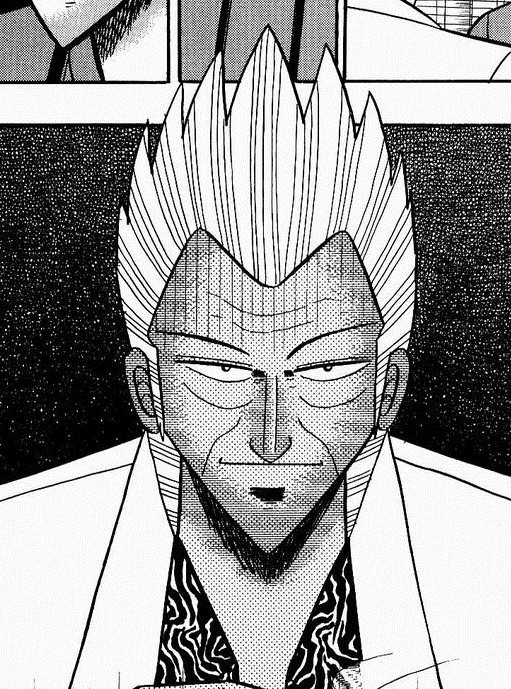
One of the main characters of this work. A fixer in the underworld, he is known as the "Silver King" for his outstanding abilities in all aspects, including his ability to take action, control people's hearts, and gain insight. His greatest ambition is to control the country's economy by using politicians and other influential figures from various fields. He had been trying to bring Morita into the underworld and train him to be his successor, but when Morita retired, he lost "something in himself" and decided to retire. However, when Morita wins a close race against Kono, he feels an invisible will that pulls him back to the game, and he decides to continue his work. However, since the serialization of the work itself was suspended at this point, what happened after that is not depicted.
Tetsuo Morita
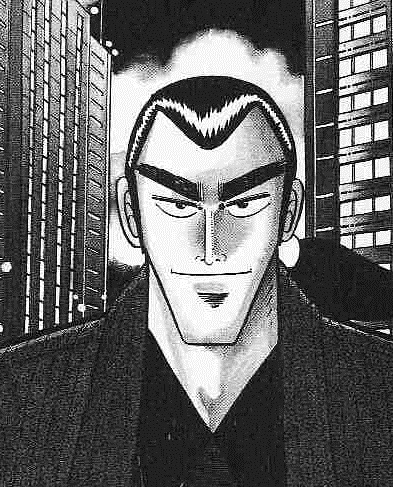
He is the other main character of this work. At the time of his first appearance, he was just a "no good" young man with a gambling addiction, but after he was invited by Ginji and decided to live in the underworld, he began to show his talent for taking advantage of his opponent's weakness and gained Ginji's trust as a partner. However, he tried to save Katsuhiro and Kunio in the battle over the Kamui family disturbance.
However, he is unable to save Katsuhiro and Kunio, whom he tried to save in the battle over the Kamui family disturbance, and is disappointed that he helped Shuho, the cause of their unfortunate lives, and decides to get out of the backroom business.
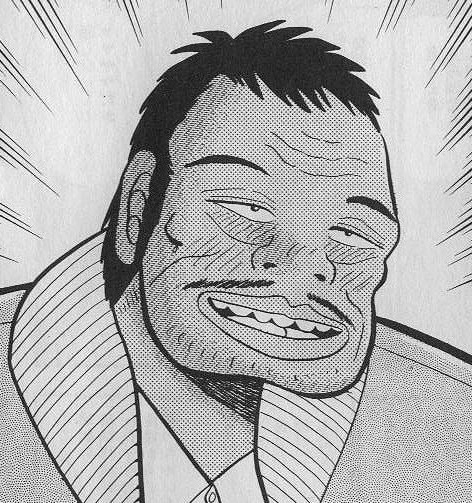
Tetsu Umeya

Related Articles
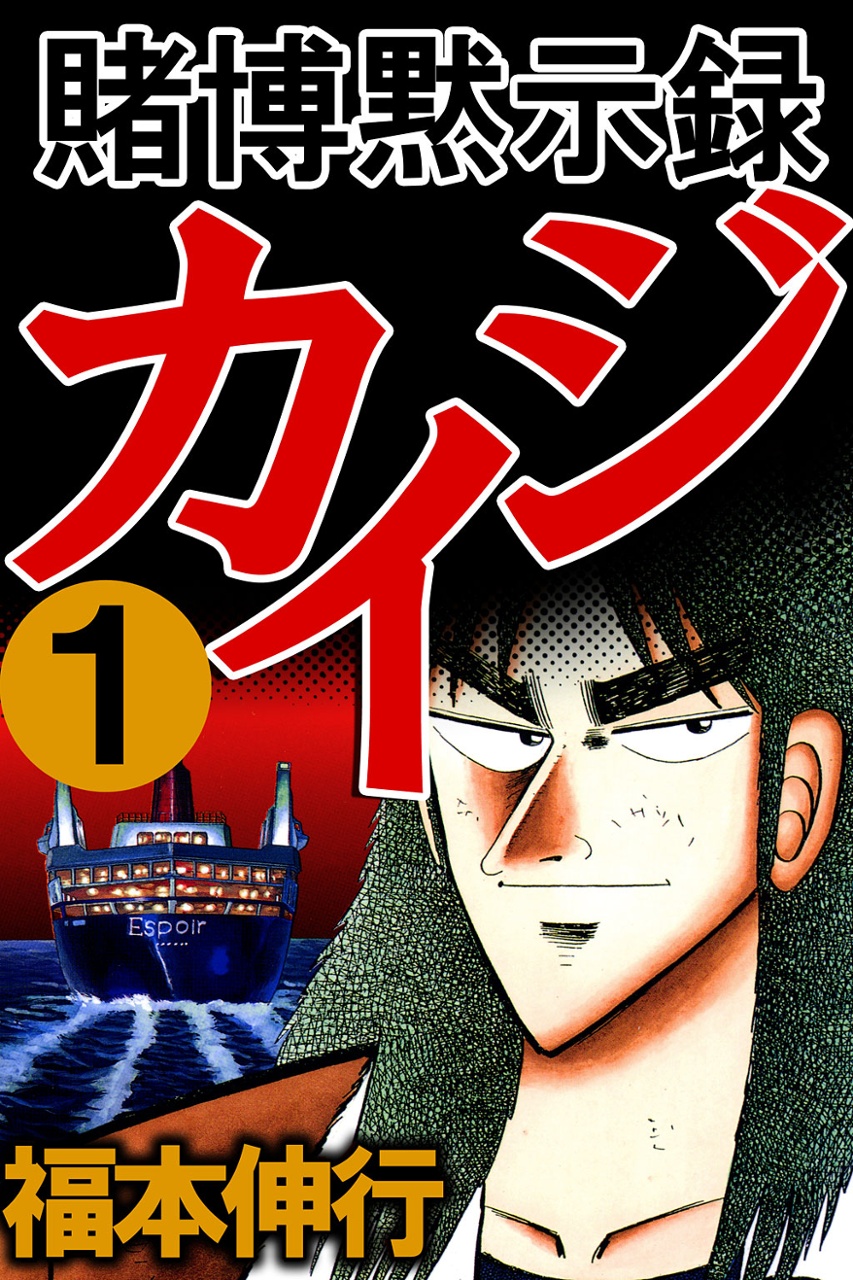
Spoiler commentary and discussion of Gambling Revelation Kaiji (Nobuyuki Fukumoto)
A gambling manga by Nobuyuki Fukumoto serialized in Weekly Young Magazine from 1996 to 1999, as well as an anime and movie based on the manga. The story follows Kaiji, a young man who spends his days working, drinking, and gambling, and who enters the world of gambling to pay off the debt of his former part-time job partner as a guarantor, and then takes on a variety of gambling challenges.
Read Article
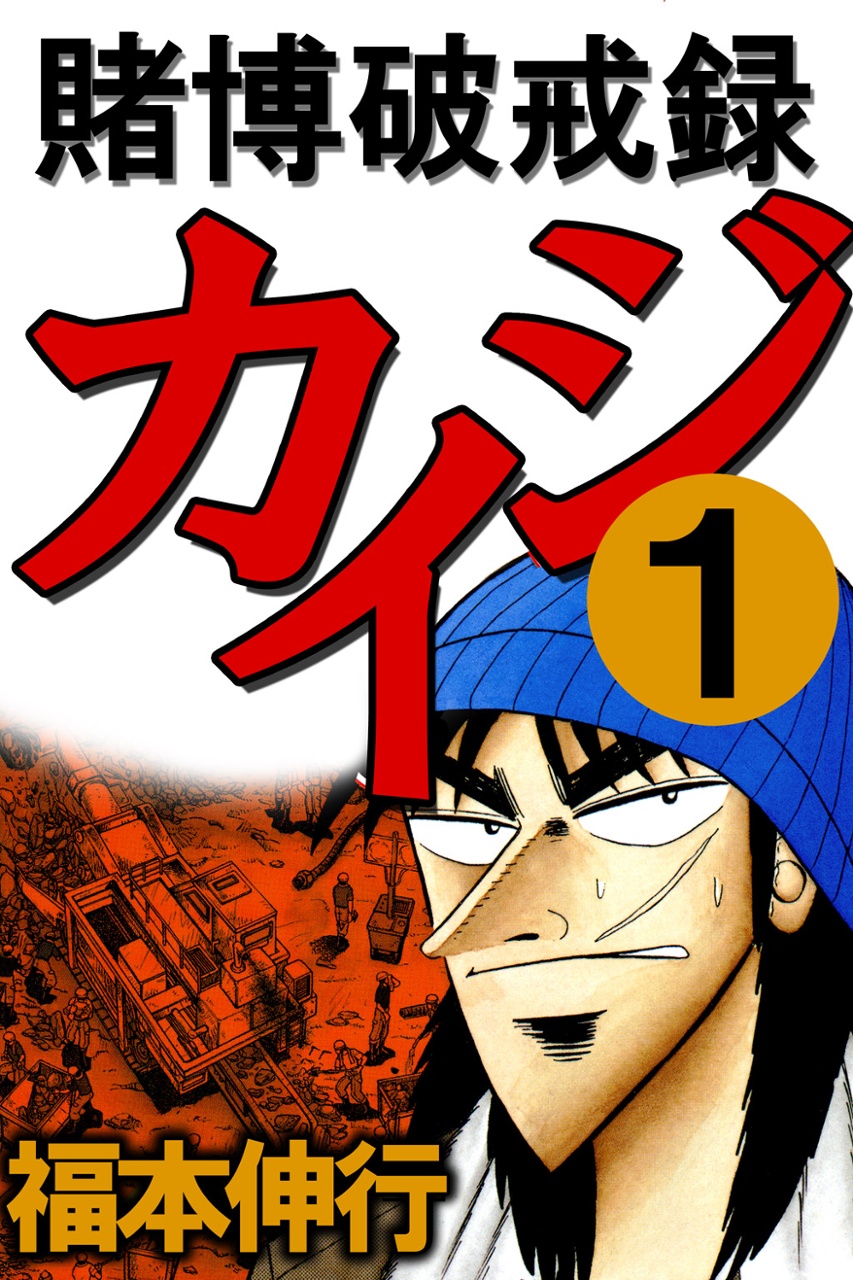
Spoiler commentary and discussion of Gambling Breakthrough Kaiji (Nobuyuki Fukumoto)
A gambling manga by Nobuyuki Fukumoto serialized in Weekly Young Magazine from 2001 to 2004, as well as an anime and movie based on the manga. It is a sequel to the previous work "Kaiji: The Gambling Revelation," which depicted Kaiji, a self-defeating and helpless man who throws himself into the world of gambling to repay the debts of his former part-time job partner as a guarantor, and again shows Kaiji's struggle in the world of gambling.
Read Article
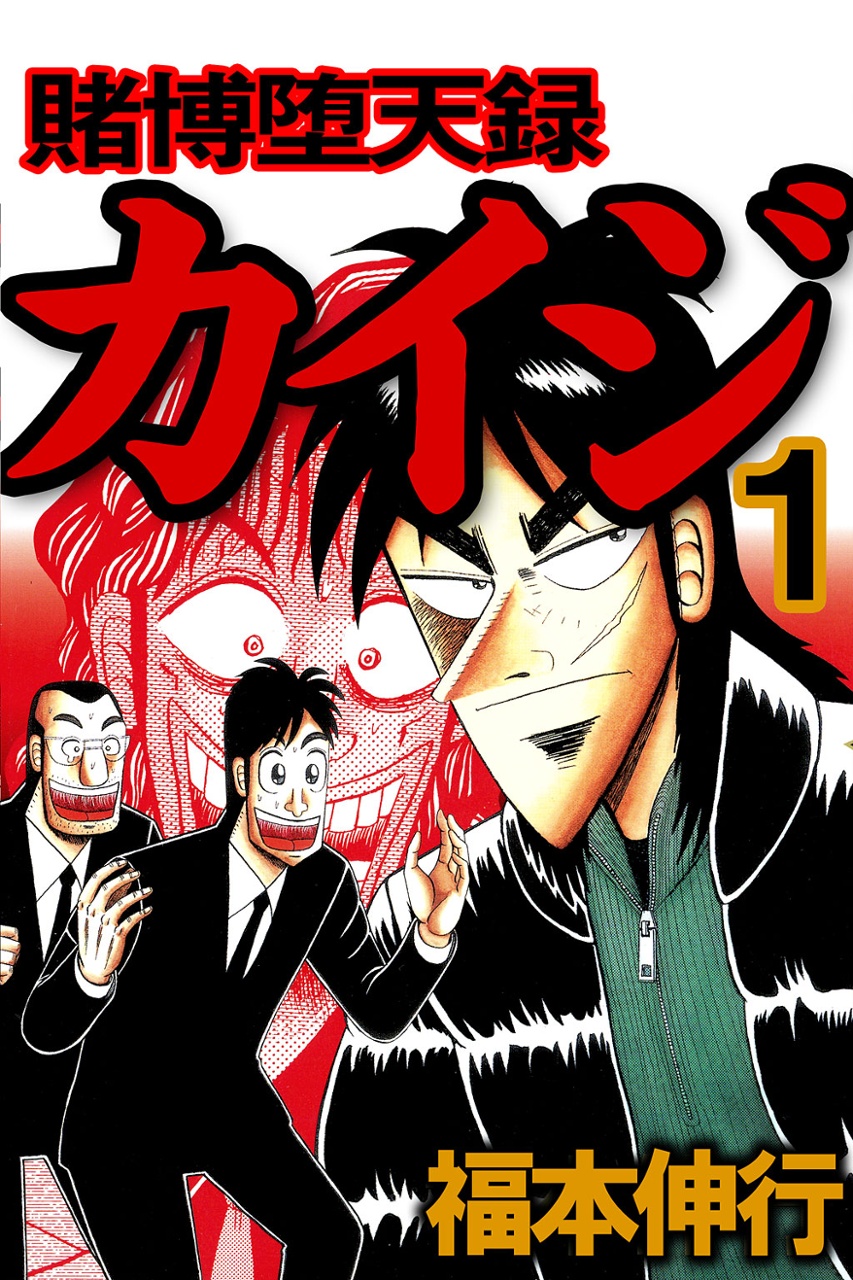
Spoiler commentary and discussion of Gambling Fallen Kaiji (Nobuyuki Fukumoto)
Gambling manga by Nobuyuki Fukumoto, serialized in Weekly Young Magazine since 2004. It is a sequel to "Gambling Revelation Kaiji," which depicts how Kaiji became absorbed in the world of gambling when he was forced to take on the debt of a former part-time worker as a guarantor, and how he was forced to work underground as compensation for his ballooning debt, and how he returned to the surface. The story again depicts Kaiji's struggles in the world of gambling.
Read Article
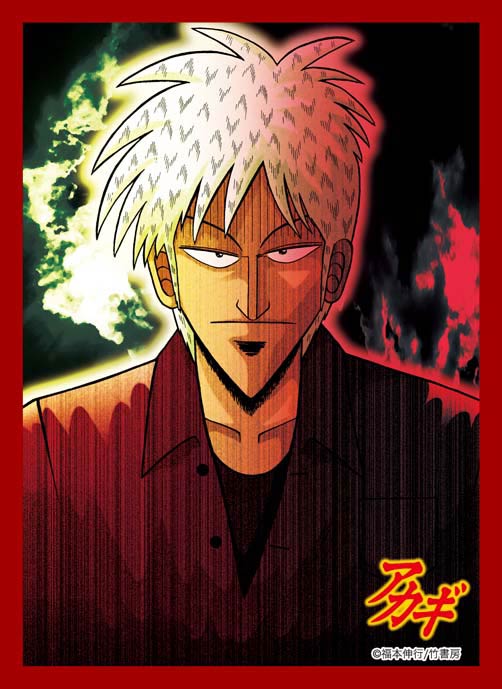
Akagi - The Genius Who Descended into Darkness (Nobuyuki Fukumoto) Spoiler Commentary and Discussion Summary
Mahjong manga by Nobuyuki Fukumoto. It was serialized in "Bessatsu Kindai Mahjong" (July 1991 issue). It was later transferred to "Kindai Mahjong". This is a spin-off work featuring the "legendary mahjong player" Akagi Shigeru, who appears in "Ten Tenwa Dori no Kaiohonji. The story follows young Akagi's encounter with mahjong at a mahjong parlor where he sneaks in to hide after an incident involving a gang of delinquents, and his competitions with a number of famous substitute mahjong players, culminating in a final battle with his ultimate enemy, Iwao Washizu.
Read Article
Spoiler commentary and discussion of Ichinichi Guroku Hancho (manga).
1 DAY OUT ROKU HANCHO" is a manga written by Tenharu Hagiwara (original story), Motomu Uehara and Kazuya Arai (manga), with the cooperation of Nobuyuki Fukumoto (manga). It is a spin-off of Fukumoto's masterpiece "Gambo Hakkairoku Kaiji" featuring Taro Ootsuki, a.k.a. Hancho, who is seen between the main character and Chinchillo gambling. The Teiai Group, a consumer finance company, has many bad debtors interned in an underground forced labor facility. The highest value work incentive option is a "one-day pass" to encourage them to work there. This is a gag manga about how Ootsuki, who frequently buys "one-day pass", enjoys his limited day.
Read Article
![Akagi] Nobuyuki Fukumoto Manga Quotes and Great Lines [Kaiji](https://renote.net/files/blobs/proxy/eyJfcmFpbHMiOnsiZGF0YSI6ODUyNzgzLCJwdXIiOiJibG9iX2lkIn19--330c1988e8df0fae5dc14e6ba0bb144beea5ccbc/SID0002540.jpg)
Akagi] Nobuyuki Fukumoto Manga Quotes and Great Lines [Kaiji
Nobuyuki Fukumoto is known for his many masterpiece gambling manga such as "Kaiji," "Akagi," and "Silver and Gold. Did you know that many of his works are filled with quotes that hint at how to turn your life around? We will bring you a number of such quotes and famous lines that will surely make you "zawa...zawa...".
Read Article
Seven Gambler Manga
"I learned to play mahjong from this manga. "I got a glimpse of the depth of the gambling world. I have compiled a list of manga that could be a bible for those who want to start gambling.
Read Article
[Trauma] A compilation of manga with painful scenes.
Manga is, after all, "pictures". Even so, the fact that the emotion of "pain" comes to mind when reading them is evidence of the writer's excellence in expression. So I have compiled a list of manga with "painful" scenes.
Read Article
Appetizing! Summary of "Manga Meshi
Whether it is a cooking manga or not, there are certain dishes in manga that are very appetizing. We have compiled a list of 10 such "manga meshi.
Read Article
![Memetaa] A compilation of various onomatopoeias that appear in manga!](https://renote.net/files/blobs/proxy/eyJfcmFpbHMiOnsiZGF0YSI6NzIwMCwicHVyIjoiYmxvYl9pZCJ9fQ==--cda9b94c960b9803180ac78dcbda543354772e0c/memetaa.jpg)
Memetaa] A compilation of various onomatopoeias that appear in manga!
In manga without background music or sound effects, various actions are accompanied by onomatopoeia. In this article, we will introduce some unusual onomatopoeias that appear in such manga.
Read Article
Tags
Contents
- Outline of "Silver and Gold
- The story of "Silver and Gold
- Speculative Stocks Edition
- Art Dealer, Nakajo Edition
- Poker Edition
- Seikyo Mahjong Edition
- The Divine Intentions
- Sashi Race Edition
- Main characters
- Ginji Hirai
- Tetsuo Morita
- Tetsu Umeya
- Takeru Domon
- Atsushi Izawa
- Akio NAKAJO
- Mitsunari Kawada
- Shinya Saijo
- Hitoshi Kuramae
- Hidemine Kamui
- Katsuki Kamui
- Katsuhiro Kamui
- Kunio Yoshizumi
- Yoichi Kono
- Terms of "Silver and Gold
- Golden Bridge
- Seikyo Mahjong
- Famous quotes, lines, scenes, and scenes from "Silver and Gold
- A person who cannot trust others is ultimately unable to trust himself or herself...!
- "It's just not nice to be a villain who can't reopen...Is it a good person to be lost...? Is it a great thing to be lost... or is it a great thing to be troubled...?"
- I'll load it..! Elbow high."
- I was discriminated against..."
- "Understand them as they 'want' to be understood...fall in...I've lost over a hundred people this way...from all walks of life..."
- television drama
- Outline of "Silver and Gold
- Main Cast