
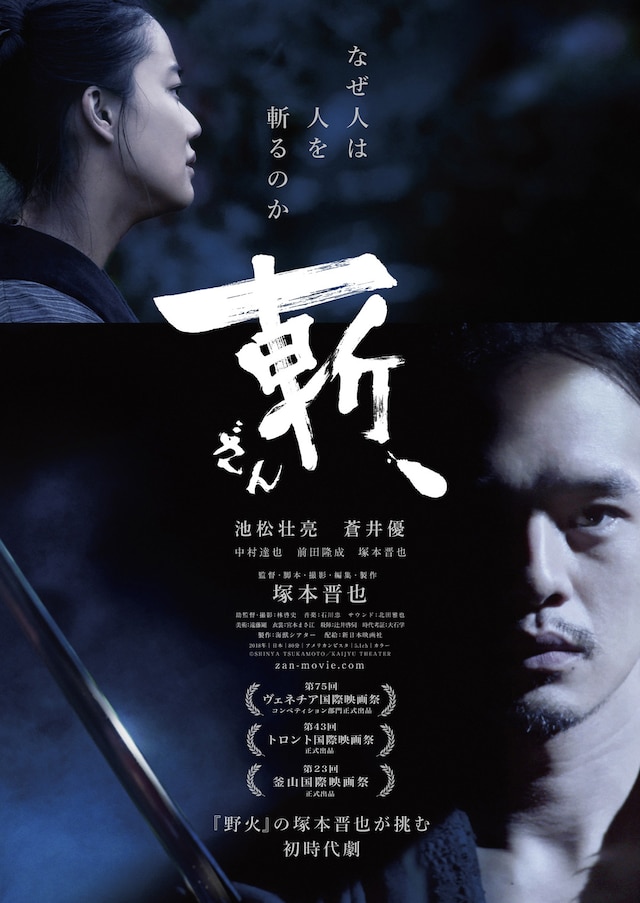

A period drama that spectacularly depicts the pain of slaying a man.
The first period drama by director Shinya Tsukamoto, internationally acclaimed for his unique depiction of violence.
In the late Edo period (1603-1868), a young ronin (ronin) living a peaceful life helping farmers in a rural village is invited by an elderly swordsman to make a name for himself in Kyoto on the eve of the Meiji Restoration. In a normal historical drama, the story of their journey to Tokyo would be the main focus of the film, but in this film, an incident occurs in the village before that, and the real-life murder makes the cause of the journey to Tokyo unimportant.
The incident in the village starts out as a minor squabble, and then, in no time at all, things get worse, and the horror of the gruesome killings is overwhelming, as if you could not see straight. The second half of the film centers on the clash between a young man tormented by his inability to cut and a swordsman obsessed with making him do it, as the two clash in their growing madness, which is followed by a daughter living an ordinary life in a farming village who has changed.
Sousuke Ikematsu plays the young man, and while the first half of the film has his typical calm and tranquil appearance, in the second half, he shows a spectacular form that has never been seen before. Director Tsukamoto himself, who plays the swordsmith, has a calm demeanor and a cool-headedness that exudes a madness that slaughters people without changing color. Above all, the inaudible scream of the daughter, who had been living an ordinary life in the village, at the end of the film is the highlight of the film, as if to condemn this story of the clash of madness in "slaying people" as nothing short of a tragedy.