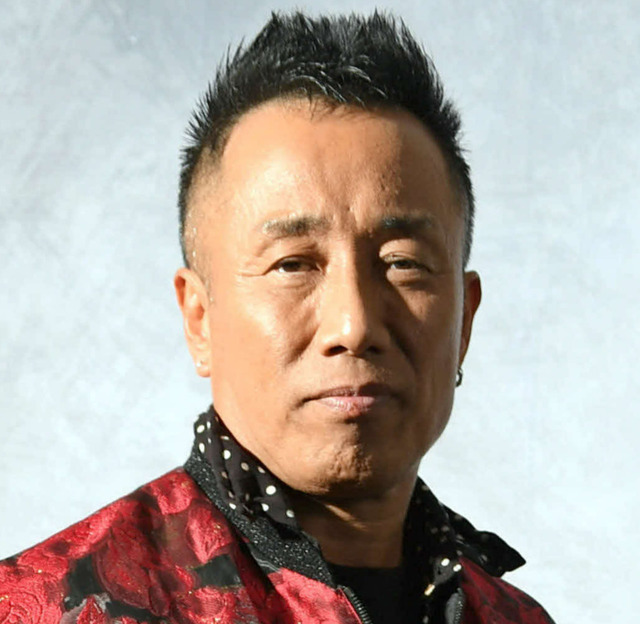
長渕剛

長渕剛

長渕剛(ながぶちつよし)とは、日本のシンガーソングライターである。1977年に『雨の嵐山』でデビュー。当時の名前の読み方は「ながぶちごう」だった。翌年、『巡恋歌』をリリース。同曲が本格デビュー曲として知られており、読み方も「ながぶちつよし」になった。
1980年にリリースした『順子』でオリコンチャート1位を獲得。翌年、当時アイドルとして活躍していた石野真子と結婚するも、1983年に離婚した。1988年には『乾杯』や『とんぼ』をリリースし、どちらもミリオンセラーを記録する大ヒットに。1990年には『NHK紅白歌合戦』に初出場を果たし、ベルリンから生中継で3曲を披露。
1995年、大麻取締法違反で逮捕されたが、処分保留のまま釈放され、不起訴となった。2011年に起きた東日本大震災の直後には、復興支援ラジオ番組を立ち上げ、自ら被災地に足を運ぶなどの活動を行った。2015年には、静岡県で約10万人を集めたオールナイトコンサートを成功させている。

Reviews, Ratings and Comments on 長渕剛

長渕剛
8

Learn more about living legendary musician Tsuyoshi Nagabuchi.

Tsuyoshi Nagabuchi is celebrating the 45th anniversary of his debut. We have compiled a history of him that makes him worthy of being called a living legendary musician.
Born in Kagoshima Prefecture on September 7, 1956. Starting with his debut song "Megurikoiuta," he has produced numerous hit songs, including "Cheers" and "Tombo," and has recorded 60 singles and 25 albums with total sales of over 20 million copies.
In addition to his singing career, he has also had a brilliant acting career, starring in dramas and movies.

In 2004, he held an all-night live concert in his hometown Kagoshima Prefecture. About 75,000 spectators gathered from all over Japan. Eleven years later, he held a second all-night live concert. Fuji, the highest mountain in Japan. In October 2025, the "Last Stage" will be held in Kagoshima Prefecture for a 9-hour live stage.

The first all-night live concert was 47 years old, the second 58 years old, and this third will be 68 years old. Even though this time the stage will be from noon to night, I feel that it will be an unprecedented challenge for a solo artist to perform a 9-hour live concert. While he has left behind many legends in the past, we can't take our eyes off this new stage. Let's keep an eye on his future activities.

長渕剛
8

He gives us various kinds of "power". Sometimes he heals us, sometimes pushes us forward, and such an artist is Tsuyoshi Nagabuchi!

One of the charms of Tsuyoshi Nagabuchi is that he gives us various "powers. This is because he is a groundbreaking artist who can enjoy each era (debut, middle age, and old age).
Another thing is his acoustic guitar performance. The unique singing style, steps, and the power of the lyrics will give you new discoveries as you listen to them over and over again.

First, I would like to introduce "Gyakuryu" from their second original album as a recommendation. At this time, her voice is characterized by sweetness and sadness, but she also has strength in her voice. Gyakuryu" is the kind of song that will push people who are about to do something in the future.

Next, we introduce their sixth album, "Heavenly Gauge," released in 1983. It is not only sweet and sad, but also austere, and one cannot help but feel its indescribable sex appeal.

It is no exaggeration to say that this is where I feel the most sex appeal, and the deeper you listen to the albums "Showa," "JEEP," and "Japan," released in succession since 1989, the more you get hooked on their charms. It is such an album.
After this, "Kazoku" and "Sora" follow with an indescribable austerity. The ultimate highlight is "ALL NIGHT LIVE IN SAKURAJIMA". If you are interested in Sakurajima, please watch the LIVE DVD. I am sure you will find its charm.

Other songs include "Black Train" and "Orange," which show the strength and tenderness of the band, even in their old age.

Last but not least, I would like to recommend this album to anyone who is trying something new, students, or young professionals.

長渕剛
10

Man of the Showa Era

Tsuyoshi Nagabuchi is a man of the Showa era. He has been mentally trained by singing among the yajis when he was young. His debut song was "Ame no Arashiyama," which was a song about a sad story of a long-distance girlfriend who went from Kagoshima to Kyoto to see him, but was rejected there. Although he was very confident in his work, it was arranged differently from how he wanted it to be, and moreover, it did not sell at all. When I listen to the song again, I realize that although she was only 21 years old, her singing ability was outstanding, indicating that she had a great deal of confidence in her singing from that time on. However, because she could not sell at all, she was forced to earn her living by singing at a local club, where she was forced to sing enka (traditional Japanese folk songs) and had beer bottles thrown at her. He was forced to sing enka songs and have beer bottles thrown at him. His calm observation of scary people at that time was utilized in creating violent dramas in later years.
He also has a strong image of muscular muscles, but he used to be skinny, and when he was 40 years old, he felt sorry for his skinny self and started to remodel his body. He could not even lift his own body weight, but he became able to lift a barbell weighing 100 kg. It took him eight years to achieve this, and his perseverance is astonishing. In this way, he has gradually improved his brand and is now a member of the company.

長渕剛
10

An absolute must-hear masterpiece.

When you think of Tsuyoshi Nagabuchi, "Cheers" and "Tombo" are probably the first two that come to mind.
In reality, however, there are many more great songs.
There are various types of his songs, including songs written from his own experiences and songs about world affairs, among which I like the message songs that cheer up the listeners.
In particular, I recommend "STAY DREAM," "HOLD YOUR LAST CHANCE," "myself," and "Toward Tomorrow.
These songs really encourage me when I listen to them when I am frustrated or depressed.
I myself was saved many times by his songs and I still listen to them often.
Of course, you can listen to his songs by renting his CDs or DVDs, but if you are interested in his songs, I strongly recommend you to go to his live performances.
I think you will understand what kind of person the real Tsuyoshi Nagabuchi is when you experience his songs live.
And you will be amazed at how the whole audience gets excited. Everyone sings loudly, everyone pumps their fists in the air, and in the end, everyone is completely burned out and everyone wants to go to the concert again.
Of course, some people may like or dislike the music, so please listen to the songs I have recommended first.

長渕剛
7

I hear you so deeply!

I am now 42 years old, and I have been listening to Takeshi Nagabuchi's songs since I was a child. I have sung many of his songs at karaoke and other events.
Nowadays, Tsuyoshi Nagabuchi has an image of a very muscular and macho man, but the Tsuyoshi Nagabuchi I knew in his younger days was the complete opposite of what he is now: he was absurdly slim and thin. Of course, the way he sang has also changed. In the past, he used to sing rather plainly into the microphone, but nowadays he uses his macho body to the fullest and sings in a wild style. He has also arranged his songs differently than in the past, and I think they have become more like Tsuyoshi Nagabuchi's songs.
There are so many songs that he represents, and all of them are masterpieces. One of his most memorable songs is "Hitotsu", which was written for the people in Tohoku who suffered from the earthquake a while ago. It is a song with a message that everyone should work together as one. I couldn't help but cry when I first heard it. I was so intoxicated by the lyrics and the song, which is typical of Tsuyoshi Nagabuchi. I also attended the famous Sakurajima Live before. It was a truly moving live performance, and I think it was a legendary live performance that is still talked about to this day.

長渕剛
10

A man who hasn't faded since his debut in 1976! Tsuyoshi Nagabuchi!

Tsuyoshi Nagabuchi is one of Japan's most well-known musicians. He has released a string of hit songs such as "Jun Koinka," "Junko," "Yuuji," "Rokunakomotte na ne," "Cheers," and "Tombo," to name a few.
Besides being a musician, Tsuyoshi Nagabuchi has also made a strong impact as an actor. He gave us a strong presence in "Family Game," "Dragonfly," "Bodyguard," and many others.

Born in Kagoshima Prefecture on September 7, 1956, Nagabuchi made his debut in 1976 with "Ame no Arashiyama," which was not a hit, but made his debut again in 1978 with "Jun Koinka," and his fifth single "Junko" became a big hit, reaching No. 1 on Oricon.
In 1978, at a live house in Kitakyushu City, Fukuoka Prefecture, he said, "I'm going to marry Mako Ishino! (They divorced in May 1983.) In 1983, he became an actor in "Family Game," and later played a strong yakuza in the drama "Tombo. My image of yakuza still reminds me of Tsuyoshi Nagabuchi in the drama "Tombo.
With hit songs such as "Rokunaimonjana," "Tombo," and "Shabondama," he became one of the most popular artists of the 80s and 90s.
More recently, he has expanded the scope of his activities into the field of art, holding his first exhibition of poetry and paintings at the Nichido Gallery in Tokyo in 1998. His appeal is not limited to music, but also extends to art and painting, and he is attracting even more support, especially from young people.

長渕剛
10

Musicians who move the heart

I would like to introduce my favorite musician, Tsuyoshi Nagabuchi. He is one of Japan's most well-known musicians, but his talent as an artist as well as a musician is amazing, and I can't help but look forward to seeing more and more of his work. Personally, I find Tsuyoshi Nagabuchi as an actor to be one of his charms that cannot be overlooked.

The works he has left behind since his debut, such as his representative songs "Junko," "Yuuji," "Tonbo," and "Shabondama," have not faded away with each passing generation. I first recognized Tsuyoshi Nagabuchi as an actor in the drama "Oyako Game" broadcast in 1986.
At the time, I had an image of Nagabuchi as a thin, light older brother, a far cry from his current muscular appearance. The theme song "super star" still leaves a strong impression on me 32 years later. The episode that I admire most about the legend of Tsuyoshi Nagabuchi that I know is when he said, "In the future, I will marry Mako Ishino! and he really got married.
In the drama "Dragonfly," which began airing in 1988, he went from the dreaded Tsuyoshi Nagabuchi and his impressions to the drama "Bodyguard," which began airing in 1997, he changed his mind and played a strong man protecting his beloved friends, and I truly admire the way he evolved while changing with the times.
As Tsuyoshi Nagabuchi gets older, he becomes more and more robust, and as a man, he is a beacon for me to aspire to be like.