
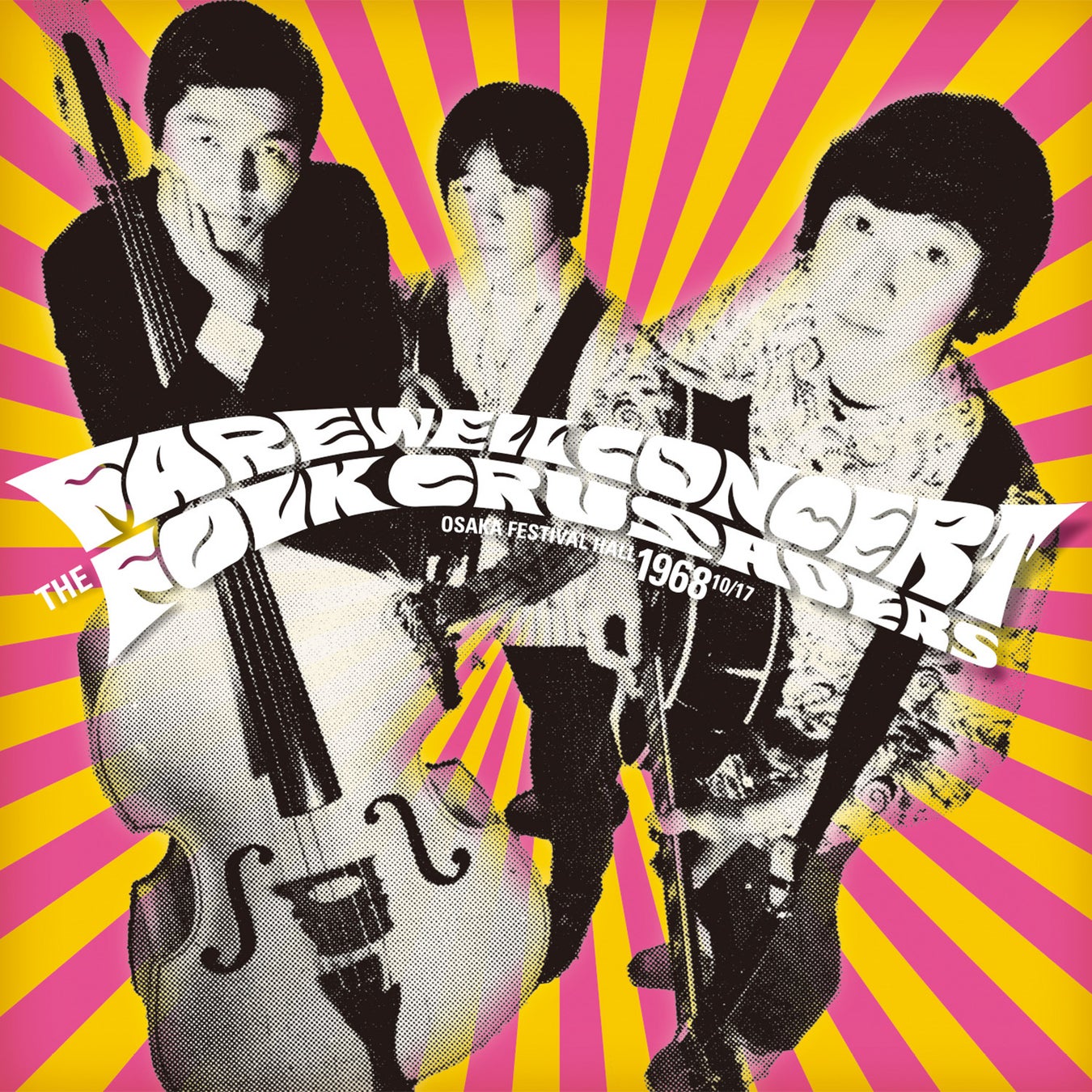

Folkle" from Kyoto, the starting point of the Japanese version of "Folk Song
The Folk Crusaders (or "Folkle" for short) is a folk song group made famous by Kazuhiko Kato, Osamu Kitayama, and Norihiko Hashida.
It was in 1967 that the group made its real start with "Kitaitekita Yopparai" ("I'm Back, Yopparai").
Kazuhiko Kato and Osamu Kitayama each had their own folk song groups in Kyoto.
These folk crusaders had been famous since they were students (Kato-san at Ryukoku University and Kitayama-san at Kyoto Prefectural University).
It was Toshiba EMI that took notice of them.
This was around the time when television was in its heyday. Comedy was still in its infancy, and even when it came to musicians, the major "Watanabe Productions" had most of them under control, so the completely independent "folklore" companies, music group companies under the umbrella of major electronics manufacturers that had entered the market at this time, had their eyes secretly set on these folklore companies.
Toshiba EMI managed to sign an exclusive contract with Faucheur.
However, the company thought, "If we're going to market Folkle, why not put someone together who can make us laugh even more? So, Toshiba EMI planned to launch a trio with the addition of Norihiko Hashida, a former musician at Doshisha University.
The glue music of Ms. Kato and Mr. Kitayama was intended to be a folk song about discrimination, as typified by "Imujingawa" (Imujingawa River).
However, it was pointed out that this was a bit "dark," so they decided to release "Kitaitekita Yopparai" to the public.
The "ennui" in his singing voice, which appeared on the record when it was played too fast, was well received by the young people of the time.
I'm dead, I'm dead, I've gone to see heaven, heaven's a good place, come here once, the drink's good, the girl's beautiful, waa, waa, waa, waa, waa, waa, waa..." This phrase was a play on the Beatles' "Ya, Ya, Ya".
The band tried to "make people laugh" by adding a parody to a folk song.
As it turned out, their plot was very successful.
However, since they had promised to be a "limited unit" for university students, they "disbanded" after only one year.
Other than this, there were some miscommunications among the members, and it was a regrettable breakup, but after the breakup, Norihiko Hashida went with the times with "Norihiko Hashida and the Schuberts" and "Norihiko Hashida and the Climax.
Mr. Kato is not beholden to the times, and he is making efforts to discover young artists. He started with Sadestic Micaband, which later led to the emergence of YMO.
However, both Mr. Kato and Mr. Kitayama suffered from a "mental void" at the time of the breakup of the band. They regretted parting ways with Hashida-san.
So, they released a song called "Ano Suteki Ai wo Once More" ("Let's Make Love Again"). This song is a parody of the session with Mr. Norihiko Hashida.
If the group had continued, it would have been more popular, but it was the era of rapid economic growth. Each of us was on a different path.
Osamu Kitayama hoped to somehow revive the exchange between Mr. Kato and Mr. Hashida.
However, Hashida-san was suffering from unexplained low blood pressure.
Mr. Kato, Mr. Kitayama, and Alfie's Mr. Sakazaki did a one-time "Folkle Reunion" on NHK TV.
Unfortunately, Mr. Kato committed suicide because he was in debt, and Mr. Hashida had "Parkinson's disease" and had no more time to live.
But "Folkle," representing the 40s of the Showa era, was a trio that still comes up with innovative ideas, and was the first group to successfully perform the now-defunct "Folk Songs: Japanese Version.
Many people will mourn the passing of Mr. Kato and Mr. Hashida.
I am sure that many people will once again learn about the folk songers who mixed songs and laughter that existed during the high growth period of the Showa era.
I would like to conclude with a prayer of condolence: "Rest in peace, folk genius who died too soon.