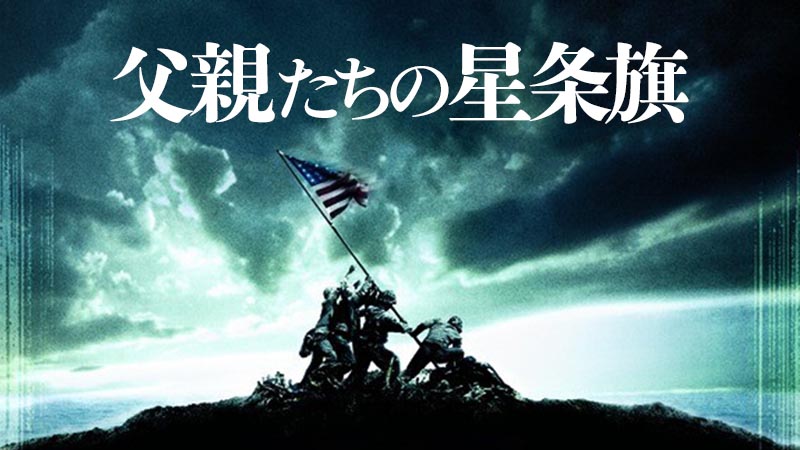
父親たちの星条旗

父親たちの星条旗

『父親たちの星条旗』(原題:Flags of Our Fathers)とは、2006年に製作されたアメリカの戦争映画。同名のノンフィクション小説を原作に作られた映画で、太平洋戦争を日米それぞれの視点から描いた『硫黄島2部作』の1作目にあたる。監督はクリント・イーストウッドが務めた。硫黄島の擂鉢山に星条旗を立てた6人の兵士の写真に秘められた真実と、戦場から帰還した3人のアメリカ兵のその後が描かれる。

Reviews, Ratings and Comments on 父親たちの星条旗

父親たちの星条旗
8

The Star-Spangled Banner of the Fathers," a moving visual portrait of a group of nameless soldiers who raised the American flag after a fierce battle against the Japanese on Iwo Jima.

The Star Spangled Banner of Our Fathers is a 2006 American film directed, co-produced, and scored by Clint Eastwood. The screenplay was written by William Broyles Jr. and Paul Higgins. Based on the book "The Star-Spangled Banner of Iwo Jima," by James Bradley and Ron Powers, about the Battle of Iwo Jima in 1945. The book chronicles the life paths of five U.S. Marines and one Navy corpsman who fought to raise the Stars and Stripes on Iwo Jima. The film depicts the battle of Iwo Jima from the U.S. perspective, while this film's sister film, "Letters from Iwo Jima" (directed by Eastwood), depicts the Japanese side of the battle. Although the film did not do well at the box office, earning $659 million on a production budget of $90 million, it was well received by audiences. The sister film, "Letters from Iwo Jima," was released in Japan on December 9, 2006 (December 20, 2006 in the U.S.), two months after the U.S. release of "The Star-Spangled Banner of Our Fathers" (October 20, 2006). John Bradley, a naval officer, was mistakenly believed to have been one of the second people to raise the Stars and Stripes and was sculpted as the third person in a nearly 10-meter tall bronze grouping depicting a scene of the flag being raised.

父親たちの星条旗
9

The tragedy of the "heroes."

It is a counterpart to "Letters from Iwo Jima," but it is not necessarily a depiction of the "Letters from Iwo Jima" episode from the American side. It is the story of a group of "heroes" whose lives were upended because they were or were supposed to be in the photograph that raised the Stars and Stripes on Iwo Jima.
The scene where the three survivors are used solely in a campaign to encourage the purchase of war bonds, and the scene where Ira, one of the three who was particularly pained by this, loses his emotional balance, in some ways made me want to turn away even more than the images of the bodies of the dead. I felt the callousness of power in the larger sense, including the military and the state. In particular, I thought it was insensitive to make the star-spangled banner stand on the papier-mâché Mount Suribachi.
I also realized once again that war is nothing more than a slaughter of both sides. Fortunately, we have not experienced war, but that is why we should watch war films like this one as much as possible and remember over and over again that war must never be repeated. As is said in the film, "It is those who have never been to war who want to talk about war. Watching war movies may not be a pseudo-experience, but it is much better than watching nothing at all.