
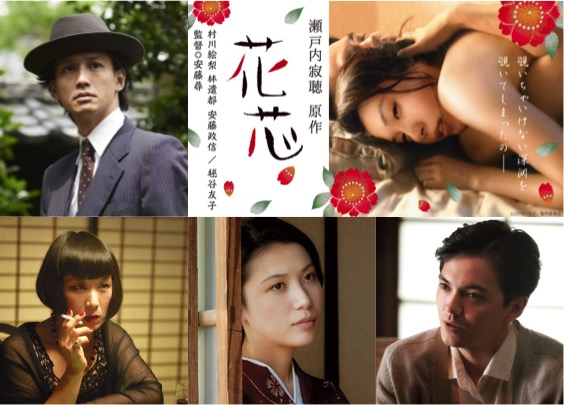

Notice the change in facial expression.
The heroine, Sonoko, played by Eri Murakawa, was expressionless like a robot, but after meeting Ochi, her expression comes out. However, after meeting Ochi, Sonoko's facial expressions start to appear, but then they disappear again. That is why in the few scenes where she does show an expression, she can be very attractive or, conversely, very ugly, and it is impossible to take your eyes off her. Hats off to Eri Murakawa for her acting ability in this role.
A woman like Sonoko would not be liked by most people, especially women. In that sense, it is not a film suitable for all people, but I think it does a good job of depicting the atmosphere in which things that had been pushed inside women explode in the free postwar atmosphere. Sonoko herself probably did not understand why she could only be this way. She probably had no choice but to simply surrender to the impulses that came from within her.
One hidden point of interest is that Eri Murakawa and Izumi Fujimoto have a striking sisterly resemblance in appearance. In movies and TV dramas, people who do not look alike often play parent-child or brother-sister roles, so I applaud whoever chose Eri Murakawa and Izumi Fujimoto to play sisters.
In addition, the scene where Sonoko writes her novel while biting her toast was somehow very memorable because of its cute, lotus-like feel, despite the fact that she is, of course, misbehaving.