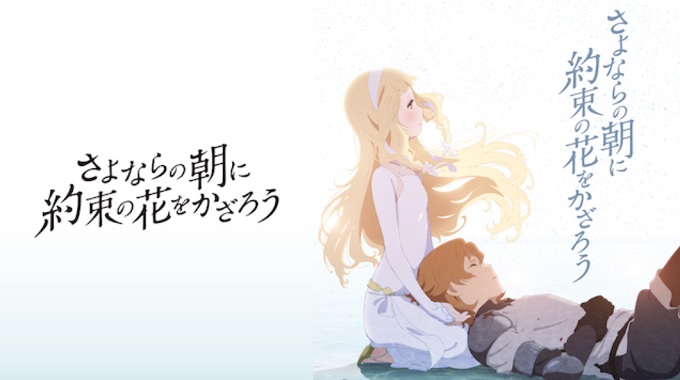
さよならの朝に約束の花をかざろう / さよ朝

さよならの朝に約束の花をかざろう / さよ朝

Sayonara no Asa ni Yakusoku no Hana wo Kazarou" is a Japanese fantasy anime film released in 2018. It was produced by "P.A.WORKS" and directed by "Mari Okada." The story is about a young girl, "Makia," who has a much longer life span than normal humans, who picks up an ordinary human baby, "Erial," and raises it while overcoming various difficulties. The story of a long-lived mother and her not-so-long-lived son delicately and beautifully expresses the preciousness of "love" and "life," and has been acclaimed as a work that has greatly moved those who have viewed it.

Related Articles on さよならの朝に約束の花をかざろう / さよ朝

Reviews, Ratings and Comments on さよならの朝に約束の花をかざろう / さよ朝

さよならの朝に約束の花をかざろう / さよ朝
10

A moving story filled with life

I remember watching it for the first time with tears in my rags throughout the entire viewing. It is a moving work that I would recommend to many people.
It is a fantasy animated film centered on a girl from a long-lived race called the Farewell Clan, and I love this movie because the hearts and feelings of the characters are so carefully portrayed.
The environment and position of the characters change, and their feelings change or do not change in various ways, but I am sure that there is someone in the film with whom you will have an emotional connection.
The main character, Makia, is weak at first, but as she goes through her experiences, she grows stronger and stronger. This shows us that human beings, despite their weaknesses and insecurities, grow stronger with age in this way. It is no exaggeration to say that this film is a whole life in one film.
Looking at the key visuals showing the main characters Makia and Elial, you might think that it is a typical love story, but this film does not develop in that way.
It is a story about parents and children, and if you have ever experienced something similar, I think you will not be able to watch it without tearing up, and I think it will make you think.
The images and music are also beautiful, and I felt that the delicate and beautiful melody of the ending song was perfect for the work.

さよならの朝に約束の花をかざろう / さよ朝
9

Thoughts of Parent and Child

This "Let's put the promised flowers on the good-bye morning" is a song from "We still don't know the name of the flower we saw on that day" and "My heart is screaming. and "My heart cries out to you. and "My Heart is Screaming. Unlike those two works, this is a complete fantasy film.
The main character, a young girl named Machia, is a member of an immortal family called the Iorphs. They are immortal and live in a remote village, and are legendary beings with special powers in the eyes of ordinary humans. Then there is Renato, a dragon-like creature who is also a legendary being. The sense of royal fantasy that can be felt from these two points will intrigue fantasy lovers.
The story begins with the capture of Iorph and his men by an army that arrives on Renato under the king's orders. The idea was to make the royal family immortal. As a result, Makia escapes from the hands of the army and is left all alone. At that time, she picks up a baby who was attacked by the opposition and lost its mother.
Macchia, as a mother, takes care of the baby, Elial.
At the beginning of the film, Macia is withdrawn and still childish, but as the story progresses, she grows stronger. It is heartwarming to see her grow as a mother.
But as the story progresses and Elial gradually grows older, she eventually develops complicated feelings for Makia. This appearance gives the viewer complex feelings as well.
The feelings of Makia and Eyal are so different that it is hard to breathe. They are like real parents and children in reality. Yes, they must be real parents and children even if they are not blood related.
The second half of the story is extremely intense.
There are no complex emotions, only the bond between parent and child and new feelings.
What is the end of the road for these two, Makia, an Iorph and mother, and Erial, a human and her child?
The characters, the story, the music, and the performances by the voice actors are all superb.
This is a work that I urge you to see.

さよならの朝に約束の花をかざろう / さよ朝
9

Mother's love

The scene where Makia, a young girl who looks young and has a long life span, a member of the Iorph family, and a human baby meet was a scene of great destiny. The baby is a boy, and we are moved by the sight of Makia, who names him Eriale and does her best to raise him.

You can feel the emotions of each and every one of the characters. The more time passes, the more Elial grows up to the same level as Makia before you know it. Elial is going through puberty, and even if that is not the case, there are times when he rebels against Makia because they are parents and children with a reason.
As a viewer, I understand both Makia's and Eyal's feelings so much that it brings tears to my eyes. Elial, who worked so hard to raise his child by himself, has grown up and has a precious family of his own: his wife and child. I was reminded once again that this is how human beings grow up. I also realized that because of a mother's greatness, great love, and love, there are things that she scolds and things that she cannot say.

Lang, who secretly had feelings for Makia, is a very good person. Because he loves Makia, he sometimes speaks strongly against Elial, but I thought it was also his kindness. The last part of the film is hard to watch without tears. The reminiscence scene between Makia and Elial and the ending song will make you cry.

さよならの朝に約束の花をかざろう / さよ朝
10

A story of "love" with infinite transparency, fully depicted by Mari Okada.

The power word "directorial debut" of popular screenwriter Mari Okada inevitably precedes this film. Because of the strong image and preconceived notion of the creator herself, I honestly went to see the film without raising my expectations that high. I went to see the film without raising my expectations too high, but ...... really betrayed my expectations in the best possible way, and in a good way.
Makia is a young girl from a long-lived family called "Iorph," who lives hundreds of years in her young form. When an unexpected enemy attack forces her to flee her homeland, she wanders alone and meets a baby boy whose parents have been killed. She names the child Eriale and decides to become a mother and raise him.
As mentioned earlier, Makia does not age outwardly. The son ages normally, and the mother remains a 15-year-old girl. At first they are "father and son," but as they age, their appearances become more and more reversed, and with it, their relationship and their hearts change in a complex way. Although blood is not the only factor in their relationship, and even though they love each other more than anyone else, they cannot, by any means, become just father and son. That sadness, that bitterness, but also that great big presence that is the absolute "place to return to. The way she depicted this (without making it too sad or light-hearted like a love story) was truly amazing! I could not help but be impressed.
Although there are many fantasy elements in this work, I never found the setting complicated or difficult, and I believe that the quality of the animation created by P.A Works is of course one of the reasons for this, as well as the skill of the scriptwriter, Mari Okada, being fully demonstrated in this area.
And in the end roll, we also saw Nagai Tatsuyuki's name in the "Direction" section. I guess Team Chichibu (is that right?) I also understood why the depth of the story (and the skillful direction) was so overwhelming.
Anyway, it was a wonderful work. I hope non-animation fans will feel cheated and give it a look.

さよならの朝に約束の花をかざろう / さよ朝
9

Crying more than you think! Animated film "Let's put the promised flowers on the morning of goodbye"

I saw this movie in the theater.
When I saw the official PV video on YouTube, I thought it would be a typical fantasy movie about a mother and her child meeting and parting.
I went to see the movie on a whim, but the story was more complete than I expected, and I was fascinated all the way to the end roll with a handkerchief in one hand.
The "meeting" and "parting" between mother and child, as suggested in the PV, was a major flow of the story, but I also thought that even I, who am not familiar with fantasy, could get into the theme and structure of the story, such as the struggle between humans over the existence of a "long-lived race" and the fate of those who have a long life.
The voice actors, who are indispensable in animation films, were excellent, and the exchange between the mother and the child at the end had me crying uncontrollably.
I later learned that this was the first film directed by Mari Okada, who wrote the screenplay for "Anohana," so I was again surprised at the degree of perfection.
I am looking forward to seeing more of Ms. Okada's work in the future!
Outline of the film
The "Hibior," a long-lived race of people, live quietly in a remote land, weaving their way through the daily events of their lives.
With an appearance of mid-teens and a lifespan of several hundred years, they are called the "Farewell Clan" and have been considered a living legend among the people.
Makia, a young girl alone without parents, is spending her days peacefully with her friends, but she feels lonely somehow.
The army of the "Mezate" attacks Makia and her friends, who are after Iorph's longevity.
In the dark forest where she has escaped, she meets a baby who has also lost his parents and is now truly alone.
This is a story of the irreplaceable time when the loneliness meets the loneliness and spins out across the ages.

Parent Tags