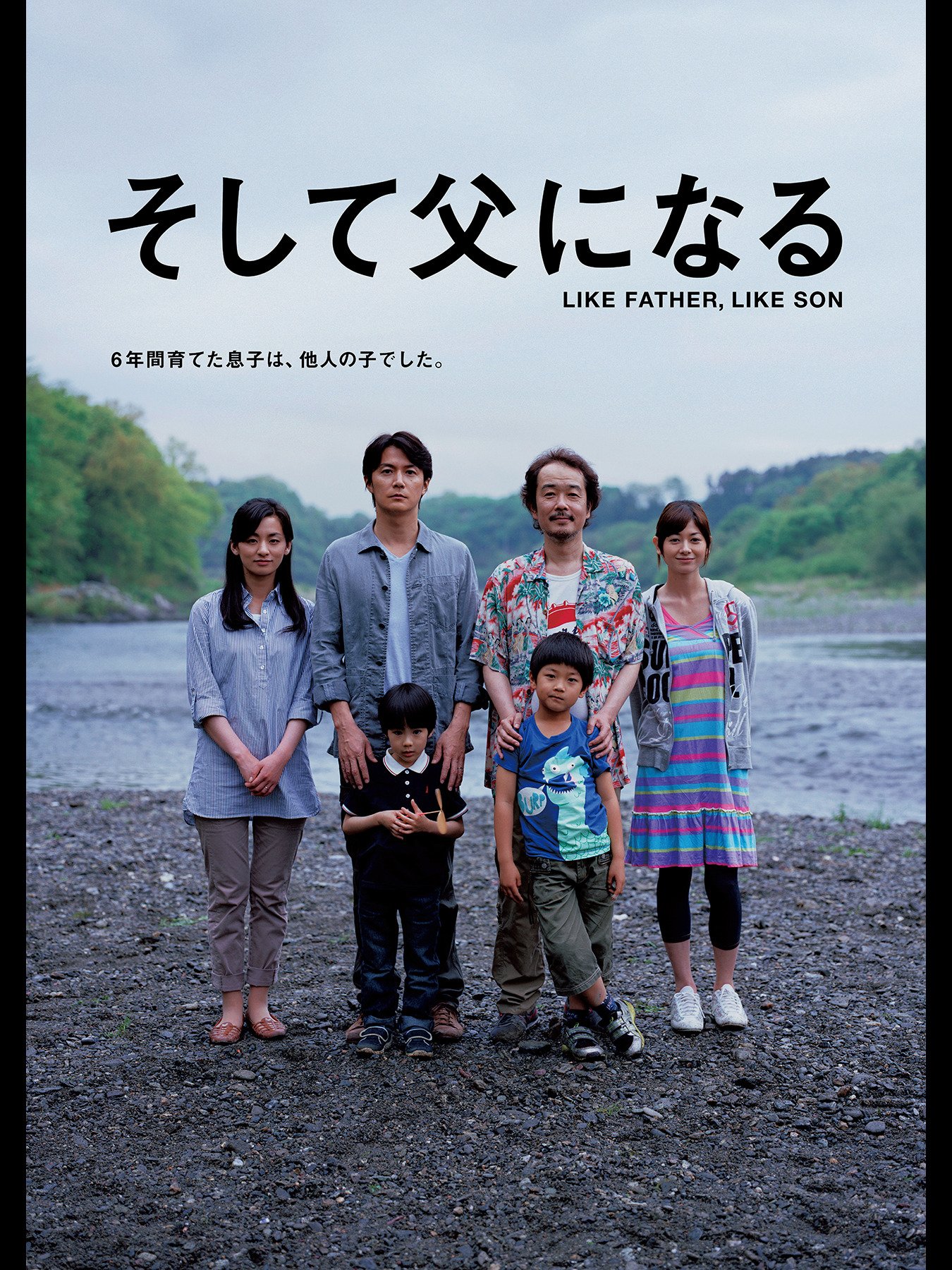
そして父になる / Like Father, Like Son

そして父になる / Like Father, Like Son

And Then I Became a Father" is a 2013 Japanese film about the "baby mix-up" case, directed, written, and edited by Hirokazu Kore-eda, a former TV documentary filmmaker, and starring Masaharu Fukuyama in his first role as a father. The film was a big hit at the 66th Cannes International Film Festival, where it won the Jury Prize. The film depicts two contrasting couples who are forced to make a tough decision one day when they suddenly learn that their son, whom they have raised for six years, is the child of a stranger who was mistakenly brought up at a hospital.

Reviews, Ratings and Comments on そして父になる / Like Father, Like Son

そして父になる / Like Father, Like Son
7

Fukuyama-kun is a jerk.

I thought Masaharu Fukuyama played a much more unpleasant role. I would hate a husband like that.
But maybe normal people are like this. No, I don't think the idea of exchanging children would ever occur to them.
The other family member was a man who had great love for his family, but I didn't like that because of money, money, money.
I thought Lily Franky was really good at playing the role of the impatient guy.
He is a hospital owner, so he eats at the food court where both families are discussing, and even takes some home.
I liked the way he was made to look like a bit of a jerk. I really felt sorry for the children.
It's not easy when you are suddenly asked to change houses, isn't it?
I felt sorry for the children who went to Lily's house and those who went to Fukuyama's house.
I thought that if Fukuyama had been able to act like a father to the new child, but had been able to do so earlier, they would not have come to the conclusion that they should have switched in the first place.
I thought my son's attitude when I went to pick him up was natural.
This time it was a story with a replacement incident, but I thought that it wasn't, that even families who were blood related were not family because they were blood related, but because they were becoming a family.

そして父になる / Like Father, Like Son
7

A film that leaves the final result to the viewer.

Envious of the picture-perfect happy elite family played by Masaharu Fukuyama, a newly divorced female nurse intentionally replaces the child she has just given birth to.
The nurse has done something terrible and irreparable, but not much spotlight is given to it.
The child is restored to its original state, and the couple lives together for a trial run, trial and error.
Normally, the storyline would be a sordid, bloody tale, but the story progresses in a relatively unobtrusive, documentary-like manner.
Lily Frankie's family is not financially well off and lives a freewheeling life, running a small electronics store in town.
The Lily Frankies seem happier than Masaharu Fukuyama and his family, who have no money but live cheerfully and cheerfully with their whole family, rather than Masaharu Fukuyama and his family, who have vanity, pride, and an elite family.
This contrast is the heart of the film.
Lily Franky is always aloof and elusive, but she is a good actor.
I felt at ease watching the film because everyone in the film is basically a good person who accepts his or her circumstances.
The film ends with Kore-eda leaving it up to the viewer to imagine what will happen to the two families in the future.
The film made me think about growth, conflict, anguish, touching, and the nature of human beings, and what happiness is.

そして父になる / Like Father, Like Son
10

It is not seen without tears.

And Then I Became a Father" is directed by Hirokazu Kore-eda, the Oscar-winning director of Shoplifting Family. The theme of the film is about the difference in child adoption, and whether to take the six years spent with one's own son or to choose the blood with one's own child.
The father, played by Masaharu Fukuyama, wants to choose the blood of his own son, while his wife is conflicted because she cannot easily let go of the son she has raised. The child, on the other hand, gradually becomes more open as he spends time with the other parent and the child, but the expressions on the adults' faces make him feel uneasy.

Director Kore-eda does not give the child actors scripts for their performances, but instead asks them to perform the lines he teaches them on the spot as they feel them, which allows him to express the child's facial expressions more realistically. After many twists and turns, the children were finally allowed to visit their original parents on a regular basis, and the children were not exchanged. Is it the bloodline that makes a child resemble you, or is it the happiest for the child to solve everything with money?