
Seven Gambler Manga
"I learned to play mahjong from this manga. "I got a glimpse of the depth of the gambling world. I have compiled a list of manga that could be a bible for those who want to start gambling.
Read Article

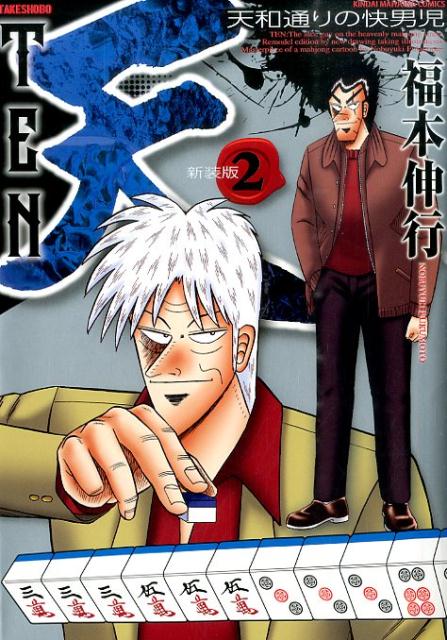
『天 天和通りの快男児』(てん てんほーどおりのかいだんじ)とは、『賭博黙示録カイジ』などで有名な漫画家・福本伸行による麻雀を題材にした漫画。1989年から2002年にかけて竹書房の『近代麻雀ゴールド』にて連載されていた。単行本は全18巻。ゲーム、パチンコ・スロットなどのメディアミックス展開をしており、2018年には岸谷五朗主演の実写ドラマが放送された。
Akagi," the gold standard of mahjong manga
Although many people are unaware of this work because it has become so well-known that it has even been made into an anime, it was originally a spin-off work that brought a popular supporting character from another manga into the lead role.
The original mahjong manga was "Ten Tenwa Dori no Kaioji.
The story, which began when Hiroyuki Igawa, a student who prefers to play mahjong by logic, meets Takashi Ten, a reliable mahjong player, was initially a one-part story that was a human-interest story.
Gradually, however, the story shifted to a full-fledged fighting tile mahjong manga with psychological battles.
The story progresses to a major battle between the top mahjong players from the East and West, which occupies half of the story.
The turning point was the appearance of Shigeru Akagi before Ten and Hiroyuki.
About 30 years after the time of "Akagi," Shigeru Akagi was called the "man of the divine realm" and became a legendary mahjong player.
This old man Akagi is just so cool!
Compared to his younger days when he was always cool and nihilistic, he shows a mischievous side, such as going to Hawaii on a whim after asking his good friend Tsure to play golf with him, but when it comes to a game of mahjong, he is the strongest character among both adversaries and friends, and is very reliable.
Furthermore, because of his youth and sensitive sensibility, he is also a mentor who gives advice and guidance to Hiroyuki, who is troubled and lost, at key points throughout the East-West matches.
There are also a lot of numbing quotes, such as "My darkest moment is right there..." and "In a place unrelated to such a silly thing... a strong man exists.
In the last part of the story, the "wake" section, as it is commonly called, is a serialized story in a mahjong manga magazine, but instead of playing mahjong, the story is a conversation between Akagi and the people around him before his death, which is also very hot! At the end of the story, Ten and Hiroyuki talk about the scattered Akagi.
It is both lonely and somewhat refreshing. I am sure that readers can share these feelings.
This work is valuable as a record of Mr. Nobuyuki Fukumoto's growth from a cartoonist of humanity to a gambling cartoonist and a leading artist of human psychology over the course of his 13-year long serialization.
Why not relive the life of this legendary man?
The manga "Ten Tenwa Dori no Kaiohonji" is a manga about mahjong.
Mahjong is largely dependent on luck, but in this work, the game is not played by such luck, but is explained in a very logical manner. For example, when a player reaches tenpai, he or she is told in great detail how many ways the player can receive the tenpai or how many tiles he or she can cut.
He also explains how to read the opponent's discarded tiles and the shape of the tenpai, and sometimes, instead of directly reading the opponent's hand and discarded tiles, he reads what other players are discarding.
The manga also provides a rich depiction of human psychology in the game of mahjong. The main character of the manga is the man named Takashi Ten, but there is also another main character, a young man named Hiroyuki Igawa. In the mahjong matches, Hiroyuki's hand is depicted more often than Ten's. The manga is divided into three main categories: the first is "the game," the second is "the game," and the third is "the game.
The manga is divided into three parts. The first part is the encounter between Ten and Hiroyuki and their game, the second part is the East-West battle in which Ten and Hiroyuki fight against the West's substitutes for the East, and the third part is a mahjong manga that surprisingly contains no description of mahjong at all. The third part is the story of the burial of Shigeru Akagi, who was active as the East's substitute uchiuchi along with Ten and Hiroyuki. The story also touches on the issue of euthanasia and makes us think about what it means to live. Because of this, the manga is recommended not only for those interested in mahjong, but also for those who are interested in psychology and philosophy of life, even if they do not know anything about mahjong.
