
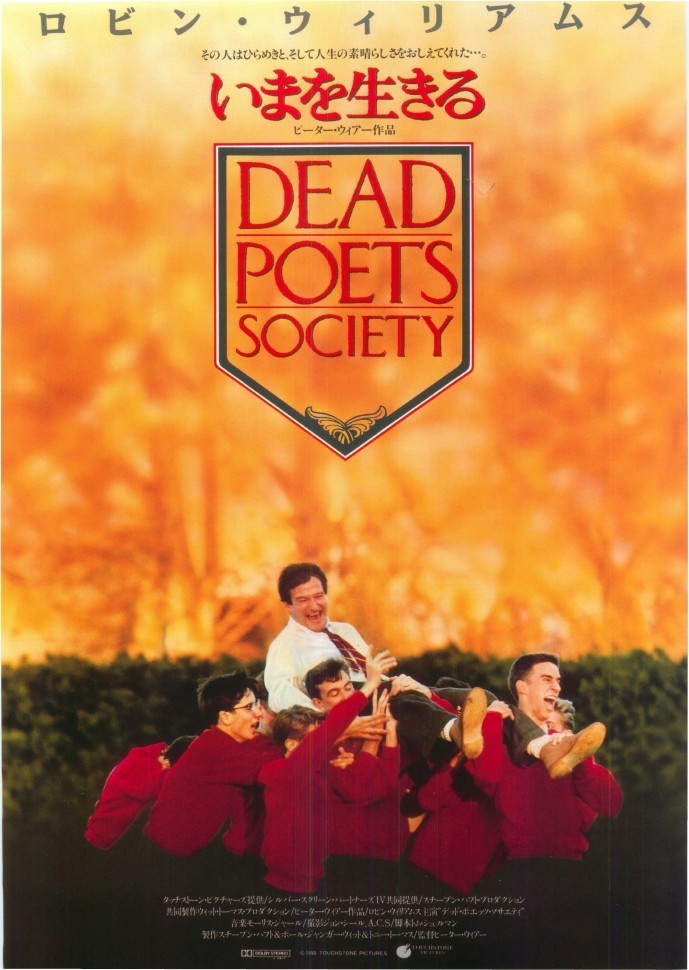

The heart-to-heart exchanges and tragedies between a new teacher and her students at a rigorous preparatory school
He is a wonderful teacher. He teaches the most impressionable high school students what it takes to live. The truth of humanity is depicted at every corner of the film. Parents who only want their children to do well academically because it is a prestigious school and send them the same stationery set as last year as a birthday present, parents who decide their children's career path and impose it on them regardless of their will. I thought that the problems faced by students and parents regarding education are the same in every country. It is up to the students to decide what they are interested in and what their future career will be. However, as parents, we want our children to have a stable life and a high income and wealthy lifestyle, so few parents take the risk of telling their children to pursue their interests in whatever way they want to. Neil, a student, excels academically and his parents expect him to be a doctor, but his strong interest in theater and a well-received performance as Puck the Fairy in Shakespeare's A Midsummer Night's Dream, are scandalized by his father and he is transferred to a military school. In despair, Neil chooses death. It is a tragedy, but in the long run, it would have been better to let him study theater in college, and if he could not make a living as an actor, then he could have considered a career as a doctor. By studying theater seriously in college, performing in various plays, and going through auditions, he would have been able to determine whether his passion for theater was just a high school interest or if it was enough to make him want to become an actor. It was Keaton's teacher, not his father, who really cared about the child's future. Keaton took responsibility and resigned, but the seeds he had planted were firmly planted and growing in his students. Sometimes it is only later in life that we learn what we really wanted to do, and sometimes it is only later in life that we find our spiritual freedom. One of the answers to how to live one's life can be found in this film.