ゴジラ-1.0 / Godzilla Minus One

ゴジラ-1.0 / Godzilla Minus One

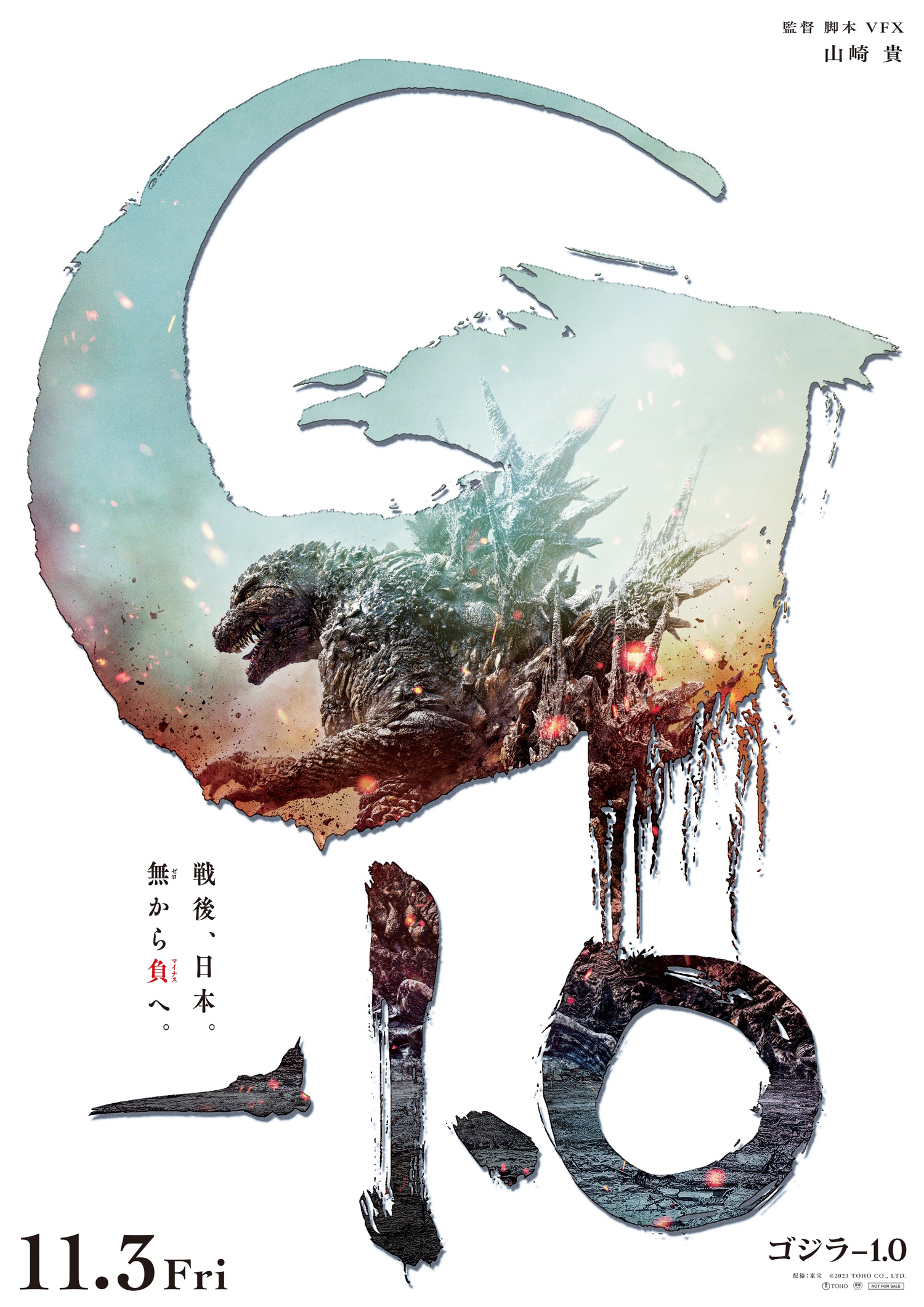
Godzilla-1.0" (Godzilla minus one) is a film produced to commemorate the 70th anniversary of the birth of the world-famous "Godzilla" monster film series. Directed by Takashi Yamazaki and starring Ryunosuke Kamiki, the film was produced with the slogan "Postwar, Japan. From nothing to negative" was the catchphrase of the film.
The film is set in Tokyo shortly after the Pacific War has ended. Koichi Shikishima, a former member of a suicide squadron, is shuddering with guilt at having left his comrades to die, but he is trying his best to survive. Then, a giant dinosaur-like creature appears in Tokyo. Shikishima realizes that it is Godzilla, the monster he saw during the war, and risks his life to defeat it for revenge and for the future of Japan.

Reviews, Ratings and Comments on ゴジラ-1.0 / Godzilla Minus One

ゴジラ-1.0 / Godzilla Minus One
10

戦後日本の影を映し出す圧倒的な怪獣映画

「ゴジラ-1.0(ゴジラマイナスワン)」は、戦後の日本を舞台にした怪獣映画であり、圧倒的な破壊力を持つゴジラを通して、戦争の傷跡と、それに向き合いながら再び立ち上がろうとする人々の姿を描いた作品です。

この映画では、主人公・敷島が戦争で大切なものを失い、その喪失感と向き合いながらも、生き残った家族や仲間たちと共にゴジラに立ち向かう姿が描かれます。
敷島の葛藤や犠牲の中で見つけた希望が、映画全体の重要なテーマとなっており、観る者の心を深く揺さぶります。

ゴジラがもたらす破壊と混乱は、戦後の日本が直面していた現実そのものであり、1954年の初代ゴジラが核兵器の恐怖を象徴していたように、本作では戦争の爪痕とそれに続く再建の道が描かれています。ゴジラが特攻隊や戦争による被害を象徴する存在である点も、非常に深い意味を持っています。

また、この映画では、リアルに再現された東京の街並みと巨大なゴジラの姿が、圧倒的な視覚効果を発揮し、観る者に強烈な印象を与えます。
同時に、1950年代特有のクラシカルな雰囲気とVFXが見事に融合した映像によって、観客は時代を超えてこの世界に引き込まれるのです。

「ゴジラ-1.0(ゴジラマイナスワン)」は、単なる怪獣映画を超えて、戦後日本の人々が直面した苦難と再生の物語を描いた傑作です。
ゴジラの圧倒的な破壊力と人間ドラマが深く結びついており、戦争の悲惨さや人々の再生への願いを強く訴えているのです。ゴジラファンのみならず、幅広い観客にぜひ観てもらいたい一作です。

ゴジラ-1.0 / Godzilla Minus One
3

This time, the work is also...

If I remember correctly, I remember that the movie won the Academy Award for Best Visual Effects, so my expectations were high to see it. At the beginning of the movie, there is a scene in which Godzilla appears before he is fully formed, and I was excited because I felt a sense of fear in that scene. After watching the entire movie, I felt that the biggest part of the movie was only the beginning. I am not a particularly avid Godzilla fan, but that scene was so powerful that it might have surpassed Jurassic Park.
The main character was a member of a suicide squadron, but there is a background where he could not go on a suicide mission and had to flee. It was inevitable and I could sympathize with him. The memories of the suicide attack did not disappear and they were still with him until the end of the film, but the way of thinking and acting of the hero and heroine were so blurred that it was difficult for me to empathize with them. I think that Ryunosuke Kamiki and Minami Hamabe are actors with high acting ability, but I am sorry to say that I did not think their acting was good in this film. I am wondering if it is not their intention but the director's intention. I am sure those who are familiar with Godzilla will have more opinions, but I did not enjoy it. I don't know what to say, but the development of what was going to happen next was so on target that it wasn't surprising.
I think I can understand the reason why the film seems to have been rated in two different ways: high praise and low praise. I think the VFX in the director's films is a great technology in Japan, but I feel that's all there is to it. Every time a new film is released, I watch it with great anticipation, but at the end of the film, there is a stunt that makes me feel a sense of bewilderment, and I feel like "Here we go again," which is not refreshing as an entertainment.
I have said a lot of things from an amateur's point of view, but after seeing this film, I wondered if it was true that it won an Academy Award.

ゴジラ-1.0 / Godzilla Minus One
10

The main focus is still the story of Shikishima's rebirth from frustration and despair. The story overlaps with that of Japan's postwar recovery, and it is a heartwarming one.

The hero, Shikishima, flees from a suicide attack, complaining of a malfunction in his plane, but his allies see through his true intentions and he becomes depressed.
That night, Shikishima sees a gigantic beast that shatters all human hopes and attachments to life like a piece of paper.
Shikishima runs away in terror, terrified by a horror unmatched by anything he has ever seen.
His allies are wiped out, and Tachibana, a survivor, taunts him again and again, but he makes it back home.
What awaits him, however, is his parents' house, reduced to rubble, and his family, who have been destroyed in the war. ......
Shikishima lives in the ruins of a house where everything is gone, with a wound that cannot be healed.
However, blessed with a job to earn his daily bread, friends, and people to protect, he gradually regains a peaceful life.
Then, as if from a recurring nightmare, the huge beast creeps up on Shikishima.
Can Shikishima shake off the nightmare and protect his loved ones?

The story takes place shortly after World War II, a time of extreme poverty in which people are forced to live without food or shelter. There is no super-weapon that can defeat Gojira, and the people gather together wooden ships that look like dead leaves and discarded weapons to fight back.
The fight is inevitable, because the enemy is a monster that emits heat rays reminiscent of nuclear weapons and can kill dozens of people with a single step. If they do not fight, their loved ones behind them will be trampled and burned to death.
The survivors of the Pacific War mobilize all their wits and unite once again to fight a desperate battle. I could not take my eyes off this drama until the very end.

There are many things to see in this film, but what I particularly liked about the film was Godzilla's face. Successive Godzilla's had the appearance of a king who has no regard for humans.
However, in the look in Godzilla's eyes this time around, I sense a clear intent to kill and hate humans, and a clear intention to attack.
It is a hatred of the human species itself, the very species that burned itself with the atomic bomb. I was horrified by this feeling as I sat in the movie theater.
I felt a sense of despair as the people who were running away from the atomic bomb were mercilessly trampled underfoot. The mushroom cloud that rises beyond the heat rays that it spits out. I was numbed by the sight of the god of despair.

The "Shinden," a phantom prototype fighter plane, the "Yukikaze," a famously lucky destroyer, and the "Takao," a battleship that survived until after the war. Weapons that military fans will be pleased with also make an appearance.
From the setting to the tense development, this is a very well made film. Highly recommended!

ゴジラ-1.0 / Godzilla Minus One
9

Marriage of human drama and monster movie

I underestimated "Godzilla-1.0" quite a bit before seeing it. After watching it, however, I felt like apologizing for having seen it with such a feeling. Please note that there are some spoilers.

The first half of the film is not enough. However, I really liked the way Shikishima (Ryunosuke Kamiki), who was returning from a suicide mission, Noriko Oishi (Minami Hamabe), and Sumiko Ota (Sakura Ando) worked together to raise Akiko, who is not even related to them, while overcoming the postwar confusion. The relationship between Shikishima and Noriko in particular is not that of a married couple, even though they have to help each other. I liked the very delicate relationship that fits the story...because there are certain kegesis that must be attached in order to become husband and wife.
It was a performance that made me rethink Minami Hamabe. I did not get tired of watching the portrayal of the people at Shikishima's workplace. I still like the pattern that the people he was with were actually great.

The story changes when Godzilla appears and turns into a powerful monster movie. The main characters are in despair as they watch the huge battleship sink without being able to do anything against Godzilla. Can it be defeated? The meeting held amidst the question, "Can we defeat it? It was exciting to watch.
I also liked the logic of defeating Gojira. The failure of the Wadatsumi operation and the backup plan, the awakening of the heroes, and the final blow. At the end, the heroine who was thought to be dead is reunited with the hero and there is a happy ending. Even though it was a royal development, even though it was goofy, it was powerful and I watched it.

Although there are some points that need to be mentioned, I think it was a good film that successfully blended the power of Godzilla and the two elements of a home drama.
It is a must-see for those who are tired of monster movies, for those who like human dramas, and for fans of Minami Hamabe.

ゴジラ-1.0 / Godzilla Minus One
7

The sense of hopelessness is great among Godzilla's works so far!

The story takes place at the end of World War II and after the war. Unlike previous Godzilla films, this one can truly be described as one of despair, as Godzilla appears from a battered state with few weapons due to the defeat by the U.S.
The main character, Koichi Shikishima, lies that his Zero fighter plane broke down on the way to a suicide mission and lands on Odo Island in the Ogasawara Islands. That night, Godzilla suddenly appears, and everyone except Sosaku Tachibana and Shikishima are killed by Godzilla. Later, the war is over and Shikishima returns to his hometown of Tokyo, but his family is all dead and he is left alone. He lives alone with Noriko Oishi, who also lost her family, and Akiko, the baby he entrusted to Shikishima.
While Japan is gradually recovering despite such a battered state, Godzilla comes ashore and drives Japan to despair. Nevertheless, how will the main character and those who oppose Godzilla defeat him with no weapons?
In previous films, there was some kind of weapon against Godzilla, so there was no small hope of victory. However, in this work, there is no hope of victory, and there is no help from the U.S. at all. I was moved by the Japanese who were determined to win against Gojira even in such a reckless situation. I strongly recommend that you see this film.

ゴジラ-1.0 / Godzilla Minus One
9

The greatness of Takashi Yamazaki's VFX and screenplay, which we know from "Godzilla-1.0"!

Released on 11/3, the film grossed 3.9 billion yen in Japan on 12/6, and on 12/5 in the U.S., it became the highest-grossing Japanese live-action film of all time (approximately $14.36 million) for the first time in 34 years.
Let's find out what makes it so appealing.

No.1 [It is amazing that even a Japanese film can do so much with VFX!
This movie is so good that you will be surprised that even a Japanese film can do so well! This movie is so good that you will be surprised that even Japanese films can do so well.
VFX" means visual effects and is a visual technology used to produce images that cannot be seen in the real world. The tension and realism of the images are so compelling that you can't help but get caught up in them. The tension and realism of the images are so compelling that one is left with the impression that Godzilla is really there, and the battles at sea are a sight to behold.

No. 2 [Takashi Yamazaki's script is too good!
In all of Godzilla's previous films, there have been very few that have given me the "Godzilla defeated" feeling. However, this time, we have a new Godzilla movie, which is a postwar movie with a changed story.
But this time, in order to "survive" the people living in a postwar Tokyo, they defeat Godzilla in a way they never imagined (temporarily, but...).
I was impressed that they could go this far. I was impressed.

I think many people were moved to tears by the fact that Ryunosuke Kamiki, who played Shikishima, and Minami Hamabe, who played Oishi, were able to survive at the very end of the film.
Shikishima had a scene at the end that made one think, "Godzilla and the bomb?" and Oishi is blown away by the blast and goes missing. In the midst of such despair, you must be relieved to know that he was "alive.

Those who have seen the film have said, "It surpasses 'Shin Godzilla'! The best Godzilla movie ever made! It is the best Godzilla movie ever made!
Why don't you come to the movie theater and experience the reality?

ゴジラ-1.0 / Godzilla Minus One
8

Godzilla's 70th anniversary film is an ancestor

This film, commemorating the 70th anniversary of Godzilla's birth, is set just after World War II, when Godzilla was trying to become his ancestor.
While the American and Hideaki Anno's versions of Godzilla were impressive in their gigantic size and perfection, the Godzilla in this film was about 50 meters tall, following the first generation. Although much smaller in stature, I have a strong impression that Godzilla's agile movements were frightening, partly due to the influence of improved visual technology.
The scene where Godzilla rampages in Ginza, where buildings have been destroyed, is particularly powerful and sent shivers down my spine because of the detailed depiction of the many people fleeing at Godzilla's feet.
The distance between Gojira and the people was so close that I felt as if I was being trampled.
In a time when there were no Self Defense Forces or defense organizations, and no advanced chemical weapons, the people who stood up to Gojira were trying to defeat it with all the technology they could muster, using only Japanese people. I was impressed by the way the people who took part in the operation, not knowing whether it would succeed or not, and who fought against Godzilla without giving up even with the slightest hope of success.
The drama of the human side was also depicted in depth. The main character, a young man who was a former Kamikaze pilot, was conflicted because of the emotional trauma of having run away because he did not want to die. The people around him who supported this young man were very moving.