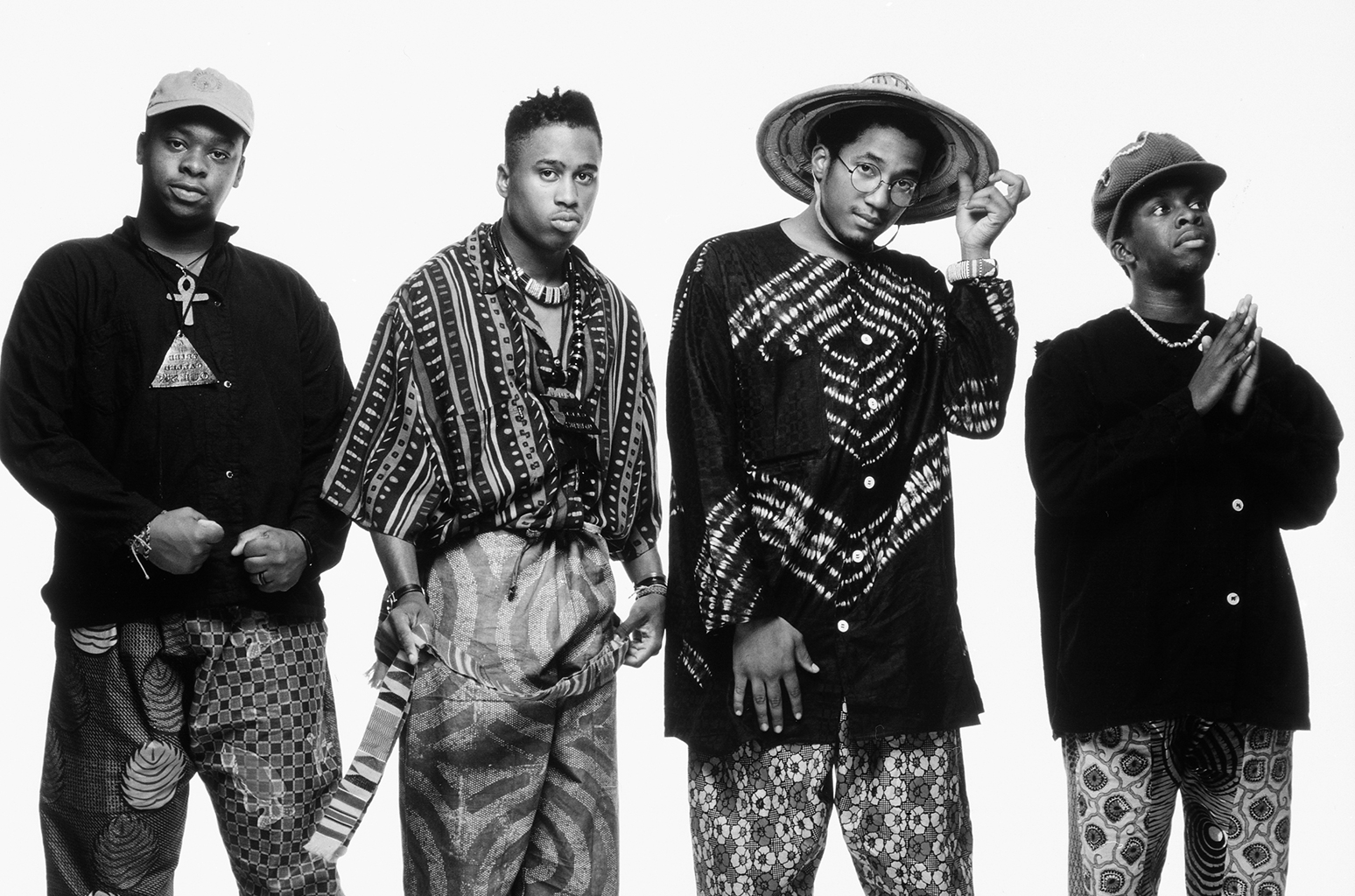
A Tribe Called Quest celebrates 25th anniversary
Let's take a closer look at the charismatic group that is always mentioned when unraveling the history of hip-hop, not only in the US, but also in the surrounding groups.
Read Article

A Tribe Called Quest(ア・トライブ・コールド・クエスト)とは、1988年に結成されたアメリカのヒップホップグループ。通称「ATCQ」。5枚のアルバムをリリースした後、1998年に1度解散するも、2006年に再結成を果たした。USのみならずヒップホップ史を紐解く際に、必ず言及されるカリスマ・グループである。デ・ラ・ソウルやジャングル・ブラザーズと並びネイティブ・タン(Native Tongues)の中核グループのひとつ。
It has been nearly 30 years since EDM (electric dance music) began to dominate the charts after the rise of DTM in the 1990s, and one of the most underrated groups among these units is A Tribe Called Quest (hereafter ATCQ, formed in New York in 1988). A Tribe Called Quest (ATCQ, formed in New York in 1988).
ATCQ is a HipHop trio (until their first album, they were a 4-member group including Jarobi), but their range of activities is not limited to HipHop. The range of their activities goes beyond the boundaries of HipHop.
Their first album, "People's Instinctive Travels and the Paths of Rhythm (1990)," was made by boldly cutting up the more austere songs from the jazz and fusion music that was being pushed aside as "lame music" at the time, and their second album, "The Low End Theory (1991), which quickly rewrote the history of breakbeat music. HipHop, which had been called "Jazz Rap" and "New School," and had been considered "just music for kids," was sublimated into a sound that could be appreciated by adults by adding a jazzy and stylish taste to it. The band members were only around 20 years old at the time, but already their production work had a mellow depth, and their creativity was outstanding from the time of their debut, including the use of samples from Japanese radio programs and the fusion of HipHop with the live sound of historic bassist Ron Carter.
The band's third album, "Midnight Marauders (1993)," reached the U.S. Top 10, and their fourth album, "Beats, Rhymes and Life (1996)," reached No. 1 in the U.S., making them a first-class unit in both name and reality, but they never stopped evolving their sound, and their fifth album, "The With their fifth album, "The Love Movement" (1998), the band approached not only R&B, but also electronica, trip-hop, and EDM. Even Yoshinori Sunahara (formerly of Denki Groove, now of METAFIVE) has stated that he used them as a reference for his sound when he produced the masterpiece "LOVEBEAT" (2001).
Q-Tip, who was also a central figure in the sound side of the band, organized the music production groups "The Ummer" and "The Abstract" one after another from the late 1990s, and D'Angelo, J Dilla, and others participated. The urban soundscape created by boldly processing sampling (reverse playback, chopping, etc.) and reducing the number of notes as much as possible became the foundation of the later New Soul movement. There are countless artists who have been influenced by ATCQ or Q-Tip, including Gen Hoshino, Cero, and King Gnu.
The group broke up and reformed several times, but with the sudden death of original member Fife in 2004, they were never able to revive.
ATCQ has never been at ease in the HipHop scene, but has always been in a constant state of flux, pursuing comfortable rhymes and beats, and although their free style of music has led to a dispersed reputation, they are a rare HipHop unit that continues to have a tangible and intangible influence on musicians in many genres. Q-Tip has been teaching at New York University since 2006, and we look forward to seeing his direct disciples come to the forefront.
