
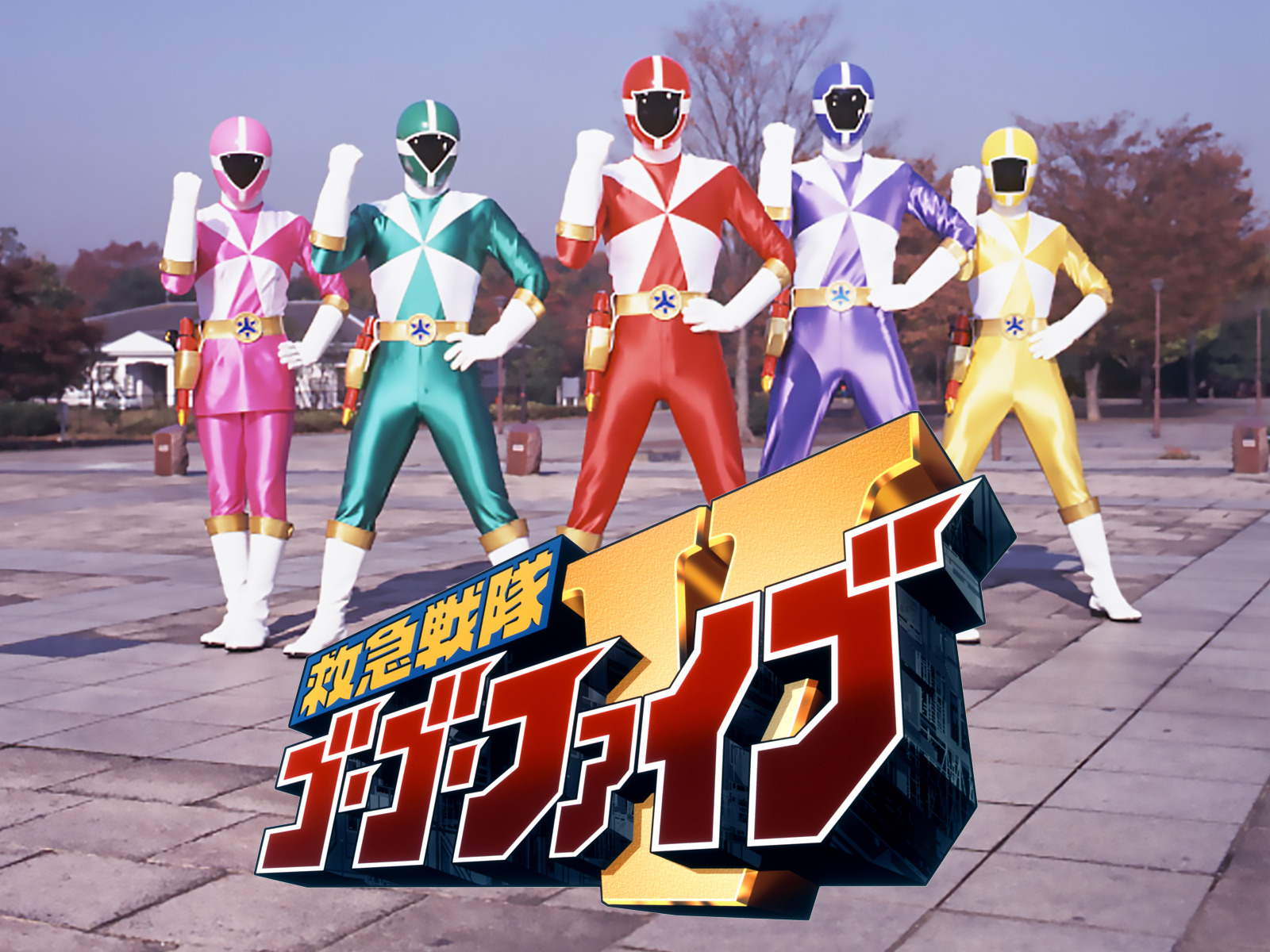

A masterpiece that is interesting, but lacks a lot of filler.
Following the success of the previous work "Seijuu Sentai Gingaman," this time it was made in 1999, with the theme of "first aid" and the prophecy of Nostradamus, a legend that was believed to be true at the time. It is the only one of its kind in the series that has an element of "first aid," and it could be said to be the work that introduced the so-called "Rescue Police Trilogy," which ran from 1990 to 1992, to the Sentai series. This work is also famous for being the first sibling squadron since "Earth Sentai Fiveman".
One of the few drawbacks of the previous "Gingaman" was that the depiction of giant battles (especially in the latter half) was one-dimensional, and the special effects with miniatures, such as rescue operations using emergency machines, are very interesting and worth seeing. The characters of the five Tatsumi siblings, including Gorred Matoi and his father Tatsumi Mondo, are also well-developed, and their seriousness in risking their lives to protect the earth and human lives is evident.
However, looking at this work overall, it is hard to deny the impression that it is inferior in terms of setting, drama, consistency of style throughout the year, and completeness compared to the previous and following "Gingaman" and "Time Ranger," both of which were written by Yasuko Kobayashi. The reason for this is that, although each episode is interesting and full of strong episodes, the "meaning of being a family squadron," which was one of the problems of this work, is noticeably underexplored. In particular, the conflict between Dr. Mondo and the five Tatsumi siblings, which was depicted in the first eight episodes, did not gain much momentum as a drama.
Also, as for the concept of "first aid," the Victory Robo in the early part of the film is a machine that combines first aid and combat, and the Life Bird is a tool for both rescue and combat that tickles the playful spirit of the audience. However, the V-Lancer, V-Mode Breath, and Go Blaster that appear in the second half of the series are completely designed for combat use, and the Liner Boy and Victory Mars robots have almost nothing to do with rescue. In the latter half of the film, the rescue scenes are few and far between, and only occasionally thrown in as a reminder.
Therefore, in terms of the depth of the characters, the portrayal of the characters seems one-dimensional, not as thin as in "O-Ranger," but still lacking in depth compared to Ryoma and his friends in the previous work, "Gingaman. The family reunion in the last episode is not as moving as the one in "Gingaman"... It is highly entertaining and interesting as a heroic story, but it is a masterpiece that cannot go one step further to become a masterpiece.