
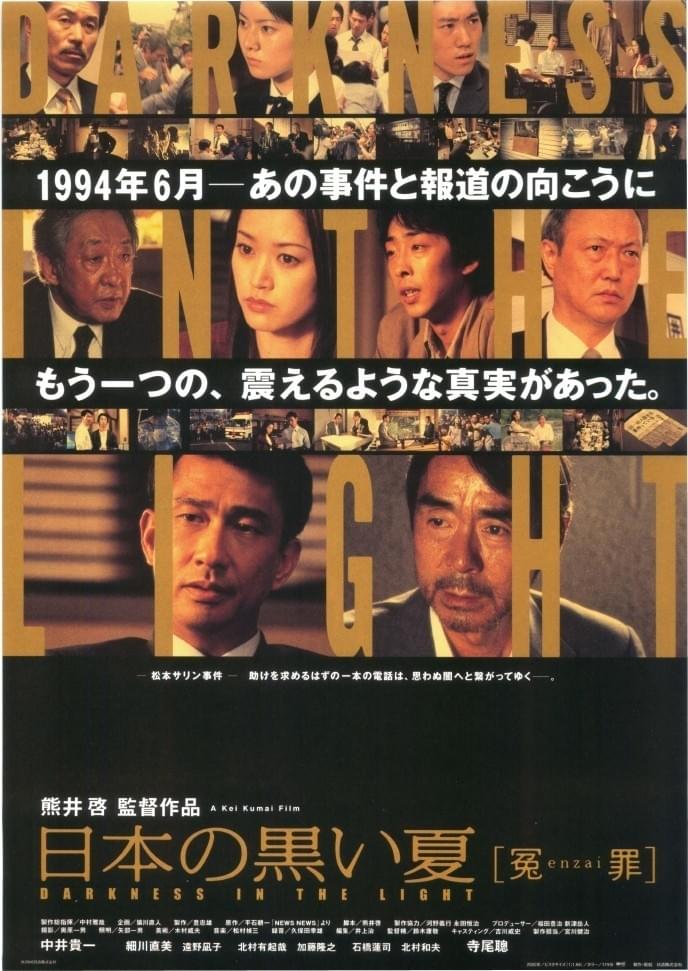

Makes you think about media literacy.
This film is not a full documentary, but a drama in which a fictional broadcaster talks about the problems with high school students who came to interview him.
It is now common knowledge that there were problems with the police investigation and reporting of the case at the time, and that the man who was the first to be found was treated as the culprit, but it is surprising that this film, released five years after the incident, examines the case from an impartial perspective.
Because the film is tailored as a drama, the director played by Kiichi Nakai is too much of a hero, and the news reporter Koji played by Yukiya Kitamura is emphasized as he rushes into a special story in an easy-to-understand manner, but I think the film depicts what was actually the problem in a clear and simple manner.
The scene in which the high school student reporter played by Nagiko Tono confronts the reporters with sharp words that adults would have a hard time getting into was thought-provoking.
At the same time, the viewer's own reflection that he or she did not question the news reports and focused too much on the easy-to-understand nature of the case was also brought to the fore.
The family of the man who was falsely accused, played by Akira Terao, is the most moving part of the story. The mother is unconscious, the father is unable to walk, and is being interrogated day after day, and the three siblings are fighting together amidst harassing phone calls.
It is a film that should be seen with the awareness of the people involved.