

So this is what it means to live.
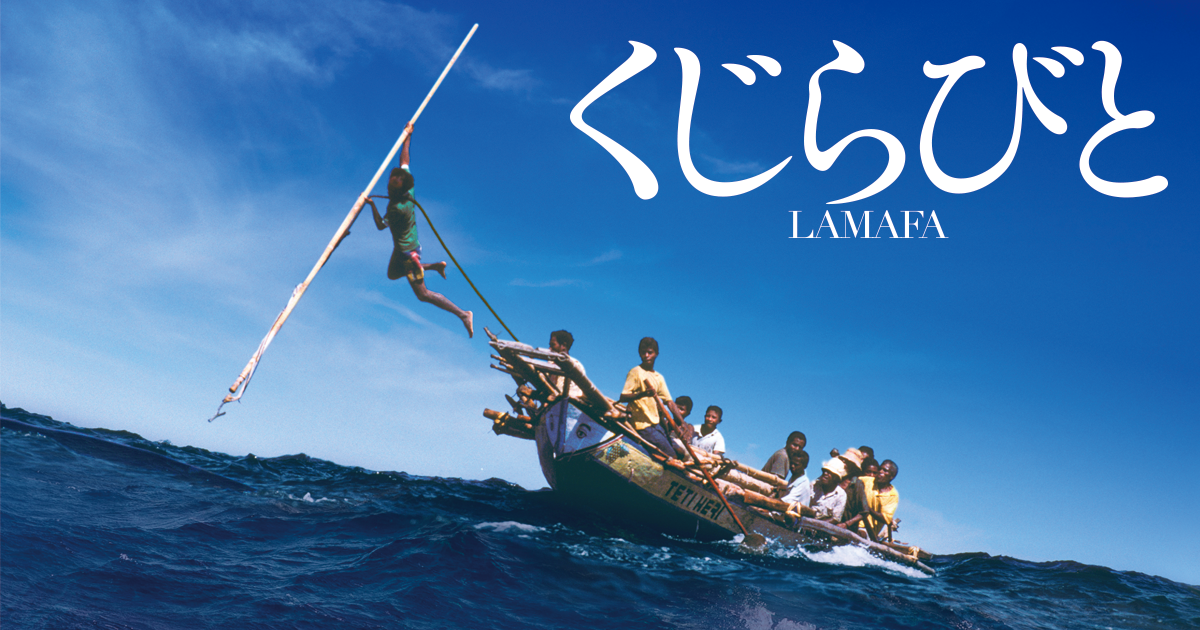
Traditional whaling has been practiced for 400 years in the village of Ramarela, a small island in Indonesia.
This documentary film looks at the lives and culture of the villagers who risk their lives to catch whales in order to survive.
Whales do not always appear, and the villagers cannot eat without them.
That is why they risk their lives to hunt whales when they appear.
During the filming of this film, whales were hard to come by, and miraculously, they succeeded in filming the whaling.
A harpoon to pierce the whale, a whale much bigger than a small boat. The man who goes to kill the whale with his body, the whale that resists, the sea surface that turns bright red....
The breathtaking images almost made me seasick.
The film, shot sometimes from underwater, depicts the struggle of the whales and the brave people who confront them with a single harpoon, images that only director Bon Ishikawa, who has spent more than 30 years in the area and has developed a close friendship with the villagers, could have captured.
There is no running water or gas, and electricity is only available at night. Whales are more than food for these people who live on an island where crops do not grow, and their unique religious beliefs can be seen.
The fact that there is a civilization in Asia that is completely different from ours surprised me once again, and reminded me of the preciousness of eating and living.
This film was produced using crowdfunding, and a whopping 13 million yen was raised for the production costs.
I felt that it was an impressive visual work that made me feel that it was worth it.