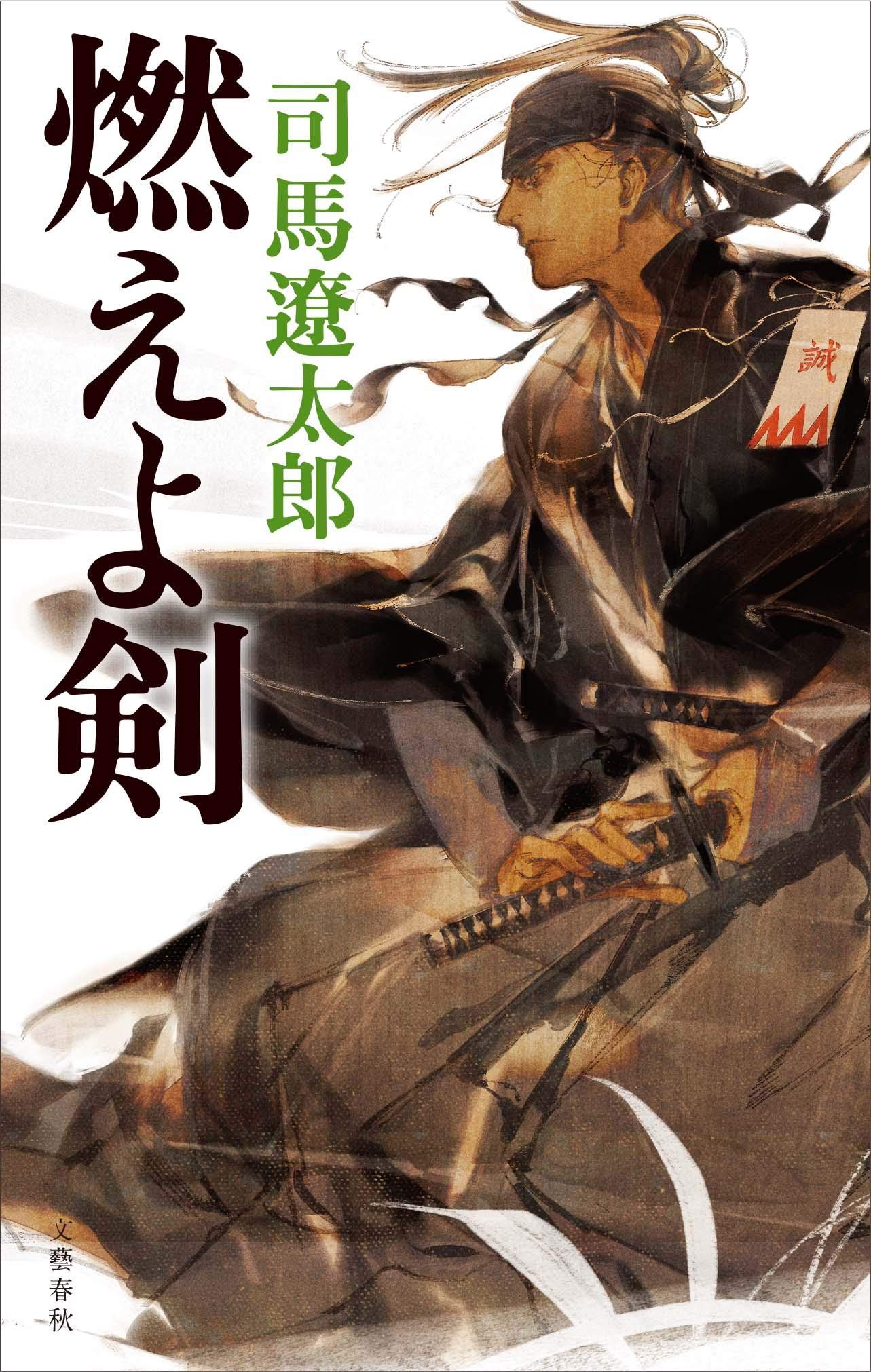
燃えよ剣

燃えよ剣

『燃えよ剣』(もえよけん)とは、司馬遼太郎による日本の歴史小説、およびそれを原作とした映画、テレビドラマなどのメディアミックス作品である。『週刊文春』誌上で1962年11月から1964年3月にかけて連載された後、1964年3月に文藝春秋新社より単行本が刊行された。幕末の動乱期を駆け抜けた武装集団「新選組」の副長・土方歳三の生涯を描いた作品であり、司馬の代表作の一つとして支持を集めている。
物語は、武蔵国多摩郡石田村の豪農に生まれ、郷里で「バラガキ」と呼ばれて恐れられた荒々しい若年時代から幕を開ける。天然理心流の道場「試衛館」で剣術を磨いた歳三は、近藤勇ら仲間たちと共に上京し、京都の治安維持を目的とする「新選組」を結成する。上意下達の厳格な組織作りと卓越した諜報能力、そして類まれな采配によって新選組を恐るべき戦闘集団へと育て上げ、池田屋事件などで過激志士たちを圧倒していく。しかし、時代の大きなうねりの中で大政奉還が成され、幕府が衰退していくと、歳三は時勢の流れに抗うように佐幕派として徹底抗戦の道を選ぶ。鳥羽・伏見の戦いを皮切りに、甲州勝沼、会津、そして北の大地・北海道の函館へと転戦を重ね、新政府軍との激しい戦いの果てに五稜郭周辺で壮絶な最期を遂げるまでが描かれている。
政治思想ではなく、ひたむきに「喧嘩」や剣の美しさを求めて生き抜いた土方歳三の生き様を「喧嘩師」と形容し、鮮烈に描き出した本作は、それまでの単なる人斬り集団という新選組のイメージを覆し、今日に至る人気と定評を決定づけた。その圧倒的な描写力は多くの読者を魅了し、テレビドラマや劇場映画、舞台など数々のメディアミックス作品を通じて、時代を超えて語り継がれる歴史文学の金字塔となっている。

Related Articles on 燃えよ剣

Reviews, Ratings and Comments on 燃えよ剣

燃えよ剣
10

History buffs & fans of the performers will love it!

The film features Hijikata Toshizo, vice president of the Shinsengumi, as the main character, and tells the story of the rise and fall of the Shinsengumi during a period of historical change.
The overall story may seem a bit difficult for those who are not familiar with history, as many historical terms and characters from the end of the Edo period appear, but I was overwhelmed by the action scenes of the cast, including the lead actor, Junichi Okada! The power and tension that only a period drama can convey was very much conveyed from the screen!
Although the film is long, at just under 3 hours, I was so drawn into the world that I didn't feel it.
I have seen other Shinsengumi films such as Taiga dramas, but I was struck by the deep relationship between Isamu Kondo, the leader of the Shinsengumi, and Toshizo Hijikata, the vice leader, as well as the bond between Hijikata and his admirer, Soji Okita. I was impressed by the way each of them is trying their best to change the world!
As for the title "Burning Sword," I feel that the story was not so much centered on swords. However, I feel that it did cover the fact that Hijikata had a fateful encounter with the sword as he grew up to be a splendid chief of the Shinsengumi's outfit.
It was a work of great courage and hope for those of us living in this day and age!

燃えよ剣
4

The actors are doing their best, but it's the same as always.

Directed by Masato Harada. It is a masculine film depicting a man's struggle and extreme conditions, in the same taste as "The Longest Day in Japan" and "Sekigahara". As usual, the characters talk fast and the scenes develop rapidly, making it very difficult to understand.
This film has dynamic battle scenes and a large budget for a Japanese film.
It also has some English language and conversations with foreigners, perhaps with an eye on the overseas market.
As with the previous film, I always go to the theater with high expectations for a moderately big movie, but something is always missing.
I guess the climax is not very moving. Although many of them are based on famous novels, I don't think it is necessary to follow the original story until the last scene.
The good thing, however, is that the actors, including Junichi Okada as Toshizo Hijikata, the main character, do a very good job.
His dynamic sword fighting, fast-talking but realistic dialogue, and true-to-life acting are all very appealing.
Ryosuke Yamada also plays the role of Soji Okita, and although there are some who complain about the discovery of the Johnny's character, he does a good job in his role. However, the actors' efforts are not fully utilized in this film.
This film also started out looking like it could be a good film, but it lacks cohesion in the second half, which is a shame.
Since the director is likely to make a similar period drama next time, I think it is time for him to have the staff around him tell him to review his self-indulgent works.

燃えよ剣
3

The actors do their best, but it's not very inspiring.

Based on Ryotaro Shiba's masterpiece about the end of the Edo period.
Masato Harada tackles a period drama with Junichi Okada following "Sekigahara".
It is made on a very large budget for a Japanese film. The actors do a pretty good job with their tate, action, acting, and facial expressions.
However, in the same taste as "Sekigahara," everyone speaks too fast, making it difficult to understand, and scenes develop too quickly, making it hard to understand various things.
It is good for audiences who have read the original work or who like Bakumatsu or historical dramas, but it may be too much for first-time viewers.
The same can be said for "The Longest Day in Japan" and "Sekigahara," both directed by the same director, and it is also a major flaw.
Despite what has been said in the impressions and reviews, he did not reflect too much on his previous films and tackle them.
I wish I could put subtitles in my films since they are written in English and include foreigners for foreign audiences.
Of course, it is strange to put subtitles in a Japanese film, and the more difficult it is to understand, the less impressive it seems.
Also, there are many bleak scenes, and they are a little grotesque and make me turn away.
The title of the film is "Burning Sword," so sword fighting and swordsmanship are unavoidable, but the film could be improved in various ways, such as the timing of the scenes.
However, it is admirable that they spent such a large budget to create a full-fledged period drama in this day and age. Period dramas themselves are comparable to American westerns.
There are many cases where it is difficult to create period dramas along with American westerns, such as filming location and expression, etc., and they are on the decline.
Although it features many Japanese celebrities and young actors, it is a solid piece of work.
I would like to see the next film with the same members when they make another historical film, and I would like to see the next improved film.