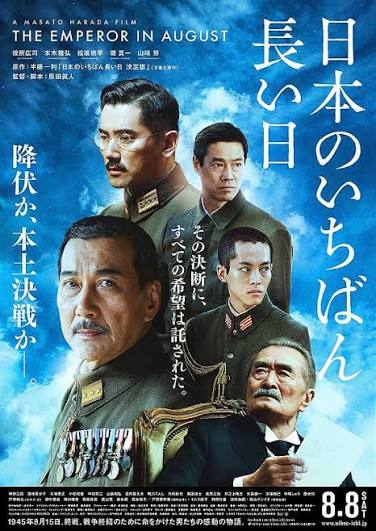
日本のいちばん長い日

日本のいちばん長い日

『日本のいちばん長い日 運命の八月十五日』(にほんのいちばんながいひ うんめいのはちがつじゅうごにち)とは、半藤一利による日本のノンフィクション書籍である。1965年の初版刊行時は文藝春秋新社から大宅壮一編名義で発売され、1995年6月に文藝春秋から半藤名義の決定版として再版された。
昭和天皇や鈴木貫太郎内閣の閣僚たちが御前会議で降伏を決定した1945年8月14日の正午から宮城事件を経て、8月15日正午に玉音放送でポツダム宣言受諾が国民へ知らされるまでの24時間を描いている。初版のタイトルは映画『史上最大の作戦』の原題から採用され、青年将校側の手記などをベースに執筆された。本書を原作とする劇場用映画は、1967年と2015年の2度にわたり製作・公開されている。
1967年公開の映画は岡本喜八が監督を務め、東宝創立35周年記念作品として白黒・シネマスコープで製作された。ヒットよりも製作意義を重視された作品であったが、公開後は大きな反響を呼び、その後の「東宝8.15シリーズ」の端緒となった。青年将校たちを論理一貫性のある真摯な存在として描写したことで、従来の終戦映画とは異なる評価を受け、公開年の年末には昭和天皇も家族とともに鑑賞している。
2015年公開の映画は原田眞人が監督・脚本を務め、松竹の製作・配給によりカラー作品として48年ぶりに映画化された。半藤の原作に加え『昭和天皇実録』などの要素も取り入れられており、鈴木首相、阿南陸相、昭和天皇の3人を軸にした家族をテーマに描いている。前作とは異なり昭和天皇の姿が一人の人物として明確に描かれたほか、香淳皇后も登場した。本作は高い評価を受け、日本アカデミー賞で最優秀助演男優賞(本木雅弘)をはじめとする数々の優秀賞を受賞したほか、ブルーリボン賞の作品賞など多くの映画賞を獲得した。

Reviews, Ratings and Comments on 日本のいちばん長い日

日本のいちばん長い日
8

Nihon no ichiban nagai hi (Japan's Longest Day)" is a historical epic that depicts Japan's defeat in the war with a documentary touch.

The film of the same name was remade in the 2000s, but the one featured here is the Japanese film released in 1967, produced and distributed by Toho. It was a black-and-white film in CinemaScope format. The film was planned as a commemorative film for the 35th anniversary of the founding of the film company Toho, and the company found significance in the production itself, rather than aiming for a hit film. After this film, Toho produced the "8.15 Series" to commemorate Japan's defeat in the war, which continued until 1972. Masaki Kobayashi's name was suggested as the director, but he was not a good fit for the production team, so screenwriter Shinobu Hashimoto recommended Kihachi Okamoto, who was working on a script for another film. It is said that Kihachi Okamoto insisted on a fact-oriented portrayal when shooting the film, and insisted on inserting the phrase "3 million people died in this war" in the film's end credits.
The film caused controversy after its release, with some critics claiming that it heroized the war leaders. Shinobu Hashimoto, who wrote the screenplay, stated that the reason why this film, which was considered a huge disappointment by all the staff members, became a blockbuster hit was due to the psychology of looking back on the times in 1967, 22 years after the war, when there were whispers of a revival of militarism.

日本のいちばん長い日
9

What was World War II?

Japan is known throughout the world as the defeated nation of World War II.
Japan's Longest Day," released in 1967, is a film that shows us, the postwar generation, that the cause and responsibility for Japan's inability to escape from the quagmire of the world war lies with the top brass of the military.
The Potsdam Declaration, which was sent by the Allied Forces, was not taken as a threat, but was interpreted to suit Japan's convenience, and as a result, atomic bombs were dropped on Hiroshima and Nagasaki, and the whole of Japan was burned to the ground.

The upper echelons of the Navy and the Army are divided and squabbling in the conference room. Whether to accept or not to accept the end of the war, what will happen to the protection of the nation....
Discussions continue with no resolution in sight, and time is being wasted.
Meanwhile, the war is getting deeper and deeper, and the casualties of suicide pilots and ordinary soldiers sent overseas are increasing. The young officers begin to revolt.
The young officers began to rebel, saying, "Japan should never have lost the war. This entrenched ideology led to the unnecessary sacrifice of the people living on the mainland and the driving of more and more young men into the war zone.
Young officers even went so far as to say, "In order to end the war victoriously, a decisive battle on the mainland is unavoidable.
The military top brass continued to hold incompetent discussions with the young officers, as if they were leaving the coup d'etat reminiscent of the Niju-86 Incident unattended.
The lack of awareness of crisis among the top brass of the former Japanese military and the prime minister of the time is something that is shared by today's politicians, and it is frightening to see how little has changed in the 80 years that have passed since the war.
I think "Nihon no ichiban nagai hiban" (Japan's Longest Day), based on a novel written by Kazutoshi Hando, who was well aware of the war in those days, is a must-see film for those of us living in the peaceful modern age.